

Last updated: September 29, 2026
Any links on this page that lead to products on Amazon are affiliate links and I earn a commission if you make a purchase. Thanks in advance – I really appreciate it!
You love the look of your cowboy boots, but by the end of the day your feet, back, or knees are talking back. Before you blame the boots, it helps to figure out whether the problem is cowboy boots in general or just the pair you’re wearing.
Are cowboy boots bad for your feet? Not by themselves. A well-fitted pair with enough toe room, a lower walking heel, and decent cushioning can be comfortable for everyday wear. But a stiff, hard-soled riding boot, a tight pointed toe, or a tall heel can make long days on concrete rough on your feet. If foot, knee, or back pain keeps coming back, don’t just push through it. See a doctor or podiatrist.
I’ve worn cowboy boots nearly every day for more than 30 years, for ranch work, riding, and everyday life, and I’ve dealt with plantar fasciitis myself. Here’s what makes some boots hurt, what I look for in an all-day pair, and when pain is a sign you need more than a new pair of boots.
Table of Contents
Why Some Cowboy Boots Hurt
Traditional cowboy boots were built for riding. The smooth leather sole slides in and out of a stirrup, the narrow toe finds the stirrup easily, and the taller angled heel keeps the foot from sliding through. None of that was meant for walking miles on pavement.
Wear a traditional riding boot as an all-day walking shoe on concrete, and your feet may let you know. A stiff leather sole with little cushioning can feel unforgiving when you’re standing, walking, or working on hard ground for hours. The fix usually isn’t giving up cowboy boots. It’s matching the boot to how you actually spend your day.
The Boot Features That Matter Most for Comfort

1. A Hard Sole With Little Cushioning
Many traditional cowboy boots are built with a structured shank and a leather footbed, but they don’t have the cushioned layers you’d find in an athletic shoe. For long days on hard ground, look for a boot with a cushioned or removable insole and enough structure to keep your foot from sliding around. Some brands market built-in comfort systems, such as Ariat ATS and Justin J-Flex, and they can feel noticeably better than a basic leather insole. Still, fit matters more than the name printed on the box. If you already own hard-soled boots, a supportive insert can help, as long as the boot still fits with it in.
2. A Narrow, Pointed Toe
A sharp J-toe or snip toe can crowd the front of your foot, especially if the boot is narrow or you wear it for long stretches. According to a foot and ankle surgeon quoted by the Cleveland Clinic, that kind of pressure on the toes can inflame the nerves in the forefoot over time, causing numbness, tingling, or burning, and pointed boots are a poor choice if you already have bunions or hammertoes. A broad square toe or a round roper toe gives your toes room to sit naturally. I wear round-toe ropers most days for exactly that reason.
3. A Tall Riding Heel
A tall, angled riding heel, often around 2 inches or more, is made to help keep your foot from sliding through a stirrup. It works fine for riding, but many people find it less comfortable for a long day of walking or standing. A roper or walking heel, typically about 1 to 1.5 inches with a broader base, is usually the more practical choice when you’ll spend more time on the ground than in the saddle. My guide to the types of cowboy boots explains the different heel styles.

Break-In Stiffness vs. a Bad Fit
New leather boots can feel stiff across the vamp and shaft, and a little heel slip is normal while the sole starts to flex. But don’t confuse break-in with a bad fit. Your toes shouldn’t hit the front, curl up, go numb, or feel pinched. The instep shouldn’t feel painfully tight, and the heel shouldn’t rub hard enough to raise a blister. Leather will loosen some, but it won’t turn a boot that’s too short or too narrow into the right size.
Can Cowboy Boots Cause Back or Knee Pain?
Cowboy boots aren’t the only possible cause of back or knee pain, and a well-fitted pair may not bother many people at all. I’ve worn them for decades, and so have most of the horsemen I know. Still, heel height, fit, cushioning, the surface you’re standing on, and any existing foot, knee, hip, or back problem can all affect how you feel after a long day.
A taller heel puts more of your weight toward the front of the foot and can change how you stand and walk. If your back or knees ache after a day in boots, try a lower walking heel and a more cushioned pair, then see whether the problem settles down. If the pain keeps returning, talk with your doctor or a physical therapist instead of assuming the boots are the whole story.
Cowboy Boots and Plantar Fasciitis
People with plantar fasciitis often assume cowboy boots are off-limits. In my experience, the right pair can actually be more comfortable than a flat shoe.
Horseman’s Take: I’ve dealt with plantar fasciitis in my heels for years, and I still wear cowboy boots every day. For my feet, a completely flat shoe is usually less comfortable than a boot with a modest heel, a supportive footbed, and some cushioning under the heel. My go-to daily pair is the Ariat Amos, mainly because the footbed softens the impact compared with a traditional hard leather sole. That’s what works for me, not a prescription for everybody. If you have plantar fasciitis, especially if it isn’t improving, a podiatrist can help you sort out the support and treatment that fit your foot.
What usually matters most isn’t the word “cowboy” on the boot. It’s whether the boot leaves room for your foot, works with any insert you need, and has enough support and heel cushioning for the walking and standing you do. If a boot makes your heel pain worse during the day or with those first steps in the morning, it isn’t the right everyday pair for you.
The Ariat Amos link is an affiliate link. I may earn a commission if you buy through it, at no extra cost to you.
Is It Bad to Wear Cowboy Boots Every Day?
Not if they fit well and suit what you’re doing, but some people are more comfortable when they don’t wear the same boots every day. Rotating also gives each pair time to dry out. Leather absorbs sweat, and a pair that never gets a day off can stay damp longer than it should. If you can, alternate two pairs and let each one dry fully in a dry, airy spot. Boot trees help the shafts hold their shape, but they aren’t a must.
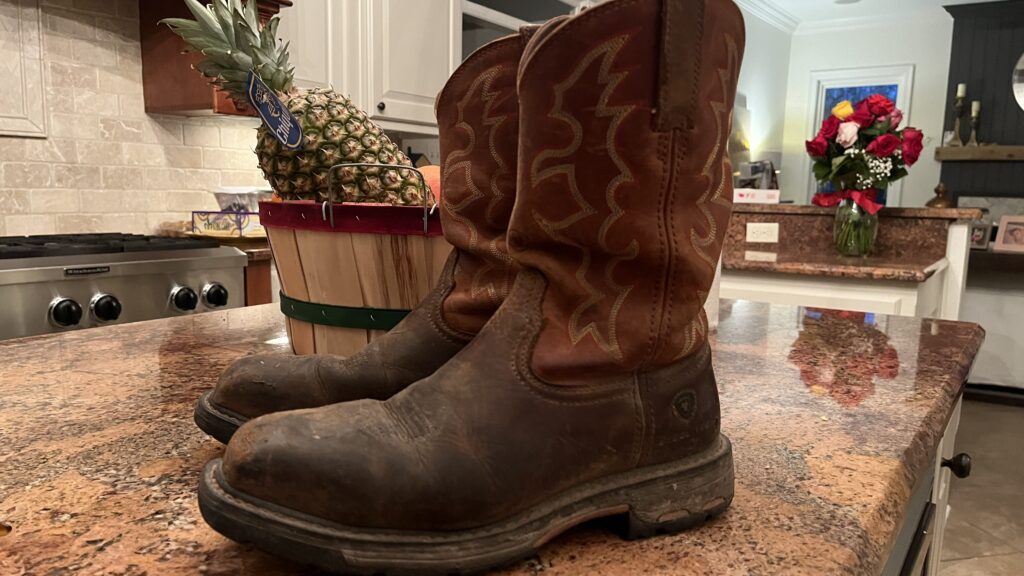
If your work calls for protective footwear, a western work boot gives you the look with a cushioned sole, slip-resistant traction, and often a safety toe. I’ve worn Ariat WorkHogs around the barn for years, and these days my Ariat Sierras handle my heaviest farm work. See my guide to the best cowboy work boots.
Do You Need Boot Socks?
For most people, yes. Socks cut down on rubbing and blisters, help manage sweat, and protect the inside of the boot. Look for moisture-wicking socks, such as merino wool blends, that come up above the top of the boot shaft so the leather doesn’t rub your calf. My guide to socks for cowboy boots covers the options.
How to Buy Foot-Friendly Cowboy Boots
Here’s what I look for when I’m buying a pair I actually plan to wear all day:
- Get the instep right. Without laces, the instep is what holds the boot on your foot. It should feel snug, like a firm handshake. If it’s loose, your foot slides forward and jams your toes.
- Make sure your longest toe has room. Your toes shouldn’t touch the front of the boot when you stand or walk. Don’t assume your big toe is the longest one, since on many people the second toe is longer.
- Expect a little heel slip. A small amount of heel slip in new boots is normal until the sole breaks in. My guide to heel slip in cowboy boots explains how much is too much.
- Choose a roomier toe shape, like a broad square or round toe.
- Pick a walking heel if you’ll be on your feet more than in the saddle.
- Check for cushioning. Look for a cushioned or removable insole, or a comfort system like Ariat’s. A boot described only as “leather outsole, leather insole” will likely feel hard on concrete.
- Try them on late in the day, when your feet are at their largest, and wear the socks you’ll actually wear with them.
For more on picking a comfortable pair, see my guide to comfortable cowboy boots.
When to See a Doctor
I’m a horseman, not a doctor, and this article is based on my own experience. Changing boots won’t fix every problem. See a doctor or podiatrist if you have foot, back, or knee pain that doesn’t improve after you change boots, numbness or tingling in your toes, swelling, pain that wakes you at night, or if you have diabetes or poor circulation, since foot problems can become serious more quickly.
Cowboy Boots and Foot Health FAQ
Are cowboy boots bad for your feet?
Not by themselves. Most discomfort comes from the wrong boot for the job or a poor fit, such as a stiff riding boot worn on concrete all day, a narrow toe, or a tall heel. A well-fitted boot with enough toe room, a practical heel, and some cushioning can be comfortable for everyday wear.
Are cowboy boots supposed to hurt at first?
New boots can feel stiff for a while, and a little heel slip is normal until the sole breaks in. Real pain isn’t. If your toes hit the front, go numb, or feel pinched, or the heel rubs hard enough to blister, the boots don’t fit, and breaking them in won’t fix that.
Can cowboy boots cause back pain?
They can contribute for some people, especially with taller heels, a poor fit, or long days on hard ground, but they’re rarely the whole story. If your back hurts after wearing boots, try a lower walking heel and more cushioning, and see your doctor if the pain continues.
Can you wear cowboy boots with plantar fasciitis?
Many people can, but the best choice depends on the person and the boot. Look for a pair that fits well, leaves room for your foot or any insert you use, and has enough support and heel cushioning for the walking and standing you do. If the boots aggravate your heel pain, especially with your first steps in the morning, talk with a podiatrist.
What cowboy boots are best for your feet?
The best pair is the one that fits your foot and matches how you use it. For long days of walking or standing, many people prefer a round or broad square toe, a lower roper or walking heel, a secure instep, and a cushioned or removable insole. For work, a western work boot with good traction and any safety protection your job requires is usually more practical than a traditional leather-soled riding boot.
After more than 30 years in cowboy boots, I’ve learned the biggest mistake isn’t wearing boots every day. It’s wearing the wrong boot for what you’re asking it to do. Get the fit right, match the boot to your day, and don’t push through pain that keeps coming back. A good pair should feel like part of your everyday gear, whether you’re riding, working around the barn, or heading into town.
About Miles Henry
Racehorse Owner & Author | 30+ Years in Thoroughbred Racing
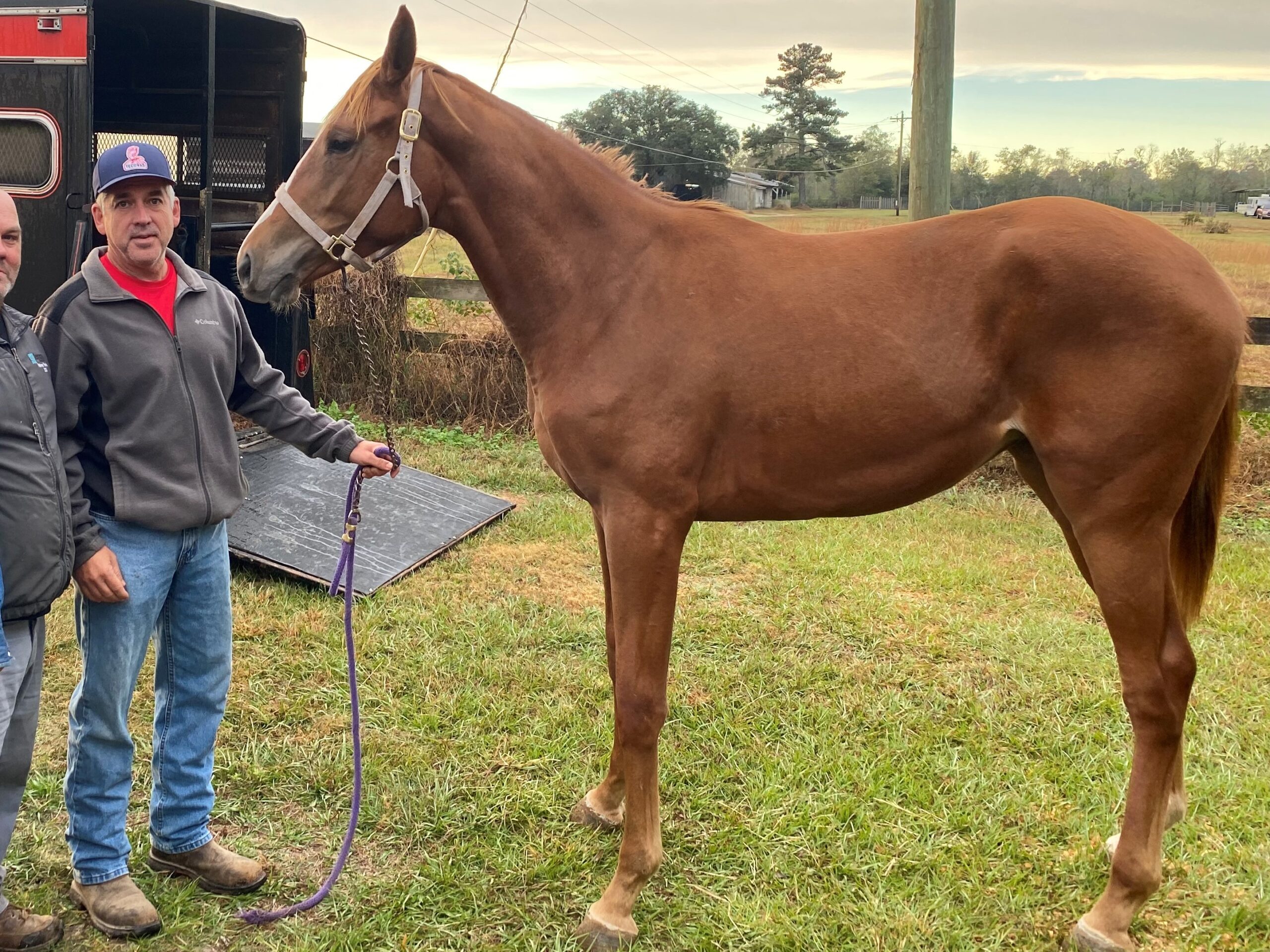
Miles Henry (legal name: William Bradley) is a professional horseman based in Folsom, Louisiana. He holds Louisiana Racing License #67012 and has spent over three decades managing Thoroughbreds at premier tracks including Fair Grounds, Delta Downs, and Evangeline Downs.
Expertise & Hands-On Experience: Beyond the track, Miles has decades of experience in specialized equine care, covering everything from hoof health and nutrition to training protocols for Quarter Horses, Friesians, and Paints. Every guide on Horse Racing Sense is rooted in this “boots-on-the-ground” perspective.
30 of their last 90 starts
Equibase Profile.

Connect with Miles: