

Last updated: October 12, 2026
Any links on this page that lead to products on Amazon are affiliate links and I earn a commission if you make a purchase. Thanks in advance – I really appreciate it!
Maybe your saddle never seems to fit your horse right, or you’re tired of swinging a heavy Western saddle onto his back, and a treeless saddle looks like the fix. Then you start shopping and find saddles from about $200 to well over $1,000, all called treeless, with no easy way to tell which ones are worth the money.
Here’s how the common options compare, what to look for in a listing, what the pressure research shows, and what to check before you buy.
Table of Contents
What Is a Treeless Saddle?
A conventional saddle is built on a tree, a rigid frame that helps spread the rider’s weight and maintain clearance over the spine when properly fitted. A treeless saddle leaves out that conventional frame, though some designs still have structured pommels, cantles, or other supporting components. Construction varies between designs, so check how each model distributes weight and maintains spinal clearance.
The catch is that the word “treeless” gets used loosely. Some saddles sold as treeless also describe a flex tree in their specs. Read the construction details, not just the title, and ask the seller to explain anything that conflicts. That difference matters if you’re weighing whether treeless saddles are bad for a horse’s back.
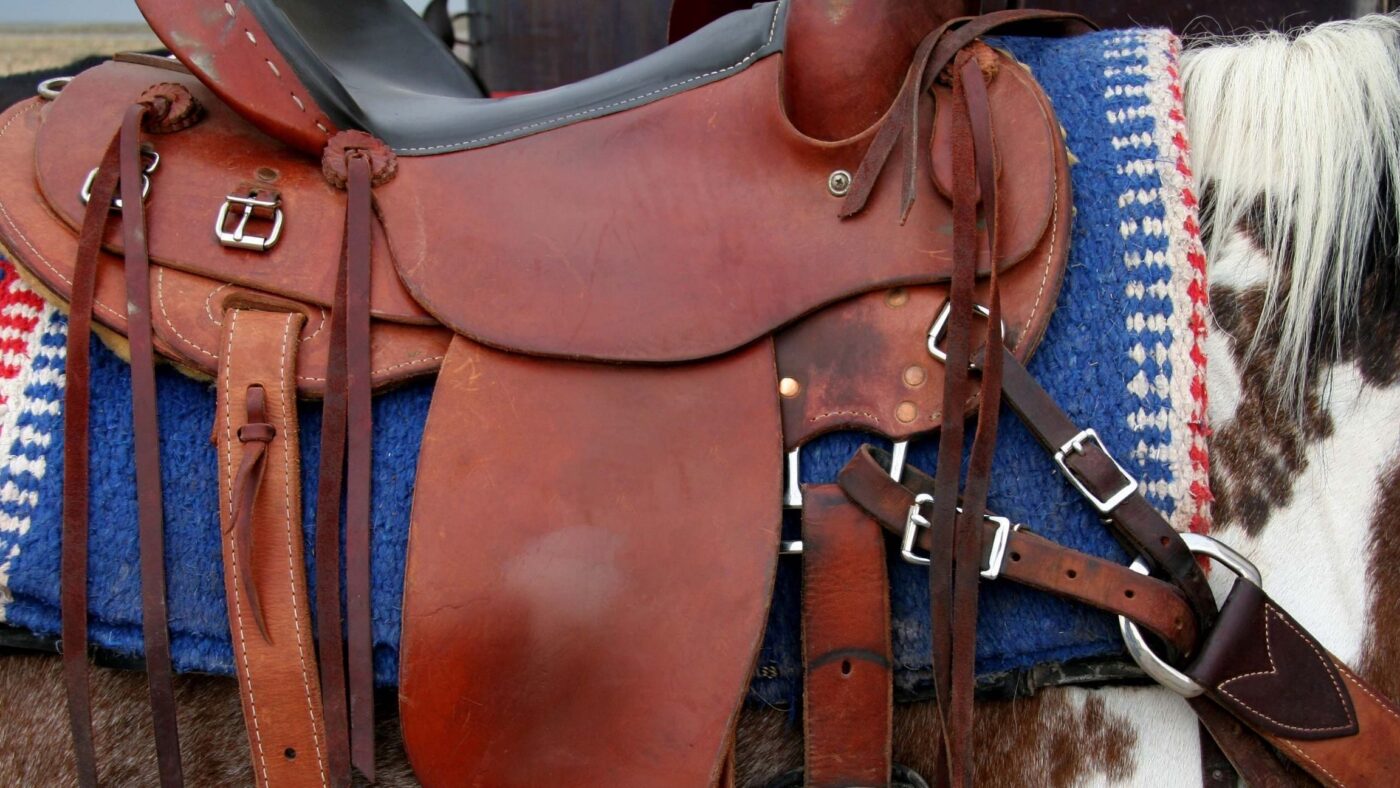
Treeless Saddles to Compare
I haven’t ridden in these saddles myself. This comparison is based on the makers’ and retailers’ published specs, saddle-fit research, and what I’d check before buying any saddle for one of my own horses. Prices change often, so check the current listing.
| Saddle | Construction (per listing) | Intended use | Main advantage | Main limitation |
|---|---|---|---|---|
| Tough-1 Treeless Endurance | Treeless, synthetic micro-suede | Endurance and trail | Light, with a seat that comes off to make a bareback pad | Limited sizing; check measurements |
| Hilason Western Treeless | Marketed as treeless, but also lists a flex tree | Western trail and pleasure | Hand-tooled leather, Western look | Heavier, and construction needs confirming |
| Challenger Western Treeless (49101) | Marketed as treeless, but also lists an adaptive flex tree | Pleasure and trail | Budget price, several seat sizes | Construction needs confirming |
Tough-1 Treeless Endurance Saddle

The Tough-1 Treeless Endurance Saddle is a budget option sold by Tractor Supply. It has a molded synthetic micro-suede seat, polymer stirrups, a girth, and D-rings front and back for gear, and the store lists it at about 16 pounds. The seat and stirrups come off, so it doubles as a bareback pad. One reviewer reported that the large seat fit smaller than expected, so go by the measurements rather than the size label.
Hilason and Challenger: Check the Construction

If you want a treeless Western saddle, Hilason and Challenger both sell Western-style models marketed as treeless. Hilason’s hand-tooled leather treeless trail saddle comes in 15- to 17-inch seats, weighs about 26 pounds, and lists a 6- to 8-inch gullet fit. Challenger’s synthetic Western bareback treeless saddle is offered in 15- to 18-inch seats and was listed at around $230 to $250, compared with about $750 for the Hilason.
Both listings call the saddle treeless, but Hilason’s also describes a four-way flex tree, and Challenger’s mentions an adaptive flex tree. Ask the seller exactly what’s inside before you treat either one as a true treeless saddle, especially if your horse needs one because a treed saddle hasn’t worked.

Other Treeless Saddle Brands to Compare
These brands focus on treeless or hybrid designs and cost more than budget picks. Model lineups change, so check each maker’s current construction details before you buy:
- Bob Marshall: Treeless Sports Saddles, including Basic and Deluxe Endurance models, with custom ordering available.
- Sensation Ride: Custom treeless saddles with a multi-point stirrup attachment system.
- Barefoot: Treeless saddles in English and Western styles, including the Cherokee and the Arizona, with interchangeable pommel inserts.
- Circle Y: The Fischer Remuda Signature Treeless is a barrel racing saddle with fleece-lined neoprene skirts and seat sizes from 13 1/2 to 16 1/2 inches. It’s an option to compare if you’re shopping for a treeless Western barrel saddle. Check current availability before ordering.
- Freeform: Treeless trail and endurance options, including the Ultimate Trail model.
Rider experiences can help, as long as you treat them as one horse’s story. One endurance rider told Horse Canada she’d gotten great back scores on 50- and 100-mile rides in a Bob Marshall saddle. That’s encouraging, but it doesn’t mean the same saddle will suit your horse.
Do Treeless Saddles Spread Weight Evenly?
Not always, and that’s the biggest question to settle before you buy. In a study at Michigan State’s McPhail Center, Dr. Hilary Clayton compared one treed saddle with one treeless model on eight horses. The same 125-pound rider rode each horse at a sitting trot without stirrups, and the treeless saddle spread her weight over a smaller area and produced higher pressure under her seat bones. Both saddles were tested without pads, so the results don’t tell you how every treeless saddle and pad combination will perform.
The takeaway isn’t that every treeless saddle is bad. It’s that taking out the tree doesn’t automatically make a saddle more comfortable for the horse.
How to Choose a Treeless Saddle
- The pad: Use the padding system the maker recommends, and make sure it gives real clearance along the spine. Don’t count on a thicker pad to fix a saddle that concentrates pressure or shifts under you.
- Your weight and balance: A rider’s weight, balance, and movement all affect the load on the horse’s back, and a flexible saddle gives an unsteady rider less help. Check the maker’s guidance for rider weight.
- Your horse’s back: A treeless saddle may be worth a look if a conventional saddle has been hard to fit, but don’t assume it’ll suit your horse just because he’s wide or has big shoulders. A high-withered horse or one with a prominent spine may need a treed saddle.
- What you’ll do: Common uses include trail, pleasure, and endurance riding. A treeless saddle with a horn still isn’t a roping saddle.
- Seat size: Follow the exact model’s size chart and measuring instructions. Some brands use small, medium, and large instead of inches, so don’t assume your usual Western seat size will transfer. If you’re comparing it with your current saddle, here’s how to measure a Western saddle seat.
- Competition rules: If you show or compete, check the current tack rules for your discipline before you buy. Rules vary between horse shows and organizations.
If the seller offers a trial, use it to check the saddle on your horse with the recommended pad and you riding in it. Watch for soreness, swelling, changes in his movement, or new resistance to being saddled. Stop riding in that setup if he shows signs of pain, and have a saddle fitter or your vet take a look. Sweat marks can point you to a possible problem, but they don’t prove good or bad fit on their own.
About Miles Henry
Racehorse Owner & Author | 30+ Years in Thoroughbred Racing
Miles Henry (legal name: William Bradley) is a professional horseman based in Folsom, Louisiana. He holds Louisiana Racing License #67012 and has spent over three decades managing Thoroughbreds at premier tracks including Fair Grounds, Delta Downs, and Evangeline Downs.
Expertise & Hands-On Experience: Beyond the track, Miles has decades of experience in specialized equine care, covering everything from hoof health and nutrition to training protocols for Quarter Horses, Friesians, and Paints. Every guide on Horse Racing Sense is rooted in this “boots-on-the-ground” perspective.
30 of their last 90 starts
Equibase Profile.

Connect with Miles: