
Last updated: September 3, 2026
A friend brought her teenage daughter over to ride one of our horses. She had ridden before, but that day she was nervous. The horse acted differently with her – less willing to move forward, more fidgety, and harder to steer than usual. Afterward, her mother asked me a question I have heard plenty of times around horses: “Can horses sense fear?”
Yes, horses can pick up on fear-related cues – but not by reading your mind. They notice changes in posture, movement, voice, breathing, and even body odor. Fear may also change the way a person rides, leads, and gives directions, leaving the horse less certain about what is being asked of him.
In this article, I share what I’ve learned from years around horses, what recent research says about how horses detect fear-related cues, and offer practical ways to handle or ride more safely when you are feeling unsure.
Table of Contents

How Horses Actually Detect Your Emotional State
Horses aren’t reading your mind. They’re reading a pile of small signals, many of which we’re barely aware we’re giving them.
In one University of Guelph study, horses moved more slowly, carried their heads lower, and had lower heart rates around fearful or stressed people. In that setting, the horses did not appear to become more alarmed themselves. That result matters because horses respond to a whole situation, not one cue in isolation. Newer odor research looks specifically at what may happen when scent is separated from posture, movement, and the rest of the interaction.
If fear is making you freeze, rush, or lose track of safe positioning, don’t handle the horse alone. Step back and ask an experienced handler, instructor, or trainer to help. A calm, well-trained horse and supervised groundwork can build confidence – trying to “push through” with an unfamiliar, anxious, or difficult horse can get someone hurt.
Body Language: What Horses Notice Right Away
Horses are quick to notice changes in movement, posture, pace, and pressure on the lead rope. A worried person may walk faster, shorten the rope, stiffen their arms, stop abruptly, or reach toward the horse without a clear plan. To a horse, those changes make the person less predictable – not because the horse is diagnosing your emotion, but because the signals coming from you have changed. Good handlers tend to give the horse consistent space, use steady pressure and release, and move with enough purpose that the horse isn’t left guessing what comes next.
Chemical Signals: What “Smelling Fear” Actually Means

A 2023 study showed that horses could distinguish body odors collected from people experiencing fear and joy. It didn’t establish that horses “smell a fear pheromone” or that they panic around fearful people – just that they can tell the difference.
A January 2026 follow-up asked a more practical question: does that odor change what a horse actually does? In controlled tests with 43 horses, the ones exposed to fear-related human odor interacted less with a person, watched a novel object more closely, startled more strongly, and reached a higher maximum heart rate than horses exposed to joy-related or neutral odors – touching the researcher roughly 40% less often than the joy-odor group. That doesn’t mean one nervous rider automatically makes every horse dangerous; it was a controlled experiment using collected odor samples, not proof of what happens at every mounting block. It suggests that fear-related information can reach a horse through more than posture and movement.
The Sweaty Hands Reality Check: I used to get anxious loading our mare into the trailer – she’d rushed me once, and I never forgot it. Every time I’d walk her toward the ramp, my palms would sweat and my grip would tighten. One day an old trainer told me: “She’s not reading your mind. She’s reading your white knuckles and the way you’re holding your breath. Breathe out. Loosen your hands. Walk like you’re going to get a sandwich, not face a jury.” I tried it. The mare loaded without hesitation. Same horse, same trailer, different handler. I may not have felt calm at first, but I could practice slower breathing, softer hands, and a more deliberate approach.
Vision and Sound
Horses have nearly 360-degree peripheral vision, which makes them exceptional at detecting movement. Sudden, erratic motion tends to trigger prey instincts more than steady movement does, even if you’re feeling anxious inside. They also respond to vocal pitch and rhythm – a high-pitched, fast-talking voice can read as trouble, while a calm, low, steady voice tends to signal safety.

Why Predictable Handling Helps a Nervous Horse
You don’t have to feel confident around a horse. What helps most is becoming predictable: breathe, slow down, keep enough space, and use handling that fits the horse in front of you. Horses don’t need to know what you’re thinking – they have plenty of information to work with from what you do, how you sound, and what you smell like. If you’re too frightened to think clearly or respond safely, that’s the signal to step back and get help, not to push through.
| What a Horse May Notice | Why It Can Create Trouble | A Safer Habit |
|---|---|---|
| A constantly tight lead rope | The horse feels continuous pressure and may brace, pull, or become more reactive | Keep safe contact, but allow slack when the horse is standing quietly |
| Fast or jerky movements | Sudden movement can startle a sensitive horse or make handling harder to follow | Move deliberately and show the horse what you’re about to do |
| Holding your breath | Often goes along with a rigid body, fixed hands, and hurried decisions | Exhale slowly and reset before asking the horse to move |
| Hunched shoulders, arms pulled in tight | Less balance, less room to react, and poorer control of the rope | Stand balanced, keep a safe distance, and avoid wrapping the rope around your hand |
Key insight: nervousness is manageable; unpredictability is what makes handling harder. Slow down, give the horse room, and get help before fear starts making your decisions for you.
The Herd Response: What Happens When One Horse Gets Nervous
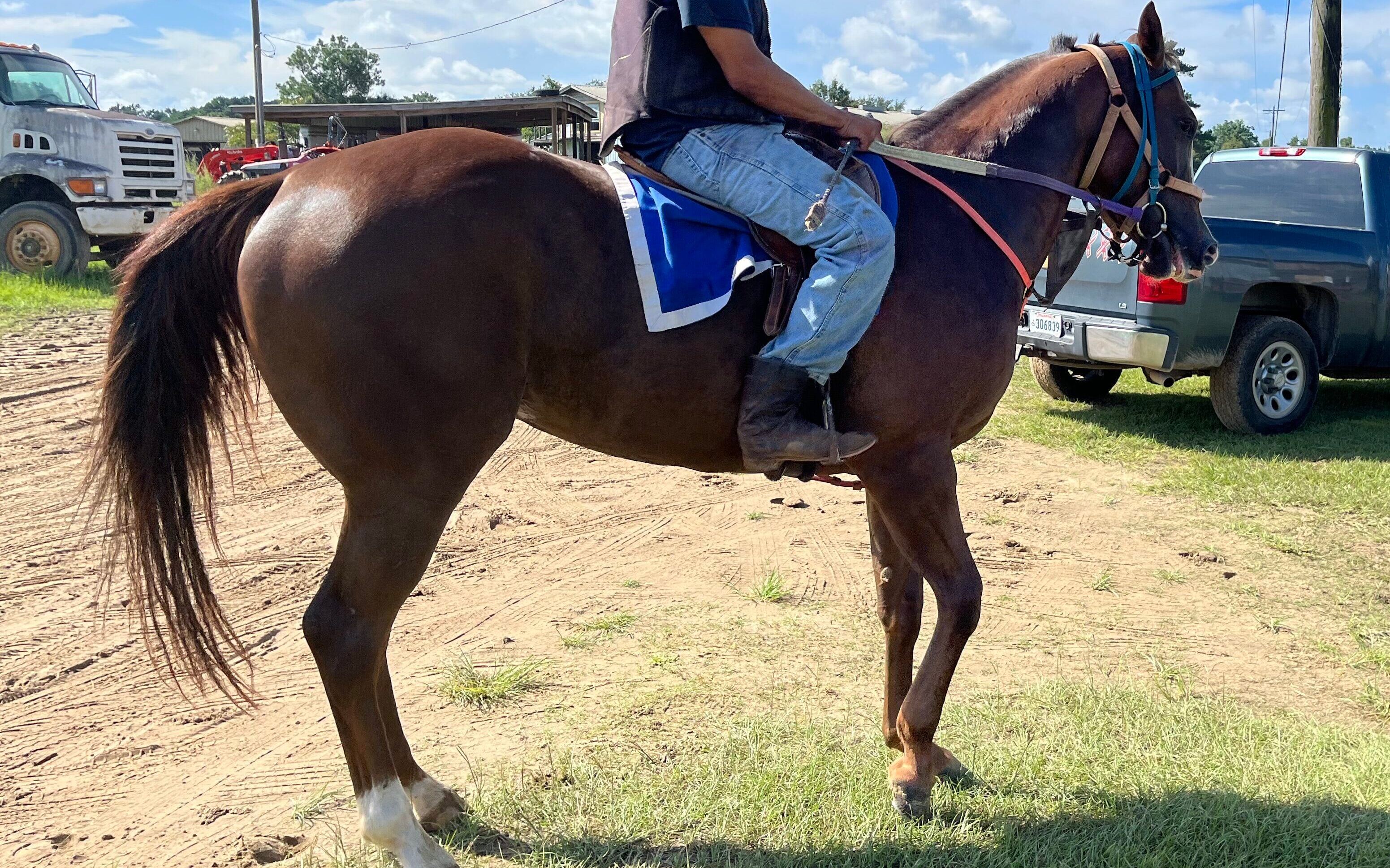
Horses are built to notice what the horses around them notice. When one horse snaps its head up, locks onto something, or scoots sideways, the others often become more alert too – in a pasture or barn aisle, that can happen when one horse reacts to a noise, a new object, or a person moving unpredictably.
I’ve seen it near the starting gate more times than I can count. One horse begins dancing sideways or gets difficult to load, and the horses nearby often get sharper too. They may not all be reacting to the same thing – they’re responding to movement, noise, pressure, and another horse suddenly acting unsettled.
The same general lesson matters when you’re handling a horse: your behavior becomes information the horse has to interpret. A calm, predictable handler gives the horse less to react to, even if the horse felt uncertain at first.
5 Steps for Handling a Horse When You’re Nervous
- Pause and breathe before you enter the horse’s space: take one or two slow exhales, then decide what you’re going to do before you start moving.
- Approach from a safe angle: come toward the near shoulder rather than marching straight at the horse’s face or walking up from directly behind. Speak in a normal, steady voice if that helps the horse know where you are.
- Keep enough room to move: don’t crowd the horse, trap yourself against a wall, or wrap the lead rope around your hand. Give yourself an exit and pay attention to the horse’s feet.
- Use quiet, consistent handling: ask once with clear pressure, then soften when the horse responds. Avoid snatching, yanking, or repeating the same request faster and louder.
- Get help before fear takes over: if you’re freezing, rushing, or unsure what the horse may do next, hand the job to someone experienced. Watching a good handler can teach you more than forcing yourself through a bad moment.
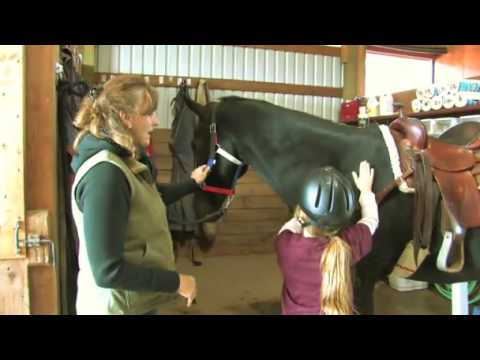
Here’s a short video on reading a horse’s body language before you approach.
Miles’ Tip: if a horse makes you genuinely afraid, don’t push through it. Ask for help. There’s no shame in saying, “I need someone more experienced to handle this horse today.” Safety first, pride second.
Common Myths About Horses and Fear
| Myth | Reality |
|---|---|
| Horses are telepathic and can read your thoughts | Horses respond to observable, measurable cues – movement, voice, breathing, and body odor. There’s no evidence they can read a person’s private thoughts. |
| If a horse senses fear, it will attack you | In a University of Guelph study, horses moved more slowly and carried their heads lower around fearful people – caution and reduced arousal, not aggression. |
| If I’m nervous, I should force myself through the interaction until I get over it | Safe confidence is built through a suitable horse, good instruction, and repetition. Pushing through panic around an unfamiliar or difficult horse can make things worse and get someone hurt. |
| “Fear pheromones” are the main way horses detect it | Horses can discriminate between odors linked to different human emotional states, and the 2026 research shows that odor can measurably change their behavior. That doesn’t mean researchers have identified one single “fear pheromone,” and scent is only one of several channels a horse is reading at once. |
FAQ
Can horses sense fear in humans?
Yes, in the sense that they pick up on real signals fear produces: tense muscles, jerky movements, breathing patterns, vocal tone, and body odor. They aren’t reading your mind – they’re reading your behavior and physiology.
Will a horse become aggressive if it senses fear?
Not automatically. A horse may become more watchful, hesitant, or reactive when a handler is tense or unpredictable, but aggression has many possible causes, including pain, fear, poor handling history, resource guarding, confinement, and learned behavior. Treat pinned ears, striking, biting threats, kicking threats, bolting, or repeated pulling away as safety concerns – not as proof the horse “smelled your fear.”
Do horses actually smell fear?
Yes, more than researchers used to think. A 2023 study showed horses can distinguish fear sweat from joy sweat. A January 2026 follow-up found this changes their behavior: horses exposed to fear-related odor interacted less, startled more strongly, and reached a higher maximum heart rate than horses exposed to joy or neutral odors. That’s controlled-experiment evidence, not proof that every nervous rider transmits fear to every horse.
How do I stay calm around horses if I’m nervous?
Focus on becoming predictable rather than fearless: slow, deliberate movements, steady breathing, a relaxed grip, and a normal speaking voice. Work with a suitable, well-trained horse and an experienced instructor rather than trying to push through fear alone. Confidence around horses is something you build through repeated, controlled, positive experiences.

Final Thoughts: Be Predictable, Not Perfect
Horses don’t need you to be fearless. They need you to be safe, clear, and predictable. Fear can change your posture, breathing, voice, and even your scent, but it doesn’t make you a bad handler.
Start with the right horse, give yourself room, move without rushing, and ask for help before anxiety turns into unsafe handling. That’s how confidence is built in the barn – not by pretending you’re never afraid, but by learning what to do when you are.
Miles’ Challenge: spend 15 minutes grooming a calm, familiar horse without trying to accomplish anything else. Pay attention to your breathing, your grip, and your shoulders, and to the horse’s ears, eyes, head position, and overall tension. See whether changing your own breathing and posture changes the way the interaction feels. I’d genuinely like to hear how it goes: miles@horseracingsense.com.
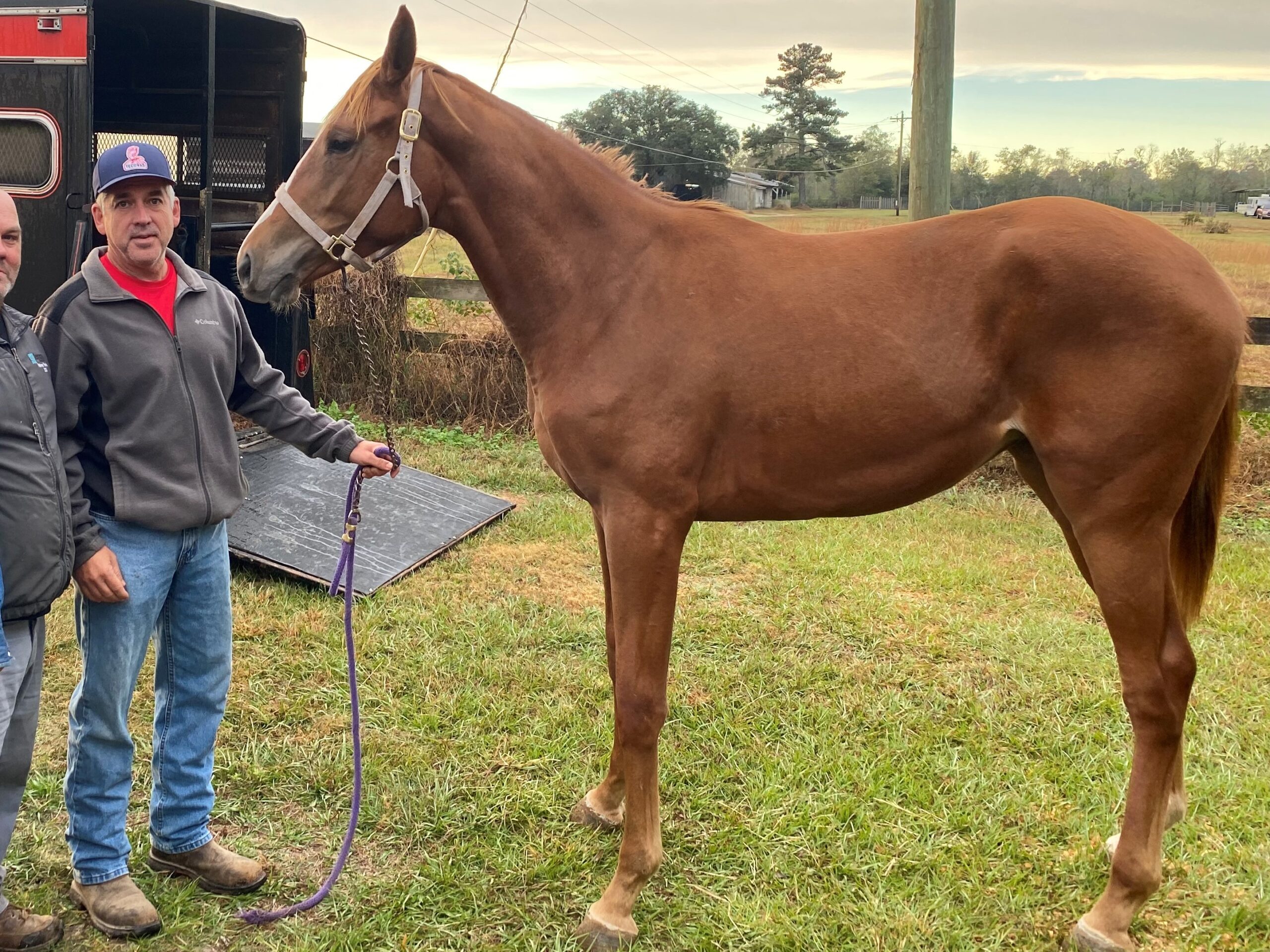
About Miles Henry
Racehorse Owner & Author | 30+ Years in Thoroughbred Racing
Miles Henry (legal name: William Bradley) is a professional horseman based in Folsom, Louisiana. He holds Louisiana Racing License #67012 and has spent over three decades managing Thoroughbreds at premier tracks including Fair Grounds, Delta Downs, and Evangeline Downs.
Expertise & Hands-On Experience: Beyond the track, Miles has decades of experience in specialized equine care, covering everything from hoof health and nutrition to training protocols for Quarter Horses, Friesians, and Paints. Every guide on Horse Racing Sense is rooted in this “boots-on-the-ground” perspective.
30 of their last 90 starts
Equibase Profile.

Connect with Miles: