
Last updated: September 3, 2026
Any links on this page that lead to products on Amazon are affiliate links and I earn a commission if you make a purchase. Thanks in advance – I really appreciate it!
Ariat makes several steel-toe work boots that look similar at first glance, but they do not wear the same through a long day. The wrong pair can leave your feet hurting on concrete, feel too heavy for everyday barn chores, or wear out faster than you expected once mud, manure, fencing, and farm work get involved.
Of the Ariat steel-toe boots I’ve worked int, the WorkHog is my favorite for long days on my feet. Choose the Sierra if you want a more traditional western look for farm and property work. The Groundbreaker is worth considering if you want a lower-priced Ariat steel-toe option.
Below, I break down the WorkHog, Sierra, and Groundbreaker by comfort, durability, break-in, fit, safety features, and the kind of work each boot is best suited for.
Best Ariat Steel-Toe Work Boots: My Picks
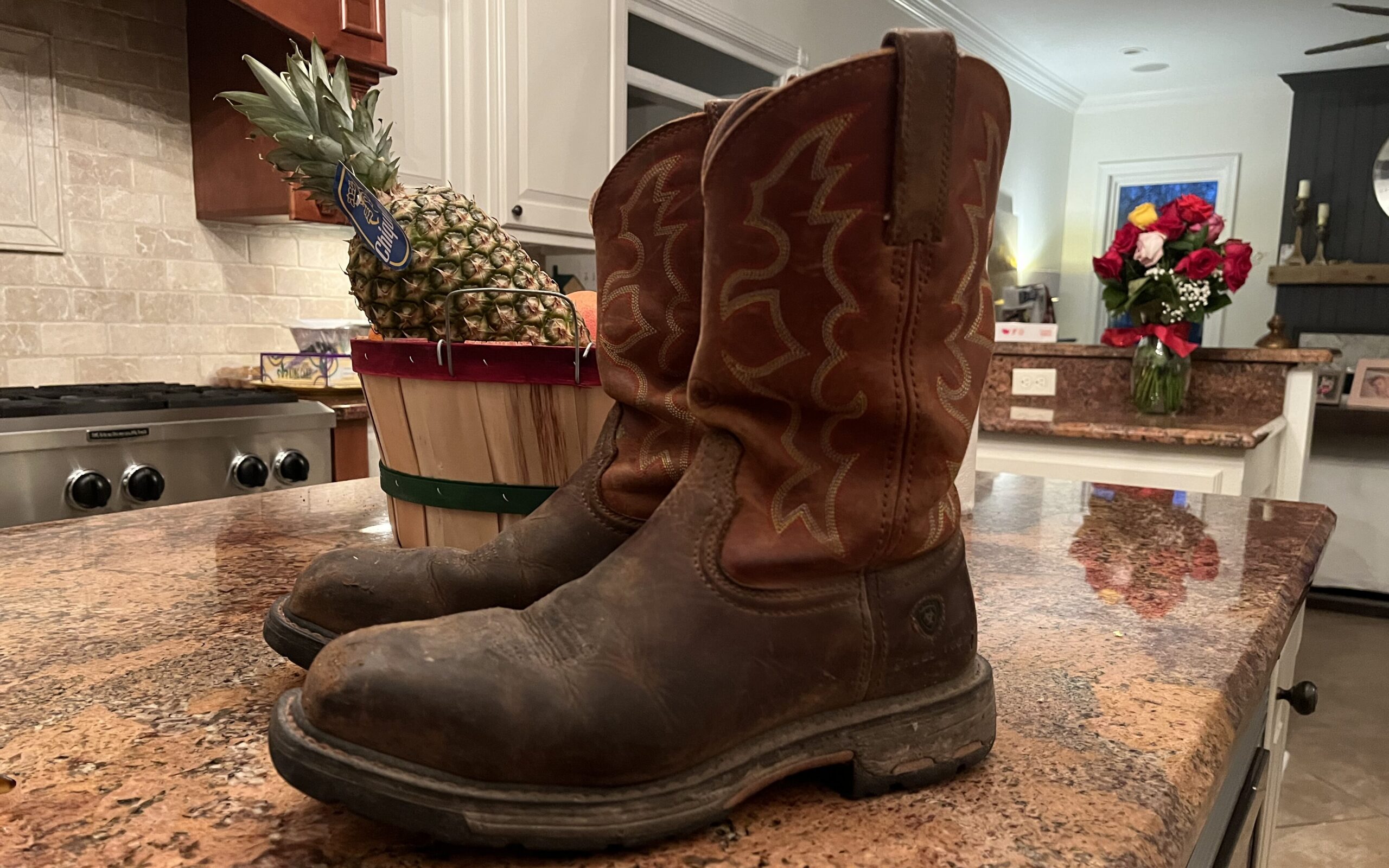
Ariat WorkHog Steel Toe Boot

This was my go-to boot for years, and it’s still the one I’d point to for comfort. The WorkHog gives my feet more room and cushioning than the Sierra, and it is the comfort pick I would point most people toward in this group. The square toe feels roomy without being sloppy, and it needed less break-in for me than the Sierra did. Ariat builds it on their ATS Max platform with a removable Pro Performance insole and an EVA midsole – what I actually noticed after a long day wasn’t the technology name; it was that my feet didn’t feel beat up when I was done.
Best for: long days on your feet, hard surfaces, and anyone who puts comfort ahead of a lighter or more traditional-looking boot.
Keep in mind: this is a substantial work boot, not a lightweight one. If your main goal is a traditional cowboy-boot profile, the Sierra has the better look.
Ariat Sierra Steel Toe Boot

The Sierra is now my main boot for the hard farm work that is toughest on footwear—mucking stalls, repairing fences, hauling feed, and walking muddy paddocks. After 18 months of that use, the leather still has no splits or failures.
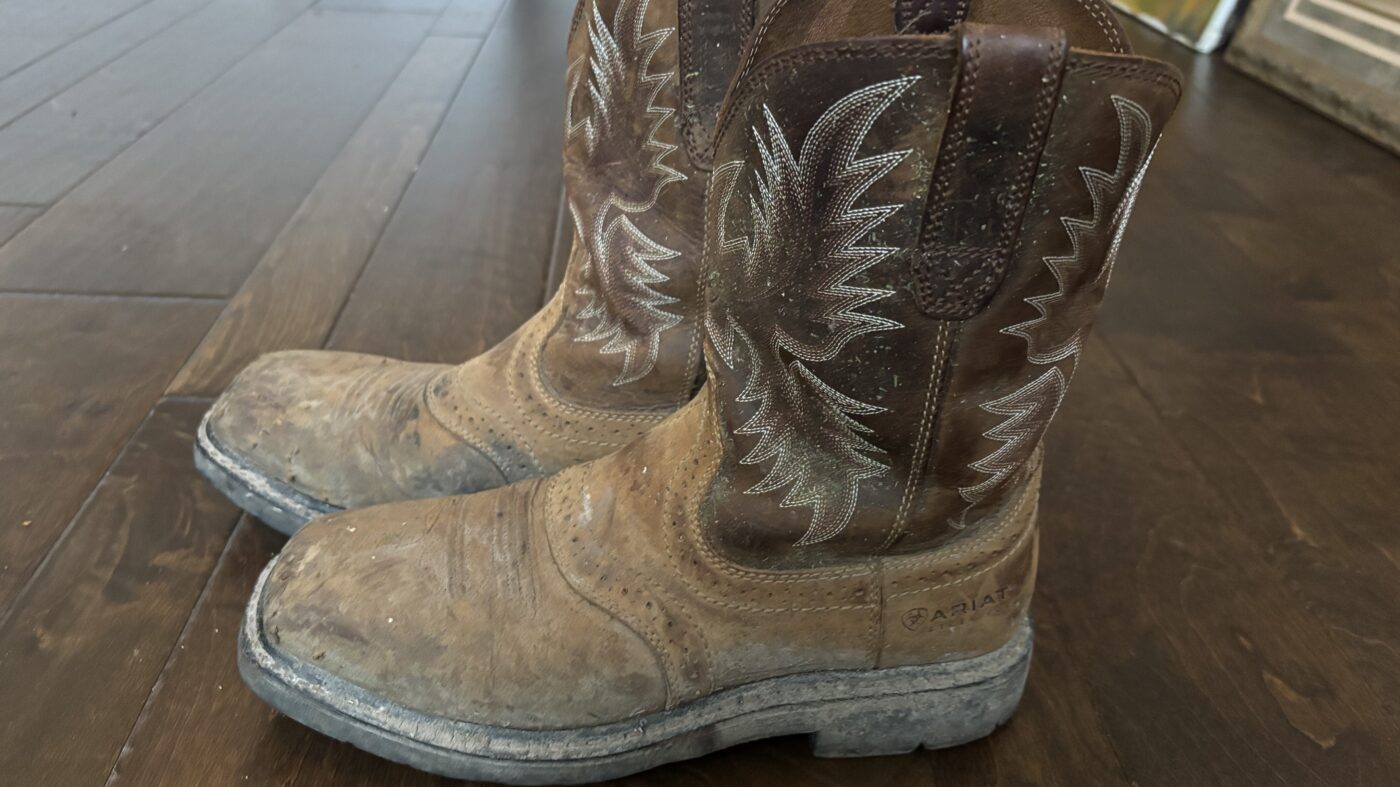
It has the western profile and full-grain leather construction that make it feel less like a modern work boot, with Goodyear welt construction—a build that is generally more repair-friendly than a molded sole. It also uses Ariat’s ATS footbed for stability. It’s water-resistant rather than waterproof, and it took about three days of regular wear to break in for me. I go into a lot more detail, including sizing and what stood out after a year and a half of daily use, in my full Ariat Sierra review.
Best for: heavy ranch and farm work, buyers who want a resoleable boot, and anyone who wants steel-toe protection in a traditional western profile.
Keep in mind: it’s heavier than the WorkHog and needs a real break-in period – if you want the most cushioned, least-break-in boot of the three, this wouldn’t be my first choice.
My tip: don’t buy any of these based on the model name alone. Ariat sells several versions of the WorkHog, Groundbreaker, and Sierra with different toe shapes, shaft materials, and waterproofing, and you can usually compare the full current lineup on Ariat’s own site before deciding. Check the exact width, toe shape, and current version before ordering – fit matters more than most of what’s printed on the box.
Ariat Groundbreaker Steel Toe Boot

I haven’t personally worn the Groundbreaker, so take this as research rather than a firsthand account. It’s built with a full-grain leather foot and a 900D nylon shaft, and Ariat’s 4LR footbed with a removable All Day Cushioning insole is designed to keep it comfortable across a full day. Owner reviews consistently describe it as a durable, no-frills option that costs less than the WorkHog – if you want a closer look before buying, I’ve put together a separate roundup of Groundbreaker owner and reviewer feedback.
Best for: rough property work and buyers who want a durable boot at a lower price point than many WorkHog versions. Check current prices, since Ariat’s pricing varies by style and retailer.
Keep in mind: since I haven’t worn a pair myself, I can’t personally vouch for long-term comfort the way I can with the WorkHog and Sierra – the feedback above is secondhand, not my own experience.
WorkHog vs. Groundbreaker: Which Should You Buy?
Short answer: choose the WorkHog if you are on your feet all day and comfort is the priority—I wore mine for years and can personally stand behind that recommendation. The Groundbreaker is a lower-priced, durability-oriented option based on Ariat’s specifications and owner feedback, but I have not worn one myself.
The WorkHog wins for:
- Long days on concrete
- Barn chores and general standing/walking for hours
- Foot comfort, especially if you deal with foot pain
The Groundbreaker may be the better fit for:
- Buyers who want a lower-priced Ariat steel-toe option
- Rough property, farm, or construction work where durability is the priority
- People who are comfortable relying on the current specifications and owner feedback rather than my firsthand testing
| Ariat WorkHog | Ariat Groundbreaker | |
|---|---|---|
| Best for | All-day comfort, standing on hard surfaces | Rough, demanding work environments |
| Comfort system | ATS Max platform, removable Pro Performance insole, EVA midsole | 4LR technology, removable All Day Cushioning insole |
| Build | Full-grain leather upper | Full-grain leather foot, 900D nylon shaft |
| Break-in time | Minimal, in my experience | Not tested firsthand – owner reviews describe an average break-in |
| My take | My go-to for years; the most comfortable of the three I’ve compared | Not personally worn – widely reported as Ariat’s durability value pick |
Both use a steel safety toe, but check the label on the exact style you’re ordering to confirm its ASTM marking and any electrical-hazard rating you need, since Ariat sells multiple versions under both names.
Are Steel-Toe Boots Good for Working Around Horses?
For barn and property work, yes – I wear mine regularly. Standing on concrete aisles for hours, hauling feed and equipment, and being around a 1,000-pound animal that occasionally steps somewhere it shouldn’t are all good reasons to have real toe protection. The square toe on the WorkHog and Groundbreaker also gives your feet more room than a traditional pointed cowboy boot, which matters when you’re on your feet all day.
One thing to know: some riders prefer not to wear steel toe boots while actually mounted, since a rigid toe can make it harder to feel the stirrup. That hasn’t been an issue for me doing barn work and ground handling, but if you’re spending most of your time in the saddle rather than on the ground, that’s worth factoring in.
What to Check Before Buying Ariat Steel-Toe Boots
Match the boot to your work
Think through where you’ll actually be standing and what you’ll be doing – hours on concrete calls for a different priority than occasional rough outdoor work. That’s really the whole decision between the WorkHog and Groundbreaker above.
Get the fit right
Try boots on wearing the socks you’d actually wear on the job, and walk around in them before deciding. Fit varies between models even within the same brand – my WorkHog and Sierra don’t fit identically despite being the same brand and size.
Check safety and weather features
Waterproofing, puncture resistance, and electrical-hazard protection vary by exact style within each model line – don’t assume every “WorkHog” or “Groundbreaker” listing has the same feature set. Check the specific product page for the pair you’re ordering.
Safety Rating: Check the Label, Not Just the Name
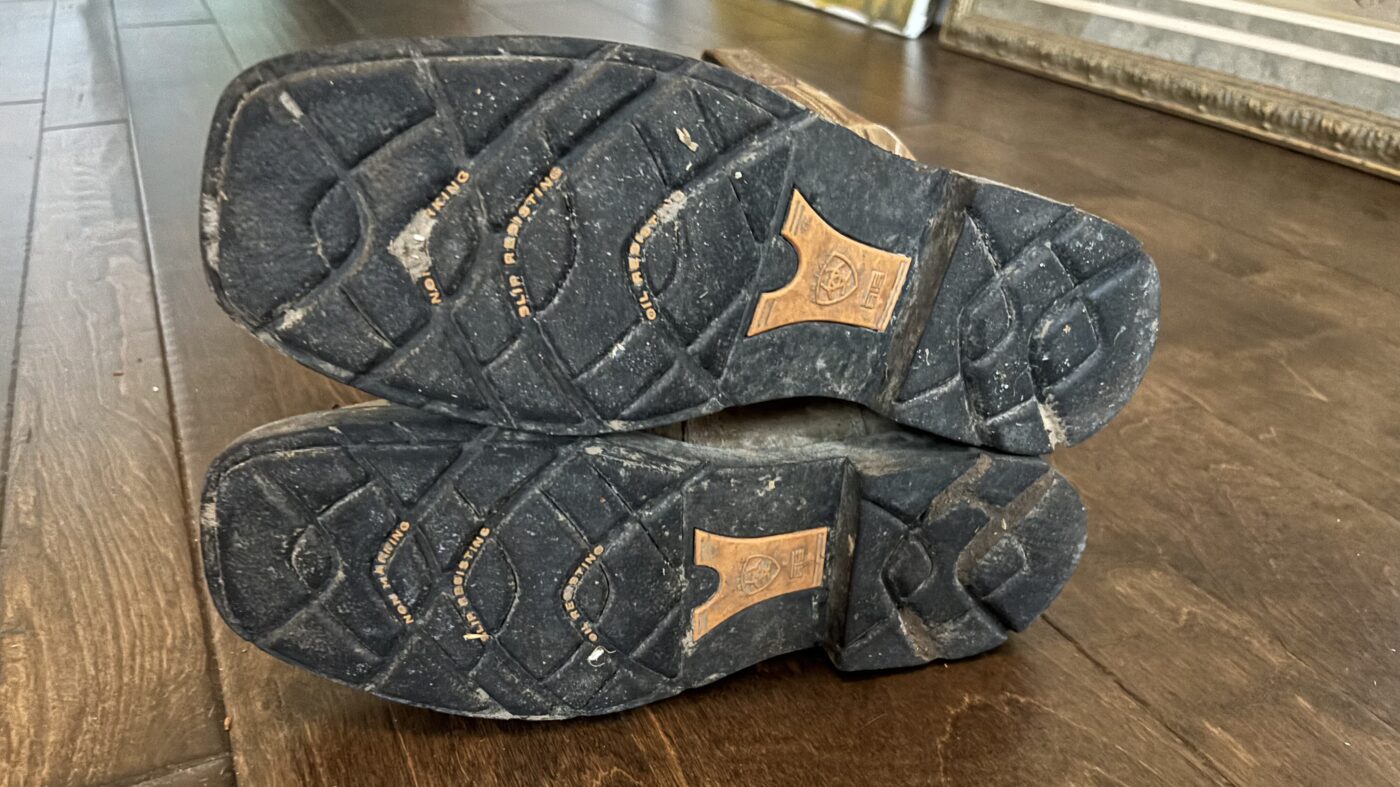
Don’t assume every steel-toe boot in a product family carries exactly the same safety ratings. The current WorkHog steel-toe listing linked above is marked ASTM F2413 M/I/C EH, while current Groundbreaker steel-toe listings include ASTM F2413 I/C EH SR markings. My own Sierra pair is rated ASTM F2413-18, EH rated – Ariat also sells a separate Sierra Puncture Resistant model marked ASTM F2413 M/I/C PR EH, which adds puncture protection underfoot if you’re dealing with nails or fencing wire.
That’s why I’d check the certification info for the exact model and current listing you’re buying, rather than relying on a general statement about the Ariat brand. If you’re buying boots for a job with a specific written safety standard, match the boot’s actual current rating to that requirement before you order.
If you want a closer look at the Sierra’s fit, shape, and western profile, this video review may help.

FAQ
Ariat WorkHog vs Groundbreaker: which is better?
The WorkHog is the better choice if comfort is your top priority, especially for long days on your feet or hard surfaces – it’s the one I’ve worn for years. The Groundbreaker is the pick most owners reach for when durability at a lower price matters more than cushioning, though I haven’t tested one myself, so that recommendation is research-based rather than firsthand.
Are Ariat WorkHog and Sierra steel-toe boots good for barn work?
Yes, in my experience. I wore the WorkHog for years around the barn and now use the Sierra as my main boot for heavy farm work – mucking stalls, fence repair, hauling feed, and muddy paddocks. Still, check the exact style’s safety label, outsole, and waterproof rating before ordering, since features vary by model.
Should I buy steel-toe or composite-toe cowboy work boots?
Steel toe is a solid choice when your job requires that protection or you regularly work around falling or heavy objects. Composite toe can be lighter and may suit some work environments better. The right choice depends on your employer’s requirements, your climate, and how much weight you want on your feet all day. I break this down further in my guide to steel toe vs. composite toe cowboy work boots.
If you’re still deciding between steel and composite toe protection, or want the full picture on why steel toe boots are worth wearing in the first place, those are good places to start. And if Ariat isn’t giving you the fit you need, my guide to the most comfortable square-toe cowboy boots covers other brands worth trying.
About Miles Henry
Racehorse Owner & Author | 30+ Years in Thoroughbred Racing
Miles Henry (legal name: William Bradley) is a professional horseman based in Folsom, Louisiana. He holds Louisiana Racing License #67012 and has spent over three decades managing Thoroughbreds at premier tracks including Fair Grounds, Delta Downs, and Evangeline Downs.
Expertise & Hands-On Experience: Beyond the track, Miles has decades of experience in specialized equine care, covering everything from hoof health and nutrition to training protocols for Quarter Horses, Friesians, and Paints. Every guide on Horse Racing Sense is rooted in this “boots-on-the-ground” perspective.
30 of their last 90 starts
Equibase Profile.

Connect with Miles: