

Last updated: November 6, 2026
Any links on this page that lead to products on Amazon are affiliate links and I earn a commission if you make a purchase. Thanks in advance – I really appreciate it!
If your boots feel fine in the store but pinch across the ball of your foot by lunchtime, you know how frustrating finding cowboy boots for wide feet can be.
Here’s how widths and toe shapes affect fit, which boots I’d try first, and what to check when you try them on.
Table of Contents

Boot Widths: D vs. EE
D is the standard width for men’s boots, and E, EE, and EEE are progressively wider on Justin’s width chart. Many men with wide feet find EE a good place to start, and Tecovas says its EE is about half an inch wider than its D. Not every brand makes an E or an EEE, so check the size guide for the boot you want.
To find your width, measure both feet across the widest part of the forefoot and compare the numbers to the maker’s size guide. Width ranges change with foot length, so the width measurement alone won’t tell you whether you need a D or an EE. If you fall between the two, Tecovas suggests going with the EE. If you’re not sure, have a boot store measure you.
Width and fit aren’t the same thing, either. If a boot is tight across the top of your foot rather than squeezing the sides, the problem may be a high instep, not a wide foot, and an EE won’t necessarily fix it.
Women’s boots often use B as the standard width, so don’t compare a women’s B to a men’s D.
The Best Toe Shapes for Wide Feet
Width isn’t the whole story. Toe shape changes how much room your toes get in front, and a wide toe box isn’t the same as a wide boot. Justin and Tecovas both suggest a square toe if an EE still feels snug, and a round toe can work, too. A narrow or pointed toe usually leaves the least room up front. Don’t buy a D-width boot just because the toe looks broad, though. It still has to fit across the ball of your foot. These comfortable square toe cowboy boots are a good place to compare styles.

Best Cowboy Boots for Men With Wide Feet
I picked these because they come in a wide width and have a roomy toe. I own the Chisos, Tecovas, and Ariats, and the Justin pick is based on its listed specs. Fit still varies from foot to foot, so try them on indoors before you wear them outside, in case you need to return them.
Chisos No. 2
Chisos calls the No. 2 its best option for wide feet, because it has the most toe space of any boot it makes, according to its help center. It has a square toe, comes in D and EE, and costs $595 at Chisos. That’s a lot of money for a boot, but it’s built to be resoled.


Tecovas The Doc
The Doc has a broad square toe, a calf-high shaft, a 1.5-inch heel, and a leather sole, and it comes in regular and wide widths for $375, according to Zappos. Tecovas says its square toes give very wide feet even more room than the EE alone. Check the model and size you want for current availability. Tecovas offers free returns and exchanges, which matters when you’re ordering a width you’ve never worn.

Ariat Groundbreaker Wide Square Toe
The Groundbreaker is the lower-priced work boot in this group, not a dress or town boot. The wide square toe version comes in D and EE, has a soft toe, an All Day Cushioning insole, and an oil- and slip-resistant outsole, and lists for $164.99. This version isn’t waterproof. If you need one that is, Ariat’s WorkHog wide square toe comes in D and EE with a waterproof build.

Justin Canter Wide Square Toe
The Canter is an 11-inch western boot with a wide square toe, a block heel, a removable orthotic insole, and an oil- and slip-resisting outsole. It comes in D and EE for $169.99. The removable insole is handy if you wear your own orthotics.

How to Get the Right Fit
Don’t size up just to get more width. A longer boot can put the ball of your foot in the wrong spot and add heel slip. Get the width and the length right together.
Snug, not squeezed. A new boot should feel snug across the instep and ball of the foot without pinching, with room in the toe box to move your toes.
A little heel slip is normal. A quarter to half an inch of heel slip is normal in new boots, according to Justin Boots, and it settles down as the sole flexes. It should be a slight lift, not a heel that feels loose or unsteady. This look at whether cowboy boots should slip at the heel explains what’s normal.
Try them on in your boot socks. A thick boot sock takes up room, so wear the socks you’ll actually wear. Keep new boots indoors until you’re sure, so you can still return them. If they’re hard to get on, how hard cowboy boots should be to put on explains what’s normal.
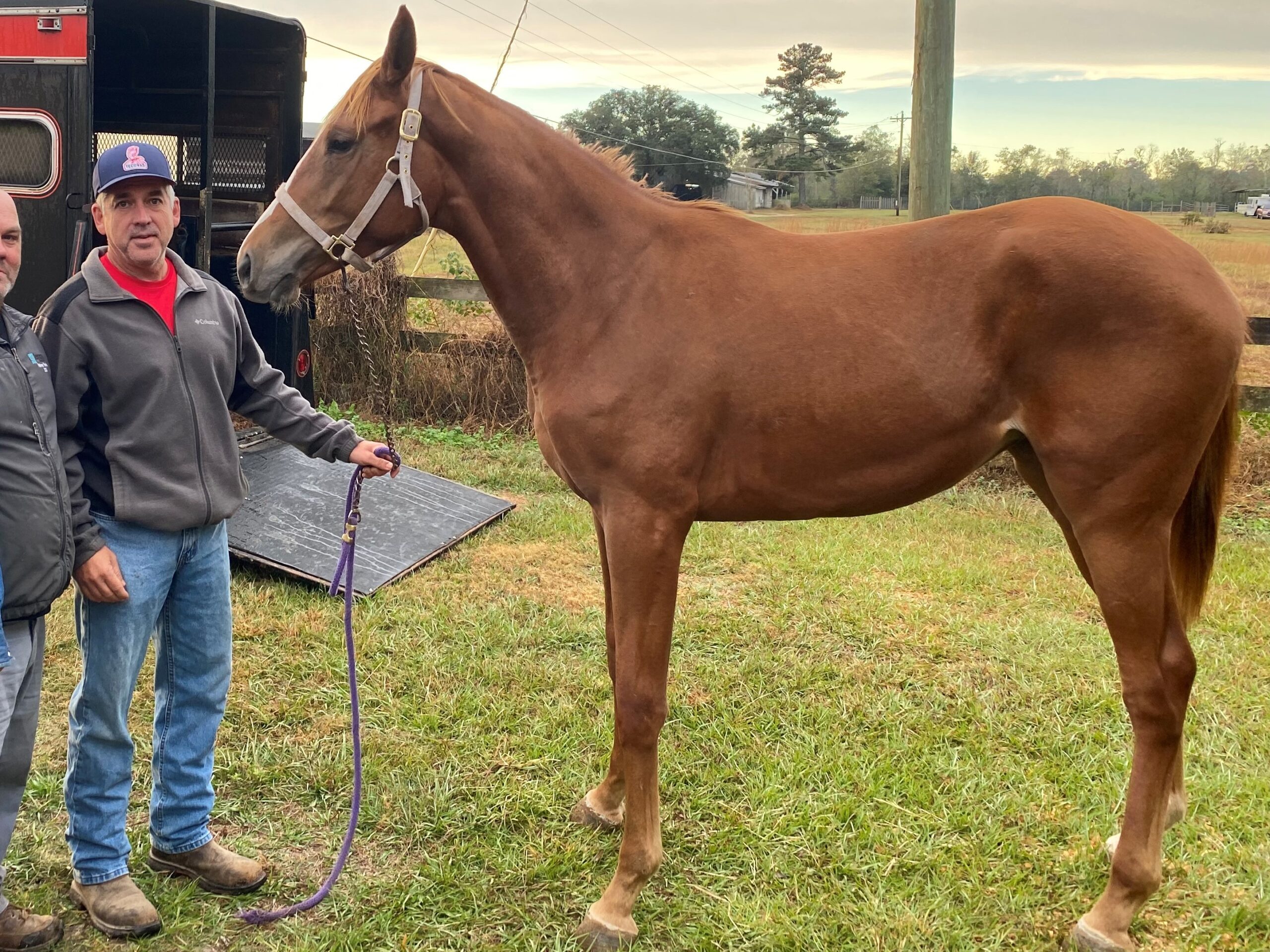
About Miles Henry
Racehorse Owner & Author | 30+ Years in Thoroughbred Racing
Miles Henry (legal name: William Bradley) is a professional horseman based in Folsom, Louisiana. He holds Louisiana Racing License #67012 and has spent over three decades managing Thoroughbreds at premier tracks including Fair Grounds, Delta Downs, and Evangeline Downs.
Expertise & Hands-On Experience: Beyond the track, Miles has decades of experience in specialized equine care, covering everything from hoof health and nutrition to training protocols for Quarter Horses, Friesians, and Paints. Every guide on Horse Racing Sense is rooted in this “boots-on-the-ground” perspective.
30 of their last 90 starts
Equibase Profile.

Connect with Miles: