
Last updated: September 6, 2026
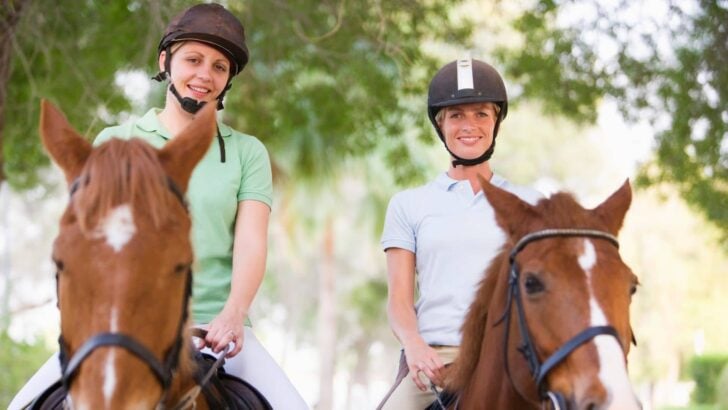
When the first McDonald’s opened in our small community, we talked about riding our horses over for the occasion. The route crossed into the city limits, so before we saddled up, I checked whether horseback riding was actually allowed there.
You may be able to ride a horse on city streets, but the answer depends on your state law and, more importantly, your local ordinances. Some cities permit horses on certain roads or bridle paths; others restrict them on busy streets, in parks, or throughout the city limits. Before you ride, check the municipal code or call the city, then decide whether your horse, route, traffic, and weather actually make the trip a good idea.
Below is how to check the rule where you live, what restrictions to look for, and the practical preparation a horse needs before you take it into traffic and city noise.
How to Find Out if You Can Ride in Your City
Don’t assume that a quiet town, a country road, or a horse-friendly state automatically allows riding inside city limits. The rule may come from a city ordinance, a county rule, a park regulation, a state traffic law, or a restriction posted right on the road itself.
- Search the city’s municipal code. Try the city name plus “horse,” “equestrian,” “livestock,” “animals,” “bridle path,” and “traffic.”
- Check the specific route. A city may allow horses generally but prohibit them on designated high-volume streets, controlled-access roads, medians, sidewalks, or park roads.
- Call the right office if the code is unclear. Start with the city clerk, police non-emergency line, animal control, parks department, or public works department. Ask about your exact streets, not simply whether horses are legal in the city.
- Ask about practical requirements. Find out whether you need a horse license, proof of vaccination, manure cleanup equipment, reflective gear, a permit, or a particular route.
- Get the answer in writing when possible. An email response or the actual ordinance section gives you something more reliable than a verbal “I think it’s okay.”
City horse-riding rules change, and they can vary by street, park, or type of roadway. This article is general information, not legal advice – verify the current rule with your own city before you ride.

Why City Rules Differ So Much
One city may allow horses on ordinary roads but keep them off major traffic corridors. Another may limit riding to marked bridle paths or require a local horse license. Parks often have their own separate set of rules from city streets entirely. That’s why the right question isn’t whether horses are “legal in cities” generally, but whether they’re permitted on the exact route you plan to ride.
New York City is a good example of how much this can shift over time. Horseback riding largely disappeared from Central Park after its longtime stable, Claremont Riding Academy, closed in 2007 – for nearly two decades, there was essentially no way to ride there. That changed again in early 2026, when a new outfitter partnered with a local saddlery to relaunch guided rides along the park’s historic Bridle Path, run as private, appointment-only outings rather than a casual walk-up rental. It’s a real illustration of why “can you ride here” isn’t a fixed answer – it’s worth checking current availability directly rather than relying on what used to be true, or even what’s true today, a year from now.
Elsewhere, informal city riding happens in plenty of places without a formal tour operator involved – a Chicago rider became locally known a few years back for riding his own horse through the city streets, and in a Dallas suburb, a longtime local rider took his horse through a Taco Bell drive-thru regularly for over a decade before finally being cited under a high-volume-roadway rule as the area’s traffic grew. Neither story tells you what’s legal in your city – they just show how differently this plays out depending on where you are and how the rules get enforced.

Is Your Horse Ready for City Traffic?
City riding isn’t the place to find out whether a horse can handle traffic. Before taking one into town, I want that horse comfortable leaving the barn, standing quietly when asked, and recovering from ordinary surprises without trying to spin, bolt, or crowd the rider.
Start with controlled exposure close to home: vehicles passing at a safe distance, bicycles, barking dogs, trash cans, road paint, and people walking near the shoulder. A horse can be perfectly sensible in an arena and still get overwhelmed by diesel noise, air brakes, a siren, loose plastic blowing across the road, or a car coming up fast from behind. Motorcycles in particular seem to trigger a different reaction than cars – the pitch of the engine catches horses off guard even when they’ve handled regular traffic fine. Construction noise and children suddenly running toward the horse are two more things I specifically want a horse to have seen before, not experience for the first time downtown.
Watch the whole horse, not just its attitude at the walk. A raised head and pricked ears may simply mean he’s alert. But if the horse gets tight through the back, stops listening to your aids, wants to rush, or becomes hard to steer, turn around before he gets in over his head. There’s no prize for forcing a green or worried horse through a bad situation.
Miles’s Take: Personally, I’d rather have a horse that’s bored by traffic than one that’s curious about everything. A city ride isn’t where I test a horse’s bravery – it’s where I confirm the training I already built at home.

Wear Gear Drivers Can See
Make yourself easy for drivers to see. Wear high-visibility or reflective clothing, and add reflective material to tack or leg protection when you’ll be near traffic. A properly fitted riding helmet and boots with a heel are sensible protection for any road ride.
Think about the horse’s feet before you leave the driveway. Pavement can be abrasive, slick when wet, and hard on a horse that isn’t conditioned for it. Some horses travel well barefoot over short stretches; others need shoes, boots, or a different route entirely. Match the footing, distance, weather, and your own horse’s hoof quality to the plan, rather than assuming one setup suits every horse – see my guide on riding a barefoot horse on the road if that’s a live question for yours.
Carry Basic Essentials
A small saddlebag keeps essentials on the horse instead of stuffed in your pockets. The first thing I want on any town ride is my phone somewhere I can reach it without digging through a bag – not buried at the bottom. At minimum, carry a charged phone, identification, water, and a hoof pick. A hoof pick sounds unnecessary until your horse picks up a stone or pulls a shoe two miles from home. If you’re riding somewhere a delay is realistic, add a basic first-aid item or two and the number for someone with a trailer. Some riders also carry a small knife or multi-tool for an equipment emergency – if you do, keep it secured somewhere you can reach it safely, not loose in a bag.
Plan a Route You Can Safely Leave
Know your route before you go: how many intersections you’ll cross, what traffic is typically like, and whether you’ll pass anywhere with heavy foot traffic, like a school. Time your ride so you’re not still out after dark – riding a horse on city streets at night is a bad idea no matter how well you know the area.
If a route leaves you with no shoulder, blind curves, fast traffic, or nowhere to step off the road if you need to, choose another route. A road can be perfectly legal and still be a poor place to ride.
Ride With a Capable Buddy When the Route Is New
If you already know a route well, riding it alone is fine. If it’s new to you, bring someone along – an extra set of hands is invaluable if something goes wrong or your horse needs to be held while you sort out a problem. Just remember to follow the actual road rules together, which in some places means riding single file rather than side by side.
Don’t get so absorbed in conversation that you stop paying attention to the city around you. Stay alert to road signs, vehicles, crosswalks, and pedestrians the whole ride.
Assume Drivers Don’t Understand Horses
Don’t assume a driver knows how a horse may react. Use clear hand signals when local law requires or permits them, ride predictably, and give yourself room to move away from a vehicle if you need it. When a car approaches from behind, acknowledge it if you can safely do so, and keep your horse straight rather than letting him drift toward traffic.
This video gives a good visual example of the traffic, noise, and distractions a horse may encounter in town.

Legal and safe aren’t always the same question. A road can check every legal box and still be the wrong place to take a particular horse on a particular day. Confirm the rule, then use your own judgment about the horse, the route, the traffic, and the weather before you actually go.
About Miles Henry
Racehorse Owner & Author | 30+ Years in Thoroughbred Racing
Miles Henry (legal name: William Bradley) is a professional horseman based in Folsom, Louisiana. He holds Louisiana Racing License #67012 and has spent over three decades managing Thoroughbreds at premier tracks including Fair Grounds, Delta Downs, and Evangeline Downs.
Expertise & Hands-On Experience: Beyond the track, Miles has decades of experience in specialized equine care, covering everything from hoof health and nutrition to training protocols for Quarter Horses, Friesians, and Paints. Every guide on Horse Racing Sense is rooted in this “boots-on-the-ground” perspective.
30 of their last 90 starts
Equibase Profile.

Connect with Miles: