
Last updated: July 18, 2026
Any links on this page that lead to products on Amazon are affiliate links and I earn a commission if you make a purchase. Thanks in advance – I really appreciate it!
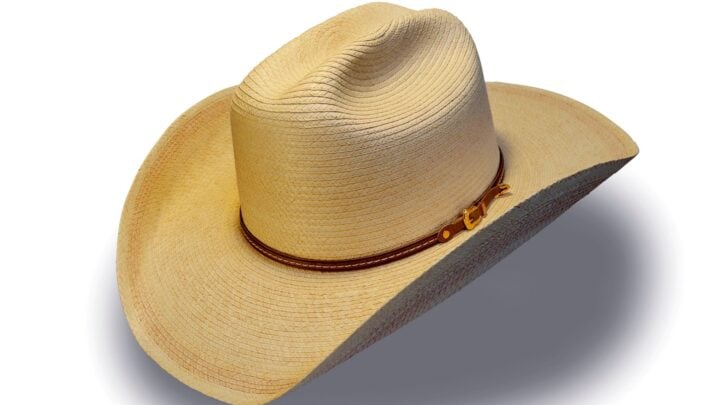
How much is a real cowboy hat, and how do you tell one from a costume-shop knockoff? It comes down to the material and how it’s built — straw vs felt, cheap vs expensive, and which one actually makes sense for how you ride, work, and spend your money.
After 30+ years around barns, ranch work, trail rides, and arena events, I’ve worn both in real conditions — heat, wind, dust, rain, and long days in the saddle. The difference isn’t just style. It’s breathability, durability, cost per year, and how the hat performs when you actually need it.
In this guide, we’ll break down the performance of straw vs felt, cheap vs expensive quality differences, sizing, seasonal use, and which material fits ranch work, trail riding, rodeo, and casual wear.
How much is a real cowboy hat? A genuine cowboy hat built for actual riding runs $75–$160 for quality straw or wool felt — that’s the working sweet spot, not the cheapest option or the most expensive. Entry-level hats start around $25–$65 but won’t hold up past a season or two. Premium fur felt (4X–6X) runs $160–$350 and can last a decade or more. Straw tends to cost less upfront but wears out faster; felt costs more upfront but often works out cheaper per year of use.
What Counts as a “Real” Cowboy Hat?
A real cowboy hat isn’t defined by price alone — it’s defined by what it’s built for: a shaped crown, a brim that holds its form under real use, and materials matched to the job. That’s also why a quality straw hat can cost more than people expect: hand-shaping, tighter weaves like shantung or palm leaf, and reinforced brims all add real labor and material cost that a cheap costume-shop straw hat skips entirely. (For the full breakdown of what separates a working hat from a fashion one, see the FAQ below.)
Quick Picks: The Big Three
My top recommendations for overall durability, summer heat, and winter warmth.


Three rules that will save you money and frustration:
- Hot climate / summer: Focus on quality palm leaf straw ($60–$100). The American Hat Makers Bozeman is a perfect entry point.
- Cool climate / winter: Transition to wool felt ($100–$150). Look at the Resistol Pageant or Stetson Alamo.
- Measure your head first: Use a soft tape just above the ears. A wrong size results in a hat that won’t stay on during a lope.
Which Hat Is Right for Your Discipline?
Before spending a dollar, match your hat to how you ride. The instinct to go wide-brim for maximum sun protection backfires fast once you’re at a canter into a Gulf Coast headwind.
| Discipline | Brim Width | Crown Height | Material | Price | Miles’ Take |
|---|---|---|---|---|---|
| Ranch Work | 4″+ Wide | Cattleman (4–4.5″) | Felt | $$$ | Dust-proof, wind-secure. Don’t cheap out — it’s on your head 10 hours a day. |
| Trail Riding | Medium (3–3.5″) | Low–Medium (3–3.5″) | Straw | $$ | Breathable for long hours. Straw snags in brush — bring a backup on multi-day trips. |
| Rodeo / Arena | Curled / Rolled (3″) | High (5″+) | Felt | $$$ | Shape holds in wind. Tall crown gets heavy with sweat — look for a wicking band. |
| Barrel Racing | Narrow (2.5–3″) | Medium | Felt or Straw | $$ | Narrower brim cuts wind. A chin strap is mandatory. I’ve watched $200 hats disappear into arena dirt. |
| Casual / Pleasure | Narrow (2.5–3″) | Standard (3.5″) | Straw or Felt | $ | Prioritize style over durability here — just don’t get caught in rain with a cheap straw. |
Straw vs Felt vs Beaver: At-a-Glance Performance
Here’s how the three main hat materials actually perform on the metrics that matter for riding and ranch work. I’ve built these ratings from personal use — not spec sheets.
Breathability (Cooling Performance)
Durability (Expected Lifespan)
Weather & Water Resistance
| Feature | Straw Hats | Felt (Wool) | Beaver Felt | Winner | Why It Matters |
|---|---|---|---|---|---|
| Material | Woven plant fibers | Compressed wool | Beaver fur blend | Beaver (Premium) | Fiber density drives durability and water resistance. |
| Breathability | High (9/10) | Medium (5/10) | Low-Medium (3/10) | Straw | Poor airflow is a safety issue on 90°F+ barn days. |
| Durability | 1–3 seasons | 3–5 years | 5–10+ years | Beaver Felt | A $180 beaver hat at 10 yrs is cheaper than replacing straws annually. |
| Weather | Minimal | Repels light moisture | Strong — beads and sheds rain | Beaver Felt | Beaver beads water; many inexpensive straw hats permanently lose their shape after a heavy soaking. |
| Shape | Fair – deforms | Good – holds crease | Excellent memory | Beaver Felt | A drooping brim reduces sun coverage and looks unprofessional. |
| Price Range | $20–$200 | $40–$250 | $150–$2,000+ | Straw (Value) | Calculate lifespan-adjusted cost, not just purchase price. |
| Best Season | Late Spring–Fall | Fall–Spring | Fall–Spring | Seasonal | In Louisiana: Straw May 1st, Felt Oct 1st. Match material to climate. |
Three Hard Lessons from the Barn
Charts and tables tell you what a material should do. These are the three times mine didn’t.
Wide-open levee trail ride, steady Gulf south wind, brand new 4.5″ brim felt hat. First canter into the headwind — the hat went straight off. Chin cord wasn’t tight enough. Spent twenty minutes retrieving it from a muddy ditch.
- Over 4″ brim in open terrain = wind sail without a proper chin cord.
- Match brim to terrain: 3–3.5″ for fast/open riding; 4–4.5″ for slow ground work.
- Always check the cord is snug before mounting — not decorative-loose.
- Same physics that make chaps snag brush make a wide brim catch wind.
95°F Louisiana heat, full morning of barn work, new wool felt hat I was breaking in. By noon I was soaked — and so was the hat. Wool retained every bit of heat. Like wearing a warm compress on my skull. Switched to my palm leaf straw: air moved through the weave and I could actually function.
- Felt is a winter material — wearing it in August is just being stubborn.
- For long hours in 90°F+ heat, I strongly prefer palm leaf straw because the increased airflow keeps me noticeably cooler than felt.
- A $60–$80 quality straw keeps you functional when felt would cook you.
- Traditional switch: Straw Memorial Day to Labor Day; Felt after the first cool snap.
North Louisiana outdoor rodeo, afternoon thunderstorm blew in fast. My $35 palm leaf straw was on my head. By the time I got to cover, the brim had drooped like a wet newspaper and never recovered. The treated felt on the rider next to me? Water beaded off. Shape held. He walked back to the arena looking sharp.
- Cheap straw at an outdoor event is a single-storm investment.
- For unpredictable weather: Choose quality felt with a waterproofing treatment.
- Apply waterproofing spray (like Kiwi Camp Dry) at the start of each fall season.
- The $35 gap between cheap straw and treated felt? Think of it as rain insurance.
Top Cowboy Hats Reviewed: All Six at a Glance
Here are the six hats I’d actually recommend to a rider at my barn — a quick-scan grid first, then full deep-dives below for the top three.
Best for Heat
Stetson Square Eyelets
$95–$130
4″ Brim · Shantung Straw · Vented Square Eyelets · Premium Sweatband
Amazon →
 Best Overall
AHM Bozeman Straw
$75–$100
Stiff Bangora Straw · 4″ Brim · Highly Water Resistant · Lifetime Guarantee
Amazon →
Best Performance
Resistol Cody Johnson 9th Round
$280–$315
6X Fur Felt · 4 1/4″ Brim · 4 5/8″ Crown · Exceptional Water Resistance
Amazon →
Best Overall
AHM Bozeman Straw
$75–$100
Stiff Bangora Straw · 4″ Brim · Highly Water Resistant · Lifetime Guarantee
Amazon →
Best Performance
Resistol Cody Johnson 9th Round
$280–$315
6X Fur Felt · 4 1/4″ Brim · 4 5/8″ Crown · Exceptional Water Resistance
Amazon →
 Best Felt
Resistol 6X Uvalde
$280–$325
6X Fur Felt · 4.25″ Brim · Classic Cattleman Crown · High-End Performance
Amazon →
Best Felt
Resistol 6X Uvalde
$280–$325
6X Fur Felt · 4.25″ Brim · Classic Cattleman Crown · High-End Performance
Amazon →
 Best Budget
Queue Essentials Straw
$25–$45
100% Straw · 4″ Brim · Adjustable Internal Band · 1–2 Season Use
Amazon →
Best Budget
Queue Essentials Straw
$25–$45
100% Straw · 4″ Brim · Adjustable Internal Band · 1–2 Season Use
Amazon →
 Wind Security
Western Express Straw
$45–$75
Pinch Front · 4.25″ Crown · Included Chin Strap · Durable Form
Amazon →
Wind Security
Western Express Straw
$45–$75
Pinch Front · 4.25″ Crown · Included Chin Strap · Durable Form
Amazon →
Deep Dive: Top 3 Picks
Of those six, three earn a closer look — one for each of the situations most riders actually face: beating the heat, everyday ranch durability, and cold-weather performance.
Stetson Square Eyelets — Top 3 Straw Pick
Context: The Stetson Square Eyelet model (SSSQRE) is a standout for anyone riding in high-humidity zones. While solid weave hats trap heat at the crown, the square eyelet vents on this model create a chimney effect, allowing heat to escape even when there is no breeze.
Real-world performance: This is my go-to for heavy arena work or summer clinics. Shantung straw is deceptively tough—it handles the moisture from sweat much better than cheaper paper-straw alternatives. The eyelets are reinforced, so they don’t compromise the structural integrity of the crown even after a season of hard use.
Durability: Because it’s a Stetson, the lacquering is superior. It resists yellowing and stays stiff longer than budget brands. If you store it crown-down in a cool place, you’ll easily get three full seasons out of this hat before the edges start to show wear.
2. American Hat Makers Bozeman Straw — Best Overall
The Cattleman crown — most versatile for ranch work and riding. Three creases on top, 4–4.5″ height.
Context: Ranch work essential. If you’re on your feet and on horseback in dusty, windy conditions and you need a hat that doesn’t require babying, this is the one. While most straw hats are fragile, the Bozeman is built from a midweight, stiff Bangora straw that actually holds up to real work.
Real-world performance: I’ve put mine through hundreds of barn days. The “stiff” construction isn’t just marketing; it keeps the brim from sagging after a long day of sweat or a surprise afternoon shower. It comes with an elastic sweatband that makes the fit more secure than traditional leather bands when you’re moving fast.
Durability: American Hat Makers stands behind their work with a lifetime guarantee, which is rare for straw. It handles water better than Shantung and doesn’t get that “limp newspaper” feel after it gets wet. It’s a hat that actually improves as the internal band conforms to your head.
For a full breakdown of the AHM lineup, see our American Hat Makers review.
3. Resistol 6X Uvalde — Best Fur Felt Pick
Context: When the temperature drops and the humidity turns into a bone-chilling dampness, this is the hat I reach for. The “6X” is a quality-tier marketing term rather than a standardized measurement — no industry-wide standard exists, and hatmakers vary in how they apply it, but within the Resistol line, higher X numbers do track with more fur content and a finer felt. The Uvalde is the gold standard for a daily driver that looks good enough for a show but works hard enough for the barn.
Real-world performance: Fur-felt is naturally water-repellent and holds its shape significantly better than cheaper wool alternatives. If you get caught in a downpour, you can simply shake the water off, set it on the crown to dry, and it won’t lose that crisp brim line. It’s also significantly warmer, making it essential for winter trail rides.
Durability: This is a 10-year hat if you take care of it. Unlike wool, which can become “fuzzy” or limp over time, fur-felt stays dense and smooth. The internal leather sweatband is premium grade, designed to wick moisture away from your forehead while keeping the hat securely seated in a wind.
Cheap vs. Expensive Cowboy Hats: What’s the Difference?
A $25 import straw hat keeps the sun off your face for a summer. That’s its job and it does it adequately. The problems start when you ask more of it — a rainy day, a windy canter, a rodeo where you want to look put-together. And the math almost always favors buying quality once over buying cheap twice.

How Much Is a Real Cowboy Hat, By Price Tier?
| Investment | Materials & Quality | Miles’ Take |
|---|---|---|
| $25 – $65 Entry Level | Canvas / Basic Straw Machine-pressed straw or stiffened canvas. Great for one-off events or light summer wear. |
Disposable gear. Expect the shape to wilt after one humid week or a single rain shower. |
| $75 – $140 Working Class | Bangora / Wool Felt High-tensile straw or mid-grade wool. Often features internal comfort bands. |
The “Sweet Spot.” This is where you find the AHM Bozeman or Stetson Alamo. Real durability for daily barn work. |
| $160 – $350 Performance | 4X – 6X Fur Felt Beaver or Rabbit fur blends. Exceptional water resistance and shape memory. |
Professional grade. If you ride in the winter or rain, this is the minimum investment for a hat that lasts a decade. |
| $500+ Heritage | 20X – 100X Pure Beaver Ultra-dense, silk-like finish. Custom-shaped by master hatters. |
Heirloom quality. You’re paying for the hand-feel and the prestige. Beautiful, but overkill for mucking stalls. |
The math example I give riders at my barn: a $180 beaver felt hat at 10 years = $18/year. A $45 straw at 18 months = $30/year. The premium hat isn’t just better-feeling — it’s cheaper per year once you do the arithmetic. For more on why top-tier construction matters, see our American Hat Makers review where the material differences are visible and measurable.
The biggest buying mistake I see: new riders focus on brand names instead of materials and construction. I’d rather own a well-made $120 straw hat from a respected western maker than a $60 hat with a famous logo built from inferior materials. The name stitched inside the sweatband doesn’t determine how long a hat lasts — the material and construction do.
Crown Shapes & Brim Widths: What Actually Matters for Riding
Price and material get you in the right ballpark. Shape is what determines whether the hat actually works for what you’re doing in the saddle.
| Crown Style | Height | Best For | Wind Behavior | Miles’ Verdict |
|---|---|---|---|---|
| Cattleman | 4–4.5″ | Ranch work, rodeo, everyday riding | Good — three creases add rigidity | The workhorse shape. Aerodynamics are predictable; crease gives the hat rigidity in wind. My default recommendation. |
| Open Road | 3–3.5″ | Trail riding, long-hour comfort | Better — lower profile = less wind catch | Comfortable for extended saddle time. More modern look. My choice for trail rides where I want the hat to stay put. |
| Gus | 5–5.5″ | Events, arena appearances | Poor — tall crown is a wind scoop | Beautiful. Dramatic. I wear mine to events, not work. The silhouette commands attention but acts like a parachute in a headwind. |
| Gambler | 2.5–3″ | Casual / Western fashion | Average | Stylistic, not functional for riding. Popular in modern Western fashion. Not a working hat. |
Brim width rule of thumb: 3–3.5″ for barrel racing and fast riding; 3.5–4″ for trail and general barn work; 4–4.5″ for slow ranch ground work and arena events. Whatever width you choose — use a chin cord on anything over 3.5″ when you’re in the saddle.
Modern Materials: What’s Actually Changed
Shape and sizing haven’t changed much in decades. What’s inside the hat has — and it’s worth knowing before you assume “straw” or “felt” tells you everything.
In the early 1990s, your options were basic wool felt or basic straw. The materials side has gotten genuinely more sophisticated — and the improvements are real, not just marketing.
| Technology | How It Works | Benefit | Example / Maintenance |
|---|---|---|---|
| Hydrophobic Coating | Fluoropolymer surface treatment on felt fibers. | Water beads and sheets off instead of soaking in, a real step up from untreated wool. | Stetson Seneca; reapply with Kiwi Camp Dry annually. |
| Shape Memory Blends | Synthetic memory fibers (5–15%) blended with wool. | Beaver-like shape retention at mid-range prices; holds crease through sweat. | Resistol Pageant — professional look on a working budget. |
| Engineered Weaves | Polypropylene or Shantung blends vs. natural palm. | Significantly lighter (3oz vs 6oz); massive increase in airflow. | Stetson Square Eyelets; best for stagnant 90°F+ humidity. |
| Self-Conforming Bands | Heat-activated internal bands mold to skull shape. | Custom-fit feel after 5 wears; prevents “wind-gap” between hat and head. | Resistol Pageant, George Strait Collection. |
Getting the self-conforming fit right still starts with accurate head measurement. The same precision that matters for fitting riding boots applies to hats — get the measurement right before you buy, and the technology does the rest.
Complete your rig A cowboy hat works as part of a system. For serious riding, pair it with proper riding boots (heel height and last shape affect balance in the stirrup) and riding-specific jeans that won’t bind in the saddle. The hat you choose should complement your overall kit — not just look good in a photo.
Working ranch setup If you’re buying this hat for real cattle work, you’re probably also thinking about chaps — same durability-first logic applies. Quality protection gear for the barn and trail pays for itself in longevity and in not replacing worn-out kit after one hard season. And if you’re pairing spurs with your boots, our guide on spur hardware covers fit, placement, and use tips from the same barn-floor perspective.

Sizing, Fit, and Maintenance
How to Size a Cowboy Hat
Soft tape measure, just above the ears, across the forehead above the brow, around the occipital bump at the back of your skull. Measure twice, use the larger number. Divide circumference (inches) by 3.14159 to get hat size in inches. Match to the brand’s chart — and when between sizes, go up for both felt and straw. For a comprehensive look at the measurement principles that apply across Western gear, see our sizing and fit guide.
Felt Hat Care (Quick Reference)
| Task | How to do it | Frequency |
|---|---|---|
| Dust removal | Soft-bristle brush, counter-clockwise circular motion. | After every barn day |
| Sweat stains | Barely damp cloth + mild soap on internal band only. | As needed |
| After rain | Air dry at room temp — NO heat sources; reshape by hand while damp. | After any soaking |
| Waterproofing | Kiwi Camp Dry or dedicated hat spray (felt only). | Start of each fall season |
| Storage | Crown-up on hat stand or crown-down on clean surface. Never brim-down. | Every time |
| Serious reshaping | Professional hatter — steaming service ($20–$50). | When badly deformed |
Straw hat care in brief: Wipe with barely damp cloth; reshape while damp if wet; air dry away from heat; store in a cool dry place (never a hot car trunk — heat cracks straw fibers). A good straw hat that gets lightly rained on will survive if you reshape and dry it promptly. A cheap one will not, regardless of how carefully you treat it.
Miles Henry’s Western Gear Hub
More gear guidance from 30+ years in the barn:
- Hat Deep Dives Our American Hat Makers Felt & Straw Review gives a detailed look at my personal favorite brand. For seasonal decisions, see our guide on when to wear felt cowboy hats.
- Boots & Sizing The right hat starts with knowing your gear. Our best cowboy boots for horse riding guide covers heel height and last shape. For precise measurements, see our sizing and fit guide.
- Apparel & Protection Build out the full riding wardrobe with our riding jeans review and our guide to why cowboys wear chaps.
- Hardware & Tradition For riders adding spurs, our spur guide covers placement. Also, learn why cowboys wear snap shirts.

Frequently Asked Questions About Cowboy Hats
Is straw better than felt for summer riding?
Yes — for hot-weather riding and barn work, straw wins decisively. Straw’s woven construction allows air to circulate through the hat, which dramatically reduces heat buildup compared to dense felt. At 85°F+ with humidity, a quality straw hat keeps your head meaningfully cooler than wool felt. My rule: straw from Memorial Day through Labor Day in Southern climates, felt after the first cool snap. In cooler climates that window shifts, but the principle holds — felt retains heat, straw releases it.
When should you wear a felt cowboy hat?
Fall through spring — roughly October through April in most US regions, year-round in cooler and drier climates. Felt’s dense fiber construction retains body heat and repels light moisture, making it right for cold barn mornings, winter trail rides, and arena events where weather is a factor. Felt is also the traditional choice for formal Western occasions — rodeos, shows, dances — because it holds its shape and crease in a way straw cannot. See our full seasonal guide on when to wear felt cowboy hats.
Cheap vs. expensive hats — is the quality worth it?
Almost always yes, once you run the cost-per-year math. A $45 straw at 18 months equals $30 per year. A $180 beaver felt at 10 years equals $18 per year. The premium hat isn’t just better-feeling — it’s cheaper over its lifespan. The real sweet spot for most riders is $80–$160 — real materials, real durability, real value. My $300 beaver felt hat outlasted three $50 straws, and it still looks better than any of them did on day one.
How do I size a cowboy hat properly?
Measure the circumference of your head at the widest point — about a half inch above your ears, across your forehead above the brow, and around the occipital bump at the back of your skull. Measure twice; use the larger number. Divide circumference (inches) by 3.14159 for hat size in inches, then match to the brand’s chart. When between sizes, go up — a slightly large hat can be shimmed with foam strips in the sweatband; a too-small hat cannot be easily stretched. Some hats include self-conforming sweatbands that mold slightly over the first few wears.
Can straw hats get wet in rainy conditions?
Cheap straw hats should be kept completely dry — they lose shape rapidly when wet and rarely recover. Quality palm leaf and shantung straws can survive a light drizzle if dried promptly and reshaped while still slightly damp. But no straw hat is reliably rain-resistant. If caught in rain with a straw hat, reshape by hand while still damp, stuff the crown gently with cloth to support its shape, and air dry away from heat.
Best hats for windy or dusty trails?
For wind: keep brim width at 3–3.5 inches for riding at any speed, and use a proper riding chin cord — not decorative hardware. A cattleman-crown felt performs better in wind than a tall Gus crown because the lower profile presents less resistance. For dust: felt beats straw — the dense fiber repels dust better and doesn’t allow particles into the weave. A quality beaver-blend felt with a 3.5–4 inch brim and fitted chin cord is ideal for windy, dusty trail work.
How to clean and maintain cowboy hats?
Felt: brush counter-clockwise with a soft-bristle brush; spot-clean sweat stains with a barely damp cloth and mild soap; never submerge in water; air-dry after rain; apply waterproofing spray at the start of each fall. Store crown-up on a hat stand — never brim-down. Straw: wipe with a barely damp cloth; reshape while damp if wet; store in a cool dry place. For seriously damaged hats, a professional hatter can steam and reshape for $20–$50.
Authentic ranch hats vs. fashion ones — what’s the difference?
Authentic working hats are engineered for function: denser felt or tighter-weave straw, practical 3–4.5 inch brim widths, reinforced crown construction, and sweatbands that absorb a full work day. Fashion Western hats prioritize visual impact — often exaggerated brims, thinner materials, and decorative trim that won’t survive barn conditions. If you’re riding horses or working cattle, choose functional working brands built for real use.
What is the best material for a cowboy hat?
There isn’t one best material for every rider — it depends on your climate and how you use the hat. Straw is best for hot climates and summer riding. Wool felt works fine for casual fall and winter wear on a budget. Fur felt (4X and up) offers the best combination of durability, weather resistance, and long-term value if you’re only buying one hat. If I could own only one hat for year-round use, I’d choose a quality fur felt and add a straw hat later for long Southern summers.
About Miles Henry
Racehorse Owner & Author | 30+ Years in Thoroughbred Racing
Miles Henry (legal name: William Bradley) is a professional horseman based in Folsom, Louisiana. He holds Louisiana Racing License #67012 and has spent over three decades managing Thoroughbreds at premier tracks including Fair Grounds, Delta Downs, and Evangeline Downs.
Expertise & Hands-On Experience: Beyond the track, Miles has decades of experience in specialized equine care, covering everything from hoof health and nutrition to training protocols for Quarter Horses, Friesians, and Paints. Every guide on Horse Racing Sense is rooted in this “boots-on-the-ground” perspective.
30 of their last 90 starts
Equibase Profile.

Connect with Miles: