
Last updated: October 1, 2026
Any links on this page that lead to products on Amazon are affiliate links and I earn a commission if you make a purchase. Thanks in advance – I really appreciate it!
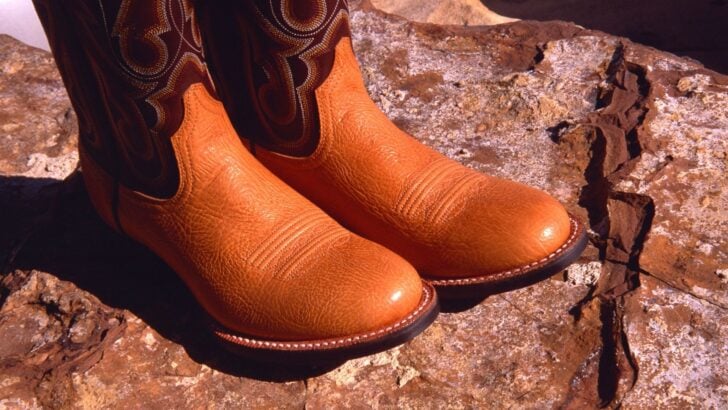
When I first pulled on my Ariat Amos boots, they felt stiff, and my heel lifted a little with each step. That’s when you start wondering whether a new pair just needs more time to stretch or whether you bought the wrong size. That’s worth figuring out while the boots are still clean enough to take back.
Here’s how to tell what will ease up and what won’t, how long break-in takes, how much heel slip is normal, and when it’s smarter to exchange a pair than try to stretch it.
Table of Contents
What Stretches in a Cowboy Boot and What Doesn’t
A new pair of boots changes more from wearing them than from anything you can do to them. Your body heat, your stride, and the pressure points of your foot slowly shape the leather and the footbed. Walking barn aisles and stepping into a stirrup flex the vamp over and over, and boots that get used like that come around a lot faster than boots that sit in the closet.
That change doesn’t happen evenly, though. Some parts of a boot are made to give, and others are stiffened on purpose so they keep their shape. Knowing the difference helps you decide whether a tight pair will break in or needs to go back.
| Boot area | What changes with wear | What to expect |
|---|---|---|
| Vamp (ball of the foot) | Usually gives the most | The leather eases across the widest part of your foot. |
| Instep (top of the foot) | May ease some | Should hold your foot firmly. Never numb or sharply painful. |
| Insole and footbed | Molds to your foot | Takes an impression of your foot, which improves the feel more than the size. |
| Length | Doesn’t change | If your toes touch the end now, they’ll touch it later. |
| Heel counter | Doesn’t get bigger | Stiffened to help the boot keep its heel shape. |
| Toe box | Very little | Many boots have a reinforced toe so the shape holds up. |
| Shaft and calf | Very little | A boot shop can stretch a tight shaft. Wear alone rarely will. |
The toe and shaft are where people usually expect too much from a new pair. If your calf is the problem, look at cowboy boots made for big calves and wide feet before you count on a narrow shaft loosening up.

How Much Will Cowboy Boots Stretch?
Nobody can honestly tell you a boot will stretch a set fraction of an inch. Leather varies from hide to hide, construction varies by model, and two pairs of the same boot can break in differently. What you can count on is the direction of the change: a good leather boot eases across the ball of your foot and settles around your instep. It doesn’t turn into a different width or length.
Width sizing puts that in perspective. Tecovas makes its wide EE boots half an inch wider than its standard D width. Break-in won’t turn a D into an EE. It’ll take the edge off a boot that’s a little snug, but it won’t make a narrow boot fit a wide foot.


How Long Does Break-In Take?
There’s no set clock, and how often you wear them matters more than anything. A pair you only pull on for an occasional wedding can stay stiff for a year. The same pair worn most days will usually feel noticeably better within the first couple of weeks and keep settling in for months.
Protect your return window while you find out. Wear them indoors for a few hours at a time at first so the soles stay clean, then work up to full days outside once you’re sure about the fit. It’s the same approach I use to break in cowboy boots for riding and walking.
Cowboy Boots Tight on Top of Your Foot?
Pressure across the top of the foot is a common complaint with new cowboy boots, and some of it’s supposed to be there. With no laces, the instep is what keeps your foot from sliding forward, so it should hold your foot firmly from day one. A firm squeeze you forget about after a few minutes is fine. Pressure that builds the longer you stand isn’t.
If the top of your foot is tight but not painful, start by switching to a thinner boot sock, since thick socks add bulk right where you need room. If the insole is removable, a thinner replacement can drop your foot slightly lower in the boot and free up a little instep room. Try that one cautiously, because lowering your foot can also add heel slip or take away support if the new insole is too thin. Beyond that, a boot stretcher or a boot shop can work the instep gradually.
Some feet just have a higher instep than others, and more leather won’t always solve a shape problem. If you know your foot runs high through the instep, plan on adjusting your size or width rather than counting on break-in. Tecovas, for one, recommends going up a width for men or a half size for women with high insteps.
A Little Heel Slip Is Normal, Too Much Isn’t
A little heel lift in a new pair surprises a lot of first-time buyers, but it’s often normal. As the vamp softens and the footbed molds, your foot settles deeper into the boot and the slip usually shrinks.
Different bootmakers describe normal heel movement differently, but the idea is the same: a little lift is expected in a new pull-on boot. Ariat considers about an eighth of an inch normal in new boots, while Justin puts the normal range at a quarter to a half inch and says no slip at all can mean the boots are too tight. If you’re not sure how much your pair is lifting, here’s how to measure heel slip in cowboy boots.
Can Cowboy Boots Be Stretched? 5 Ways to Help Them Along
Yes, if they’re close to right to begin with. If they were my boots, I’d start with the least aggressive option and work from there.
1. Wear Them and Keep Them Conditioned
Wearing boots is still the safest way to let the leather give gradually, because your foot puts pressure where the boot’s actually tight. Conditioner helps keep leather from drying out and stiffening, and well-kept leather is easier to break in. It won’t widen a boot by itself, though, so don’t keep piling it on expecting more room.
2. Thick Socks for Short Sessions
When a boot is snug all over rather than tight in one spot, a thicker sock can add a little extra pressure during short break-in sessions. Keep those sessions brief so you don’t trade a snug boot for blisters or numbness, then go back to your regular socks for cowboy boots once they loosen.
3. A Boot Stretcher
A stretcher sits inside the boot overnight and slowly widens the vamp. Turn it a little at a time over several nights instead of cranking it all at once. Get one made for cowboy boots, since a regular shoe stretcher won’t fit down the shaft. The Bloodhound below is a wood-and-metal stretcher built for western boots.
Disclosure: the product box below is an affiliate link. If you buy through it, I may earn a small commission at no extra cost to you.
[amazon box=”B07MNTSHHM”]
4. Use Stretch Spray Carefully
For one stubborn pressure point, a leather stretch spray can help. Most rely on alcohol, which helps leather stretch more easily. Spray the tight spot, then wear the boots or put the stretcher in while it’s damp. Test it somewhere hidden first, especially on colored or exotic leather, and condition the area afterward.
5. Take Them to a Boot Shop
For a tight instep, a pressure point you can’t reach, or a shaft that won’t go over your calf, take them to a western boot shop or cobbler. A good shop has stretchers a home kit doesn’t, and they’ll tell you straight if a pair isn’t worth the effort.
Leather Type Changes How Much Give You Get
Two pairs in the same size can feel completely different because of the hide. Cut, tanning, and construction matter too, and some boots only use exotic leather on the vamp, so treat these as tendencies rather than rules.
| Leather | Break-in | What to know |
|---|---|---|
| Cowhide | Moderate | The most common boot leather. Breaks in steadily with regular wear. |
| Ostrich | Often easier | Usually more supple than firm cowhide, though finish and construction still matter. |
| Caiman and alligator | Often slow | Can feel firm when new. Buy them comfortable rather than counting on stretch. |
| Lizard | Usually little give | Less forgiving than cowhide, so the fit needs to be close at the first try-on. |
Synthetic boots are the exception to almost everything in this article, since man-made uppers rarely stretch or mold the way leather does. Hides also differ in how you care for them, and the differences between cowboy boot leather types go well beyond stretch.
Signs Your Boots Won’t Stretch Enough
Leather forgives a snug boot. It doesn’t forgive the wrong size, and that goes double for the firmer exotics. If any of these happen, exchange the boots while they’re still returnable.
- Your toes touch the end or curl when you stand.
- The top of your foot goes numb or tingles after a short time in them.
- The ball of your foot sits ahead of or behind the widest part of the boot.
- Your heel doesn’t lift at all and the back of the boot digs in.
- Your toes are squeezed together from the sides.
- You can’t get your foot past the instep at all, even standing with your weight on it.
Before you order the next pair, check whether cowboy boots run true to size for the brand you’re looking at, and measure your feet with this printable cowboy boot sizing guide.
Cowboy Boot Stretching FAQs
Do cowboy boots stretch in length?
No. Wear softens the leather across the width of your foot, but it won’t move the end of the boot. If your toes are already touching the tip, go up a size rather than waiting for room that won’t come.
Should new cowboy boots feel tight?
They should feel snug, not tight. Expect a firm hold over the instep, a close fit across the ball of your foot, and a little heel lift. You should be able to wiggle your toes, and nothing should pinch or go numb.
Do cowboy boots stretch in the calf?
Not much from regular wear. A shaft may soften over time, but it usually won’t stretch enough to solve a tight-calf fit. If a pair is tight on your calf, a western boot shop can often stretch the shaft, or you can shop for wide-calf styles.
Can a cobbler stretch cowboy boots that are too tight?
Often, yes. A cobbler or western boot shop can stretch a tight spot across the vamp, instep, or shaft. It works best when the boot is only a little tight. It won’t add length or fix a pair that puts your foot in the wrong place.
Should I buy cowboy boots tight so they stretch?
No. Buy them snug, not painful. Your toes shouldn’t touch the end, your foot shouldn’t go numb, and the ball of your foot should line up with the widest part of the boot. Break-in improves a close fit. It doesn’t correct the wrong size.
Buy cowboy boots close to right, wear them often, and give the leather time to settle around your foot. A well-made pair should get more comfortable as the leather and footbed break in, but stretching only refines a good fit. It won’t fix boots that are too short, painfully tight, or the wrong shape for your foot.
About Miles Henry
Racehorse Owner & Author | 30+ Years in Thoroughbred Racing
Miles Henry (legal name: William Bradley) is a professional horseman based in Folsom, Louisiana. He holds Louisiana Racing License #67012 and has spent over three decades managing Thoroughbreds at premier tracks including Fair Grounds, Delta Downs, and Evangeline Downs.
Expertise & Hands-On Experience: Beyond the track, Miles has decades of experience in specialized equine care, covering everything from hoof health and nutrition to training protocols for Quarter Horses, Friesians, and Paints. Every guide on Horse Racing Sense is rooted in this “boots-on-the-ground” perspective.
30 of their last 90 starts
Equibase Profile.

Connect with Miles: