
Last updated: July 23, 2026
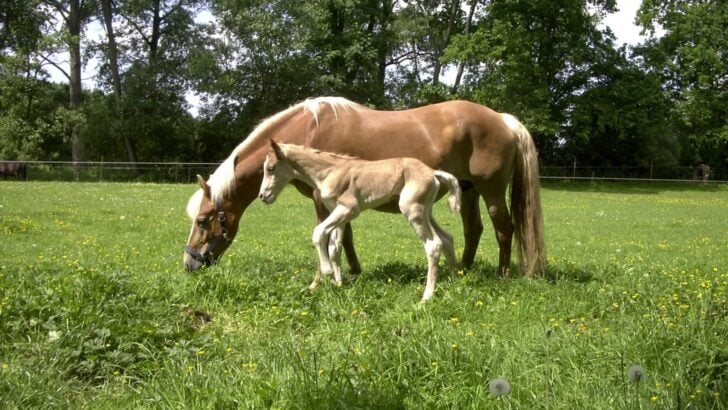
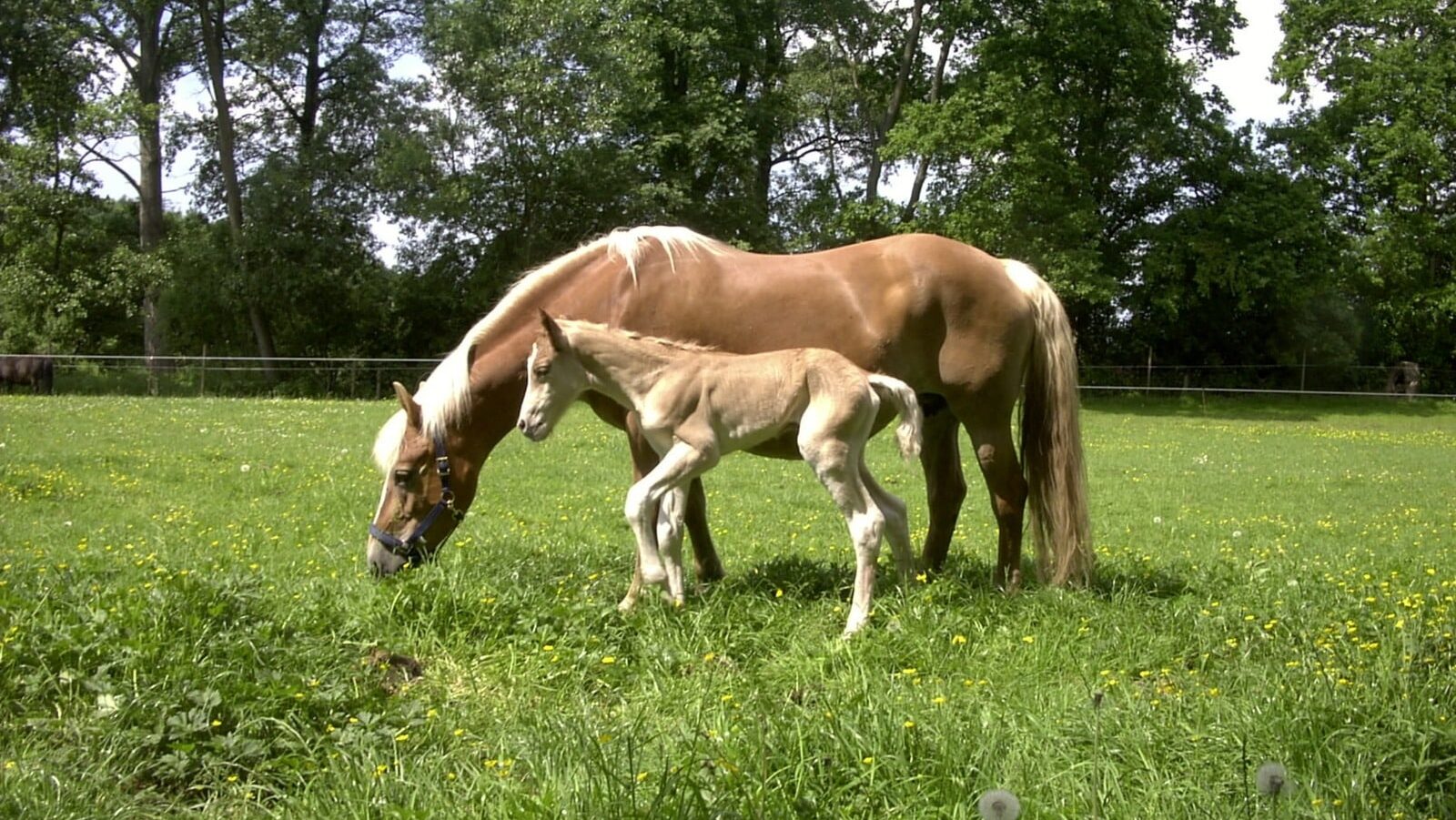
Haflingers are compact, chestnut horses with flaxen manes and tails, known for their calm temperament, strength, and versatility. They are often a good fit for beginners, families, trail riders, and driving homes, but like any breed, the individual horse’s training and temperament matter more than the breed name alone.
Haflingers have always stood out to me as one of the most useful all-around breeds you can own. I’ve ridden with friends who used them for wagon trips and long trail rides, and what always sticks with me is the same combination: they stay sensible, they work hard, and they usually have a lot more substance than people expect from their size. This guide covers what Haflinger horses are like to own, whether they’re good for beginners, how they’re used, and what to watch for if you’re thinking about buying one.
Table of Contents
Haflinger Horse Breed Overview
Haflingers originated in the Tyrolean Alps of Austria and northern Italy, where breeders developed them as practical mountain horses for riding, packing, and light draft work. That background still shows in the breed today: they are usually surefooted, strong for their size, and useful in more than one job.
All modern Haflingers trace back to the foundation stallion Folie, foaled in 1874. Breed organizations such as the American Haflinger Registry and the World Haflinger Federation still emphasize the breed’s recognized stallion lines, type, and traditional chestnut-with-flaxen appearance.
Haflinger Size and Appearance
- Height: usually 13.2 to 15 hands
- Weight: commonly around 800 to 1,300 pounds, depending on type and conditioning
- Color: always chestnut in some shade, with a flaxen mane and tail
- Build: compact, muscular, deep-bodied, and strong-boned, with plenty of substance for their height
People sometimes confuse Haflingers with palominos because of the blond mane and tail, but they are not palomino. A Haflinger’s look comes from breed type and chestnut coloring, not from the cream dilution gene that produces a true palomino coat.
Miles’ Take: one reason people underrate Haflingers is size. They look smaller than a lot of stock horses or draft crosses, but in person most of them are stout, sensible horses with enough bone and body to do real work all day.
Are Haflingers Good for Beginners?
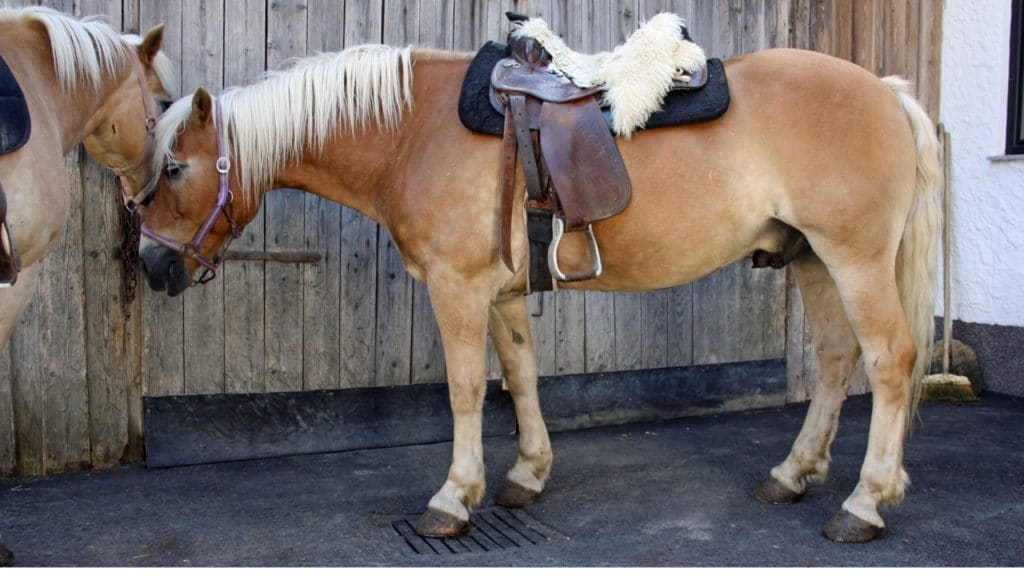
Often, yes. Haflingers are widely liked for their calm temperament, people-oriented nature, and willingness to work, which makes many of them a good match for beginners, kids, and families.
That said, breed reputation only gets you so far. A green, pushy, or poorly trained Haflinger can still be a bad choice for a beginner, while a well-trained one can be an excellent first horse. Training, handling, and individual personality matter more than the label on the registration papers.
Why Beginners Often Like Them
- Calm minds: many Haflingers are steady and less reactive than hotter breeds
- Manageable size: they are easier for many riders to mount, handle, and tack up than taller horses
- Strong work ethic: they usually like having a job and tend to be useful in both riding and driving homes
- Family versatility: the same horse may suit trail riding, light farm use, kids’ riding, and wagon work
Real-World Owner Perspective
I’ve ridden with a friend named Kimberly who owned Haflingers, including one named Daisy, and that horse fit the breed’s reputation well. We rode in a wagon with her and a group from my home to Loranger for the Old Farmers Day festival, where they hold pulling competitions, and we also spent a full day on a fundraising trail ride. Daisy stayed steady, practical, and easy to be around in exactly the kinds of situations where a nervous or sour horse would make a long day miserable.
That kind of firsthand experience is why I think Haflingers deserve their reputation with beginners. The better ones are not just gentle in a round pen or pretty in a sales ad; they stay useful and level-headed once you actually hook them, haul them, or ride them somewhere busy.
Donna Kuck, a longtime breeder at Cedar Lane Farm, put it this way:
“Many nice Haflingers can and do take excellent care of all types of beginner riders and handlers. They are in great demand as therapy horses and are solid and sound as well as easy keepers. They are confident horses generally, not as nervous as many breeds.”
That last part is important. Confidence helps beginners, but Haflingers are also smart, and smart horses can test boundaries if they’re spoiled or inconsistently handled. For a first-time owner, the safest route is still the same: buy the individual horse, not just the breed.
What Are Haflingers Primarily Used For
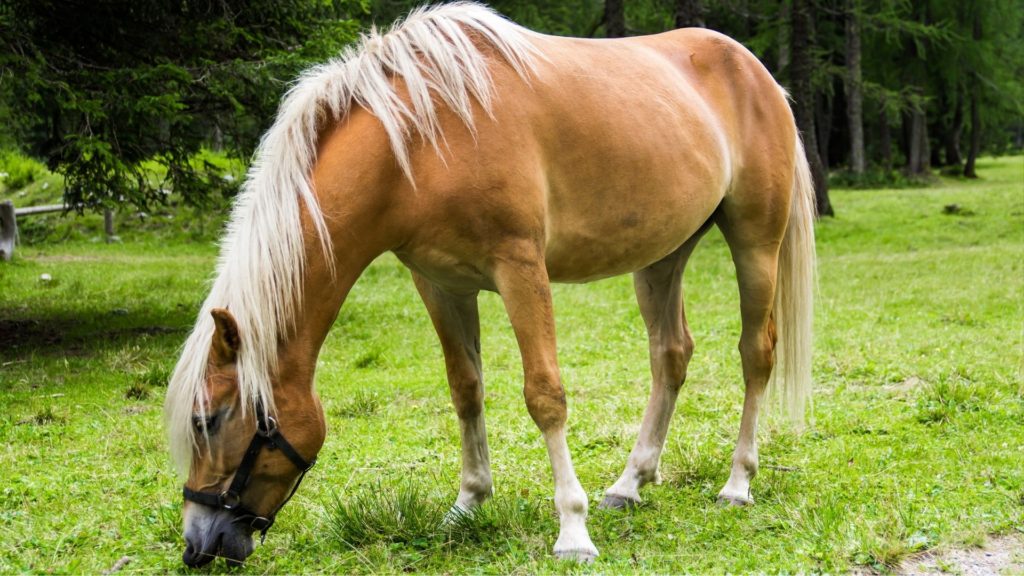
Versatility is one of the breed’s biggest selling points. Haflingers are not just beginner horses; they are genuine all-around horses used for trail riding, driving, shows, therapeutic riding, and light work.
Trail Riding and Pleasure Riding
Their mountain background shows up here more than anywhere else. Haflingers are usually surefooted, practical on rough ground, and mentally steady enough to suit both casual trail riders and experienced riders who just want a dependable horse.
Driving and Wagon Work
This is one area where Haflingers really shine. Their strength, compact size, and willing nature make them useful for pleasure driving, farm driving, and hitch work, and in some communities you’ll still see them used the way practical horses are supposed to be used — pulling, carrying, and going all day without making a fuss.
Dressage, Shows, and Therapy Programs
Haflingers also show up in dressage, lower-level jumping, and therapeutic riding settings. The Equi-Ed therapeutic program is one example of an organization using Haflingers, and breeders often point to the breed’s size, disposition, and reliability as reasons they work well in these programs.

Haflinger Care and Health
Haflingers are often described as easy keepers, and that’s true. The upside is that many of them stay in good condition without heavy grain feeding. The downside is that they can get overweight quickly if you feed them like a harder-keeping riding horse.
Feeding and Weight Management
For most Haflingers, a forage-based diet and careful pasture management are the foundation. Because easy keepers are more prone to obesity and metabolic trouble, rich grass, too much grain, and idle barn life can create problems faster in this breed than in some others.
That matters because excess weight raises the risk of laminitis and equine metabolic syndrome. The veterinary guidance on equine metabolic syndrome published in the literature makes the same basic point most practical horse owners learn the hard way: easy keepers need controlled calories, consistent exercise, and body-condition monitoring, not guesswork.

Grooming and Routine Care
Their thick flaxen mane and tail are part of the breed’s appeal, but they do take upkeep. Regular grooming, hoof care, dental work, and consistent exercise matter just as much with Haflingers as with any other horse.
Common Health Concerns
- Obesity and equine metabolic syndrome: a real concern in easy keepers
- Laminitis: often tied to weight, pasture, and metabolic issues
- PSSM concerns in some horses: worth discussing with your vet if the horse has symptoms or a relevant history
None of that means Haflingers are fragile. Quite the opposite — most are hardy horses. It just means their management needs to match their metabolism.
Buying a Haflinger
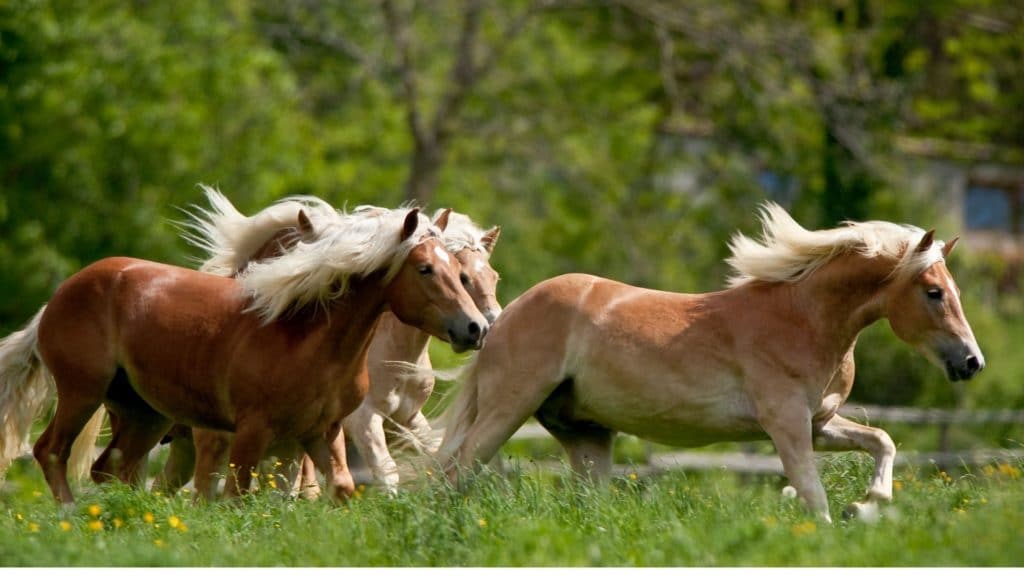
If you’re shopping for a Haflinger, focus first on suitability, not color and not breed hype. A pretty flaxen mane is easy to spot; correct training, soundness, and temperament take a lot more discipline to evaluate.
- Temperament: look for a sensible, willing horse that matches your experience level
- Training: distinguish between a truly broke horse and one that’s merely quiet in the seller’s barn
- Health: get a pre-purchase exam and review hoof, dental, and metabolic history
- Registration and pedigree: verify papers through the American Haflinger Registry if purebred status matters to you
- Intended use: buy for the job, whether that’s trail riding, driving, family use, or show work
Prices vary a lot by age, training, pedigree, and region, but the same rule applies here as with any breed: the cheap horse can become the expensive one in a hurry if temperament, soundness, or training are not right.
Haflinger vs Other Beginner Breeds
Haflingers are not the only good beginner breed, but they occupy a useful middle ground. They are often stouter and more driving-oriented than a typical pony, smaller and easier to handle than many full-sized horses, and generally more all-purpose than breeds selected heavily for one discipline.
| Breed | Typical size | Usual strengths | Best fit |
|---|---|---|---|
| Haflinger | 13.2 to 15 hands | Steady temperament, strength, driving, trail use | Families, beginners, trail and driving homes |
| Quarter Horse | 14 to 16 hands | Versatility, western work, broad availability | Riders wanting a larger all-around horse |
| Morgan | 14.1 to 15.2 hands | People-oriented, athletic, all-around ability | Owners wanting a refined but practical riding horse |
| Welsh Pony | Smaller overall | Smart, handy, popular for youth riders | Children and smaller riders |
Key Takeaways
- Haflingers are true all-around horses — useful for riding, driving, family use, and light work
- Many are excellent for beginners — but individual training and temperament matter more than the breed label
- They are easy keepers — which makes weight management more important, not less
- The breed is easy to recognize — chestnut color, flaxen mane and tail, and a compact, muscular build
- Buy for the job you need done — not just for the look or the breed’s reputation
FAQs About Haflinger Horses
Are Haflingers horses or ponies?
Haflingers are considered horses, even though some stand in a pony-like height range. Their breed identity is based on type, registry standards, and history rather than height alone.
Are Haflingers good for beginners?
Many Haflingers are excellent beginner horses because they are often calm, willing, and manageable, but the individual horse’s training and temperament still matter most.
How long do Haflinger horses live?
Haflingers are generally a long-lived breed, and many live into their late 20s or 30s with good management.
What are Haflingers used for?
Haflingers are used for trail riding, driving, family riding, therapeutic programs, showing, and light farm or utility work.
Are Haflingers easy keepers?
Yes. Haflingers usually maintain weight easily, which is convenient, but it also means owners need to watch pasture, feed, and body condition closely.
Haflingers are one of those breeds that earn their reputation honestly. They are attractive, but more importantly, they’re useful: steady enough for many beginners, strong enough for real work, and versatile enough to fit a lot of different kinds of horse owners.
About Miles Henry
Racehorse Owner & Author | 30+ Years in Thoroughbred Racing
Miles Henry (legal name: William Bradley) is a professional horseman based in Folsom, Louisiana. He holds Louisiana Racing License #67012 and has spent over three decades managing Thoroughbreds at premier tracks including Fair Grounds, Delta Downs, and Evangeline Downs.
Expertise & Hands-On Experience: Beyond the track, Miles has decades of experience in specialized equine care, covering everything from hoof health and nutrition to training protocols for Quarter Horses, Friesians, and Paints. Every guide on Horse Racing Sense is rooted in this “boots-on-the-ground” perspective.
30 of their last 90 starts
Equibase Profile.

Connect with Miles: