
Last updated: July 23, 2026
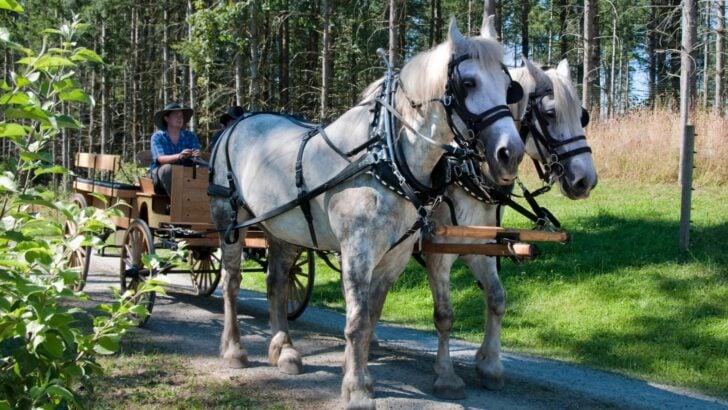
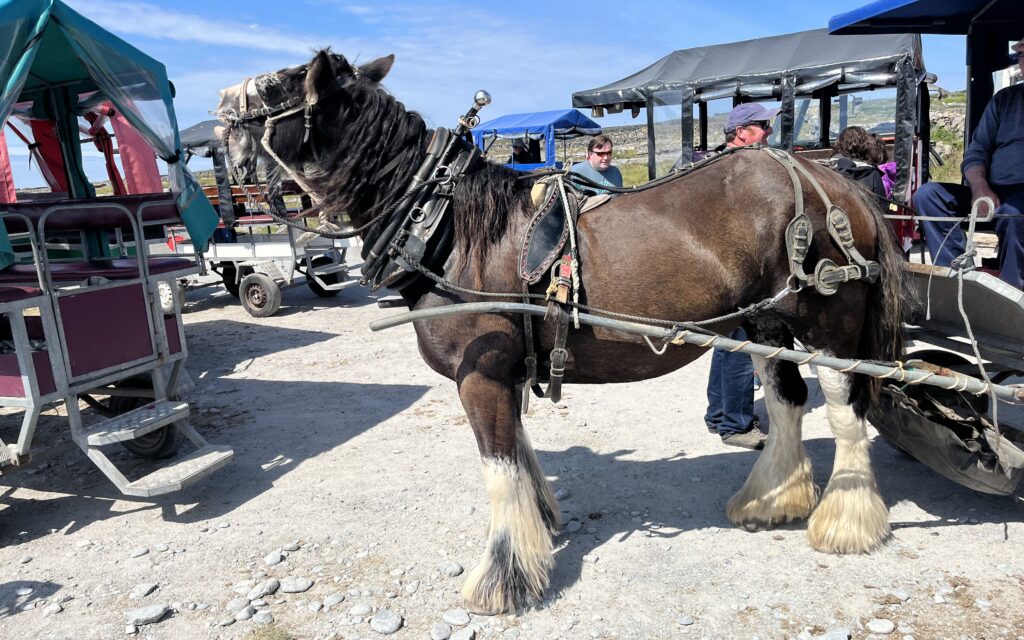
Draft horses (also spelled “draught horses”) are large, heavy-boned breeds developed for pulling and heavy farm work, typically standing 13–19 hands with calm, steady “cold-blooded” temperaments. The smallest draft horse breeds in common use include compact workers like the Haflinger and Gypsy Vanner, both under 16 hands, while the largest draft horse breeds, such as the Shire and Clydesdale, can top 18 hands and 2,000 pounds.
After decades in Thoroughbred racing, I learned to respect power that moves fast. But there’s another kind of strength that doesn’t chase speed — it pulls heavy loads with steady rhythm and quiet confidence.
I first noticed this at a small farm demonstration, watching a team of Belgian draft horses pull a weighted sled without strain or panic. The horses didn’t “race” the load — they simply handled it, calmly, over and over. That’s the defining trait of draft horse breeds: strength combined with patience. In this guide, you’ll learn which breeds are the smallest and most manageable, which are true giants built for the heaviest work, and which are best for beginners or family use.
Sources behind this guide: data drawn from the Michigan State University Extension, the Royal Veterinary College, breed-specific registries linked throughout, and general veterinary sources on equine metabolic risk.
Table of Contents
What Makes a Draft Breed?
Draft horses have heavy bone, broad chests, and calm, steady “cold-blooded” temperaments (a traditional horse classification referring to temperament, not body temperature) built for sustained pulling rather than speed. They typically stand 13–19 hands. You’ll often see claims that draft horses can pull up to 10-15 times their body weight; in practice, that figure gets thrown around a lot without much backing. One published measurement I found, from an actual heavy-horse pulling competition, put real pulling ratios closer to 2.4–2.7 times combined team body weight over a short, timed distance — still genuinely impressive, just not the inflated number you’ll see repeated across a lot of horse blogs.
Because many draft breeds are easy keepers, they’re prone to obesity and laminitis if diet and turnout aren’t managed carefully. Some compact breeds in this guide, such as the Haflinger, Norwegian Fjord, and Gypsy Vanner, are often described as “small draft-type” horses — they share draft build and pulling roles without always being classed as traditional agricultural giants.
The Draft Standard — What Actually Defines the Breed
- Power architecture: broad chests and dense bone structure built for maximum leverage.
- Cold-blooded mindset: calm temperaments and low-stress handling, even in chaotic environments.
- Team capacity: most draft work historically happened in pairs or teams, and many breeds were selected specifically for working well alongside another horse.
Breed Comparison Table
| Breed | Height (hh) | Weight (lbs) | Best For | Temperament |
|---|---|---|---|---|
| Compact / Small Drafts | ||||
| Haflinger | 13.2–15 | 800–1,300 | Trails, light driving | Friendly |
| Norwegian Fjord | 13.2–15 | 900–1,200 | Packing, trails | Calm |
| Black Forest Horse | 14.3–16 | 1,250–1,400 | Versatile forestry | Patient |
| Gypsy Vanner | 12.2–16 | 1,000–1,700 | Pleasure driving | Gentle |
| Heavy Draft Giants | ||||
| Percheron | 15–19 | 1,800–2,600 | Riding & draft work | Intelligent |
| Belgian | 16–17 | 1,800–2,200 | Farm pulling | Willing |
| Clydesdale | 16–18 | 1,800–2,200 | Parades / carriages | Spirited but calm |
| Shire | 16–19 | 2,000–2,400 | Heavy logging | Patient |
| Suffolk Punch | 16–17 | 1,800–2,200 | Farm endurance | Docile |
Smallest Draft Horse Breeds
When people search for small draft horse breeds, they’re usually looking for something specific: the strength and calm temperament associated with drafts, without the management challenges — feed bills, farrier costs, barn clearance — that come with a full-size 2,000-pound horse. These breeds aren’t miniature versions of the giants below; most were developed independently, in regions where a smaller, sure-footed worker made more practical sense than sheer size.
For new handlers or families, these compact drafts can be easier to manage physically than the giants below, even though they still demand serious hoof and metabolic care. These smaller draft horse breeds are compact, capable options for tight spaces or beginner handlers.
Haflinger Draft Horse

Best for: family trails and therapy programs. Key traits: golden chestnut coat with flaxen mane; hardy and easy-going.
- Pros: low feed needs (10–15 lbs hay/day), versatile under saddle.
- Cons: metabolic syndrome risk; obesity increases laminitis odds — consider muzzle grazing and controlled turnout.
Norwegian Fjord Draft Horse
Best for: packing and trail riding. Key traits: dun coat with a distinctive dark dorsal stripe and two-toned mane; among the oldest and purest horse breeds still in existence.
- Pros: exceptionally sure-footed, strong for its size, low-drama temperament.
- Cons: easy keeper — same obesity and laminitis watchpoints as other small drafts.
Black Forest Horse
Best for: slope logging and driving in colder climates. Key traits: chestnut with flaxen mane; strong neck and steady work ethic.
- Pros: adaptable worker, good for uneven terrain.
- Cons: rare in the U.S.; feathered legs can trap mud and debris; joint stress if overworked.
Gypsy Vanner Draft Horse
Best for: wagons, family riding, and beginner-friendly driving. Key traits: piebald or skewbald coat; abundant feathering; calm, trainable temperament. The Gypsy Vanner Horse Society’s own description calls it plainly “a breed of small draft horse” — bred down in size from the Shire and Clydesdale specifically so families could have that same gentle draft temperament without the sheer scale.
- Pros: highly trainable and gentle.
- Cons: feather care is labor-intensive; leg infections are possible without proper hygiene; higher purchase price ($10k+); weight gain increases laminitis risk.
Largest Draft Breeds
These huge horses are powerhouses, best suited for commercial work and heavy pulling.
Shire

Best for: heavy logging and maximum pulling. Key traits: tallest draft breed, commonly reaching up to 19 hands; heavy feather; bay or black coat. The Shire is generally taller and heavier than most Clydesdales, which is why it tops most “largest draft horse” lists over its flashier cousin.
- Pros: unmatched strength and stability.
- Cons: high feed needs (25+ lbs/day); colic and hoof abscesses are common without careful management; needs wide spaces for turning.
Percheron
Best for: versatile riding and draft work. Key traits: gray or black coat; refined head and athletic build for its size.
- Pros: genuinely dual-purpose; strong under saddle and in harness.
- Cons: joint wear is possible under heavy riding; some lines show metabolic syndrome predisposition.
Belgian
Best for: farm pulling, competitions, and heavy work teams. Key traits: sorrel chestnut coat; powerful and steady in teams — the most numerous draft breed in the U.S. today.
- Pros: efficient feed conversion, consistent team worker.
- Cons: hoof overgrowth and laminitis risk if overfed; requires regular trimming.
Clydesdale
Best for: parades, carriage work, and exhibition. Key traits: roan bay or bay coat; high-stepping gait; distinctive feathering — the breed most people picture first thanks to decades of beer-company advertising.
- Pros: eye-catching and steady in harness.
- Cons: feather grooming is labor-intensive; skin allergies are more common in heavily feathered breeds.
Gentlest Draft Breeds
While most draft horses are calm by nature, these breeds are often recognized by owners and breed organizations for particularly patient, forgiving temperaments across farm and family settings.
Miles’ Take: don’t let a Shire’s size fool you. They’re exceptionally patient and low-spook, and I’ve seen them handled well in therapeutic programs — but that patience doesn’t change the fact that a misstep from 2,000+ pounds of horse can hurt someone badly. Gentle and small-and-forgiving aren’t the same thing; match the breed’s temperament to the handler’s actual experience level, not just to a “calm” label on a chart.
Suffolk Punch Draft Horse
Best for: farm endurance, beginners, and family use. Key traits: chestnut coat only (it’s the one required color for the breed); compact power; calm disposition.
- Pros: easy keeper, long-lived, and steady.
- Cons: thrush risk in wet conditions; obesity risk requires controlled grazing.
More on the Suffolk Punch in our largest horse breeds guide | Livestock Conservancy — Suffolk Punch overview
Choosing the Right Draft Breed
Use this simple match guide as a starting point, not a final answer — talk to a breed-specific rescue or registry before committing either way.
- Small farm or trails: Haflinger or Black Forest Horse
- Heavy work: Shire or Belgian
- Multi-use riding + draft: Percheron
- Beginner or family/gentle use: Suffolk Punch or Gypsy Vanner (paired with experienced supervision for first-time handlers)
Before buying, always request a vet screen for metabolic syndrome and laminitis risk, and choose breeders registered with recognized associations such as the ones linked throughout this guide. Conformation matters just as much on a draft as it does on a racehorse — see our guide on why conformation matters for what to look for before you commit to any horse, draft or otherwise.
Key Takeaways
- “Draft” and “draught” are the same thing — American versus British spelling of the same type of heavy-boned, cold-blooded pulling breed
- The “10-15x body weight” pulling claim is overstated — real competition data puts actual pulling ratios closer to 2.5x combined team body weight
- Small doesn’t always mean easiest — Haflingers and Gypsy Vanners are more manageable in size, but still need the same laminitis and metabolic vigilance as their bigger cousins
- Gentle doesn’t mean risk-free — a calm 2,000-lb Shire still requires an experienced handler, size and temperament are separate questions
FAQs
What’s the smallest draft horse breed?
The Haflinger and Gypsy Vanner are among the smallest draft-type breeds, both commonly under 15–16 hands — the Gypsy Vanner’s own registry describes it as “a breed of small draft horse.”
What’s the largest draft horse breed?
The Shire is widely recognized as the tallest draft breed, commonly reaching up to 19 hands, with some individual horses recorded even taller.
Which draft breed is gentlest?
Suffolk Punch and Belgian are commonly cited as the gentlest due to their steady temperaments and calm team behavior, though most draft breeds are bred for a calm, cold-blooded disposition overall.
Is “draught horse” the same as “draft horse”?
Yes. “Draught” is the British and Commonwealth spelling of the same word; both refer to the identical category of heavy, cold-blooded horse breeds developed for pulling and farm work. You’ll see both spellings used interchangeably depending on the source.
How much can a draft horse actually pull?
Less than the commonly repeated “10-15 times body weight” figure suggests. One published measurement, from an actual heavy-horse pulling competition, found real pulling ratios closer to 2.4–2.7 times combined team body weight over a short, timed distance.
Are draft horses good for beginners?
Many draft breeds have calm temperaments, but their size means beginners should proceed carefully. Calm and easy are not automatically the same thing when a horse weighs half a ton or more, so beginners should pair a gentle draft with experienced supervision.
Can you ride a draft horse?
Yes. Breeds such as Percherons, Belgians, and Clydesdales are commonly ridden. You’ll need appropriately sized saddles built for a draft’s broader back, and may find slower, ground-covering gaits compared to lighter riding breeds.
Watch the video below for a visual look at draft horses in action.

Sources & Further Reading
- Michigan State University Extension — Draft Horses
- Royal Veterinary College — Laminitis Study
- American Haflinger Registry
- American Shire Horse Association
- Gypsy Vanner Horse Society
- Livestock Conservancy — Suffolk Punch
- Cornell University Vet — Equine Metabolic Syndrome & Laminitis
About Miles Henry
Racehorse Owner & Author | 30+ Years in Thoroughbred Racing
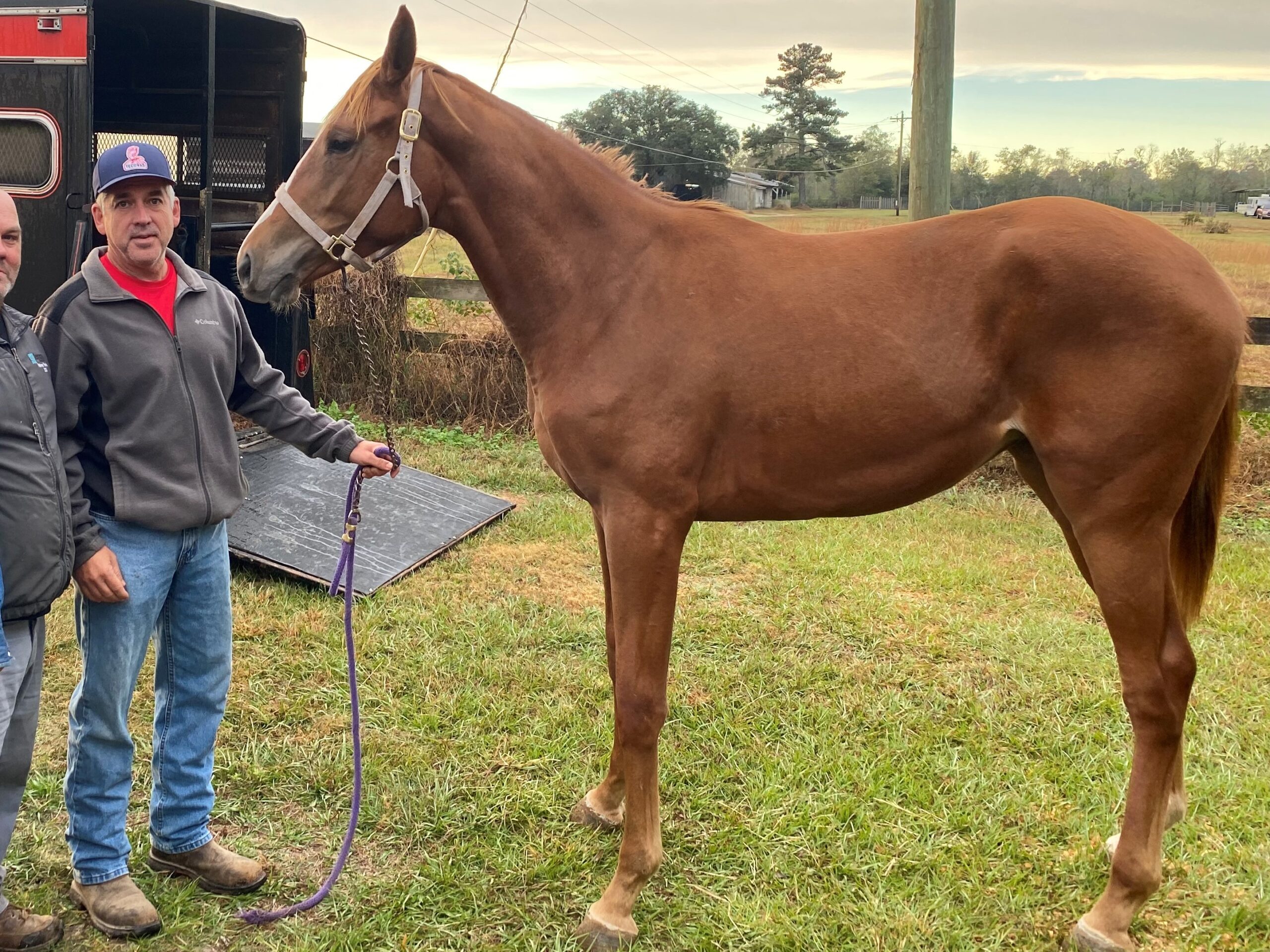
Miles Henry (legal name: William Bradley) is a professional horseman based in Folsom, Louisiana. He holds Louisiana Racing License #67012 and has spent over three decades managing Thoroughbreds at premier tracks including Fair Grounds, Delta Downs, and Evangeline Downs.
Expertise & Hands-On Experience: Beyond the track, Miles has decades of experience in specialized equine care, covering everything from hoof health and nutrition to training protocols for Quarter Horses, Friesians, and Paints. Every guide on Horse Racing Sense is rooted in this “boots-on-the-ground” perspective.
30 of their last 90 starts
Equibase Profile.

Connect with Miles: