
Last updated: July 23, 2026
Any links on this page that lead to products on Amazon are affiliate links and I earn a commission if you make a purchase. Thanks in advance – I really appreciate it!
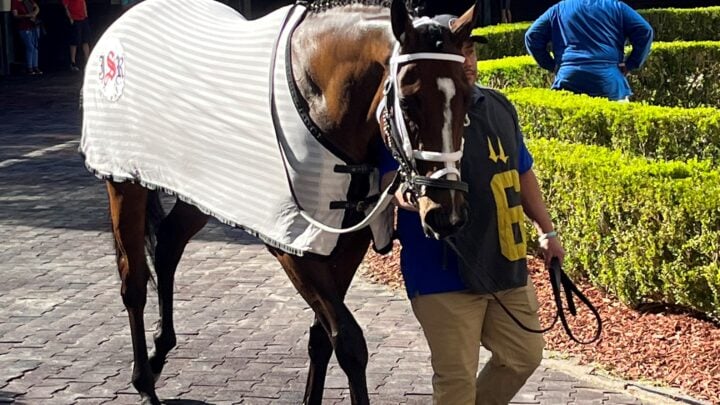
This July, a three-year-old Thoroughbred filly came back from a five-furlong breeze looking like she’d been swimming. The temperature was 102°F, with a heat index north of 110°F, and the humidity was so heavy that sweat just sat on her. After twenty minutes of walking and hosing, her chest still felt hot, and she was breathing hard. In weather like that, a horse can develop dangerous heat-related health issues fast.
When should you use a cooling sheet on a horse? Use one when a horse is damp, not dripping, to help wick moisture or prevent chilling after work or a bath. In hot, humid weather, a lightweight mesh anti-sweat sheet is usually the right call; in cooler weather, use a fleece cooler only after the horse has been walked down and is no longer soaking wet. In Louisiana-style heat, airflow matters as much as fabric — if the horse stays hot, clammy, or slow to dry, pull the sheet and rely on walking, fans, and fresh air instead.
Whether you’re cooling a racehorse after gallops, drying a trail horse after a summer bath, or managing lesson horses through August heat, knowing when and how to use cooling sheets prevents heat stress, muscle stiffness, and other problems. But not all sheets work the same way — using the wrong type at the wrong time can actually trap heat instead of releasing it.
This guide covers my exact framework for when to use one, the types that actually work in different climates, and the mistakes I’ve learned to avoid after decades of trial and error in Folsom, Louisiana’s sweltering summers.
Table of Contents
The Cooling Sheet Framework: Temperature, Work Intensity, and Climate
After cooling hundreds of horses in conditions from spring showers to August infernos, I’ve settled on a simple framework. Three variables matter most: temperature, work intensity, and climate humidity. This assumes 40-60% humidity as a baseline — in the South (Louisiana, Florida, coastal Texas), bump everything up one category. What feels like 85°F in Arizona might feel like 95°F in Baton Rouge. If your horse’s chest, neck, or flanks feel hot 15 minutes post-work, it needs more cooling, not more insulation.
The Decision Tree: Sweat Level, Work Intensity, Season
Here’s how I run through cooling decisions at the barn:
Golden Rule: Always walk your horse before applying a sheet — never sheet a dripping horse.
Step 1 — Assess sweat and saturation:
- Heavy sweat (dripping): walk 15-20 minutes first. Fabric blocks initial evaporation. Apply an anti-sweat mesh sheet only once the coat is no longer “running.”
- Moderate sweat (damp patches): walk 10 minutes, then apply an anti-sweat sheet or lightweight fleece cooler.
- Light sweat (warm coat): walk 5 minutes. A sheet is rarely needed unless it’s windy or below 60°F.
Step 2 — Account for work intensity:
- High intensity (racing, barrels, gallops): higher core temps mean higher stress risk. Use an open-weave mesh sheet, monitor vitals every 15 minutes, and offer fresh water immediately.
- Moderate work (lessons, trail, schooling): standard cool-down. Sheet based on air temp and watch for steady breathing.
Step 3 — Adjust for season and climate:
- Hot/humid (Gulf Coast, Southeast): mesh only. Horses can overheat under heavy sheets above 85°F. If humidity is over 70%, prioritize airflow and hydration.
- Cool/damp (Pacific Northwest): slow evaporation. Use a fleece cooler so the horse doesn’t sit in a cold, damp coat.
- Dry heat (Southwest): fast natural drying. Focus on shade and water; sheets are often secondary.
- Winter/cold: use heavy fleece to prevent chilling, but remove it the moment the coat is dry to avoid stall overheating.

Key Factors Beyond Temperature
Temperature alone doesn’t tell the whole story. Here’s what else I pay attention to:
- Breed and coat type: Thoroughbreds with thin skin and fine coats overheat faster than stocky Quarter Horses. My TBs get anti-sweat sheets at 80°F; my barrel horses can go to 85°F before I worry. Clipped horses chill easier — use coolers even in moderate temps if they’re body-clipped.
- Anhidrosis risk: horses that don’t sweat properly in heat are in serious danger. If your horse stops sweating in summer, use cooling sheets with fans and ice packs on major vessels, and call your vet immediately — anhidrosis is a serious condition.
- Drying needs post-bath: a cold-water bath in summer usually dries fine with a quick walk. A winter bath makes a fleece cooler non-negotiable — wet hair in 50°F weather without one invites chills, especially with wind.
- Turnout timing: I never turn a horse out in a cooling sheet. They’re for supervised drying only — sheets can snag on fences, trees, or other horses. Always remove before turnout.
Miles’ Take: the biggest mistake I see is people treating cooling sheets like blankets — throwing them on and walking away. Cooling sheets are active management tools. You need to be present, checking, adjusting, and removing them at the right time. This framework has kept my string healthy through thirty-plus Louisiana summers and plenty of unpredictable spring and fall weather.
What I’ve Learned From Barn-Testing Cooling Sheets
I’ve tried just about every cooling sheet design — cheap polyester mesh, high-end Irish wool coolers, waffle-weave anti-sweats. Some worked brilliantly. Others caused problems. Here’s what happened when I put them to the test.
The Anhidrosis Scare That Changed My Protocol
That TB filly taught me you can’t trust a sheet to do the work for you. I’d thrown an anti-sweat sheet on her after that breeze and walked away to deal with another horse. Fifteen minutes later, she was hotter under the sheet. The mesh was soaked through, trapping moisture because the humidity had stopped evaporation. I pulled the sheet, got her under a fan, sponged her with cool water, and stayed until her respiratory rate dropped.
Now, anytime it’s 95°F+ with muggy air, I use the sheet plus a fan, and I check every ten minutes. Period.
Lesson: The Humidity Trap. Anti-sweat sheets aren’t magic. In high humidity (70%+), a sheet can actually become a barrier to cooling if there isn’t real air movement — always pair it with a fan or cross-ventilation. My 20-minute rule: if the horse isn’t noticeably drying after 20 minutes, pull the sheet immediately. In stagnant, humid air, trapped moisture quickly becomes trapped heat.
Barrel Horses, Sweat, and Fleece Cooler Mistakes
A barrel mare came off the pattern absolutely soaked. Mid-September, low 70s, so I grabbed a fleece cooler. Twenty minutes later, she was still wet and the fleece had started rubbing her withers raw.
Turns out, fleece coolers work for lightly damp horses or cold-weather drying, but when a horse is truly soaked, fleece absorbs too much moisture and becomes a heavy, damp blanket. Now, if a horse is dripping, I walk first, hose if needed, then apply the sheet once she’s down to “damp.”
Lesson: Match the Sheet to the Sweat. Don’t skip the walk. The biggest mistake here is putting a heavy fleece cooler on a dripping-wet horse — fleece can’t handle a “running” sweat, so it saturates, sags, and often causes painful shoulder rubs. For heavy sweat, walk 15 minutes and use an anti-sweat mesh sheet first. Save the fleece cooler for moderate dampness or as a second layer once the initial “steam” has dissipated.
Winter Drying: Layering for Cold Baths
Winter baths in Louisiana don’t happen often — we’re usually dealing with mud, not snow — but when they do, say after a horse rolls in a frozen puddle, you need a solid drying strategy. I learned this after bathing a gelding in 45°F weather and watching him shiver under a single fleece cooler that wasn’t cutting it.
The fix: layer a fleece cooler under a waterproof rain sheet. The fleece wicks moisture, and the rain sheet traps body heat without trapping dampness, since it’s not sealed tight and air can still circulate. I walk the horse 10-15 minutes, check under the layers to confirm he’s drying rather than just getting clammy, and pull the rain sheet once the fleece is doing its job. By 30-40 minutes, he’s dry and warm. This trick works down to about 35°F — below that, I just don’t bathe unless it’s absolutely necessary.
Lesson: The Cold-Weather Layering Trick. Don’t reach for the heavy turnout blanket yet — a heavy, filled blanket over a damp horse traps moisture against the skin. Use a fleece cooler paired with a breathable rain sheet instead; it pulls water out of the coat while the sheet blocks wind chill. My touch test: check under the layers every 20 minutes. Clammy or greasy means you’ve trapped moisture and need more airflow. Warm and fuzzy means the system is working.
Breathability Matters More Than Brand Name
I’ve used $30 anti-sweat sheets and $150 Irish wool coolers. The expensive ones usually are better — better stitching, better fit, less rubbing — but the most important factor is breathability. Cheap mesh sheets have outperformed pricey fleece in summer simply because mesh moves air.
When buying, hold the fabric to light — if you can see through it, it’ll breathe. Stretch it — if it’s stiff, it won’t contour, which creates gaps or bunching. And fit is non-negotiable: measure your horse, compare to size charts, and go up if you’re between sizes. A slightly loose sheet beats one that’s tight.
Lesson: Breathability Over Brand. A fancy logo won’t cool your horse. Many “premium” sheets use tight weaves that look great but trap heat. My light test: hold the fabric up to the sun — if you can’t see light through the weave, air isn’t moving through it either. Never skimp on sizing to save a few dollars; a sheet too tight across the chest or withers causes painful rubs and sores within hours. A breathable, well-fitted sheet is an investment that saves you vet bills later.
Post-Race Cooling Protocol: What Actually Works

For racehorses, the cooling protocol is stricter because the stakes are higher — these horses work harder, heat up faster, and have less margin for error. Here’s my step-by-step after a race or serious workout:
- Walk 10-15 minutes immediately post-work. No sheet yet — let the initial sweat evaporate naturally.
- Check vitals. Respiratory rate should drop below 60 breaths/min within 10 minutes; check capillary refill and gut sounds too. If anything’s off, call the vet before proceeding.
- Hose legs and chest, not the whole body — I don’t want to shock the system. Lukewarm water in summer, cool water in moderate temps.
- Apply an anti-sweat sheet if still damp and the temp is above 75°F. Walk another 10 minutes under the sheet.
- Check every 10 minutes. Feel under the sheet — drying or staying wet? If drying, continue. If wet, pull the sheet and reassess with a fan, more walking, or a cooler water rinse.
- Remove the sheet once dry. Offer water, check for tying-up or colic signs, and monitor for the next 2-4 hours.
This protocol has kept my racing string sound and healthy, even through brutal summer meets. The key is active management — checking, adjusting, and responding to what the horse’s body is telling you, not just applying a sheet and walking away.
Top 5 Cooling Sheet Recommendations
I’ve run through dozens of cooling sheets, and these five have proven themselves in real barn conditions — sweaty racehorses, muddy trail rides, and relentless Southern humidity. Here’s what I keep in my tack room.
| Product & Type | Material | Best Use Case | Good for Hot/Humid? | Price |
|---|---|---|---|---|
| Tough-1 Deluxe Fleece Cooler | Polyester fleece | Winter/shoulder drying (50-70°F) | No | $30-45 |
| Jeffers Expression Fleece Cooler — my top pick | Absorbent fleece | Post-ride drying and layering | Limited | $45-60 |
| Amigo Jersey Jersey Cooler | Cotton-poly blend | Spring/fall (60-80°F) | Limited | $70-90 |
| Centaur Turbo Dry All-Season Wicking | Turbo Dry fabric | Rapid wicking, all seasons | Yes | $85-110 |
| Saxon Element Net Anti-Sweat/Mesh | Polyester net | Budget cooling, high airflow | Yes | $35-50 |
Product Notes
- Tough-1 Deluxe Fleece Cooler — best all-around value. Good for winter/shoulder-season drying and post-bath use at 50-70°F. Avoid above 80°F. My tip: layer under a waterproof turnout below 45°F for extra drying, but remove once dry — don’t leave it on overnight.
- Jeffers Expression Fleece Cooler — my top pick. Good for post-ride drying and shoulder-season layering. Avoid in heavy summer heat or extreme cold. Highly absorbent and durable, works on most breeds and coat types.
- Horseware Amigo Jersey Cooler — best spring/fall versatility. Good for moderate work and post-bath use at 60-80°F. Avoid extreme heat or cold. The soft cotton-poly blend reduces rubs — use on damp coats, not dripping ones, and walk first if the horse is heavily sweating.
- Centaur Turbo Dry — top performance, all-season wicking. Suitable for most climates and workloads, with no real weak season. Excellent for hot, humid summers and cooler shoulder seasons alike; monitor closely if the horse is fully soaked from heavy work.
- Saxon Element Net/Mesh — best budget summer sheet. High airflow at a low price point, a solid entry-level option for hot climates.
General buying tips: measure from the center of the chest to the tail base in inches and compare to brand size charts — go up if you’re between sizes. A front buckle beats surcingle straps for security; leg straps are optional but help on fidgety horses. Wash fleece and bamboo in cold water with mild detergent and air dry; mesh can usually handle a low machine-dry cycle. Skip fabric softener — it reduces wicking ability. And match the climate: hot/humid calls for mesh, cold/dry calls for fleece, shoulder seasons suit a jersey or lightweight fleece. Don’t force a fleece sheet to work in summer just because you already own it.
These five cover about 90% of the cooling situations I encounter in a typical year. Pick based on your climate, your horse’s workload, and your budget, and you’ll be set.

When NOT to Use Cooling Sheets (Critical Mistakes to Avoid)
Cooling sheets are useful tools, but they’re not appropriate for every situation. Many well-meaning horse owners create problems by using sheets at the wrong time, in the wrong conditions, or with poor fit. Here’s when to skip the sheet entirely, and what to watch for when you do use one.
1. Never Use on a Dripping-Wet Horse in Extreme Heat
This is the mistake I see most often, especially with new horse owners. Pulling a horse off a trailer after a long haul in August, soaking wet, and immediately throwing a sheet on thinking you’re helping? Wrong. If the horse is dripping wet and it’s 90°F+ with high humidity, the sheet traps moisture against the skin and actually slows cooling rather than speeding it up.
What to do instead: walk the horse 10-15 minutes to let initial sweat evaporate. For faster cooling, sponge or hose the chest, neck, and hindquarters with lukewarm — not ice-cold — water, scrape off the excess, then apply the anti-sweat sheet once the horse is down to damp instead of saturated.
2. Don’t Use Ill-Fitting Sheets
A sheet that’s too small pulls across the shoulders and creates pressure points at the withers. Too big, and it slides back, bunches at the girth, and rubs raw spots on the sides or barrel. I’ve treated rub wounds that took weeks to heal because someone used a 72″ sheet on an 80″ horse.
Warning signs of poor fit: the sheet rides back behind the withers, the front buckle digs into the chest, fabric bunches at the shoulders, surcingle straps are maxed out or dangling loose, or hair rubs and bald spots appear after repeated use.
What to do instead: measure your horse, buy the correct size, and check the fit after the first use. Adjust straps, reposition the sheet, or exchange it if necessary — don’t “make do,” or your horse pays for it in rubs and soreness.
3. Never Leave a Cooling Sheet on Unattended or During Turnout
Cooling sheets are for supervised drying only. Sheets can snag on fences, gates, feeders, or other horses. I once had a gelding catch his surcingle strap on a fence latch and panic, tearing the sheet and scraping his side before we could get to him. He was fine, but it was a close call.
What to do instead: stay with the horse while sheeted, check every 10-15 minutes, and remove the sheet as soon as it’s dry. If you need to leave the barn, either pull the sheet or have someone else monitor. Never turn a horse out in a cooling sheet — use a turnout blanket if coverage is required.
4. Avoid Heavy Fleece in Hot Weather
Fleece coolers are for cold-weather drying, not summer use. If it’s 85°F or hotter, fleece traps heat instead of wicking moisture, leaving the horse hotter and stressed.
What to do instead: use lightweight mesh or anti-sweat sheets in summer, and save fleece for temperatures below 75°F. If it’s hot and fleece is all you have, skip the sheet and rely on walking, fans, and natural drying instead.
5. Don’t Ride or Lunge in a Cooling Sheet
Cooling sheets are not riding sheets or quarter sheets. Straps can shift, fabric can bunch, and the horse may spook or trip. I’ve seen riders try a quick warm-up walk with one on and the sheet slide under the belly, causing panic.
What to do instead: for keeping a horse warm during warm-up or cool-down rides, use a proper exercise sheet or quarter sheet with tail straps and saddle loops. Cooling sheets are strictly for after work.
6. Watch for Saturation and Trapped Moisture
In humid conditions (70%+ humidity), even the best cooling sheet can become saturated, trapping moisture instead of wicking it away. If under the sheet feels clammy, cold, or excessively wet, it isn’t working.
What to do instead: pull the sheet, wring it out, swap for a dry one, and increase airflow — move the horse to a breezier area, set up a fan, or keep walking. Don’t leave a wet sheet on hoping it will eventually dry.
Monitoring checklist — every 15 minutes:
- Touch test: the coat should be drying. If the sheet is wet, heavy, or clammy, pull it immediately.
- Check respiratory rate: should drop steadily, targeting under 40 breaths/min before leaving the horse unattended.
- Ensure proper fit: the sheet shouldn’t shift or sag. Check for red spots or friction points at the shoulders and withers.
- Observe behavior: restlessness or head bobbing signals discomfort; a relaxed, “cocked” hind leg means cooling is working.
- Final removal: once dry, the sheet traps heat — remove it immediately.
Red flags — call the vet if you see any of these while sheeted or right after removal: respiratory distress (breathing stays at 60+ breaths/min more than 20 minutes post-work), anhidrosis signs (hot, dry skin with zero sweat in high heat), muscle tremors or total reluctance to move, a pulse over 60 bpm after 20 minutes of rest, colicky behavior (pawing, kicking at the belly, looking at the flanks), or abnormal gums (pale, tacky, or dark purple). Cooling sheets are a management tool, not a cure — if your horse is in real distress, it needs a vet, not more monitoring.
Here’s a short video on how to measure your horse for blankets and cooling sheets.

FAQs About Horse Cooling Sheets
Do cooling sheets keep horses cool or warm?
Cooling sheets don’t actually cool horses down — they manage moisture and regulate temperature during the drying process. Anti-sweat mesh sheets wick sweat away from the skin to speed evaporation in hot weather, while fleece coolers provide insulation and absorb moisture to prevent chills in cold weather. Match the sheet type to the temperature: mesh for 75°F+, fleece for below 70°F. Always monitor drying progress every 10-15 minutes — the wrong sheet at the wrong temperature can trap heat instead of releasing it.
When should I use a cooling sheet on my horse?
Use one post-workout when your horse is damp, not dripping, and needs help drying, or after baths in cool weather. Never sheet a dripping-wet horse in extreme heat — walk first to let initial sweat evaporate, then apply the sheet. If your horse is still damp 15-20 minutes post-work and it’s above 70°F, or below 65°F in cold weather, a cooling sheet helps speed drying and prevents muscle stiffness or chills. Remove it as soon as the horse is dry.
Can I ride my horse with a cooling sheet on?
No, never ride or lunge a horse in a cooling sheet. They’re designed for stationary or walking cool-downs only — straps can shift, fabric can bunch under the saddle or girth, and the setup becomes a real safety hazard. If you need to keep a horse warm during ridden work, use a proper exercise sheet or quarter sheet with tail straps and saddle loops instead. Cooling sheets are strictly for post-workout or post-bath management under supervision.
What’s the difference between cooling sheets and anti-sweat sheets?
Anti-sweat sheets are the lightweight, open-weave mesh or waffle-knit styles built for hot weather — they create airspace between the fabric and the skin to speed evaporation without adding insulation. “Cooling sheets” is the broader term covering anti-sweat mesh and fleece coolers alike — any sheet used during the cool-down or drying process. Fleece coolers are thicker, built for cold-weather drying below 70°F, and wick moisture while providing warmth. In practice: match the material to the weather, mesh for heat, fleece for cold.
How do I measure my horse for a cooling blanket?
Use a soft measuring tape and measure from the center of the chest, where the front buckle sits, along the side of the horse to the point of the buttock or tail base, with the horse standing square. Compare the measurement to the manufacturer’s size chart, since brands vary slightly, and go up a size if you’re between sizes — a slightly loose sheet is safer than one that’s too tight and pulls across the shoulders. Check the fit after the first use: the sheet should cover chest to tail base without riding back, and the front buckle shouldn’t dig into the chest.
Final Thoughts: My Real-World Cooling Protocol
After thirty-plus Louisiana summers managing racehorses, barrel horses, and trail horses, here’s what it comes down to: cooling sheets are active management tools, not set-it-and-forget-it blankets. Used correctly — matched to temperature, applied at the right time, monitored every 10-15 minutes — they speed drying and prevent heat stress. Used carelessly, they trap heat and cause problems.
- Walk first, sheet second. Never sheet a dripping-wet horse.
- Match material to weather. Anti-sweat mesh for 75°F+, fleece for below 70°F.
- Monitor actively. Check every 10-15 minutes — is the horse drying or staying wet?
- Remove when dry. Sheets aren’t turnout blankets. Once dry, pull the sheet.
- Prioritize breathability and fit. A well-fitting $40 mesh beats a poorly-fitting $100 fleece.
Whether you’re managing racehorses in Florida, lesson horses in Oregon, or a backyard trail horse in Texas, these principles apply. Cooling sheets are valuable when used intelligently — just don’t expect them to do the work for you. They’re also only one part of the system; getting your horse blanket weight and layering right is what keeps horses comfortable once temperatures drop.
Stay safe out there, keep your horses comfortable, and remember: the best cooling protocol is the one you actively monitor and adjust based on what your horse’s body is telling you.

Related resources: for more barn-tested guidance on horse care and seasonal management, see When to Blanket Horses: Rules for Every Temperature, Do Horses Sweat? The Science of Equine Cooling, the AAEP’s winter health care strategies, and the full Practical Horse Care Hub.
About Miles Henry
Racehorse Owner & Author | 30+ Years in Thoroughbred Racing
Miles Henry (legal name: William Bradley) is a professional horseman based in Folsom, Louisiana. He holds Louisiana Racing License #67012 and has spent over three decades managing Thoroughbreds at premier tracks including Fair Grounds, Delta Downs, and Evangeline Downs.
Expertise & Hands-On Experience: Beyond the track, Miles has decades of experience in specialized equine care, covering everything from hoof health and nutrition to training protocols for Quarter Horses, Friesians, and Paints. Every guide on Horse Racing Sense is rooted in this “boots-on-the-ground” perspective.
30 of their last 90 starts
Equibase Profile.

Connect with Miles: