
Last updated: September 22, 2026
Any links on this page that lead to products on Amazon are affiliate links and I earn a commission if you make a purchase. Thanks in advance – I really appreciate it!
When a horse starts coughing, has a fever, shows colic signs, or just seems off, the hard part isn’t finding a long list of possible illnesses. It’s knowing whether you may be looking at something contagious, an emergency, or a problem that can wait for a routine appointment.
Quick answer: Horse health problems owners should know how to recognize include strangles, equine herpesvirus (EHV), equine influenza, colic, equine asthma, and laminitis. Fever, trouble breathing, severe pain, neurologic signs, or a horse that suddenly seems unwell are reasons to call your veterinarian.
Below, I cover the early signs of each condition, whether it can spread to other horses, the first steps to take, and when the situation needs urgent veterinary attention. You’ll also find practical prevention tips that can help reduce risk, limit spread, and protect the rest of the barn.
Table of Contents
| Condition | Main early signs | Can it spread? | First action |
|---|---|---|---|
| Strangles | Fever, nasal discharge, swollen throatlatch nodes | Yes | Isolate and call the vet |
| EHV | Fever, respiratory signs, neurologic signs | Yes | Stop movement and call the vet |
| Colic | Pain, rolling, reduced manure | No | Call the vet promptly |
| Equine asthma | Cough, exercise intolerance, labored breathing | No | Reduce dust and call the vet |
| Laminitis | Heat in feet, strong digital pulse, reluctance to walk | No | Call the vet and farrier as directed |
| Influenza | Fever, cough, nasal discharge | Yes | Isolate and call the vet |
| EIA | Often no signs; fever or weight loss can occur | Yes, through blood | Contact your vet and follow regulatory guidance |
Strangles (Streptococcus equi)
Strangles is a highly contagious bacterial infection caused by Streptococcus equi subspecies equi. It commonly causes fever, thick nasal discharge, and painful swelling or abscesses in the lymph nodes beneath the jaw and throatlatch. Severe swelling can make breathing or swallowing difficult, which is where the name comes from.
It spreads through direct contact with nasal discharge or pus, as well as contaminated hands, buckets, tack, grooming tools, and other equipment – which is why an outbreak at one barn can move through a whole facility fast. Anyone who’s managed a barn through a strangles outbreak knows the frustrating part isn’t just treating the sick horse – it’s trying to keep every other horse from becoming the next case.
Symptoms of strangles
Watch for fever, thick nasal discharge, swollen lymph nodes under the jaw, depression, lethargy, coughing, decreased appetite, and difficulty swallowing. Most horses recover, but serious complications can occur, including “bastard strangles,” where abscesses develop in lymph nodes or other areas away from the head and throat.
Prevention and treatment
Isolation and hygiene are the real prevention tools here: quarantine any horse that tests positive, disinfect stalls and shared equipment thoroughly, and don’t share equipment with horses of unknown status. The AAEP strangles guidelines recommend separating horses into clean, exposed, and sick groups during an outbreak. Vaccines exist, but different vaccines have different uses, so your vet can help decide what makes sense based on your horse’s situation.
Treatment depends on severity. Many horses recover with supportive care – rest, soft or moistened feed, and hot compresses to help abscesses mature and drain. Your vet may prescribe anti-inflammatory medication for fever and comfort, and antibiotics in some cases, though the timing of antibiotic use in strangles is a clinical judgment call your vet should make rather than a default.
Equine Herpesvirus (EHV)
If you suspect EHV, stop unnecessary horse movement, isolate the horse, take and record temperatures, and call your veterinarian before making decisions about travel, turnout, or shared equipment.
Equine herpesvirus (EHV) is extremely common worldwide, with EHV-4 and EHV-1 the two strains owners hear about most. EHV-4 mainly causes respiratory illness; EHV-1 can also cause late-term abortion and, in some cases, serious neurologic disease. Respiratory disease is especially common in younger horses such as weanlings and yearlings, although horses of any age can be affected, and older horses may carry the virus without obvious signs and still shed it.
EHV spreads primarily through respiratory secretions – a horse coughing near others is the classic transmission route.
Symptoms of EHV
Watch for fever, nasal discharge, cough, lethargy, and reduced appetite. EHV-1 can also cause late-term abortion and neurologic disease. Hind-end weakness, incoordination, urine dribbling, trouble rising, or an abnormal stance are emergencies – call your veterinarian immediately and isolate the horse.
Prevention and treatment
Isolate new or returning horses before introducing them to the herd, and avoid sharing tack or equipment. The AAEP’s EHV owner FAQ explains why a fever, respiratory signs, abortion, or neurologic changes should trigger immediate isolation and a call to your veterinarian. Vaccines exist for some strains and can reduce shedding and severity, but no currently licensed EHV vaccine is labeled to prevent the neurologic form – talk with your vet about what’s appropriate for your horse’s risk level.
A nasal swab or blood test confirms diagnosis. Respiratory cases are usually managed with supportive care – fever and cough control, sometimes antibiotics for a secondary bacterial infection – while the illness runs its course. Neurologic cases are more serious and may need hospitalization, sling support, or IV fluids depending on severity.

Colic
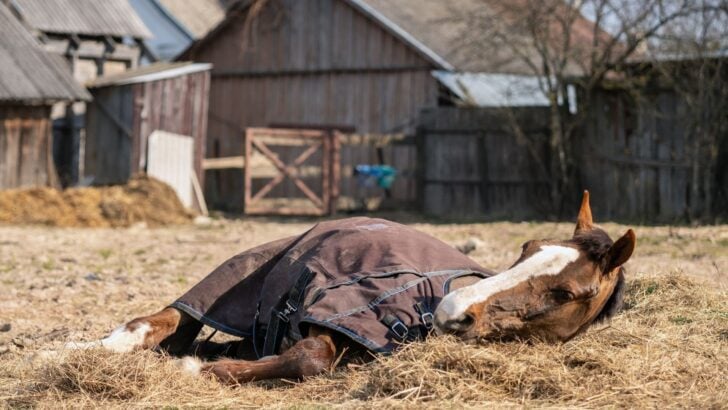
Colic is a broad term for abdominal pain in horses, and it’s one of the more dangerous conditions on this list – some cases resolve with a single dose of medication, others require emergency surgery. Common triggers include gas buildup, intestinal impaction, grain overload, sand ingestion, and parasites, though the exact cause isn’t always clear.
Signs to watch for
Watch for pawing, looking at the flank, repeated lying down or rolling, sweating, loss of appetite, reduced manure, or a horse that can’t get comfortable.
What to do
Call your vet promptly if you suspect colic. Remove feed unless your veterinarian tells you otherwise, but leave clean water available unless your vet gives different instructions.
Don’t give medication or put yourself at risk trying to keep a painful horse from rolling – a horse can’t reliably twist its intestine simply by rolling, and the bigger danger is often an owner getting hurt trying to prevent it. Your vet can tell you whether to walk him, confine him safely, check vital signs, or take other steps while you wait.
I’ve covered colic causes, symptoms, and what to do in much more depth in a dedicated guide – see how horses get colic and how it’s treated for the full picture.
Equine Asthma (Heaves/RAO)
Equine asthma is a chronic inflammatory airway disease. Many horse owners still use “heaves” or “RAO” (recurrent airway obstruction) for the more severe form, especially in mature horses that react to dusty hay, bedding, mold spores, or other airborne irritants. It’s non-infectious – a reaction, not something a horse catches from another horse.
Symptoms
Early on, it can look like nothing more than an occasional cough. As it progresses, expect faster breathing during exercise, wheezing, flared nostrils, and nasal discharge. In advanced, poorly managed cases, the horse’s abdominal muscles enlarge from the constant extra effort of breathing – sometimes called a “heave line.”
Prevention and treatment
With equine asthma, the barn environment usually matters more than the medication. Reduce dust at the source: maximize turnout when practical, improve ventilation, use low-dust bedding, and discuss forage changes with your veterinarian. Some horses do better with steamed hay, soaked hay, or a suitable hay replacement, depending on their respiratory needs and feeding program.
There’s no cure, but the condition is very manageable. Your vet may prescribe anti-inflammatory medication – oral, injectable, or inhaled – to control flare-ups. Horses with well-managed asthma, especially with real improvements to air quality, often continue working comfortably for years.

Laminitis (Founder)
Laminitis is inflammation and weakening of the laminae, the tissue that bonds the coffin bone to the hoof wall. In severe cases the bond fails enough that the coffin bone rotates or sinks within the hoof – permanent, painful damage. Laminitis and founder are often used interchangeably, and it’s one of the more serious conditions on this list because catching it early genuinely changes the outcome.
Early signs include heat in the feet, a stronger-than-normal digital pulse, shifting weight between feet, a shortened stride, and reluctance to move. Rich pasture, grain overload, obesity, insulin dysregulation, retained placenta, severe illness, and other problems can all contribute to laminitis. For many at-risk horses, prevention centers on weight management, controlled forage intake, regular hoof care, and prompt attention to an underlying medical issue. I’ve seen horses recover well when owners catch those early signs, and I’ve seen how quickly things can go downhill when a horse keeps getting pushed through foot pain.
Given how much there is to know about recognizing and managing this condition, I’ve covered it in full detail separately: see what causes founder in horses and preventing laminitis for early-warning signs, prevention strategies, and what treatment actually involves.
Equine Influenza
If you suspect the flu, call your vet for testing and isolate the horse from others while you wait.
Equine influenza is a highly contagious respiratory virus and a common cause of acute respiratory illness where horses travel, show, race, or otherwise mix with unfamiliar horses. It spreads through the air when an infected horse coughs.
Symptoms of equine influenza
Lethargy, loss of appetite, fever, nasal discharge, coughing, and swollen lymph glands are typical. Most horses recover with rest, though secondary complications can occur if the horse is worked before it’s fully recovered.
Prevention and treatment
Avoid contact with horses of unknown health status, especially any that are coughing. Both injectable and intranasal vaccines are available and reduce risk, though neither guarantees full protection – your vet can advise on the right schedule for your horse’s exposure level.
If you suspect the flu, call your vet for testing and isolate the horse from others while you wait. Treatment is mostly supportive – clean, well-ventilated housing, plenty of water and hay, and fever control as needed. Don’t return a horse to work until your veterinarian is satisfied he’s recovered; respiratory illness needs real rest, not just a day or two after the fever breaks. A common rule of thumb many horsemen use is roughly a week of rest for every day the horse had a fever, but your veterinarian’s assessment should make the final call.
Equine Infectious Anemia (EIA)
EIA is far less common than the conditions above, but every horse owner should understand it because it’s incurable, regulated, and spread by blood-feeding insects and contaminated blood. It also explains why Coggins paperwork matters when you buy, ship, board, show, or travel with a horse. An infected horse may look completely healthy while remaining a lifelong carrier. Because the virus is spread through infected blood rather than ordinary nose-to-nose contact, testing matters more than trying to judge risk by appearance alone.
The Coggins test is how EIA is diagnosed. A current negative Coggins test is commonly required for interstate travel, shows, sales, and boarding facilities, but the exact test timing and paperwork requirements vary by state and event. Testing has dramatically reduced EIA’s prevalence in the U.S. since the test became widely available in the 1970s, though the disease still turns up in isolated cases each year.
Symptoms and outcomes
Acute cases can hit hard and fast, with a severe fever spike; some horses die within weeks. Others progress to a chronic pattern of recurring fever, weight loss, fluid retention, and leg swelling. Some infected horses show no symptoms at all but remain lifelong carriers capable of infecting others – which is the whole reason routine Coggins testing exists.
There’s no cure and no vaccine available in the U.S. A positive EIA test triggers state and federal animal-health requirements; owners should work immediately with their veterinarian and animal-health officials, since the specifics of quarantine, movement restriction, and next steps vary by jurisdiction. Prevention – annual testing, fly control, and only attending events that require Coggins certification – matters more here than with most conditions on this list.
FAQs
What horse diseases are the most serious?
There isn’t one universal answer – severity depends on the condition and the individual horse. EIA is serious because infected horses become lifelong carriers, while severe colic, laminitis, and neurologic EHV can become life-threatening emergencies. What matters most is recognizing an emergency early: severe pain, difficulty breathing, high fever, neurologic signs, collapse, or a horse that can’t get up all need immediate veterinary attention.
Is equine influenza deadly?
Most healthy adult horses recover from equine influenza with isolation, rest, and veterinary guidance. The risk is higher for young horses, older horses, horses with other health problems, and horses that return to work before their respiratory system has recovered.
Are ulcers common in horses?
Yes – gastric ulcers are very common, particularly in horses under stress, in hard training, or on high-grain diets. See our full guide for signs, causes, and treatment.
What vaccinations does a horse actually need?
Core vaccines recommended by the AAEP for nearly all horses include rabies, tetanus, West Nile virus, and Eastern/Western equine encephalitis. Risk-based vaccines, including strangles, EHV, and influenza, depend on age, travel, local disease activity, and contact with unfamiliar horses. Review the AAEP vaccination guidelines with your veterinarian to build the actual schedule for your situation.
How can I tell if my horse’s illness is an emergency?
Call your vet immediately for severe or worsening pain, repeated rolling, trouble breathing, a high fever, neurologic signs such as stumbling or hind-end weakness, collapse, or a horse that can’t stand. A horse producing little or no manure along with pain, poor appetite, or other colic signs also needs prompt veterinary advice. If your horse is suddenly not acting normal and you aren’t sure how serious it is, call.
You don’t have to diagnose every illness at the barn. The useful habit is knowing what’s normal for your horse, noticing when that changes, and getting your veterinarian involved early. Keep up with the vaccination and biosecurity plan that fits your horse’s travel and exposure, and don’t haul or turn out a horse that has a fever, cough, nasal discharge, or unexplained neurologic signs.
About Miles Henry
Racehorse Owner & Author | 30+ Years in Thoroughbred Racing
Miles Henry (legal name: William Bradley) is a professional horseman based in Folsom, Louisiana. He holds Louisiana Racing License #67012 and has spent over three decades managing Thoroughbreds at premier tracks including Fair Grounds, Delta Downs, and Evangeline Downs.
Expertise & Hands-On Experience: Beyond the track, Miles has decades of experience in specialized equine care, covering everything from hoof health and nutrition to training protocols for Quarter Horses, Friesians, and Paints. Every guide on Horse Racing Sense is rooted in this “boots-on-the-ground” perspective.
30 of their last 90 starts
Equibase Profile.

Connect with Miles: