

Last updated: September 18, 2026
Any links on this page that lead to products on Amazon are affiliate links and I earn a commission if you make a purchase. Thanks in advance – I really appreciate it!
Maybe your horse left grain in the tub this morning, turned sour when you reached for the girth, or came back flat in training. Ulcers may be part of the picture, especially in performance horses, but those same signs can also come from saddle fit, back pain, dental trouble, lameness, or other digestive problems.
Horse ulcers
- They’re common in performance horses: Studies have reported high rates of gastric ulceration in Thoroughbreds in training, though risk varies by horse, management, and lesion type.
- The signs aren’t specific: Picky eating, girthiness, poor performance, condition loss, and recurrent mild colic can occur with ulcers, but they can also point to another problem.
- Gastroscopy confirms gastric ulcers: A scope lets your veterinarian examine the stomach and identify whether lesions involve the squamous or glandular region.
- Treatment is veterinary-directed: Omeprazole is commonly used for confirmed gastric ulcers, while glandular disease may need a different approach.
- Management matters: Avoiding long forage gaps, reviewing starch intake, and reducing avoidable stress can help lower risk and reduce recurrence.
Below, I’ll cover the signs worth discussing with your veterinarian, how ulcers are confirmed, what treatment usually involves, and the feeding and management changes that have made the biggest difference in our barn.
Disclaimer: This reflects our barn’s management practices and research, not veterinary advice. I’m not a licensed veterinarian. Always work with your veterinarian for diagnosis, medication, and treatment decisions.
Table of Contents
What Are Horse Ulcers?
Equine gastric ulcer syndrome, often shortened to EGUS, describes sores in a horse’s stomach lining. Horses produce stomach acid continuously. When a horse goes long stretches without forage or works with an empty stomach, the upper stomach is more exposed to acid.
Veterinarians generally separate gastric ulcers into squamous disease in the upper stomach and glandular disease in the lower stomach. That distinction matters because the risk factors, treatment plan, and response can differ. Squamous ulcers are common in performance horses and often respond well to omeprazole-based treatment plus better forage management. Glandular disease can be more stubborn and may require a different veterinary-directed plan.
Horse Ulcer Symptoms: Signs Worth Taking Seriously
Ulcer signs can be subtle, and the signs you see don’t reliably tell you what a scope will show. Some horses with significant lesions look nearly normal, while another horse with mild changes may act miserable. Ulcers are worth considering, but you can’t diagnose them by symptoms alone.
Signs worth discussing with your veterinarian:
- Picky eating: Leaving grain behind, taking a few bites and walking away, or eating hay eagerly while avoiding concentrates.
- Girthiness: Pinning ears, biting, or becoming resentful when saddled or girthed. See our guide to girthiness causes and solutions.
- Condition loss: Unexplained weight loss, loss of topline, or a dull coat despite an adequate ration.
- Performance decline: A horse that’s reluctant to extend or collect, feels tight through the back, or suddenly loses his usual willingness to train.
- Recurring mild colic: Repeated low-grade episodes, particularly around feeding, deserve a veterinary conversation.
- Foal signs: Colic after nursing, teeth grinding, drooling, diarrhea, poor nursing, or poor weight gain. A sick foal needs prompt veterinary attention.

In my barn, a horse that suddenly starts leaving grain after normally cleaning up gets my attention. Girthiness is another common concern, but it can also come from saddle fit, back pain, or lameness – persistent signs deserve a veterinary workup rather than guesswork.
What Causes Horse Ulcers?
In most barns, ulcer risk isn’t one single mistake. It’s several things stacking up: long forage gaps, a starch-heavy ration, hard work, travel, stall time, changes in routine, or medication use. The more risk factors a horse carries, the more important the management side becomes.
Long gaps without forage are a major concern for squamous disease. Research has linked prolonged fasting with a higher risk of squamous gastric disease, which is why many prevention plans focus on keeping forage available or using a system that avoids long empty-stomach periods. In our barn, switching from twice-daily grain feeding to more consistent hay access with slow-feed nets made the biggest difference.
Large, high-starch concentrate meals can also contribute to an ulcer-prone environment. For ulcer-prone horses, it’s worth reviewing the whole ration with your veterinarian or equine nutritionist instead of assuming more grain is the only way to support work.
Travel, hard work, changes in routine, and NSAID use can add to the risk, especially when they interrupt normal feeding. Use medications such as Bute and Banamine only as directed by your veterinarian. NSAIDs can contribute to gastrointestinal injury and are also associated with conditions such as right dorsal colitis, which is a lower-gut problem and not the same thing as gastric ulcers.
How to Diagnose Horse Ulcers
Gastroscopy, usually called scoping, is the only way to confirm gastric ulcers. It lets your veterinarian examine the stomach lining and see whether visible lesions are in the squamous or glandular region.
Your veterinarian uses the scope findings to describe the lesions and decide what treatment makes sense. A follow-up scope may also be recommended to see whether the stomach has healed, especially in a performance horse or when glandular disease is involved.
Your veterinarian will give you instructions for fasting and water restriction before the examination. The horse is usually lightly sedated while the veterinarian passes a flexible endoscope through the nostril and into the stomach.
For me, scoping has often saved money in the long run because it keeps me from treating the wrong problem. Whether it’s the right next step for your horse depends on the signs, the horse’s history, and your veterinarian’s advice.
Horse Ulcer Treatment and Recovery
Gastric ulcers in horses are generally treatable when the plan matches the diagnosis. Omeprazole is commonly used for confirmed gastric ulcers. GastroGard is an FDA-approved omeprazole product, and Gastrobim is an FDA-approved generic omeprazole paste. Both are prescription products used under veterinary direction. Glandular disease may require a longer or different treatment plan and sometimes additional medication.
Follow your veterinarian’s instructions and the product label for dosing, timing, and administration. Don’t change the dose, combine medications, or substitute a compounded product without discussing it with your veterinarian.
Some owners notice appetite or attitude improve within the first several days of treatment, but a horse acting better doesn’t prove the lesions have healed. Your veterinarian can decide whether follow-up gastroscopy is appropriate, especially for a performance horse or a horse with glandular disease.
UlcerGard also contains omeprazole, but it is marketed for prevention during predictable stress periods. If your horse is hauling, showing, racing, or entering a hard training block, ask your veterinarian whether a prevention plan fits the horse and the situation.
How to Help Prevent Horse Ulcers
Medication treats the lesions already present. Management helps reduce the conditions that can keep bringing them back. The exact program needs to fit the individual horse, but these are the areas I look at first.
| Area | What to review |
|---|---|
| Forage access | Avoid long forage gaps. The right setup may be free-choice hay, measured hay, slow feeding, pasture, or a combination that fits the horse’s weight and metabolic needs. |
| Feed and starch | Review meal size, starch level, and forage quality. Smaller meals and adequate forage are common starting points, but a nutritionist can help balance calories for a hard-working horse. |
| Before exercise | Avoid working a horse on a completely empty stomach. Some programs use a small measured amount of forage, including alfalfa, before work. Ask your veterinarian or nutritionist what fits the ration. |
| Stress and routine | Look closely at stall time, shipping, changes in turnout, hard training blocks, social stress, and disruptions to feeding. Reduce avoidable stress where you can. |
Alfalfa is one management tool I use. Its calcium content may help buffer stomach acid, and some feeding programs include a small measured amount before exercise. It isn’t a substitute for diagnosis or prescribed treatment, and it still needs to fit the horse’s total ration. If you’re deciding which hay suits your horse, see our comparison of timothy, grass, and alfalfa hay.
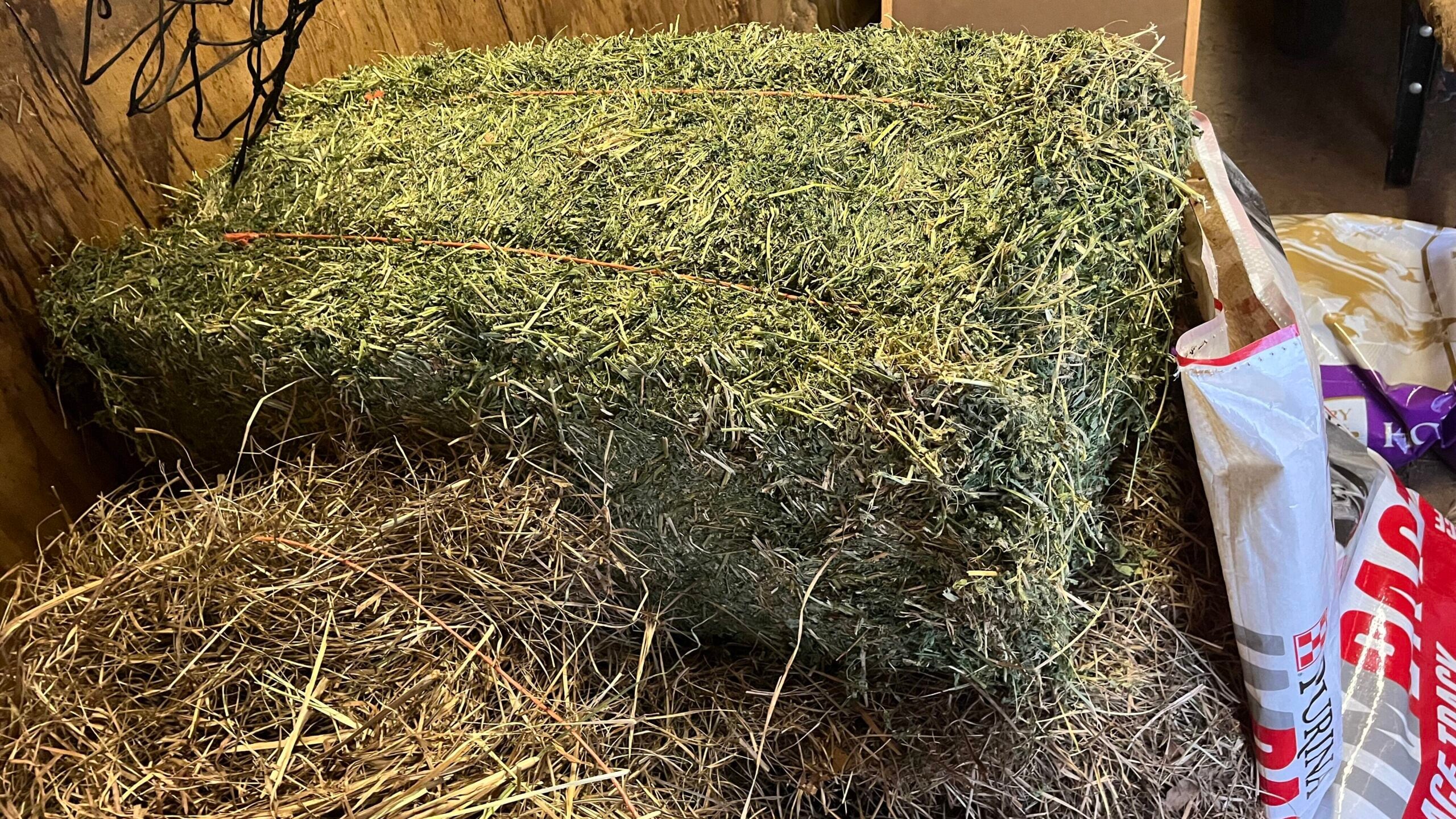
What made the biggest difference in our barn: More consistent forage access. When I moved from twice-daily grain feeding to a system with more hay available through slow-feed nets, we saw fewer ulcer concerns and fewer horses that seemed tense around morning training. That doesn’t mean free-choice hay is right for every horse, but avoiding long stretches without forage has been the foundation of our program.
When It May Not Be Ulcers
Not every girthy, picky-eating, or underperforming horse has ulcers. Treating the wrong problem wastes time and money, and it can delay the care the horse actually needs.
Other problems that can look like ulcers:
- Saddle fit, back pain, or subtle lameness: Common reasons for girthiness, resistance, and a horse that feels sour under saddle.
- Dental pain: A horse may drop feed, avoid concentrates, lose weight, or seem unhappy at the feeder because his mouth hurts.
- Estrous-related behavior in mares: Cycle-related changes can sometimes look like general irritability or discomfort.
- Digestive disease beyond the stomach: Right dorsal colitis and other intestinal or colonic problems won’t show up on a stomach scope.
If your horse is also losing weight, having repeated colic episodes, or not responding to the plan your veterinarian recommended, ask for a broader workup rather than assuming it’s still gastric ulcers.
When to Call Your Vet Immediately
Call your veterinarian promptly if your horse refuses feed, shows colic signs, produces much less manure, develops diarrhea, seems weak or depressed, or suddenly gets worse. Severe or escalating colic, repeated rolling, signs of dehydration, black or tarry manure, or a foal with pain, diarrhea, poor nursing, or teeth grinding are emergencies. See our guide on what to do when your horse colics, but don’t wait for an article to replace veterinary advice when a horse seems genuinely unwell.
FAQs
How do I know if my horse has ulcers without scoping?
You can’t definitively diagnose gastric ulcers without a gastroscope. Picky eating, girthiness, condition loss, poor performance, and mild recurrent colic can fit ulcers, but they can also come from saddle fit, back pain, dental trouble, lameness, or other digestive disease. Talk with your veterinarian about the right next step for your horse.
How long does horse ulcer treatment take?
Treatment length depends on the lesion type and the plan your veterinarian prescribes. Squamous disease often follows a standard course of around 28 days, while glandular disease may require a longer or different protocol. A horse acting better doesn’t prove healing, so follow-up care should be based on your veterinarian’s recommendations.
What is the difference between GastroGard and UlcerGard?
Both contain omeprazole. GastroGard is used to treat gastric ulcers under veterinary direction. UlcerGard is marketed for prevention during predictable stress periods, such as shipping, showing, racing, or hard training. Ask your veterinarian which approach, if any, fits your horse.
What feeding changes can help reduce ulcer risk?
Most prevention plans focus on avoiding long periods without forage, reviewing starch-heavy concentrate meals, and reducing avoidable stress. Some programs use a small measured forage meal before exercise. The right feeding plan depends on the horse’s workload, weight, metabolic status, forage, and total ration.
Key takeaways:
- Horse ulcer signs can be easy to miss, but they can also overlap with many other problems.
- Gastroscopy is the only way to confirm gastric ulcers and identify the stomach region involved.
- Veterinary-directed treatment and management changes work best together.
- Forage access, starch level, exercise timing, and stress are practical areas to review with an ulcer-prone horse.
- If the horse worsens, has colic, refuses feed, or seems systemically ill, call your veterinarian promptly.
Ulcers are manageable, but they aren’t something to guess at. If your horse is acting off, start with the signs, involve your veterinarian early, and take an honest look at the feeding and stress picture. The best results I’ve seen come from matching treatment to the diagnosis and making the management changes that give the horse a better chance to stay comfortable afterward.
About Miles Henry
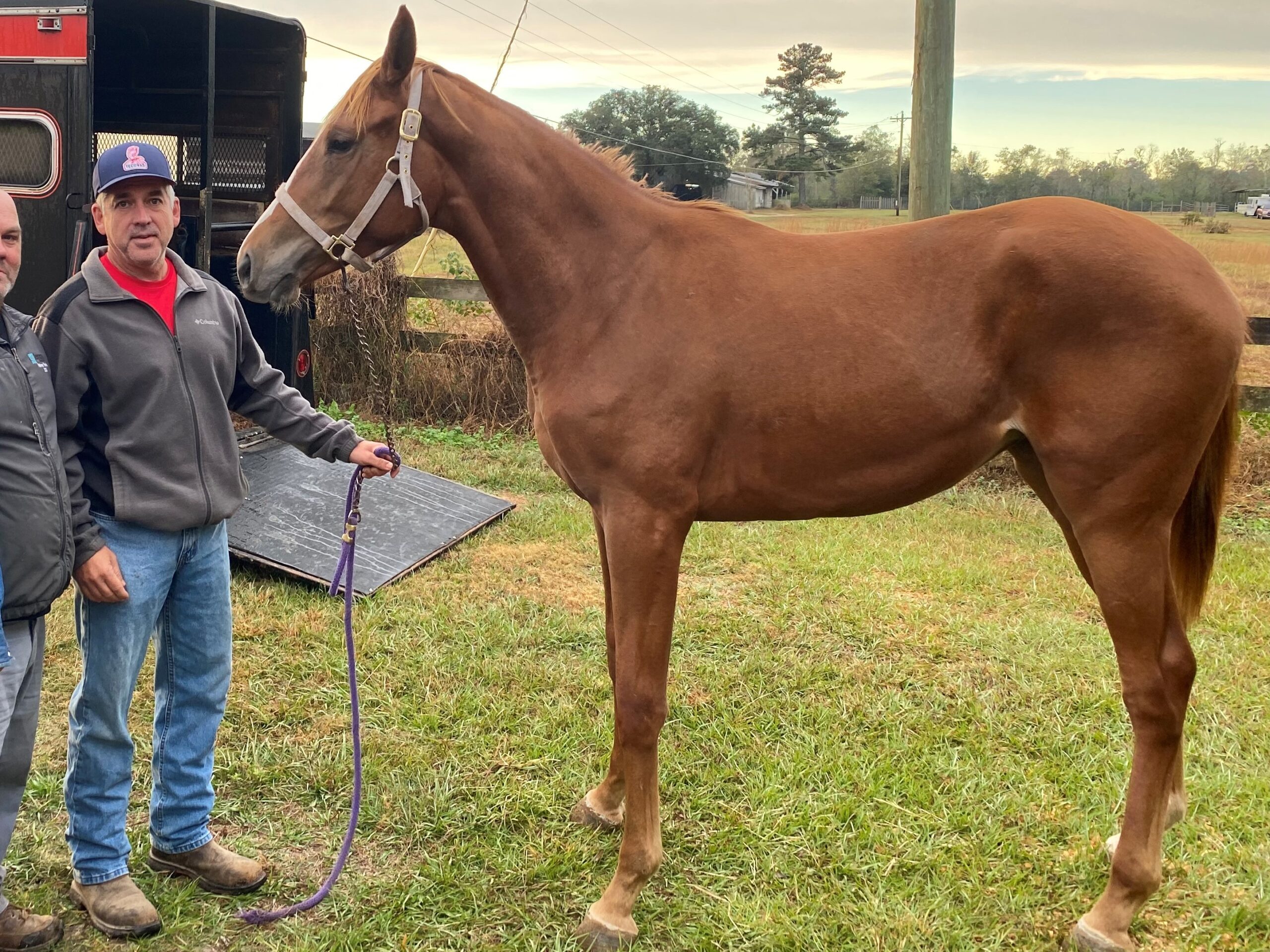
Racehorse Owner & Author | 30+ Years in Thoroughbred Racing
Miles Henry (legal name: William Bradley) is a professional horseman based in Folsom, Louisiana. He holds Louisiana Racing License #67012 and has spent over three decades managing Thoroughbreds at premier tracks including Fair Grounds, Delta Downs, and Evangeline Downs.
Expertise & Hands-On Experience: Beyond the track, Miles has decades of experience in specialized equine care, covering everything from hoof health and nutrition to training protocols for Quarter Horses, Friesians, and Paints. Every guide on Horse Racing Sense is rooted in this “boots-on-the-ground” perspective.
30 of their last 90 starts
Equibase Profile.

Connect with Miles: