

Last updated: May 27, 2026
I will never forget the day Mickey’s Mularkey went off at 15-1 at New Orleans Fairgrounds. Most bettors saw a four-year-old who had not won in eight months. What they missed was the paddock body language, the new trainer’s quiet confidence, and the subtle form improvements buried in his past performances. When Mickey paid $32.40 to win, I learned a lesson that shaped the next 30 years of my handicapping: live longshots are not accidents. They are opportunities hiding in plain sight.
What makes a horse racing longshot “live”? A live longshot is a horse whose actual winning probability significantly exceeds what the betting public believes — not just a horse with high odds. The five factors that identify them: improving recent form or workout pattern, favorable trainer and jockey signals, positive paddock appearance, a track or surface setup that suits the horse’s style, and odds that are higher than the horse’s actual chance warrants. The practical rule: only consider a bet when at least three of the five factors align.
About this guide: All examples — Mickey’s Mularkey, Corked, Aunt Addie, Astrology’s Protege, Seeking a Soldier, Diamond Country, Jeb — are horses Miles Henry owned and raced at Fair Grounds, Delta Downs, and Evangeline Downs. The criteria described here are observable by any public handicapper; the owner perspective simply provides more complete knowledge of each case.
Table of Contents
What Makes a Longshot ‘Live’?
A live longshot is not simply a horse with high odds. It is a horse whose actual winning chances significantly exceed what the betting public believes. That gap between actual probability and implied odds is where the value lives — and identifying it is the core skill in handicapping.
Through 30 years of owning and observing Thoroughbreds, I have found that live longshots fall into three categories: horses returning from layoffs with hidden fitness, horses switching to favorable conditions that suit their running style, and horses whose recent performances mask underlying improvement. The betting public focuses on the finish line. Sharp handicappers focus on why the horse finished where it did and whether those reasons are likely to change.
Take Corked. After a disappointing summer campaign, he was dismissed at 12-1 when entered in a claiming race. What bettors did not see was his exceptional morning workouts, his improved paddock demeanor, and his consistent history of performing better in cooler weather. When Corked won by three lengths it was not luck — it was a classic case of the market mispricing information that was available to anyone who bothered to look. Understanding the takeout structure is part of why this matters: favorites win roughly a third of races but typically produce long-term losses because their low payouts cannot compensate for the loss rate. Live longshots are where sustainable positive returns are possible.
Why longshots matter mathematically: Public favorites win roughly one-third of races overall, which means two out of every three races are won by non-favorites. The challenge is not predicting chaos — it is identifying which overlooked horses are legitimately dangerous rather than simply unlikely. That distinction is what separates systematic longshot handicapping from random betting at high odds.
The 5-Step Live Longshot Framework
Work through these five factors in order. Consider a bet when at least three align — the more that do, the stronger the case. No single factor is strong enough on its own.
Step 1 – Recent Form Surge
Look for horses showing improvement across their last two or three races, even without winning. A horse finishing 6th–4th–2nd demonstrates positive momentum that casual bettors overlook. Focus on speed figures trending upward, or horses earning faster fractions despite not winning. Pay particular attention to horses returning from layoffs of three months or more — especially if the layoff was due to illness or injury rather than poor performance. Those horses may have been running while compromised, making their pre-layoff form actively misleading.
The key is the workout pattern during the layoff. Horses showing sharp, consistent morning works often return significantly improved while the tote board still reflects their old form.
Miles’s Take — The filly that came back better: I once had a filly who gave me two poor races in a row and then went six months off. Her workouts before returning were sharp, fast, fluid, and confident. Bettors saw only the bad races. Those breezes told me something different. She outran her odds decisively, and it was a reminder that layoff form hides more than it reveals for any bettor who only reads the finish positions.
Step 2 – Trainer and Jockey Signals
New connections often signal renewed confidence in a horse’s ability. When a claiming trainer puts a high-percentage jockey on a longshot, they are usually expecting improved performance. This is one of the most reliable patterns in identifying live longshots because it represents the trainer making a statement with actions, not words. Research trainer statistics for specific conditions — layoff performance, first-time starter rates, and trainer-jockey combination win percentages — using Equibase and the Daily Racing Form. Track-specific numbers matter more than national averages, as covered in the racehorse trainer guide.
The day Astrology’s Protege finally broke through, my trainer had switched to a jockey with a 22% win rate on horses returning from breaks. The betting public was focused on the horse’s recent losses. The jockey choice was the signal they missed. I also owned Seeking a Soldier — his regular jockey was injured and replaced by a rider with exceptional turf statistics. Bettors saw a jockey change as a negative. The replacement had a 19% win rate on the grass. Seeking a Soldier won at 9-1.
Step 3 – Paddock Appearance
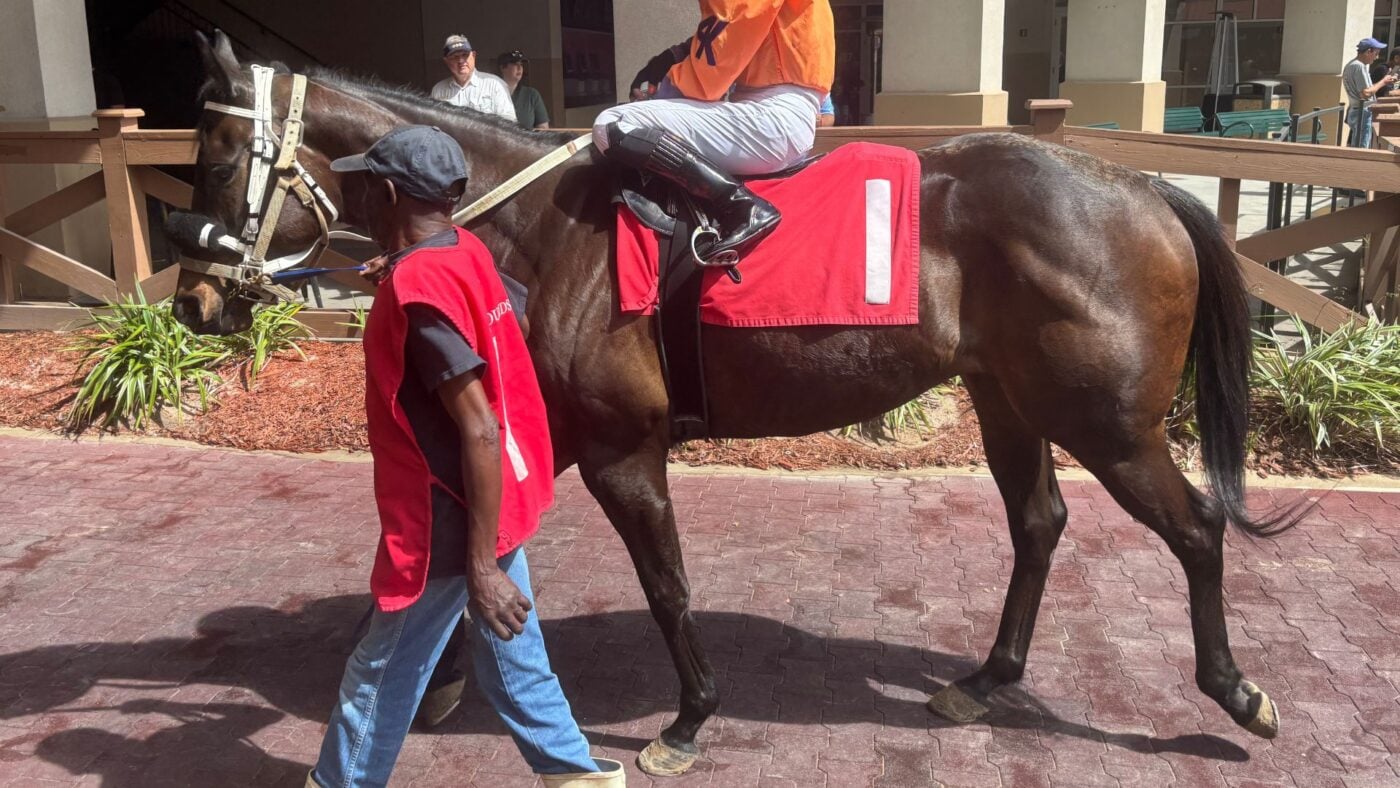
Physical appearance tells a story that past performances cannot capture. The paddock is where a live longshot often reveals its readiness most clearly. Positive signs: pricked ears (alert and focused), a glossy coat (indicates health and fitness), a fluid walk with no stiffness, focused eyes locked on the track rather than scanning nervously, and a relaxed demeanor that is not anxious or overexcited before the race has started. Warning signs: a dull coat or sunken appearance, excessive sweating before the warm-up begins, agitated or fractious behavior, and stiff or labored movement on the way to the post. A horse that looks dull or uninterested rarely outperforms expectations. The tote board tells you what the crowd thinks. The paddock tells you what the horse knows.

Step 4 – Track, Surface, and Pace Fit
Surface and distance preferences create significant value opportunities when horses encounter ideal conditions that the public ignores. A horse might struggle on dirt but excel on turf, or perform poorly at six furlongs but dominate at a mile. These preferences become betting edges when the public focuses on recent poor performances without considering that those performances came under different conditions.
My gelding Jeb had mediocre dirt form that generated dismissive odds whenever he ran on the main track. On turf, he was a different animal — stride lengthened, tactical speed improved, finishing kick became reliable. Smart handicappers who identified that pattern profited repeatedly each time he switched surfaces.
Track bias is also relevant — some horses perform better on speed-favoring tracks versus closer-friendly surfaces, and weather conditions that create wet or cuppy going can dramatically change which running styles the track rewards on a given day.
Step 5 – Odds Mispricing
True value emerges when odds exceed actual winning probability. A horse with a 15% chance of winning should offer approximately 6-1 odds. When that same horse goes off at 10-1 or higher, you have found a mathematical edge — the kind that produces long-term positive returns if identified consistently. The conversion is straightforward: 8-1 odds imply an 11.1% win probability. If your analysis suggests the horse is genuinely closer to a 20% chance, the 8-1 is a value bet. The tools for estimating that probability are speed figures, pace analysis, class comparison, and trainer patterns.
| Odds | Implied Win Probability | Break-Even Rate |
|---|---|---|
| 3-1 | 25.0% | 1 win every 4 races |
| 5-1 | 16.7% | 1 win every 6 races |
| 8-1 | 11.1% | 1 win every 9 races |
| 10-1 | 9.1% | 1 win every 11 races |
| 15-1 | 6.3% | 1 win every 16 races |
| 20-1 | 4.8% | 1 win every 21 races |
Before Mickey’s Mularkey’s win, my analysis suggested he had roughly an 18% chance — around 4.5-1 fair odds. The tote board showed 15-1. That mathematical gap, combined with the positive signals from steps 1 through 4, made him an ideal longshot bet. The odds were not just higher than fair — they were dramatically higher, which is the only category worth acting on.
The 3-of-5 rule in practice: The five steps are not a checklist to pass — they are a convergence test. One factor is interesting. Two factors are suggestive. Three or more factors aligning is when the bet becomes defensible. The single most common mistake in longshot betting is finding one compelling angle — a class drop, a sharp workout, a paddock look — and acting on it alone. Longshots win when multiple indicators converge, not because a single angle is compelling enough by itself.
Six Supporting Angles That Strengthen Any Longshot Case
These six techniques are not replacements for the five-step framework — they are additional confirmation layers that sharpen a case that is already building.
Trip Handicapping
A horse that encountered traffic trouble, was forced wide, or was steadied in the stretch may have run much better than its finishing position shows. These horses often offer excellent value in their next start because the public remembers the poor finish, not the circumstances that caused it. Watch replays focused on individual horses rather than winners — look for horses making moves that were interrupted, steadied, or blocked. Aunt Addie finished seventh in one race but was steadied twice in the stretch and lost significant ground navigating traffic. Her next start at 8-1 was a two-length win with a cleaner trip.
Late Odds Movement
Watch for horses whose odds drop significantly in the final 10 to 15 minutes before post time, especially when dropping from longshot range — say, 15-1 to 8-1. Late money often comes from people closer to the horse than the general public. It does not guarantee a win, but it confirms that someone with information is backing their opinion financially. When late odds movement aligns with steps already checked in the framework, it adds conviction. When it moves opposite to your analysis, it is worth reconsidering. At smaller tracks with lighter betting pools, however, even modest wagers can move odds dramatically — so late steam should be treated as supporting evidence rather than proof.
Pace and Running Style Mismatches
One of the best longshot setups occurs when several horses want the early lead. Casual bettors often focus on the fastest horse on paper without considering how much that speed costs when multiple front-runners are chasing the same position.
When the early pace gets too aggressive, the race often shifts toward stalkers and closers sitting just behind the leaders. Horses that looked too slow on paper can suddenly become dangerous because the leaders have softened each other up before the stretch run begins.
This is where pace figures and running styles matter. In sprint races, the first pace calls usually come at two and four furlongs, while route races extend those calls farther into the race. Understanding where the pressure develops helps identify races likely to collapse late.
I find some of my best longshot opportunities when the betting public focuses on obvious early speed while overlooking a horse whose running style fits the projected pace setup.
Personal Observation Logs
Track patterns others miss by keeping notes on horses you follow regularly — behavioral tendencies, optimal conditions, timing cycles between peak workouts and peak race performance. I discovered that Mickey’s Mularkey consistently ran his best races 10 to 14 days after his sharpest morning breeze. That timing pattern became a reliable predictor of his peak windows that no published past performance could capture.
Stable Form
Entire stables go through hot and cold cycles. When a trainer’s barn is firing — horses are healthy, the staff is clicking, and placement decisions are sharp — even their longshots become more dangerous. Track stable form by monitoring recent wins and near-misses across all of a trainer’s horses at the current meet, not just the individual horse you are evaluating.
Equipment Changes
First-time Lasix, blinkers, or tongue ties often signal that connections expect improvement. These changes are listed in the race program and represent a trainer making a deliberate adjustment based on what they have seen in the barn. Conversely, equipment removal after previous success may indicate confidence that the horse’s natural ability is now sufficient — another positive signal.
Breeding for Surface and Distance
Certain bloodlines excel under specific conditions. A horse with turf breeding making its grass debut, or a dirt-bred horse returning to its preferred surface, often provides value when the public focuses only on recent form rather than genetic predisposition. Pedigree handicapping is particularly useful for first-time turf starters — a category where breeding signals can be the primary factor in an otherwise thin form line.
When a Longshot Is Not Live — A Case Study
Identifying a live longshot requires the same discipline as knowing when to pass. High odds alone are not value — they may simply reflect that the horse has no realistic chance. Running a longshot through the five-step framework before betting is what separates systematic handicapping from wishful thinking.
Case study — a tempting trap that did not qualify: A horse went off at 17-1 and drew attention from value-seekers. He was dropping in class from a $40K claimer to a $25K sprint, and his early pace figures suggested some front-end ability. Two checkboxes. But running the full framework: his last three starts showed declining speed figures and fading finishes (Step 1 fail), the same low-percentage connections with no switch (Step 2 fail), he looked fit in the paddock (Step 3 pass), had never hit the board at this distance-surface combination (Step 4 fail), and the small class drop only created value if form improved — which the declining figures argued against (Step 5 weak). Score: 2 of 5. Result: faded to eighth after a brief flash of early speed. A class drop is compelling. A class drop with no other supporting evidence is a trap, not an opportunity.
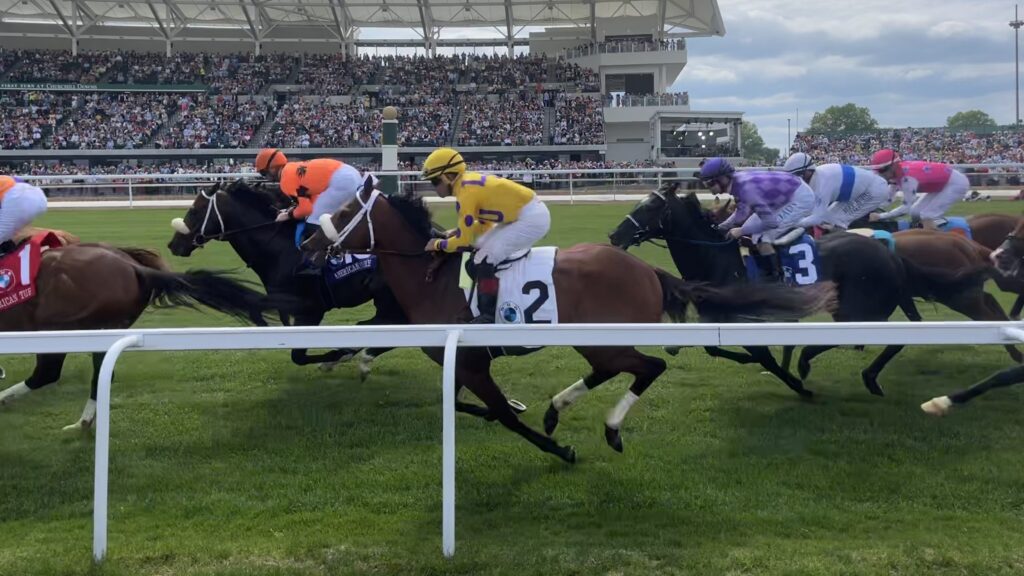
Diamond Country illustrates the correct version of the class drop angle. After two poor back-to-back showings — first in an allowance race, then in a $15,000 claimer — she was dropped into a $5,000 claiming race. The betting public saw only the recent failures and sent her off at 10-1. But the dramatic class drop, combined with sharp morning works and a positive paddock appearance, told a different story: connections believed she was ready to win against easier competition. She won by three lengths. The class drop was genuine relief, not a distress signal — and the other factors confirmed it.
The Five Biggest Longshot Betting Mistakes
Spotting a live longshot requires the same discipline on the pass side as on the bet side. These are the most common ways bettors undermine an otherwise sound approach.
Overweighting a Single Angle
Falling in love with one factor — a class drop, a fast workout, a paddock look — is the most common mistake. No single angle is strong enough on its own. A horse can be dropping in class and still be slow, unfit, or poorly placed. The 3-of-5 rule exists precisely to prevent acting on compelling but isolated signals.
Ignoring Recent Form Entirely
A horse that has been off form for months with no sign of improvement is not a value play. The reasoning that a horse is “due” is not handicapping — it is wishful thinking. The odds reflect poor form for a reason. A genuine longshot opportunity requires some positive signal, even if that signal is a workout pattern or a setup change rather than a recent good race.
Letting the Tote Board Make the Decision
High odds do not mean a horse cannot win. Low odds do not mean it will. The tote board reflects public perception, not reality. The value bet is found by forming your own probability estimate first, then comparing it to the implied odds — not by looking at the board and deciding a horse seems underpriced because the number is large.
Chasing After Losses
Longshot betting has volatility by definition. Going 0-for-nine before a winner is a normal sequence, not a sign that the approach is failing. The mistake is increasing bet size or relaxing selection standards after a losing streak to “make it back.” Only bet longshots when they actually show value — not because you are overdue for a winner. Discipline is what separates a system from gambling.
Not Tracking Results
Memory lies about betting performance. Keep a log of every selection — the odds, the finishing position, and the specific factors that justified the bet. Without tracking, you cannot know whether your approach is producing positive expected value or bleeding slowly. The goal is not just to hit winners — it is to identify whether the horses you select at given odds are winning at a rate that justifies the selections. That analysis is impossible without records.
Practical Tools and Starting Habits
Start with small investments while developing pattern recognition. A $2 win bet on each selection for your first 50 bets gives you a meaningful sample without significant financial exposure. The goal at that stage is not profit — it is learning to calibrate your probability estimates against actual outcomes.
Equibase’s free past performance data provides trainer win percentages by surface, distance, and class level — everything needed to evaluate Steps 1 and 2 without a paid subscription. The Daily Racing Form adds deeper trainer angle statistics including layoff rates and first-time starter performance. Do not overlook workout tabs — they often reveal more about a horse’s current condition than recent race results, particularly after a layoff or equipment change.
Focus on one track initially rather than spreading attention across multiple circuits. Developing expertise in a specific facility’s tendencies, biases, and trainer colonies produces better results than superficial knowledge of many tracks. The handicapping for beginners guide covers how to build that track-specific knowledge base systematically.
Gambling reminder: Horse racing wagering involves real financial risk. Even a well-researched longshot approach loses more often than it wins. Never bet more than you can afford to lose, and never chase losses. If gambling is affecting you or someone you know, contact the National Problem Gambling Helpline at 1-800-522-4700.

FAQs About Horse Racing Longshots
What is a live longshot in horse racing?
A live longshot is a horse whose actual probability of winning significantly exceeds what its betting odds imply. The distinction from a dead longshot is important: a horse at 20-1 that genuinely has a 15% chance of winning is a live longshot and a value bet. A horse at 20-1 that genuinely has a 2% chance is simply a longshot — high odds reflecting accurately low probability. The goal is identifying the former, not the latter.
How do you identify a live longshot before a race?
The five-factor framework: improving recent form or workout pattern, favorable trainer and jockey signals, positive paddock appearance, a surface and distance setup that suits the horse’s running style, and odds that exceed the horse’s actual winning probability. When at least three of these factors align, the case for a bet becomes defensible. Single-factor bets — acting on one compelling angle alone — are the most common mistake.
What trainer statistics are most useful for longshot handicapping?
Track-specific win percentage (not national average), first-off-layoff win rate, trainer-jockey combination win rate, and win percentage with horses making surface switches. These stats are available free on Equibase. A trainer with a 22% first-off-layoff win rate at a specific track is a meaningful signal when evaluating a horse returning from a break — particularly when the public has not factored it into the odds.
What does ‘class drop’ mean and when does it signal a live longshot?
A class drop means the horse is entered in a lower-quality race than its previous start. A genuine class relief play — one rung lower, sharp recent workouts, horse competitive at the higher level but not quite finishing — is one of the most reliable longshot angles. A distress drop — multiple rungs lower, declining form figures, no other positive signals — is a trap. The size of the drop and the supporting evidence from the other four factors determine which it is. The class levels guide explains how to read these moves correctly.
How often do longshots win in horse racing?
Horses at 10-1 or higher win roughly 8 to 12% of races collectively, but that aggregate hides enormous variation. A horse at 12-1 with three of five longshot factors aligned has a meaningfully different actual probability than a horse at 12-1 with none of them. The framework is designed to identify horses within the longshot odds range whose actual probability is toward the higher end of the range — not to beat the average longshot hit rate, but to beat the specific odds on specific horses.
What is trip handicapping and how does it help find longshots?
Trip handicapping involves looking beyond finishing positions to evaluate what actually happened during a race — traffic trouble, being forced wide, steadying in the stretch. A horse that finished seventh after being steadied twice may have run much closer to second or third without the interference. These horses often provide value in their next start because the public remembers only the finish position, not the circumstances. Race replays are the primary tool — watch individual horses rather than the winner to spot compromised efforts.
What is the biggest mistake in longshot betting?
Overweighting a single angle. A class drop, a sharp workout, a paddock look, or a favorable trainer stat is compelling in isolation — but no single factor is sufficient to justify a bet. The 3-of-5 rule exists to prevent acting on interesting but isolated signals. The second biggest mistake is not tracking results, which makes it impossible to know whether the selection approach is producing positive expected value or bleeding slowly over time.
Can longshots be profitable in horse racing?
Yes — but only when the odds offered are higher than the horse’s actual chance of winning. Blindly betting longshots is unprofitable because most outsiders lose for legitimate reasons. Profitability comes from identifying mispriced horses whose chances are better than the betting public believes. That requires disciplined handicapping, careful bankroll management, and the discipline to pass races where no genuine value exists. The framework is designed to find those specific horses within the longshot range — not to bet longshots as a category.
Key Takeaways: Spotting Live Longshots in Horse Racing
- A live longshot is not just a high-odds horse — it is a horse whose actual winning probability significantly exceeds what the odds imply; finding that gap is the skill
- The 3-of-5 rule: form surge, trainer/jockey signal, paddock appearance, track fit, and odds mispricing — bet only when at least three align
- Layoff form is the most overlooked angle — horses returning from 90+ days off often carry old form figures that understate their current fitness; workouts during the layoff are the real indicator
- Trainer and jockey signals are actions, not words — a high-percentage jockey on a longshot is a trainer making a statement; trainer layoff and surface-switch win rates are among the most exploitable public stats in handicapping
- Class drops require supporting evidence — a dramatic drop without improving form figures is usually a distress signal, not a value opportunity
- Track results without a log are meaningless — memory is not an accurate record; keep notes on every selection to know whether your approach is actually producing value over time
About Miles Henry
Racehorse Owner & Author | 30+ Years in Thoroughbred Racing
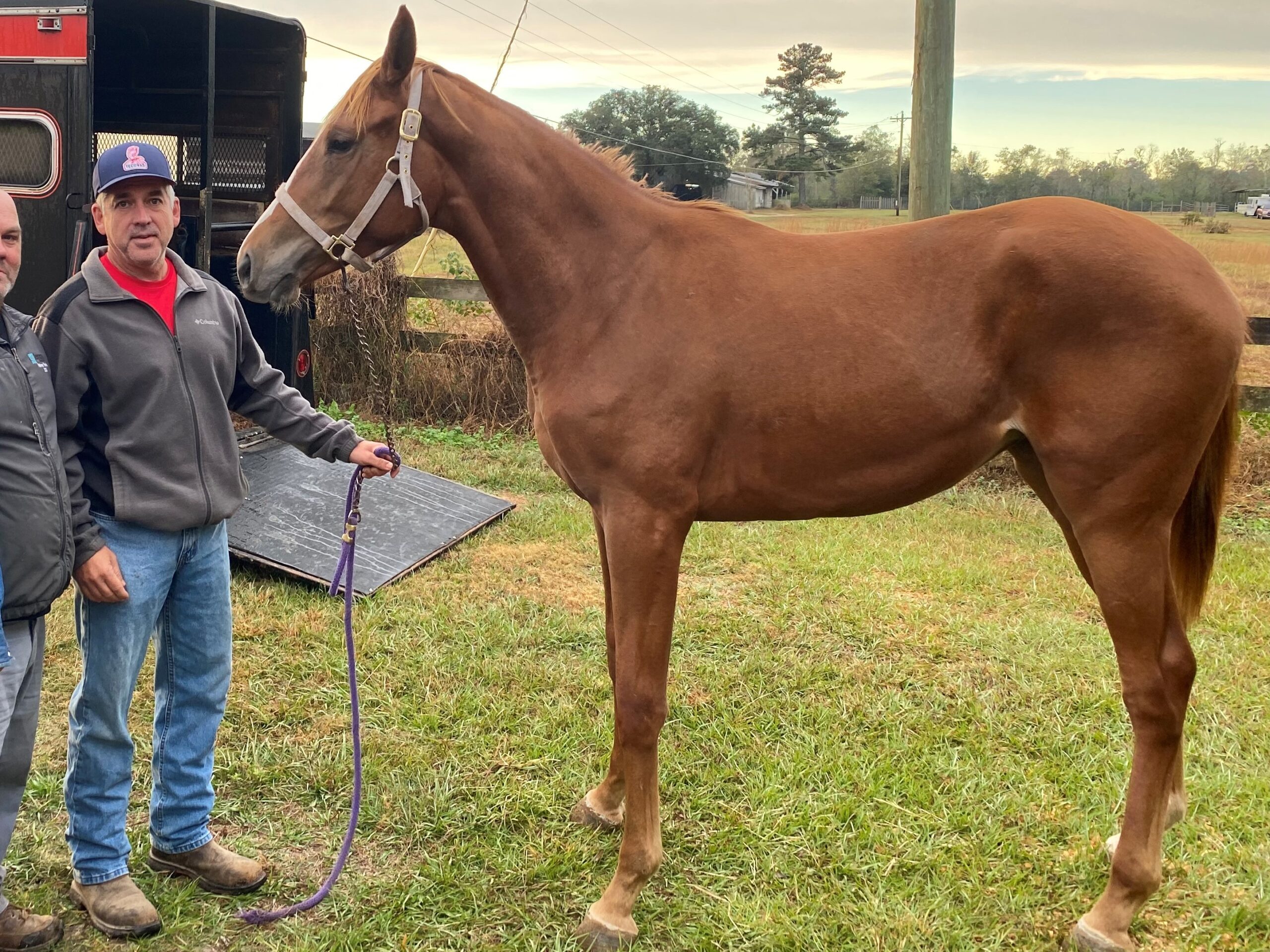
Miles Henry (legal name: William Bradley) is a professional horseman based in Folsom, Louisiana. He holds Louisiana Racing License #67012 and has spent over three decades managing Thoroughbreds at premier tracks including Fair Grounds, Delta Downs, and Evangeline Downs.
Expertise & Hands-On Experience: Beyond the track, Miles has decades of experience in specialized equine care, covering everything from hoof health and nutrition to training protocols for Quarter Horses, Friesians, and Paints. Every guide on Horse Racing Sense is rooted in this “boots-on-the-ground” perspective.
30 of their last 90 starts
Equibase Profile.

Connect with Miles: