
Last updated: August 16, 2026
A horse that spends long stretches stalled or in a small paddock may need more than a ball or hanging treat to stay settled. Limited movement, restricted forage, and too little contact with other horses can contribute to frustration or repetitive behavior, but those same changes can also have medical, pain-related, or management causes.
The best toys for bored horses are the ones that encourage natural behavior: pushing a durable ball, working for forage, or investigating a safe new object. Toys can help, but they work best alongside appropriate turnout, forage access, and safe social contact. I’ve watched one horse push a ball around all afternoon while another ignored the same toy completely.
Below I’ll cover the signs worth paying attention to, the toy types I’d try first, and the management changes that often matter more than the toy itself.
Table of Contents
Signs Your Horse May Be Bored or Need More Enrichment
Do not assume a toy is the answer to every behavior change. New or worsening cribbing, weaving, stall-walking, appetite changes, sensitivity, or a horse that seems unwell warrants a conversation with your veterinarian and a review of feed, turnout, and possible pain, not simply more enrichment. Once those issues are being considered, the patterns below can suggest the horse’s routine needs more variety or opportunity for natural behavior.
Repetitive behaviors such as cribbing, weaving, stall-walking, fence-walking, or repeated pawing.
Restlessness during long stretches in the stall, particularly around feeding or turnout times.
Excessive chewing, licking, or attention directed at fixtures or stall surfaces.
A clear behavior change after reduced turnout, layup, travel, separation from a herd mate, or another significant routine change.
Cribbing in particular has multiple possible contributors. Studies have found an association between gastric ulceration and crib-biting in young horses, but ulcers aren’t proven to be the cause of every cribbing horse. A vet should evaluate a horse with persistent or worsening cribbing, especially if other signs point to pain or gastrointestinal trouble. See our guide to why horses crib for more on that connection.
Why Some Horses Need More Enrichment
Horses are built to spend much of their day moving, grazing, and interacting with other horses. A horse kept in a stall or with limited turnout may get far less opportunity for those behaviors than his body and mind are built for. That gap between how horses are built to live and how we manage them is a major contributor to frustration and repetitive behavior in many horses.
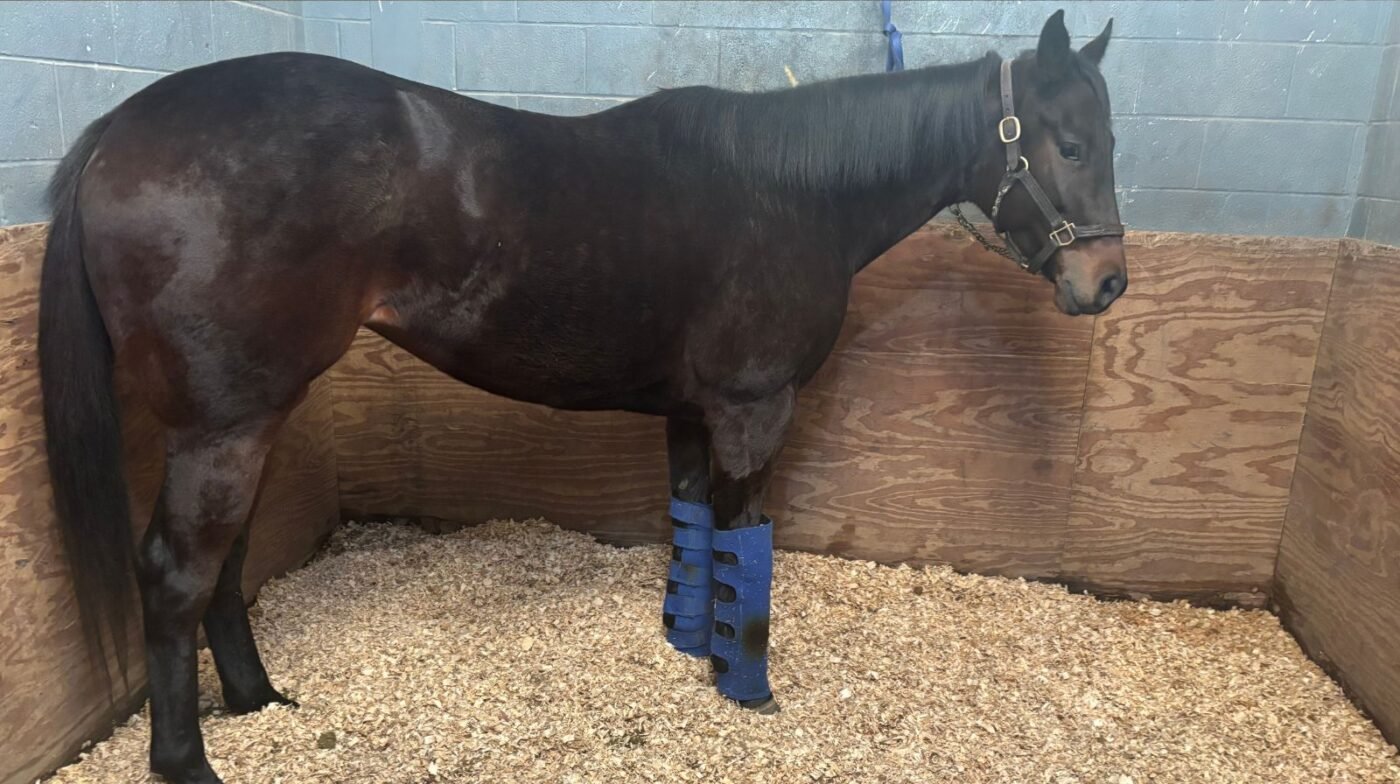
In my experience owning and racing horses, the ones that struggled most with boredom were often the ones doing the most work. They had a job, but they also spent many hours waiting in a stall between training sessions, which is its own kind of confinement even though the horse is clearly busy for part of the day. A horse can be physically tired and still mentally understimulated; those aren’t the same thing, and it’s easy to assume a hard day of training covers both.
Once repetitive behavior is established, it can persist even after management improves, so prevention and an early review of the horse’s routine matter more than waiting to see if a habit goes away on its own.
Best Toys for Bored Horses
The right choice depends on what motivates your horse, where he lives, and whether you can safely supervise a new item at first.

Ball Toys
Best for: horses that enjoy pushing, nosing, or kicking objects around.
Watch out for: cheap plastic toys that split or lose a plug and leave a chewable piece behind.
My experience: some horses love them; others could not care less.
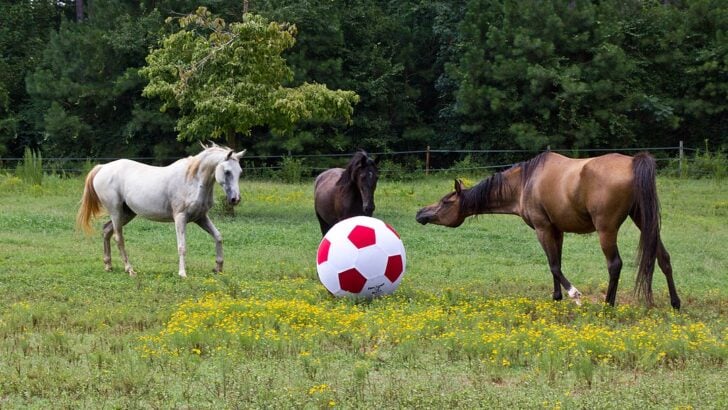
Balls are one of the simplest enrichment toys there is. We used to blow up ordinary beach balls and throw them over the fence for our horses long before purpose-built horse toys were common, and they’d push, nose, and kick them around the pasture for the better part of an afternoon. That said, I’ve learned not every horse is interested in the same things. Some will spend an hour pushing a ball around; others will ignore it completely and choose to work on a hay net instead.
Purpose-made horse balls are generally more durable than the beach balls we used, but I still inspect them often and remove any toy that begins to split, lose a plug, or create a chewable piece. No toy is automatically safe just because it’s marketed for horses.
A handled ball may interest a horse that likes to grab and toss objects, while a large smooth ball may better suit one that prefers to push or kick. Tug N Toss and Jolly Mega Ball are common examples of those two designs.
Treat-Dispensing and Foraging Toys

Best for: food-motivated horses without dietary restrictions.
Watch out for: sugar and starch content, broken parts, or frustration if the toy is too difficult to work.
My experience: I’m describing the design here rather than claiming long-term use.
A hanging treat toy, such as Uncle Jimmy’s Hangin’ Balls or the Horsemen’s Pride Amazing Graze, can give a food-motivated horse something to investigate. Whether it’s appropriate depends on the horse’s diet, stall setup, and the manufacturer’s installation guidance. Follow those instructions, introduce any hanging item under supervision, and remove or reposition it if there’s any risk of entanglement, striking, or the horse getting trapped against it.
Carrot and produce-feeder toys give a food-motivated horse a slower, more interactive way to receive an occasional treat. They aren’t a substitute for forage, and they aren’t appropriate for every diet. Supervise closely, since a horse that rushes pieces of fruit or vegetables may choke.
How to Choose a Safe Toy
The right toy depends more on the individual horse and setup than on the brand. Here’s how I think through it:
| Type | May suit | Where I’d use it | What to watch |
|---|---|---|---|
| Large pasture ball | Horses that push, nose, or kick objects | Turnout area with safe footing and no hazards | Punctures, chewed pieces, damaged plugs |
| Handle ball | Horses inclined to grab and toss | Supervised turnout | Chewing, roughness, worn handles |
| Treat-dispensing toy | Food-motivated horses, no dietary restrictions | Stall or turnout after supervised introduction | Sugar/starch intake, broken parts, frustration |
| Slow feeder or forage toy | Horses that finish their allotted forage quickly | Stall or turnout, only with a setup suitable for the horse and facility | Mesh size, shoe or hoof-entrapment risk, height, and mounting method |
| Scratching surface | Horses that seek rubbing and grooming contact | Secure wall, fence, or post location | Sharp edges, loose hardware, placement near gates |

Simple Horse Boredom Ideas That Cost Little or Nothing
Not every fix requires a purchase. A few low-cost changes can make a real difference, especially stacked together:
Spread forage into multiple piles instead of one, which encourages a horse to move between them the way he would while grazing.
Rotate turnout locations when your setup allows it. A change of scenery, even a small one, adds variety a horse would otherwise get from ranging further in the wild.
Rotate toys in and out rather than leaving the same one in the stall indefinitely. A toy that’s been ignored for a month sometimes gets rediscovered after a week away.
Add a shatterproof stall mirror for a horse that’s isolated from other horses. Research on stabled horses has found that a mirror can reduce weaving and other stress behavior in some horses by giving the visual impression of company; it’s not a substitute for real social contact, but it’s a genuinely low-cost option worth trying.
Spend a few extra minutes grooming or hand-grazing if your schedule allows it. It’s not a toy, but it’s real attention and a change of pace from standing in a stall.
Beyond Toys: Turnout, Forage, and Social Contact
Toys help, but they’re a supplement to the real fix, not a replacement for it. If a horse’s frustration is coming from too little time to move, eat, or spend around other horses, more toys in the stall will only go so far.
Turnout. For many stalled horses, safe turnout and the chance to move freely are among the most meaningful changes an owner can make. The practical amount and type of turnout depends on the horse’s health, injury status, fencing, footing, herd compatibility, and any veterinary or trainer instructions.
Social contact. Horses are social animals. Where it’s safe and workable, compatible equine company, or at least visual and safe social contact with other horses, can make a stalled horse’s day less isolating. Not every neighbor is a good match, so watch whether the arrangement settles the horse or creates more tension.
Forage. Frequent access to appropriately selected forage gives many horses more time to eat and engage in a natural behavior. The right amount, type, and delivery method should fit the individual horse’s weight, metabolic status, dental condition, workload, and your veterinarian or equine nutritionist’s plan. Slow-feed hay nets or bags can stretch out a hay ration for a horse that finishes his pile too quickly.
For a deeper look at how confinement and training stress affect a horse’s behavior and health, see our guide to stress in horses and its effect on performance.
Key Takeaways: Horse Boredom and Toys
- Rule out medical and management causes first — new or worsening repetitive behavior deserves a vet visit and a routine review, not just more toys.
- Toys work best as a supplement — the bigger difference usually comes from a daily routine with more movement, eating time, and appropriate horse-to-horse contact.
- Every horse is different — introduce anything new under supervision, and don’t assume a horse that ignores one toy needs a fancier one.
Horse Boredom FAQs
Why do horses get bored?
Horses can become frustrated when their routine offers limited movement, foraging, exploration, or safe social contact. Long periods of stabling or restricted turnout may contribute, but behavior changes can also reflect pain, illness, diet, training stress, or another management issue.
What do horses like to play with?
It depends on the horse. Some enjoy pushing or carrying a durable ball, while food-motivated horses may spend more time with forage-based enrichment or a treat-dispensing toy. Introduce any new item under supervision; if a horse ignores it, that doesn’t mean he needs a more elaborate toy.
Do toys actually help with horse boredom?
Yes, as one part of a broader routine. A horse with plenty of turnout, forage, and social contact typically needs far less stall enrichment than one confined most of the day with limited access to any of those.
How do I know if my horse is bored?
Repetitive behavior, stall restlessness, fence-walking, chewing fixtures, or a noticeable behavior change after less turnout or social contact can signal the horse may need a management review. Because these signs aren’t specific to boredom, consult your veterinarian about new, persistent, or worsening behavior changes.
Can boredom cause cribbing in horses?
Confinement and management factors may contribute to cribbing, but cribbing is complex and can involve genetics, diet, stress, and gastric discomfort. More toys may help occupy some horses, but they aren’t a stand-alone treatment for a horse that cribs.
The best enrichment plan starts with the horse’s daily routine, not a product catalog. Give him as much safe movement, eating time, and appropriate social contact as his situation allows, then use toys to add variety, not to replace the basics.
About Miles Henry
Racehorse Owner & Author | 30+ Years in Thoroughbred Racing
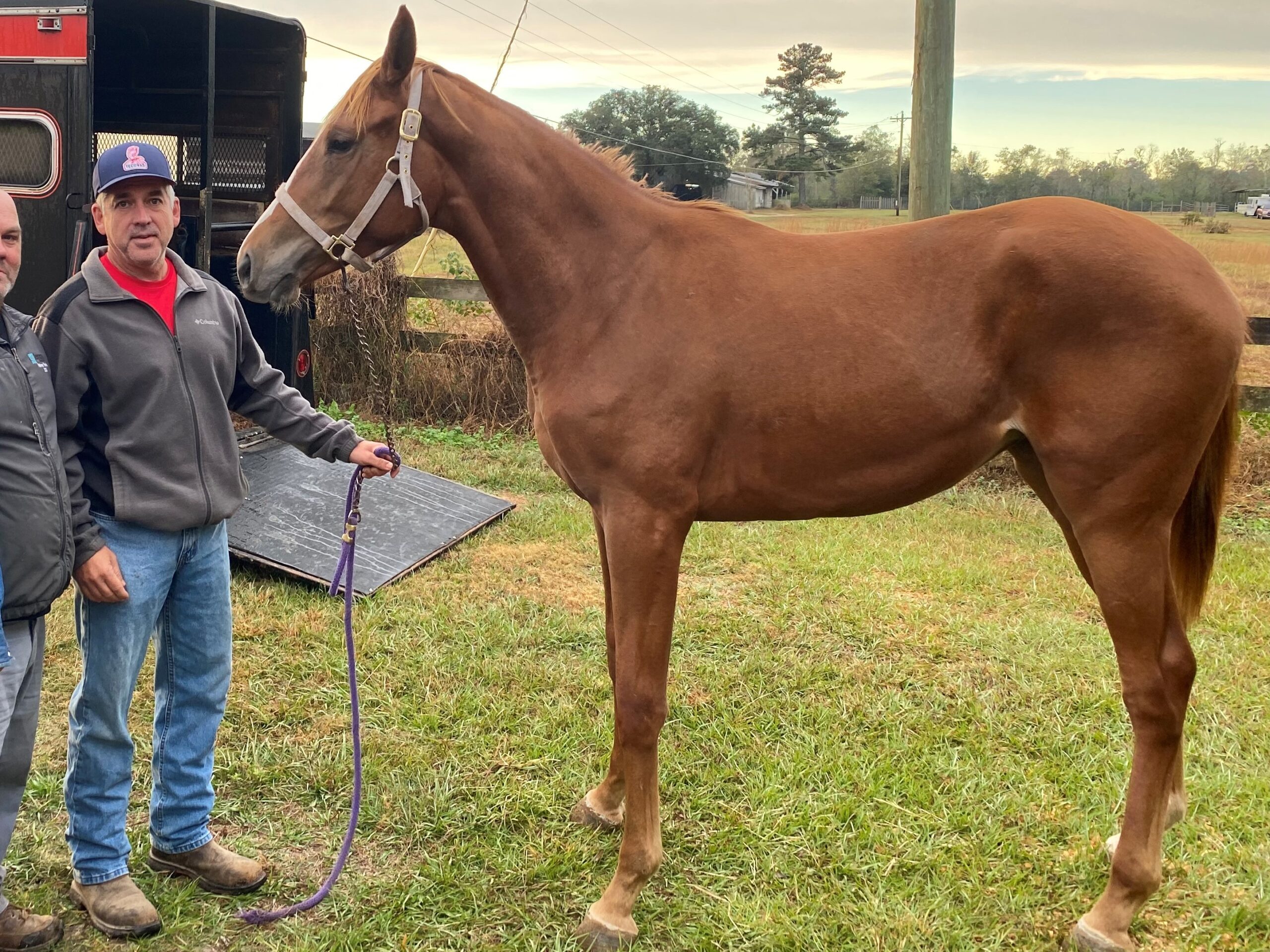
Miles Henry (legal name: William Bradley) is a professional horseman based in Folsom, Louisiana. He holds Louisiana Racing License #67012 and has spent over three decades managing Thoroughbreds at premier tracks including Fair Grounds, Delta Downs, and Evangeline Downs.
Expertise & Hands-On Experience: Beyond the track, Miles has decades of experience in specialized equine care, covering everything from hoof health and nutrition to training protocols for Quarter Horses, Friesians, and Paints. Every guide on Horse Racing Sense is rooted in this “boots-on-the-ground” perspective.
30 of their last 90 starts
Equibase Profile.

Connect with Miles: