Last updated: September 19, 2025
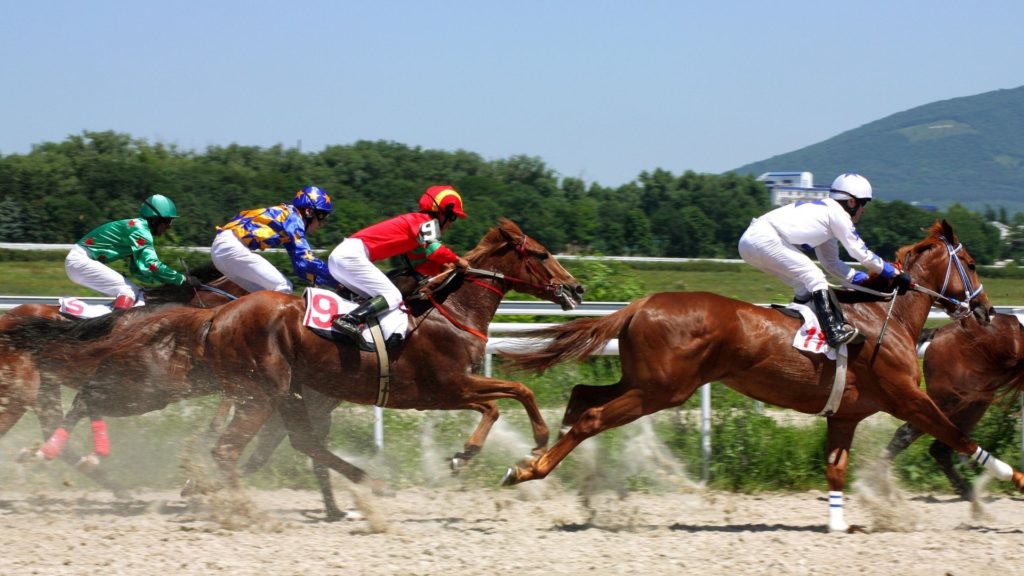
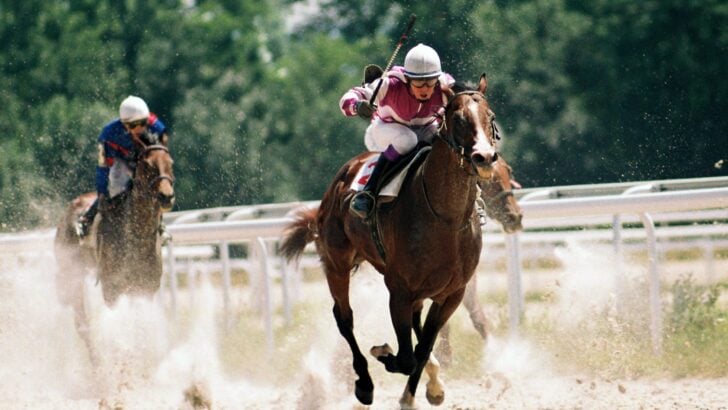
When you watch a horse race in America, you’ll notice something that might seem arbitrary at first glance: horses always run counter-clockwise around the track. This isn’t a random choice—it’s a tradition rooted in Revolutionary War defiance, backed by scientific principles, and standardized across an entire industry. But the story goes much deeper than most people realize.
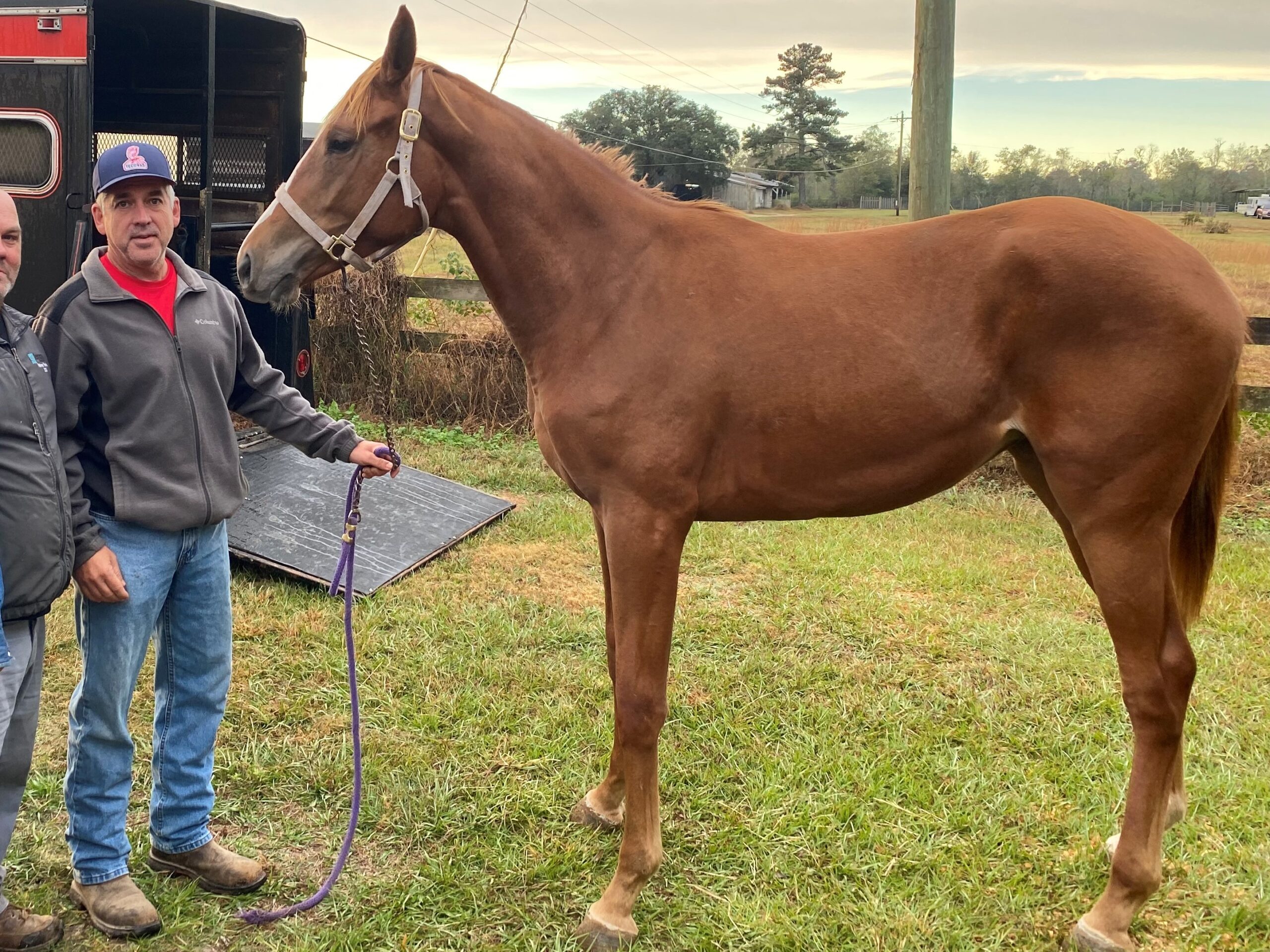
A Personal Perspective: In my 25+ years of owning Thoroughbreds, I’ve witnessed firsthand how horses naturally lean into counter-clockwise turns. I remember a young colt named Liberal Lad who had been imported from Ireland. Despite months of clockwise training abroad, within just two weeks of counter-clockwise work at our Louisiana facility, his stride lengthened, his times improved, and most tellingly, his post-workout recovery was noticeably faster. It was a living demonstration of what the science confirms—there’s something fundamentally right about running left.

Table of Contents
- The Revolutionary Origins
- The Science Behind Counter-Clockwise Racing
- Global Racing Directions: A World Map Analysis
- Modern Implications and Industry Impact
- Performance and Safety Considerations
- Training and Jockey Adaptations
- Frequently Asked Questions
- The Future of Track Direction Standards
The Revolutionary Origins
William Whitley’s Bold Statement
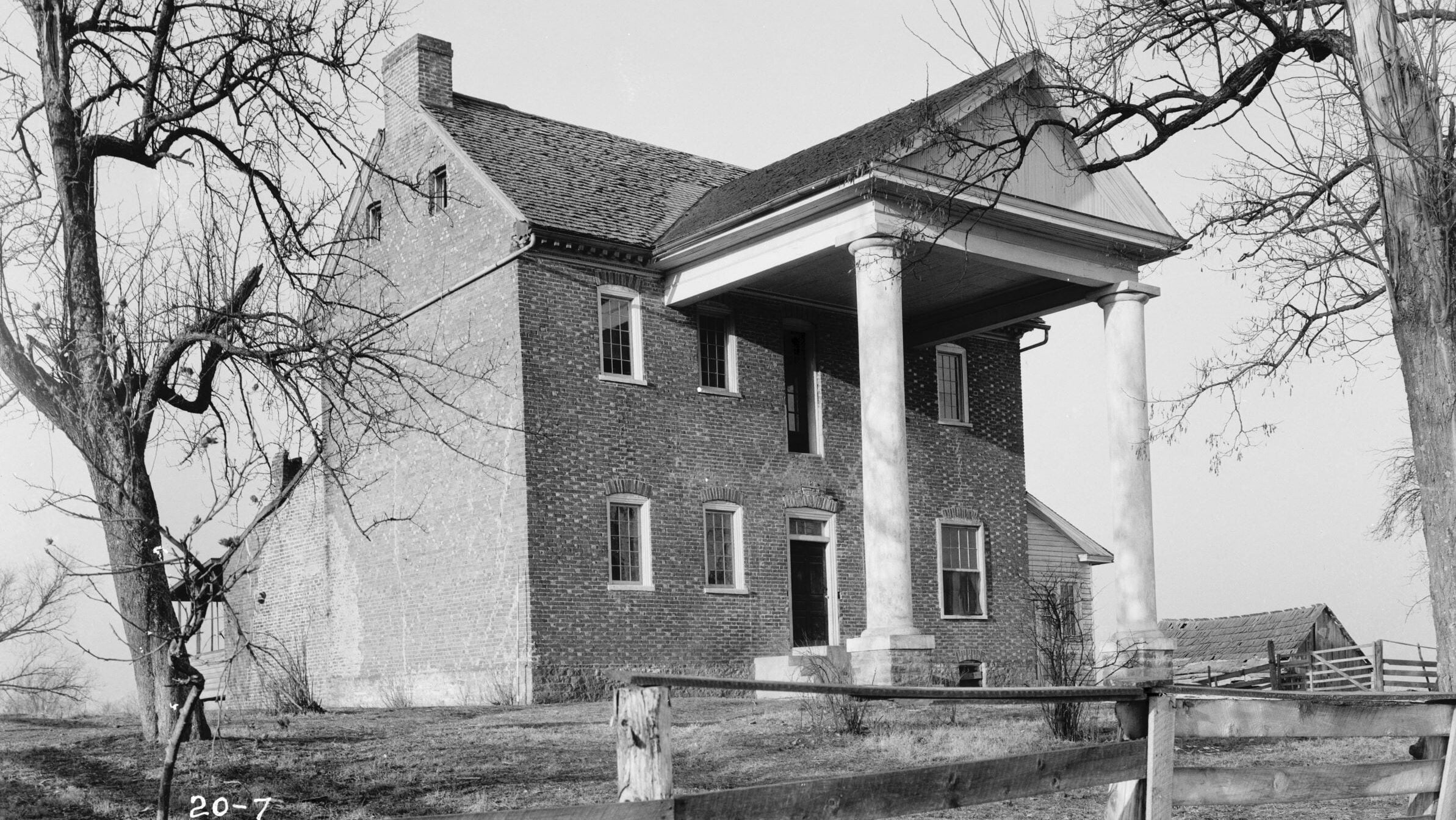
The counter-clockwise tradition in American horse racing traces back to 1780 and a Kentucky frontiersman named William Whitley. When Whitley built the first circular horse racing track in America at his home in Lincoln County, Kentucky, he made a deliberate choice that would echo through centuries of American racing.
At the time, English horse racing—the sport Americans knew—ran clockwise, following the tradition established at courses like Newmarket and Ascot. But Whitley had just fought in the Revolutionary War, and he wasn’t about to copy anything the British did. His decision to run horses in the opposite direction was a symbolic middle finger to British tradition, declaring that American racing would chart its own course.

From Rebellion to Standard
What started as one man’s act of defiance quickly spread throughout the developing American racing scene. As new tracks were built across the expanding nation, they followed Whitley’s counter-clockwise model. By the time organized racing emerged in the 19th century, the direction had become so entrenched that it wasn’t even questioned—it was simply “the American way.”
The establishment of major tracks like Saratoga (1863), Pimlico (1870), and Churchill Downs (1875). This standardization became integral to the broader evolution of American horse racing, shaping the sport’s development across the continent.

The Science Behind Counter-Clockwise Racing
Horse Biomechanics and Natural Movement
While the historical origin is fascinating, there’s genuine scientific reasoning that supports counter-clockwise racing. Modern equine biomechanics research has revealed several factors that make this direction advantageous for horses:
Right Hind Leg Dominance: Most horses exhibit a natural preference for pushing off with their right hind leg, similar to how most humans are right-handed. When turning counter-clockwise (left), the right hind leg becomes the “power leg” on the outside of the turn, providing maximum thrust and stability. Research on equine biomechanics shows that horses demonstrate measurable preferences in locomotion patterns.
Cardiac Efficiency: During counter-clockwise turns, the horse’s heart positioning allows for optimal blood flow. The heart sits slightly left of center in the chest cavity, and left turns create centrifugal forces that actually assist rather than impede circulation. Biomechanical studies have documented the physiological effects of directional movement on equine performance.
Visual Processing: Horses have evolved as prey animals with eyes positioned on the sides of their heads. When running counter-clockwise, their right eye—which connects to the left brain hemisphere responsible for analytical processing—can better assess the track conditions and obstacles ahead. This concept is supported by research on horse and rider biomechanical interactions.
Centrifugal Force Effects
The physics of circular motion also play a role in why counter-clockwise feels more natural:
- Banking Advantage: Most tracks are banked (higher on the outside), and counter-clockwise turning allows horses to use this banking more effectively given their natural biomechanical preferences.
- Speed Maintenance: Research shows horses can maintain higher speeds through counter-clockwise turns with less energy expenditure.
- Reduced Stress: Veterinary studies indicate lower cortisol levels in horses regularly trained counter-clockwise versus those forced to adapt to clockwise running.

Global Racing Directions: A World Map Analysis
The International Picture
While America standardized on counter-clockwise racing, the rest of the world tells a different story. Here’s a comprehensive breakdown of racing directions worldwide:
| Region/Country | Direction | Notable Tracks | Reasoning |
|---|---|---|---|
| United States | Counter-clockwise | Churchill Downs, Belmont Park, Santa Anita | Revolutionary War tradition + biomechanical optimization |
| Canada | Counter-clockwise | Woodbine, Fort Erie | Following American model |
| United Kingdom | Mixed | Ascot (clockwise), Chester (counter-clockwise) | Historic tradition varies by venue |
| Australia | Primarily Clockwise | Flemington, Randwick (clockwise) | British colonial influence |
| Japan | Counter-clockwise | Tokyo Racecourse, Nakayama | Post-WWII American influence |
| France | Mixed | Longchamp (clockwise), Deauville (counter-clockwise) | Regional variation |
| Germany | Mixed | Cologne (clockwise), Hamburg (counter-clockwise) | Mixed European traditions |
| South Korea | Counter-clockwise | Seoul Race Park | Modern American-influenced design |
Predominantly Counter-Clockwise Countries:
- United States (all tracks)
- Canada (following American model)
- Japan (most major tracks)
- South Korea (modern tracks)
Mixed Direction Countries:
- United Kingdom: Historic tracks like Ascot and Kempton run clockwise, while others like Chester run counter-clockwise
- Australia: Features both directions—Flemington (clockwise), Randwick (clockwise), but some country tracks vary
- France: Longchamp runs clockwise, but many provincial tracks run counter-clockwise
- Germany: Mixed, with some tracks following British tradition, others American
Predominantly Clockwise Countries:
- Most of Europe (following British colonial influence)
- Parts of South America
- Some Middle Eastern racing venues
Why the Global Variation?
The variation in international racing directions often correlates with historical colonial influence and the origin of racing in each region:
- British Colonial Influence: Countries with strong British racing heritage (Australia, South Africa, parts of Asia) often retained clockwise racing traditions.
- American Racing Expansion: Post-WWII American influence in racing, particularly in Japan and parts of Asia, introduced counter-clockwise standards.
- Local Geography: Some track directions were determined by natural terrain features and available land shapes.
- Modern Optimization: Newer racing venues often study both traditions and choose based on safety data and horse performance metrics.
In the YouTube video below, horses start in one direction, turn around, and run the opposite way;
Performance and Safety Considerations
Injury Rate Analysis
Research comparing injury patterns between counter-clockwise and clockwise tracks reveals significant insights about directional effects on horse safety:
Counter-Clockwise Advantages:
- Research on racing surface and turn radius effects shows that counter-clockwise racing can reduce certain types of limb stress injuries
- Studies indicate reduced stress on the right shoulder during left turns
- Better weight distribution during turns, as documented in equine locomotion research
Clockwise Challenges:
- Higher incidence of right front leg stress injuries in horses not adapted to the direction
- Increased muscle fatigue in horses training primarily counter-clockwise, as shown in injury epidemiology studies
- More frequent stride adjustment issues during directional transitions
Speed and Performance Metrics
Research suggests horses may experience subtle performance adjustments when racing in an unfamiliar direction, as directional familiarity influences stride efficiency and biomechanical balance, per a horse-rider biomechanics study. Trainers recommend 2-4 weeks of adaptation training to minimize stress and optimize performance when switching directions, particularly for international horses racing on US counter-clockwise tracks.
In the 2025 Kentucky Derby, winner Sovereignty, trained exclusively counter-clockwise, showcased the advantages of this standard with a commanding 1½-length victory at Churchill Downs, posting a career-best Equibase Speed Figure of 103 [2025 Derby results]. These biomechanical benefits—such as enhanced right-hind-leg thrust in left turns—have propelled many of the fastest racehorses in history on US tracks.
These biomechanical advantages have contributed to the success of many fastest racehorses in history, particularly those trained exclusively on counter-clockwise tracks.
Modern Adaptations and Changes
The direction of horse racing has balanced between preserving steadfast traditions and embracing significant changes. While some regions have maintained their directional practices for centuries, others have adapted to modern needs, including standardization, safety, and the demands of international competition.
Globalization’s Impact: The international nature of horse racing has prompted a shift towards standardizing aspects like track direction. This move aims to create a level playing field, ensuring fairness and familiarity for competitors worldwide.
Prioritizing Safety: Safety considerations have increasingly influenced the sport. Research on how racing direction impacts injury rates and performance has led to reevaluations of traditional practices.
In some cases, this has resulted in changes to track surfaces and designs, including alterations in racing direction, to enhance safety for horses and riders.

Training and Jockey Adaptations
Modern Training Methods
Contemporary trainers have developed sophisticated approaches to direction-specific training:
Daily Training Routines:
- 85% of training gallops run counter-clockwise
- Specific exercises to strengthen right hind leg power
- Balance work to optimize left-turning mechanics
Adaptation Protocols: For horses destined for international competition, trainers implement a gradual clockwise introduction:
- Week 1-2: Short clockwise gallops at 50% speed
- Week 3-4: Extended clockwise work at 75% speed
- Week 5+: Full-speed clockwise trials
Understanding directional training becomes crucial when young horses begin their racing careers, as early conditioning shapes their lifelong preferences.
Jockey Technique Differences
Professional jockeys develop direction-specific skills:
Counter-Clockwise Specialization:
- Left rein management for precise turning
- Right leg pressure techniques for turn acceleration
- Balance shifts optimized for left-leaning turns
These directional adaptations are just one aspect of how significantly jockeys impact race outcomes, influencing everything from tactical decisions to horse performance.
International Adaptability: Top jockeys who compete globally must master both directions, often requiring months of practice to achieve proficiency in their non-native direction.
Eric Frenchy, Veteran Trainer: “I began training racehorses in Europe and now work in the U.S. I’ve noticed the direction of the track can subtly influence a horse’s performance. I find training them on a counter-clockwise track aligns with their natural inclination.”
Kevin Huzak, Racehorse owner and historian: “The counter-clockwise tradition in American horse racing is a fascinating blend of rebellion and practicality. It’s a clear departure from English norms, but it also harks back to ancient practices. This blend of the old and the new is what makes horse racing history so rich and varied.”

Frequently Asked Questions
Do all American horse tracks run counter-clockwise?
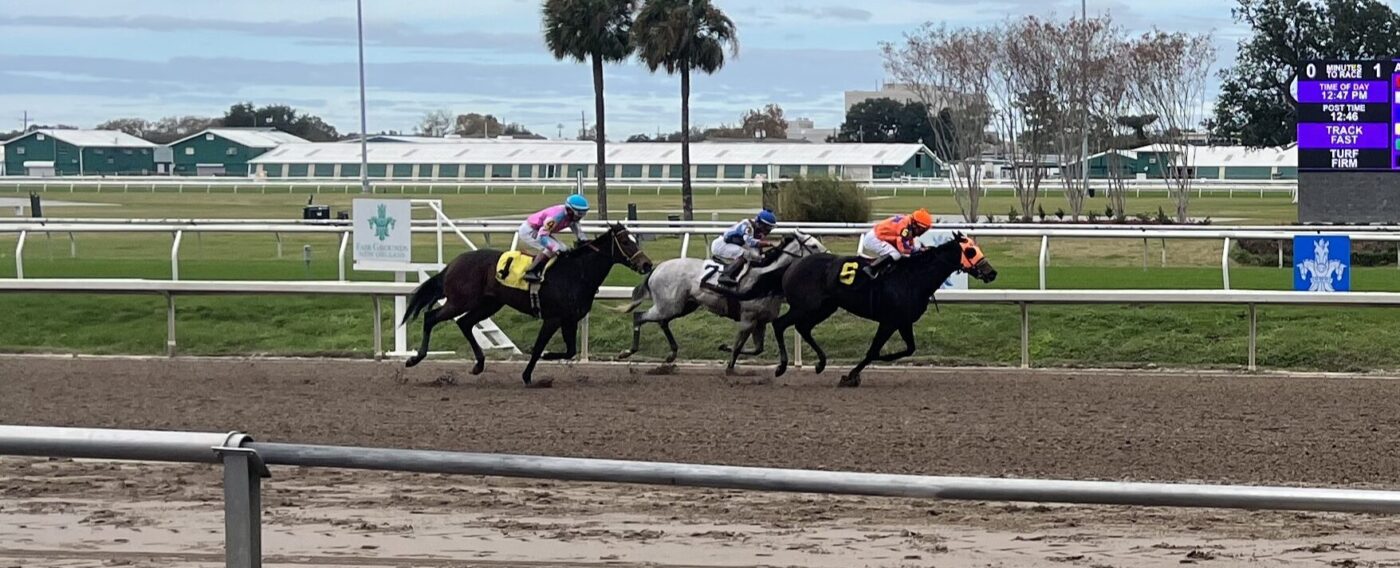
Yes, every sanctioned Thoroughbred, Quarter Horse, and Standardbred track in the United States runs counter-clockwise. This includes all major venues like Churchill Downs, Belmont Park, and Santa Anita.
Why don’t horses get dizzy running in circles?
Horses have excellent vestibular (inner ear) balance systems evolved for navigating varied terrain. The gradual turns on racing ovals, combined with their natural biomechanics, don’t trigger motion sickness like tight spinning would.
Can horses run equally well in both directions?
While horses can adapt to clockwise racing, most perform better in their trained direction. Studies show 3-5% performance decreases when horses regularly trained counter-clockwise compete on clockwise tracks without proper adaptation training.
Do other sports follow similar directional standards?
Yes, many sports have standardized directions: NASCAR runs counter-clockwise, track and field runs counter-clockwise, and speed skating runs counter-clockwise. However, Formula 1 and some international motorsports use both directions.
Has anyone tried to change the American standard?
There have been occasional discussions in racing industry publications about the theoretical benefits of mixed-direction racing, but the massive infrastructure investment required and tradition make any change highly unlikely.
Do harness racing tracks also run counter-clockwise?
Yes, American harness racing (Standardbred) tracks also run counter-clockwise. Learn more about harness racing with sulkies and how this traditional directional standard applies across different racing disciplines.
The Future of Track Direction Standards
Emerging Research and Technology
Current research in equine biomechanics continues to validate the counter-clockwise preference:
2024-2025 Developments:
- High-speed cameras and motion capture technology are providing detailed analysis of stride mechanics in different directions
- Heart rate and stress hormone monitoring continues to show advantages for horses racing in their trained direction
- Advanced research on racehorse injuries is helping identify optimal training and racing conditions
- Virtual reality training systems are being developed to help horses adapt to direction changes more efficiently
Related Reading
For more insights into horse racing fundamentals, explore these comprehensive resources:
- Equine Research Database – Horse Racing – Peer-reviewed research on racing performance and physiology
- Equine Research Database – Biomechanics – Scientific studies on horse movement and mechanics
- Understanding track surface effects on performance and safety
- Training methodologies for racing horses
- The World’s Greatest Horse Racing Tracks | Fan & Betting Guide
International Standardization Discussions
Racing industry leaders have occasionally discussed global standardization:
Arguments for Universal Counter-Clockwise:
- Reduced horse adaptation stress
- Simplified international competition
- Potential safety benefits
Arguments for Maintaining Regional Differences:
- Preservation of historic traditions
- Infrastructure investment costs
- Cultural identity in regional racing
Technological Adaptations
Modern technology is helping bridge direction differences:
- Advanced training simulators allow direction-specific preparation
- Biomechanical analysis helps optimize training for both directions
- Improved track surfaces reduce some direction-related injury risks

Conclusion: Why do Horses Race Counter Clockwise?
The counter-clockwise tradition in American horse racing represents a unique confluence of revolutionary spirit, scientific validation, and practical standardization. What began as William Whitley’s defiant gesture against British tradition has evolved into a system backed by biomechanical research and economic efficiency.
While the global racing community continues to embrace varied traditions, America’s commitment to counter-clockwise racing has created distinct advantages in training consistency, safety optimization, and competitive performance. As racing continues to evolve with new technology and international expansion, this foundational element of American racing remains both a proud tradition and a practical advantage.
The next time you watch horses thunder around the track at Churchill Downs or Belmont Park, remember that their path traces back through nearly 250 years of American racing history—from a Kentucky frontiersman’s rebellious choice to modern scientific validation of a tradition that truly makes sense.
For those new to the sport, understanding these foundational elements is part of learning about horse racing as a beginner, where traditions like counter-clockwise racing shape every aspect of the experience.
Stay Connected and Informed:
- If you found this guide helpful, consider signing up for our newsletter for more insights and updates on racehorse ownership.
- For personalized advice or specific inquiries, feel free to contact me directly. I’m here to help guide you through your racehorse ownership journey.
Join the Conversation:
- I encourage you to share your thoughts, experiences, or questions in the comments section below. Let’s create a community of informed and passionate racehorse owners.
- Don’t forget to share this article with your network. Use the social share buttons to spread the knowledge and love for racehorse ownership.
Thank you for reading, and I look forward to connecting with you, whether it’s through our newsletter, direct communication, or in the comments section. Here’s to the thrilling journey of racehorse ownership!
References and Further Reading:
Primary Academic Sources:
- A Scoping Review of Equine Biomechanics Revisited – Comprehensive review of modern equine biomechanics research
- The role of biomechanical analysis of horse and rider in equitation science – ScienceDirect study on horse-rider biomechanics
- Riders’ Effects on Horses—Biomechanical Principles – PMC research on biomechanical interactions
- Effects of Racing Surface and Turn Radius on Fatal Limb Fractures – MDPI study on directional effects and injury rates
Injury and Safety Research:
- Novel risk factors associated with fatal musculoskeletal injury in Thoroughbreds – 2025 Equine Veterinary Journal research
- Epidemiology of racing injuries in Thoroughbred racehorses – PMC analysis of Japanese racing data
- Meta-analysis of risk factors for racehorse catastrophic musculoskeletal injury – Comprehensive injury analysis
- The Effect of Combined Training and Racing High-Speed Exercise History – PMC systematic review
Industry and Educational Resources:
- Equine Research Database – Mad Barn – Peer-reviewed racing research compilation
- RSPCA Knowledge Base – Thoroughbred Horse Racing Welfare – Animal welfare considerations
- A review of research on equine locomotion and biomechanics – Foundational locomotion research
Historical Archives:
- National Museum of Racing and Hall of Fame Historical Collections
- International Federation of Horseracing Authorities Official Standards
- Kentucky Historical Society Racing Archives

About Miles Henry
Racehorse Owner & Author | 30+ Years in Thoroughbred Racing
Miles Henry (legal name: William Bradley) is a professional horseman based in Folsom, Louisiana. He holds Louisiana Racing License #67012 and has spent over three decades managing Thoroughbreds at premier tracks including Fair Grounds, Delta Downs, and Evangeline Downs.
Expertise & Hands-On Experience: Beyond the track, Miles has decades of experience in specialized equine care, covering everything from hoof health and nutrition to training protocols for Quarter Horses, Friesians, and Paints. Every guide on Horse Racing Sense is rooted in this “boots-on-the-ground” perspective.
30 of their last 90 starts
Equibase Profile.
Connect with Miles: