Last updated: July 10, 2026
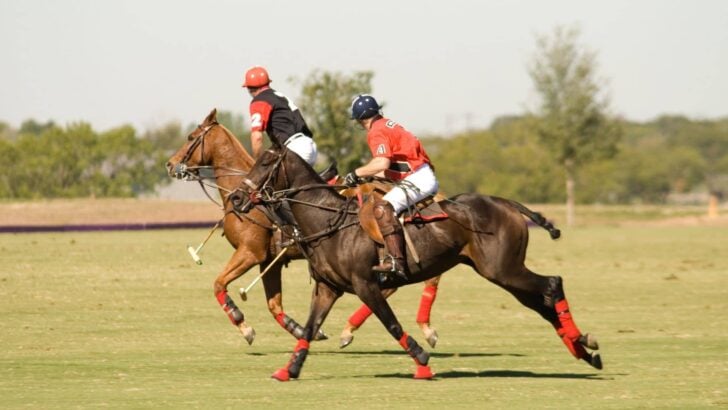
Polo looks relatively simple to play from the stands, but it’s anything but: it combines riding skill, mallet technique, strategy, and horse control at speed.
Is polo hard to play? Yes — polo is genuinely difficult. It asks players to do three demanding things at once: ride a horse with one hand, swing a mallet accurately at speed, and make real-time tactical decisions under pressure. Most beginners need several months before they’re ready for match play, and learning timelines vary widely based on riding experience, lesson frequency, and access to horses. The sport takes years to master.
Table of Contents
Why Polo Is Genuinely Hard
Most sports ask you to control your own body. Polo asks you to control your body, a trained animal, a mallet, and the tactical situation simultaneously — and to do all of it while moving at speed. The three things that make polo distinctly difficult aren’t any one of them in isolation; it’s the combination.
One-handed riding. The left hand holds the reins. The right hand holds the mallet. That means every rein signal — turning, collecting, rating speed — has to come through a single hand while the other is occupied with striking. Riders who learned to ride with two hands have to essentially relearn their communication with the horse.
Reading the play at speed. Polo requires tracking the ball, your position relative to the goal, your teammates’ positions, and the right-of-way rules all at once, while the situation changes every second. Experienced players describe it as chess at 30 mph — the decisions are fast and the consequences of a wrong read are immediate.
The horse is a variable. In most sports, your equipment behaves predictably. A polo pony has its own read of the game, its own level of training, and its own reactions to the environment. A rider who can’t manage the horse under pressure — other horses close, mallets swinging nearby, crowd noise — can’t play polo regardless of their mallet skill.
Why the Horse Makes Polo Different
Not every horse can play polo, and understanding why tells you a lot about what makes the sport hard. A polo pony needs to accelerate from a trot to a full gallop in a few strides, stop hard, spin, and rebalance — repeatedly, over the course of a seven-minute chukker. That’s demanding athleticism even before you put a rider on top doing something that actively interferes with the horse’s balance.
From working with Thoroughbreds, I know how sensitive a well-trained horse is to rider position and hand pressure. In polo, the rider’s body is constantly shifting — leaning for shots, twisting for backhands, hanging off to one side for a nearside forehand. The horse has to stay responsive to subtle cues through all of that movement, and it has to tolerate another horse’s body pressing against it at speed without flinching. That’s not something a horse does naturally. It takes years of specific training.
Miles’s Take — The Horse Partnership: The hardest part of polo for someone coming from a racing background isn’t the mallet — it’s learning to ride with intention one-handed while the horse is making its own decisions. Racehorses have a jockey; polo ponies have a partner. The communication has to be faster and subtler than most riders expect, because there’s no time to correct a misunderstanding mid-play.
| Requirement | Typical riding horse | Polo pony |
|---|---|---|
| Acceleration | Gradual, rider-directed | Explosive, must anticipate play |
| Stop | Collected, from leg and seat | Hard stop from full gallop, frequently |
| One-rein response | Rare requirement | Must respond to single-hand signals clearly |
| Contact with other horses | Generally avoided | Must tolerate close body contact at speed |
| Noise and distraction tolerance | Varies widely | Must stay focused during crowd noise, mallet swings near head |
| Training timeline | 1–3 years for basic work | 3–5 years for competitive polo readiness |
Most active players maintain a string of several horses and rotate them through chukkers because no horse can sustain that physical output for a full match. For more on how polo horses are selected and trained, see our guide to what horses are used for polo and how many horses polo players use.

How Long Does It Take to Learn Polo?
The short answer: longer than most beginners expect. The honest breakdown looks something like this.
| Stage | Typical timeline | What you’re developing |
|---|---|---|
| Early lessons | Weeks 1–8 | Balance on horseback while swinging; basic mallet grip; hitting stationary ball |
| Mounted practice | Months 2–6 | Hitting at slow trot; learning shot types (forehand, backhand, offside, nearside); horse response to one-hand signals |
| Practice chukkers | Months 6–12 | Reading the play; right-of-way rules; positioning; hitting at canter |
| Competitive play | Year 1–3 | Game awareness; horse selection; managing the string; adapting to different horses |
| Proficiency | 5–7 years | Anticipating the game, not just reacting to it; consistent accuracy at full gallop |
Most coaches recommend at least six structured introductory lessons before joining a practice game, and two sessions per week to build muscle memory consistently. Riders with prior equestrian experience — hunters, eventers, trail riders — move faster through the horsemanship fundamentals, but the mallet skills and game awareness take everyone similar time to develop.
For a detailed breakdown of polo riding techniques for beginners, we cover the foundational skills in a separate guide.
The Physical Demands
Polo is a full-body sport that disproportionately loads the core and inner thighs — the muscles responsible for staying balanced on a moving horse while rotating to swing a mallet. Players who come from other equestrian disciplines are often surprised by how much upper-body work polo adds on top of the riding base they already have.
Most riders find that it takes six to seven months of consistent practice to build the specific muscle conditioning polo requires. It’s not general fitness that’s the limiting factor — it’s the specific combination of a strong seat, rotational core strength for mallet swings, and the shoulder and arm endurance to keep hitting accurately late in a match when fatigued.
The mental load is equally real. Tracking ball position, teammate positions, opponent angles, right-of-way rules, and your horse’s current state all at once is cognitively demanding in a way that’s hard to simulate off the horse. Most experienced players say the mental fatigue after a competitive match is comparable to the physical fatigue — sometimes greater. See our overview of the health benefits of playing polo for the other side of that equation.
What Age Can You Start?
There’s no strict age limit in polo. Children typically start around five or six, once they’re comfortable on a horse, and many competitive players continue well into their seventies. The sport is one of the few where a 70-year-old with decades of horse experience can still play meaningful competitive polo against younger opponents, because skill and horse management often offset the physical gap.
Most schools run age-grouped and skill-grouped lessons separately. Junior programs typically use lead-rein ponies and focus on mallet skills and balance before introducing game play. Adult beginner programs generally teach horsemanship and polo fundamentals together — you don’t need prior riding experience to start, though it accelerates your progress significantly.
What Does It Cost?
Costs vary dramatically depending on your level of involvement — and also by region, club, and whether you’re leasing horses or owning them. A beginner taking weekly lessons through a grassroots program is in a completely different financial situation than a competitive player maintaining their own string. The ranges below reflect that spread; treat them as directional rather than fixed.
| Level | Primary expenses | Estimated range |
|---|---|---|
| Beginner (lessons only) | Grassroots program membership, lesson fees, basic gear | $400–$1,500/season |
| Club player (leasing horses) | Lease fees, club membership, equipment, tournament entry | $5,000–$20,000/year |
| Competitive player (own horses) | Board, training, vet care, farrier, gear, tournament fees | $30,000–$100,000+/year |
| High-goal player | Full string of trained ponies, grooms, travel, high-goal tournament fees | $100,000–$500,000+/year |
The primary cost driver for players who own horses is the string itself. Most competitive players rotate four or more horses through a match to avoid running any one horse through multiple consecutive chukkers. Each horse requires board, regular farrier work, veterinary care, and conditioning — costs that add up regardless of how often you compete. For a full breakdown, see our guide to whether polo is expensive.
If you’re testing the water, a single introductory lesson at a local polo school is the most efficient way to find out whether the sport suits you before committing to any equipment or program costs. Most clubs that run grassroots programs actively want new players and keep intro lesson pricing accessible for that reason.
Is Polo Harder Than Other Equestrian Sports?
That’s a question without a clean answer, but the comparison is useful because it clarifies what makes polo specifically demanding rather than just generically hard. Every discipline has its own difficulty profile.
| Sport | Primary challenge | What polo adds |
|---|---|---|
| Dressage | Precision, subtle communication, long training arc | Polo adds speed, contact sport dynamics, and a mallet |
| Show jumping | Timing, scope, horse athleticism over fences | Polo adds sustained high-speed maneuvering and opponent management |
| Thoroughbred racing | Speed, fitness, race-day management | Polo adds ball skills, one-handed riding, and real-time tactical decisions |
| Trail/Western riding | Horse partnership, terrain reading, endurance | Polo adds speed, competition, and mallet work on top of the base horsemanship |
No single equestrian discipline demands everything polo demands simultaneously. That’s the honest case for its reputation.

FAQs: Is Polo Hard to Play?
Is polo dangerous?
Polo carries real injury risk. Players travel at speeds up to 30 mph in close proximity to other horses and riders, and falls happen. The most common injuries are similar to other equestrian sports — bruising, sprains, and the occasional fracture. Helmet and knee guard requirements at most clubs address the most serious risks, but the sport is inherently physical. For a detailed look at the risk factors, see our guide on whether polo is dangerous.
Can you learn polo without owning a horse?
Yes. Most beginner and grassroots polo programs provide horses as part of the lesson or program fee. Leasing arrangements are also common for players who are beyond the lesson stage but not ready to buy. Many club players compete for years without ever owning horses outright.
Is polo only for wealthy people?
Competitive polo at the ownership level is expensive — maintaining a string of horses costs tens of thousands of dollars a year. But grassroots and beginner programs exist at most polo clubs specifically to bring in players who aren’t at that level yet. Entry-level participation is accessible for the cost of lessons and basic equipment.
How is polo different from other equestrian sports?
The one-handed riding requirement sets polo apart from most other disciplines. Dressage, show jumping, and trail riding all use two hands on the reins for most of their communication with the horse. Polo requires the rider to manage the horse entirely with the left hand while the right is occupied with the mallet — which changes the fundamental mechanics of how horse and rider interact.
Are polo horses expensive?
Well-trained polo ponies range from around $5,000 for a young or inexperienced horse to $100,000 or more for a seasoned competitive mount with proven game temperament. The cost reflects the years of specific training required to make a horse safe and effective in match conditions. Leasing is a practical alternative for players who want access to trained horses without the full ownership cost.
About Miles Henry
Racehorse Owner & Author | 30+ Years in Thoroughbred Racing
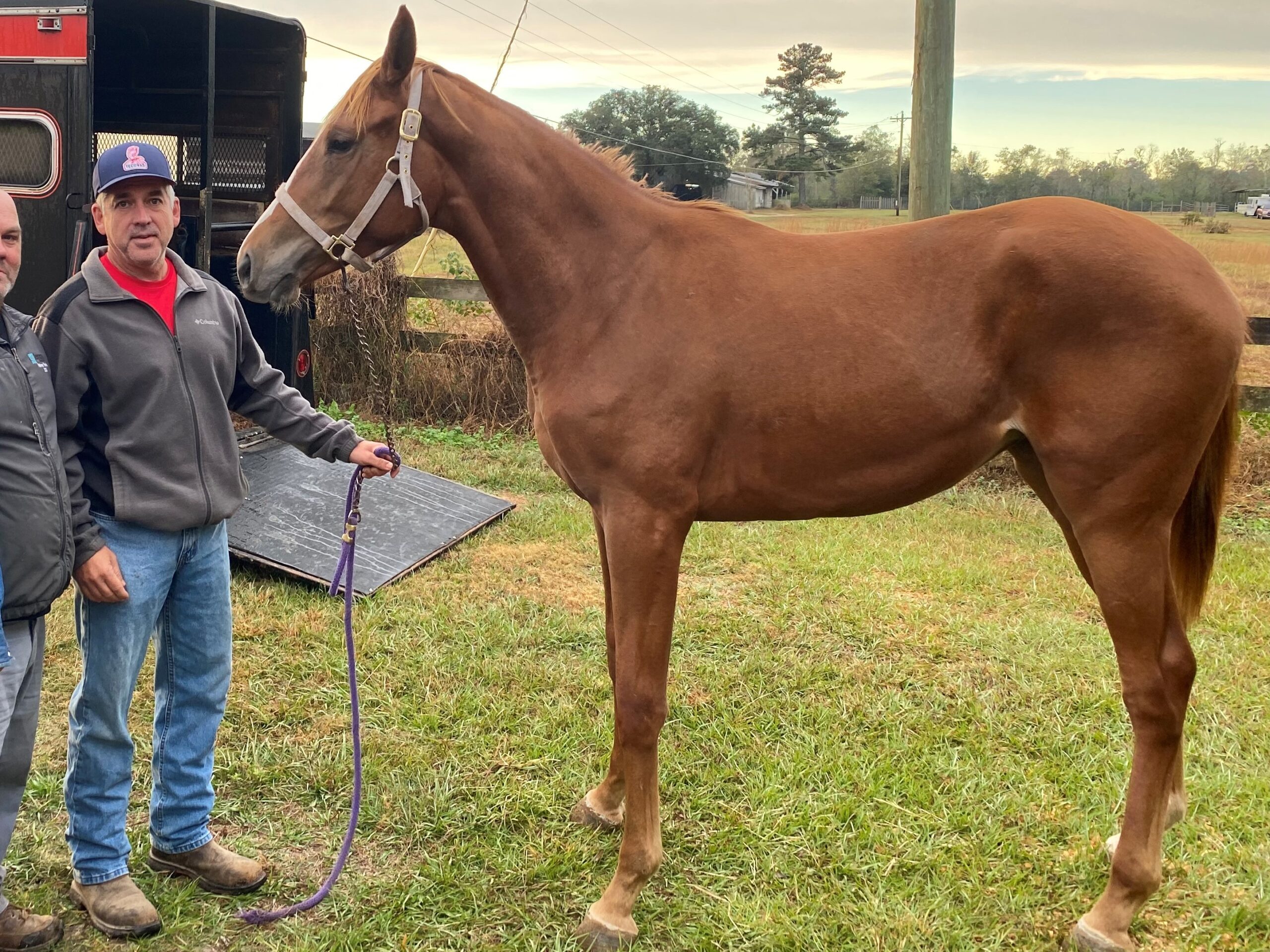
Miles Henry (legal name: William Bradley) is a professional horseman based in Folsom, Louisiana. He holds Louisiana Racing License #67012 and has spent over three decades managing Thoroughbreds at premier tracks including Fair Grounds, Delta Downs, and Evangeline Downs.
Expertise & Hands-On Experience: Beyond the track, Miles has decades of experience in specialized equine care, covering everything from hoof health and nutrition to training protocols for Quarter Horses, Friesians, and Paints. Every guide on Horse Racing Sense is rooted in this “boots-on-the-ground” perspective.
30 of their last 90 starts
Equibase Profile.

Connect with Miles: