

Last updated: September 30, 2026
Dressage looks calm. There are no fences to jump, no race-speed galloping, and no cattle to chase. But if you’re thinking about lessons, or your kid wants to try it, it’s fair to ask whether it’s actually safe.
Is dressage dangerous? Dressage usually avoids some of the higher-speed and jumping hazards of show jumping, eventing, and racing, but it isn’t risk-free. You’re still riding a large animal that can spook, buck, bolt, trip, or fall, and injuries can happen during routine handling on the ground, too. For the horse, poor footing, overuse, and forceful training are the main concerns. A certified helmet, good instruction, sound footing, and a horse that suits your experience make a real difference.
Here’s how the risks compare with other horse sports, what can hurt riders and horses in dressage, and the habits that lower the odds of trouble.
Table of Contents
Is Dressage Dangerous?
My friends were once talking about the most dangerous kinds of riding, and when someone suggested dressage, everybody laughed. I get why. There are no fences and none of the sustained high speeds you see in racing or cross-country, so dressage avoids some of the hazards that come with those sports.
But anybody who’s spent time around horses knows calm doesn’t mean predictable. Dressage riders can still get hurt in a fall, and the risks don’t end when you dismount. A horse can spook during grooming, pull back while tied, crowd you at the mounting block, or blow up over a flapping bag outside the arena. He doesn’t know he’s in a dressage arena. He just knows something scared him.
Horseman’s Take: After years of owning and working around horses, I’ve learned that the quietest-looking situations still demand respect. Dressage doesn’t remove the risks of being around horses. It just changes where they usually come from.
Here’s how the risks differ from one discipline to another:
| Discipline | Where the risk usually comes from |
|---|---|
| Dressage | Spooks, bucks, and falls at lower speeds; ground handling; rider back strain; overuse injuries in the horse |
| Show jumping | Refusals, missed jumps, and falls at fences |
| Eventing cross-country | Solid fences at speed, including rotational falls where the horse flips |
| Racing | Speed, several horses running close together, and less time to react when something goes wrong |
The Real Risks to Riders
For beginners, the biggest safety factor usually isn’t the discipline itself. It’s the match between the rider, the horse, and the instruction they get.
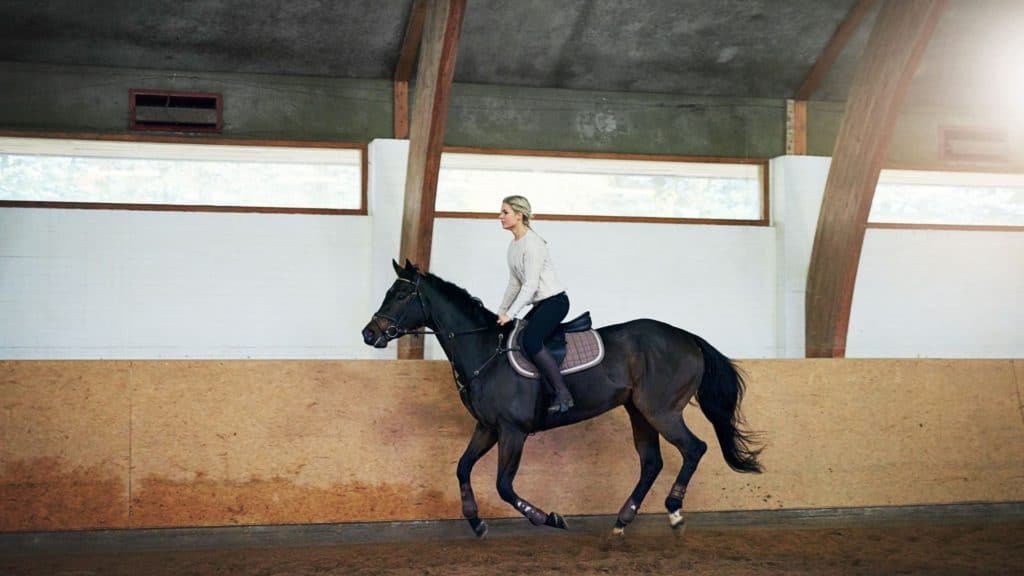
- Falls. Falls are one of the main ways riders get seriously hurt. In dressage, they usually happen when a horse spooks, bucks, bolts, or trips, and a rider sitting deep with long stirrups can have a harder time staying on through a sudden spook.
- Ground handling. Leading, tacking up, bathing, and loading all carry the chance of getting stepped on, kicked, or knocked down.
- A horse that’s too much horse. A quiet, experienced horse will teach a beginner more than a talented, sensitive one that needs a confident rider. A lot of trouble starts because the rider and horse simply aren’t a good match.
- Back and hip strain. Sitting the trot and holding a correct position can be hard on your lower back and hips, especially when your fitness is off, your position has slipped, or the saddle doesn’t fit well.
The Risks to Dressage Horses
At the higher levels, dressage asks a horse to carry more weight behind, stay balanced, and perform movements that take a lot of strength and coordination. That work can build a real athlete when the horse is brought along gradually. The trouble starts when the work gets ahead of his strength, soundness, or mental readiness.
- Overuse and lameness. Collection, small circles, lateral work, and a busy show schedule all load the hind end, back, and soft tissues. Suspensory ligament problems are a well-recognized concern in dressage horses. Watch for shorter steps, reluctance to sit behind, changes in the canter, resistance to bending, or new back soreness.
- Footing problems. A surface that’s too deep, too hard, uneven, or slick makes ordinary schooling harder on a horse’s legs. The goal is consistent, well-kept footing, not an expensive arena.
- Training pressure. A horse should develop carriage through strength, balance, and patient schooling. The FEI defines rollkur as hyperflexion achieved through aggressive force and considers it unacceptable. A tense, unhappy horse is also harder to ride and less predictable. My article on whether dressage is cruel to horses covers the welfare side in more depth.
How to Make Dressage Safer
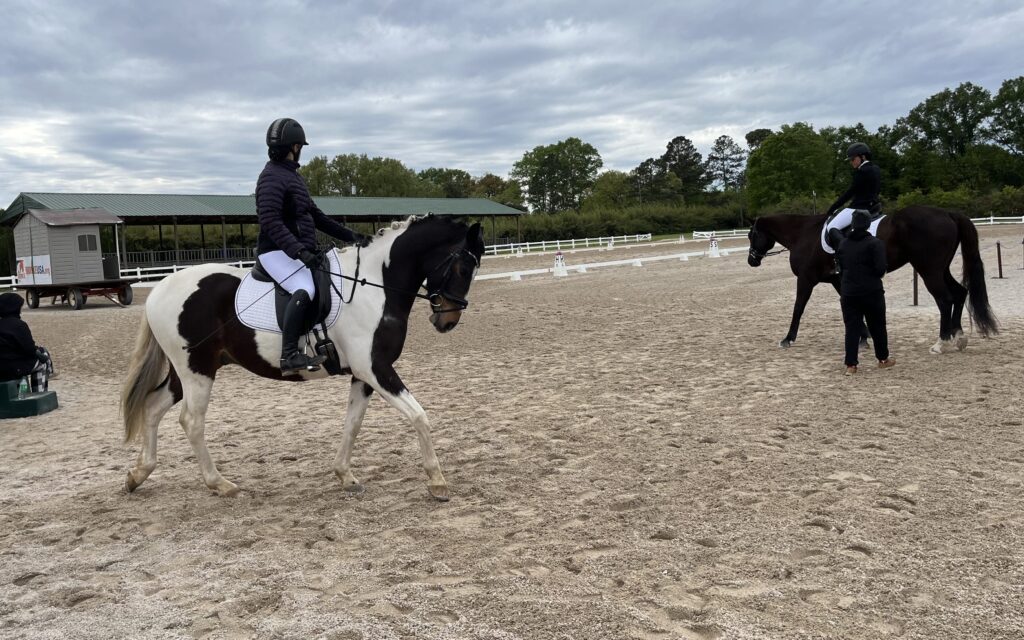
- Wear a certified riding helmet every ride. Choose a certified riding helmet that fits correctly. Competition rules vary by organization, rider age, test level, and location, so check the current rulebook before you enter, but a helmet is the sensible choice whether a rule requires it or not. My article on why a bike helmet isn’t enough explains what to look for.
- Wear riding boots with a heel, so your foot can’t slide through the stirrup. Tall or paddock boots are standard in dressage.
- Ride a horse that suits your level, and take lessons. A good instructor keeps you from building habits that make you less secure in the saddle and helps you train your horse without force.
- Keep the footing right. Groom the arena regularly, watch its moisture and depth, and fix packed, deep, or slick spots before they become a problem.
- Warm up and build fitness gradually, for both you and your horse.
- Look after the horse’s body. Check saddle fit, give regular turnout, and call your vet at the first sign of lameness or back soreness. Leg boots can help protect against interference and minor knocks, but they don’t replace good footing, conditioning, or riding.
Horseman’s Take: You don’t need a fancy arena to keep footing safe. We’ve worked horses for years over a sand and clay mix. The key is staying on top of it: work it regularly, keep an eye on moisture, and fix spots that get deep or slick after a rain. Good footing is one of those unglamorous things that pays off every time you ride.

Dressage Safety FAQ
Is dressage safer than show jumping?
Dressage removes the risks that come with jumping fences, including refusals and falls at obstacles. But a dressage horse can still spook, buck, bolt, trip, or fall, and injuries also happen while handling horses on the ground. The safer choice is the one that fits the rider’s skills, the horse’s training, and the conditions.
Can beginners do dressage safely?
Yes, especially on a quiet, experienced horse with regular instruction. A beginner doesn’t need a high-powered warmblood or advanced movements to learn dressage. Good basics, like a balanced position, reliable steering and stopping, a helmet, and calm handling on the ground, matter more.
Do dressage riders have to wear helmets?
Rules vary by organization, rider age, test level, and location, so check the current rules for the class you plan to enter. Whatever the rule, a properly fitted ASTM/SEI-certified riding helmet is the sensible choice every time you ride.
Is dressage hard on horses?
It can be physically demanding, especially as collection and difficulty increase. Done gradually, dressage builds balance, strength, and suppleness. Problems are more likely when training moves faster than the horse’s fitness, when footing is poor, or when early signs of pain or lameness are ignored.
Dressage avoids some of the hazards that come with jumping fences or riding at race speed, but it isn’t safe by default. Wear a certified helmet, ride a horse that suits you, keep your footing right, and train patiently. Those habits lower the risk and give you and your horse a better chance to enjoy the work.
About Miles Henry
Racehorse Owner & Author | 30+ Years in Thoroughbred Racing
Miles Henry (legal name: William Bradley) is a professional horseman based in Folsom, Louisiana. He holds Louisiana Racing License #67012 and has spent over three decades managing Thoroughbreds at premier tracks including Fair Grounds, Delta Downs, and Evangeline Downs.
Expertise & Hands-On Experience: Beyond the track, Miles has decades of experience in specialized equine care, covering everything from hoof health and nutrition to training protocols for Quarter Horses, Friesians, and Paints. Every guide on Horse Racing Sense is rooted in this “boots-on-the-ground” perspective.
30 of their last 90 starts
Equibase Profile.

Connect with Miles: