

Last updated: September 29, 2026
My grandson enjoys watching dressage, and seeing him get interested in it reminded me of something that applies to every riding discipline: good horses are developed through patience, clear riding, and miles of correct work—not shortcuts. Dressage may look polished in the show ring, but it starts with the same basics that make any horse safer, easier to ride, and more comfortable in his work.
Quick answer: Start dressage training with a horse that is sound, safe to ride, and responsive to basic aids. Focus on a steady rhythm, straightness, relaxed transitions, and clear communication before worrying about collection or advanced movements. Keep the work simple, quit on a good note, and get help from a qualified instructor when you and your horse hit a problem you can’t sort out safely.
Dressage isn’t about forcing a horse into a head set or copying what you see at the upper levels. It’s about teaching him to respond to lighter aids while becoming stronger, more balanced, and more comfortable carrying a rider. This guide to dressage training for beginners covers what to have in place before you start, the first exercises worth teaching, common beginner mistakes, how long training takes, and how the dressage training scale fits into everyday riding.
Table of Contents
What Is Dressage?
At its heart, dressage is teaching a horse to respond to lighter aids while becoming stronger, more balanced, and more comfortable carrying a rider. Horse and rider perform prescribed movements in an arena, and judges score the accuracy, quality, and harmony of the work.
At the beginner levels, dressage isn’t about fancy movement. It’s about riding a horse that goes forward willingly, stays in an even rhythm, bends both ways, makes calm transitions, and follows the line you ride without falling in or drifting out.
That’s why dressage helps riders in just about every discipline. A horse that stays balanced through a transition, moves off a quiet leg, and accepts a steady rein is easier to trail ride, jump, work cattle, or show. The work may look different from one discipline to another, but the foundation carries over.
Recognized U.S. dressage competition progresses through nine levels, and horses of any breed can compete. The tests get more difficult as a horse develops strength, balance, and understanding, but the goal stays the same: a willing horse and a rider who can communicate without a fight. US Equestrian’s dressage overview explains how the levels are organized.
Before You Start Dressage Training
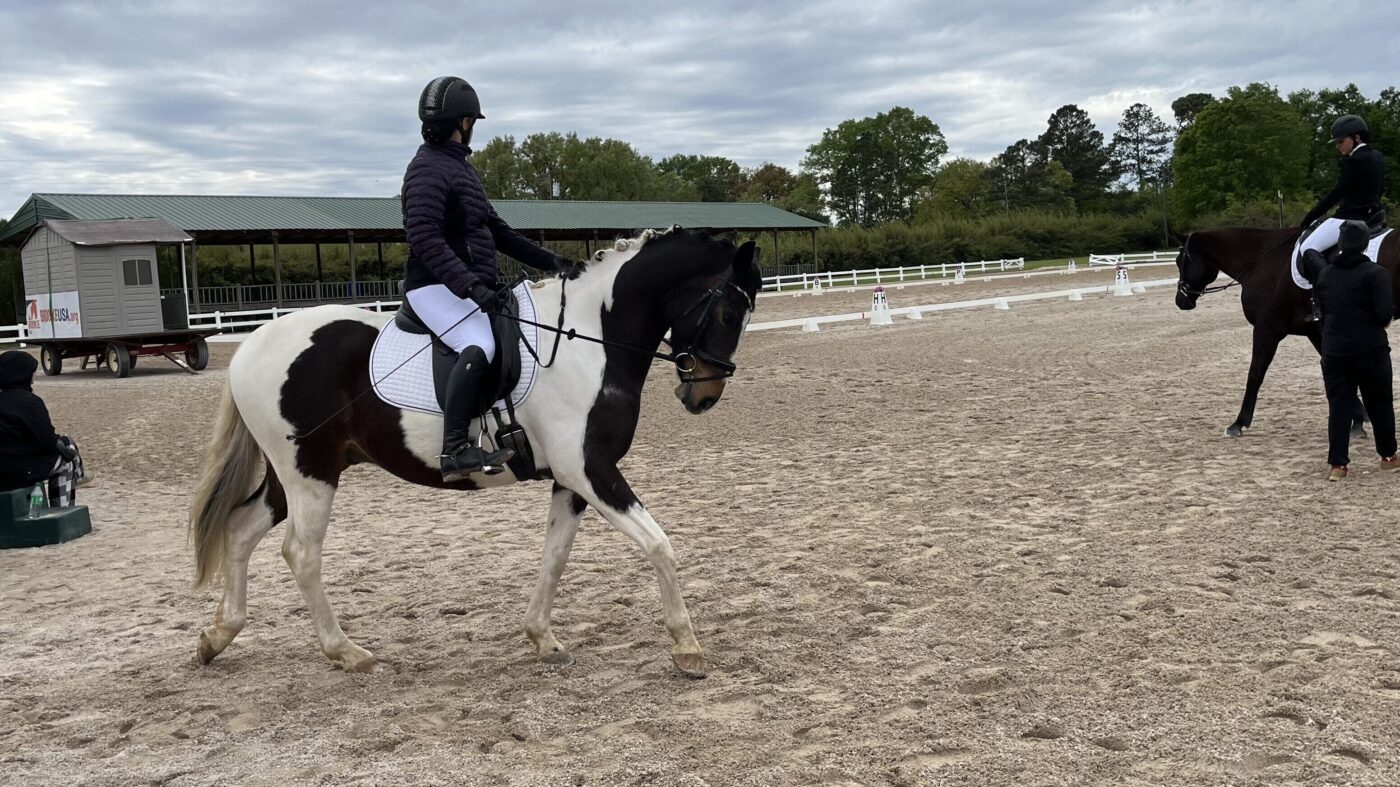
You don’t need a fancy Warmblood or a show barn to begin dressage work. You do need a horse that is comfortable doing the job, a safe place to ride, and a rider willing to work on the basics instead of skipping ahead.
Pause the training and get help if your horse:
- Is lame, short-strided, stiff, or suddenly reluctant to move forward
- Objects to saddling, mounting, bit contact, bending, or transitions
- Starts bucking, rearing, bolting, or refusing work out of character
- Is coming back from an injury, illness, major layoff, or significant weight loss
- Is young or green enough that the situation has become unsafe
Training won’t fix pain, a saddle that doesn’t fit, mouth discomfort, or a horse that is physically unable to do what you’re asking.
Start With a Safe Riding Horse
Your horse doesn’t need to be finished, but he should be safe to handle and ride at the walk, trot, and canter. He should stand for grooming and tacking up, move forward, steer, stop, and accept ordinary contact without turning every ride into an argument.
There’s no single age when every horse should begin dressage. A young horse’s growth, maturity, soundness, conformation, and prior training all matter. Most benefit from short, simple rides that build confidence and balance before anyone asks for collection or small, demanding figures.
Work on Your Own Basics
Dressage has a way of showing a rider every little imbalance. A horse can put up with a lot on a relaxed trail ride, but precise flatwork exposes crooked hands, uneven weight, a swinging lower leg, and late timing in a hurry.
Before worrying about where the horse’s head is, work on sitting centered, looking ahead, keeping your leg quiet, and following the motion without hanging on the reins. If you’re still learning to steer, post on the correct diagonal, pick up leads, or ride a balanced downward transition, a good instructor can help you build those skills in the right order.
Use Tack That Fits
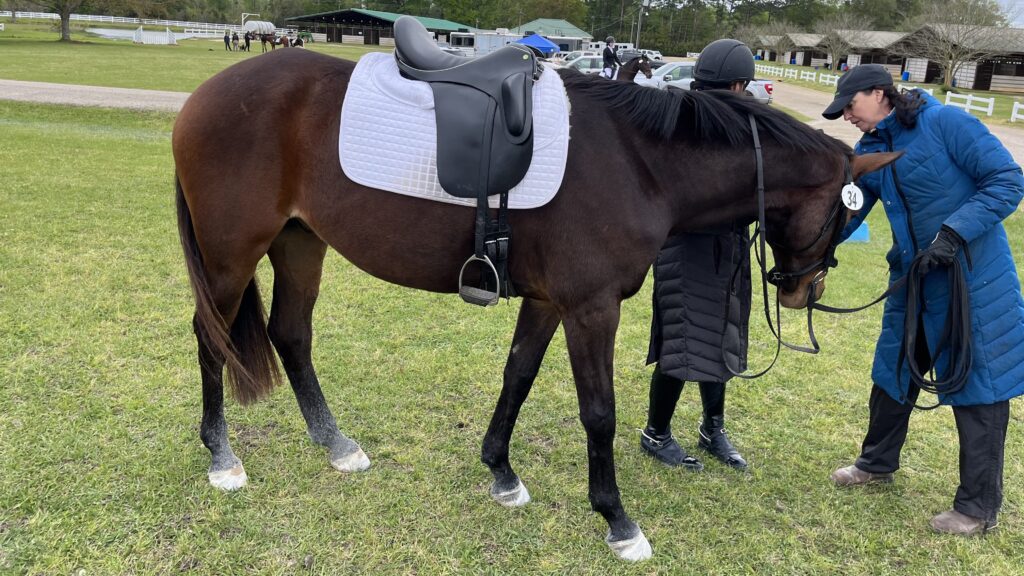
A dressage saddle can help your position, but fit matters far more than the label on the saddle. Your saddle, bridle, bit, girth, and pad should let the horse move freely. A horse that pinches, braces, or gets sore under tack isn’t being difficult—he may be telling you something is wrong.
For work at home, safe and well-fitted tack is enough. If you plan to show, check the current equipment rules for your organization and level before you buy anything new. My guides to choosing a dressage saddle and dressage saddle pads cover the practical side.
Start With These Dressage Basics
Don’t start by trying to make your horse look like a finished dressage horse. Start by making each ride clearer. The early work should teach him that your leg means go forward, your reins and seat help him slow or turn, and he can stay relaxed while you ask for those things.
- A marching walk with the horse moving freely forward
- Large circles that give him room to stay balanced
- Smooth changes of direction on both reins
- Walk-trot and trot-walk transitions without rushing or leaning
- Straight lines down the long side without the shoulders or haunches drifting
- Short, balanced canter work once the trot is steady
- Walk breaks that let the horse relax and think about what he just did
One thing I’ve seen riders do plenty of times is make the exercise harder when the horse loses balance. If he struggles on a large circle, they make the circle smaller. If he rushes in the trot, they keep pushing. Usually, that just gives the horse one more thing to fight with. Make the question easier until he finds his balance again, then build from there.
Miles’ Take: If your horse gives you one clean, softer transition after struggling with it, reward him and quit on that note. You don’t have to win the whole test in one ride. Good horses are developed one correct answer at a time.
A Simple Dressage Schooling Ride
A good schooling ride doesn’t need to be long or complicated. It needs a purpose. Pick one or two things to improve, give the horse time to understand the question, and don’t keep drilling once he’s tired or frustrated.
| Part of the ride | What to do | What you’re looking for |
|---|---|---|
| Warm-up | Walk forward, use large turns, change direction, and let the horse loosen through his back and neck. | A horse that is marching, attentive, and moving freely instead of being rushed into a frame. |
| Focused work | Choose one or two goals, such as quieter upward transitions, better bend to the left, or straighter travel down the long side. | A small improvement you can reward before the horse gets tired, dull, or frustrated. |
| Cool-down | Go back to easy work, allow a stretch if the horse wants it, and finish with a relaxed walk on a longer rein. | A horse that leaves the arena calm and comfortable, not wrung out or sour. |
The schedule has to fit the horse you’re riding, not the one you wish you had. A fit, seasoned horse may handle more than a young horse, one coming back from time off, or one still learning to use his body. Mix arena work with trail riding, hill work, turnout, or pole work when it suits the horse. Those things can build fitness and keep his mind fresher than riding the same pattern every day.
When you increase the work, change one thing at a time: the length of the ride, the number of repetitions, the difficulty of the exercise, or the amount of canter. If his stride gets short, he feels sour, or he needs longer than usual to recover, back off and figure out why. Trying to ride through it is rarely the answer.
How Long Does Dressage Training Take?
There isn’t a set timeline. A horse may improve quickly in one area and need much longer in another. He might understand transitions in a few rides but need months to build the balance and strength to carry himself well at the canter.
What matters is steady progress, not rushing to the next movement. When a horse is learning correct responses, he needs time to become comfortable and confident before you make the work harder. Trying to hurry the process usually leaves holes in the foundation that are harder to fix later.
If you’re preparing to show, let the horse tell you when he’s ready. A pair is ready for a lower-level test when the required movements are calm, reasonably consistent, and within the horse’s fitness—not when the rider can force their way through the pattern once on a good day.
Common Beginner Dressage Mistakes
Most beginner mistakes come from trying too hard, too soon. I’ve watched riders get frustrated because they were trying to fix the finished picture instead of building the pieces underneath it. Horses usually tell you exactly what part is missing if you pay attention.
Chasing a Head Set
A tucked-in nose is not collection, and it doesn’t prove a horse is working correctly. If the horse is behind the bit, braced in the jaw, hollow through the back, or dragging himself along on the forehand, the picture may look neat from the ground but the work isn’t right. Ride the hind end forward, keep an honest contact, and let the horse develop the strength to carry himself better.
Making Every Ride a Test
Tests are useful because they show what needs work, but riding the same pattern over and over can make a horse anticipate, get dull, or become worried about certain spots in the arena. School the pieces of a test, then put them together occasionally. Spend more time improving the weak pieces than memorizing the pattern.
Changing the Aids Every Time
A horse learns from clear, repeatable cues. If you use your leg one way today, pull the rein another way tomorrow, and change your timing every ride, he has to guess. Ask simply, release when he tries, and give him time to connect the aid with the answer.
Drilling a Tired Horse
When a horse gets physically or mentally tired, his balance usually goes first. That is not the time to ask for five more circles, ten more transitions, or one more canter depart because the last one wasn’t perfect. Take a walk break, make the work easier, or call it a day.
Ignoring Discomfort
Don’t assume resistance is a training problem. Sudden trouble with contact, bending, transitions, saddling, mounting, or moving forward can come from pain, saddle fit, dental issues, hoof soreness, or another physical problem. Rule out discomfort before turning a behavior problem into a bigger fight.
The Dressage Training Scale
The USDF Pyramid of Training gives riders a practical way to judge whether the work is improving. Its six parts are rhythm, suppleness, contact, impulsion, straightness, and collection. They work together. You don’t finish rhythm and forget about it while you work on collection; you keep returning to the foundation as the work gets harder.
| Training scale | What it means | What to watch for |
|---|---|---|
| Rhythm | Regular footfalls and a steady tempo in each gait. | The horse stays even instead of rushing, dragging, or changing speed every few strides. |
| Suppleness | A loose, elastic horse that is not braced in his body or mind. | He bends both ways, swings through his back, and doesn’t fight every aid. |
| Contact | A steady connection from the hind legs, through the back, to the rider’s quiet hand. | He accepts the rein without leaning, pulling, ducking behind the bit, or rooting. |
| Impulsion | More controlled power from behind, not simply a faster horse. | He steps up from the leg and feels active without running onto his forehand. |
| Straightness | Better alignment and equal flexibility on both reins. | He follows the line you ride without leaking through a shoulder or carrying his hindquarters off to one side. |
| Collection | More engagement and balance that lighten the forehand. | It comes later, after the horse can stay forward, supple, straight, and balanced. |
Don’t chase the top of the pyramid while the horse is still struggling with the bottom. Collection comes from better balance, strength, engagement, and understanding. You can read the USDF Pyramid of Training guide for a deeper explanation.
Miles’ Take: Collection isn’t a head set, and you can’t pull a horse into it with the reins. When those pieces aren’t there, go back to the work that builds them.
When to Get Help From a Trainer
A good instructor can save you and your horse a lot of confusion. You don’t need a lesson every day, but regular eyes on the ground can show you whether the horse is actually straight, whether your hands are following, and whether the issue is rider timing, fitness, tack, or discomfort.
Get help early if the horse is getting scared, dangerous, or more resistant as the work continues. The same goes for repeated trouble with basic transitions, bending, forward movement, or contact. Video is useful, but it can’t replace someone experienced watching you and the horse together.
If you want to show, download the current test for the level you plan to enter and ride it at home with your instructor. At the lower levels, clean basics matter far more than trying to copy an advanced movement you saw online.
Dressage Training for Beginners FAQs
Can any horse learn dressage?
Almost any sound horse can benefit from good dressage basics. Your horse doesn’t have to be a fancy Warmblood to learn rhythm, balance, transitions, bending, and better communication. Conformation, movement, temperament, and your goals will affect how far you go in competition, but the foundation helps every riding horse.
How often should I school my horse for dressage?
The schedule has to fit the horse you’re riding, not the one you wish you had. Mix focused arena rides with hacking out, conditioning work, turnout, and rest days. A young horse, one returning from time off, or one still learning the work needs a different schedule than a fit, experienced horse. Short, correct rides beat drilling a tired horse.
How long does it take to train a dressage horse?
Dressage training has no fixed timeline. A horse may learn one skill quickly and need much longer to develop the balance, strength, or confidence for another. Look for steady progress and don’t rush the next movement before the horse is ready to carry it well.
What should I teach a dressage horse first?
Start with the things that make every ride safer and clearer: go forward from a quiet leg aid, steer, stop, keep a steady rhythm, bend both ways, and make calm transitions. The horse needs those basics before collection or more difficult dressage movements make sense.
At what age can a horse start dressage training?
There isn’t one age that fits every horse. Growth, maturity, soundness, prior handling, and the horse’s mind matter more than the number on the calendar. Start young horses with short, simple work, and ask a qualified trainer and veterinarian for guidance when needed.
Do I need a dressage saddle to start dressage?
No. You need safe, comfortable tack that fits the horse first. A dressage saddle can help your position as you progress, but a properly fitted all-purpose saddle is enough to learn basic flatwork. Check the current rules before entering a recognized competition.
What makes a horse good for dressage?
The horses that progress are usually the ones that stay comfortable, understand what the rider is asking, and have the right attitude for steady work. Big movement can help in the show ring, but soundness, rideability, balance, and patient training matter more over the long haul.
Dressage is a long game. Start with a horse that is comfortable, build one useful skill at a time, and don’t confuse a difficult ride with a productive one. When the basics improve, the rest of the work has somewhere solid to go.
About Miles Henry
Racehorse Owner & Author | 30+ Years in Thoroughbred Racing
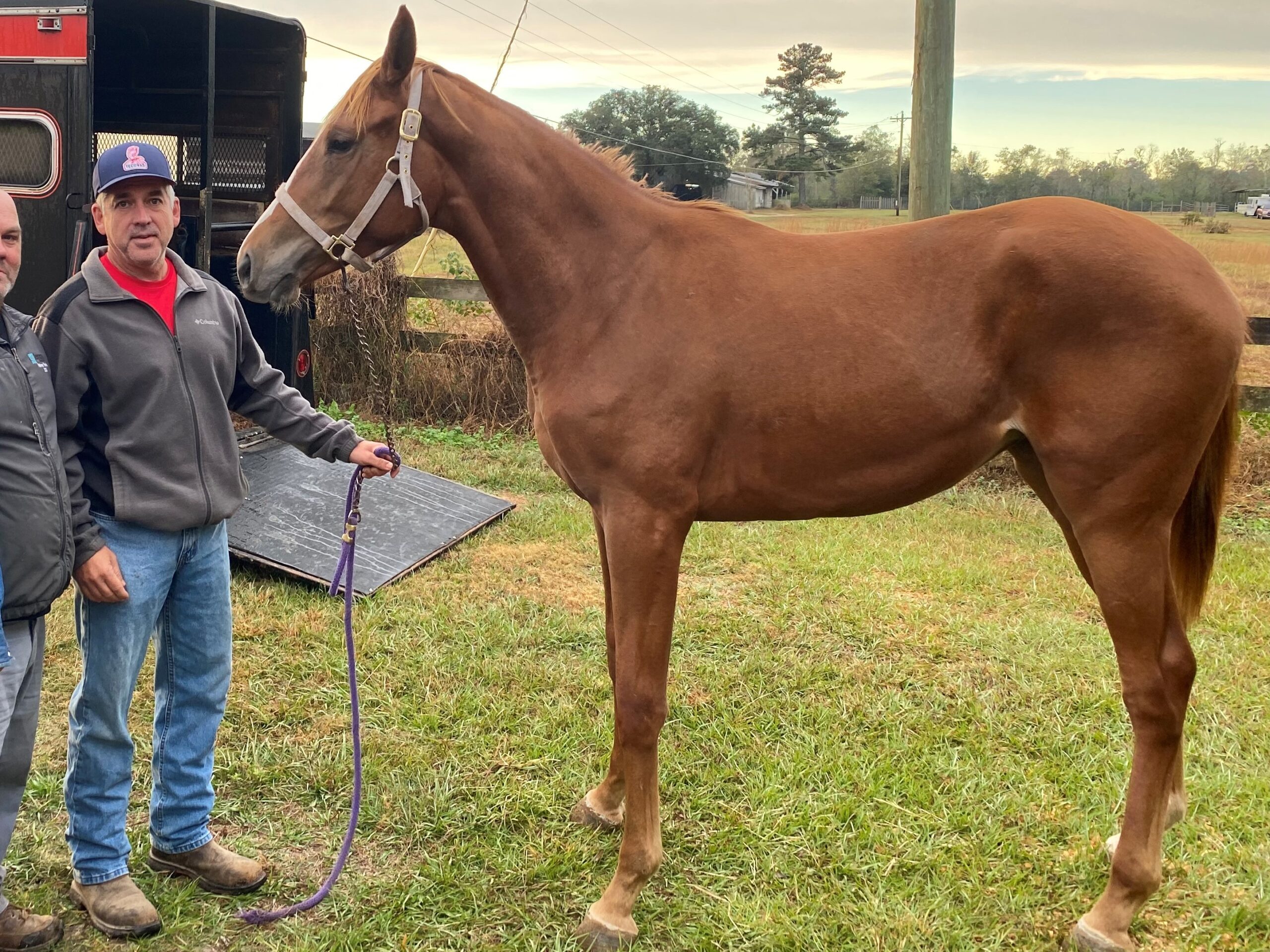
Miles Henry (legal name: William Bradley) is a professional horseman based in Folsom, Louisiana. He holds Louisiana Racing License #67012 and has spent over three decades managing Thoroughbreds at premier tracks including Fair Grounds, Delta Downs, and Evangeline Downs.
Expertise & Hands-On Experience: Beyond the track, Miles has decades of experience in specialized equine care, covering everything from hoof health and nutrition to training protocols for Quarter Horses, Friesians, and Paints. Every guide on Horse Racing Sense is rooted in this “boots-on-the-ground” perspective.
30 of their last 90 starts
Equibase Profile.

Connect with Miles: