Last updated: September 8, 2026
I often get asked: is horseback riding a sport? The question usually comes up because people say the horse does the running, jumping, or turning—not the rider.
Horseback riding is considered a sport because it involves trained skill, fitness, strategy, and competition. The horse brings its own athletic ability, while the rider must communicate, stay balanced, make decisions, and guide the horse’s performance.
Below, I explain why horseback riding qualifies as a sport, why some people disagree, and what the rider actually contributes in different horse disciplines.
Is Horseback Riding Really a Sport?
Yes. Competitive horseback riding has the things people expect from any sport: athletes train, develop technical skill and fitness, compete under rules, and are judged, timed, or scored against other entrants. The difference is that horse sports involve two athletes instead of one.
The horse is unquestionably an athlete. So is the rider. A horse doesn’t understand the competition strategy the way a rider does. The rider helps determine pace, position, lines, timing, and how the horse uses its energy. At the same time, good riders respect that horses are thinking, feeling animals with their own instincts, strengths, and limitations.
Why Do Some People Say Riding Isn’t a Sport?
Most people who question riding are focusing on one obvious fact: the horse supplies the locomotion. That’s true. A horse isn’t a bicycle, a tennis racket, or a piece of equipment. It brings its own speed, jumping ability, temperament, training, and opinions to the partnership.
But the horse doing the running doesn’t make the rider a passenger. In competition, the rider has to develop timing, balance, feel, fitness, judgment, and communication. A rider can help a horse stay organized and confident, or make the job harder by being late, unbalanced, tense, or unclear.
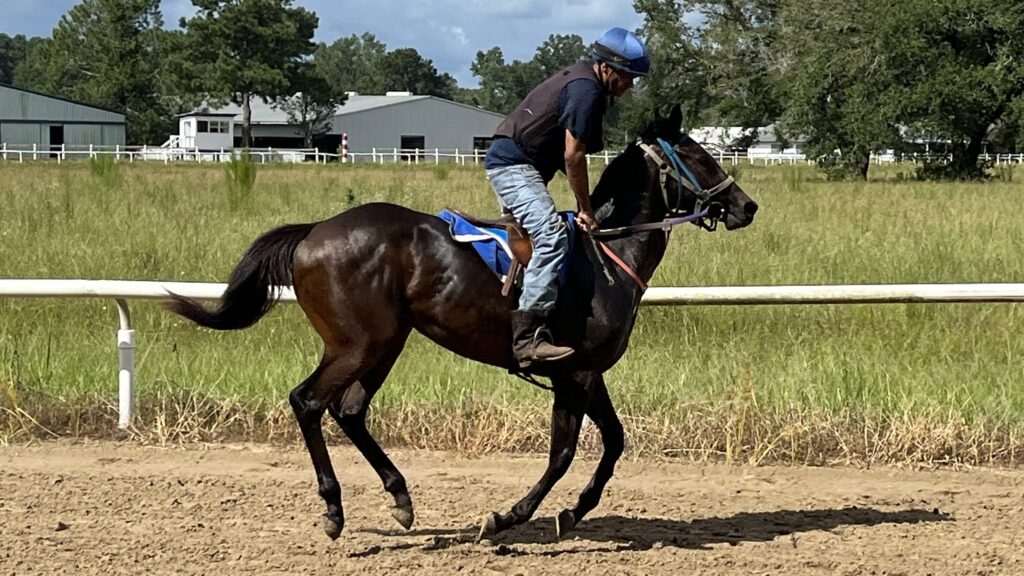
Think about a jockey trying to save ground around the first turn, judge a fast pace, find room in traffic, and decide when to ask for a horse’s run. Or think about a jumper rider keeping a horse in rhythm, making a tight turn, and arriving at a fence straight and balanced. The horse has the power, but the rider’s choices affect how well that power gets used.
What Makes Horseback Riding a Sport?
Riders need fitness and balance
Riding works your core, legs, hips, back, and hands in ways most non-riders don’t appreciate until they’ve spent time in the saddle. Good riding means moving with the horse without collapsing, gripping, bracing, or throwing it off balance. That takes strength, coordination, body awareness, and a lot of repetition.
The physical demand changes with the job. Galloping a racehorse, riding a strong jumper, working cattle, posting a big trot, or covering miles in an endurance ride aren’t identical challenges. But they all require a rider to stay effective while a horse is moving, reacting, and working hard.
Riding takes learned skill
Being fit isn’t enough. Riders learn how to use their seat, legs, hands, weight, voice, and timing so a horse understands what’s being asked. With a well-trained horse, those aids can look nearly invisible from the ground. That doesn’t mean they’re absent; it usually means the horse and rider understand each other.
Anyone who’s ridden more than one horse knows the same aid doesn’t always bring the same answer. One horse may need a rider to wait and soften, while another needs a rider to be more definite. Learning that feel takes miles, coaching, mistakes, and paying close attention to what the horse is telling you.
Competition takes strategy and preparation
Competitive riding isn’t about showing up and hoping a talented horse takes care of the rest. Riders study courses, learn the rules, condition their horses for the job, and make plans around an individual horse’s strengths and limitations. Then they have to adjust when things don’t go as planned.
In most disciplines, the competition is only the final few minutes. The real work happens in the weeks and months beforehand: building fitness, practicing specific skills, checking that tack suits the horse, keeping an eye on soundness, and learning what helps that horse stay confident and perform well.
Miles’s Take: From the racing side, this is probably the easiest example for me to explain. A jockey isn’t simply sitting on a fast horse and hoping for the best. A race can be won or lost by saving ground, timing a move, recognizing when a horse is struggling, or knowing it still has another gear. Those decisions happen at speed, around other horses, with very little time to correct a mistake. The horse is the main athlete, but good race riding can absolutely change an outcome.
When Riding Is Recreation Instead
Not every time someone gets on a horse needs to be called a sport. A quiet trail ride, a child being led around the barn, or an easy ride on familiar paths can be recreation, exercise, relaxation, or simply a good way to spend time with a horse.
That doesn’t weaken the argument that competitive riding is a sport. Tossing a baseball in the yard isn’t the same as playing in a league, but both involve baseball. In the same way, a pleasure ride and an eventing competition are different uses of riding skills. Once horse and rider are training for or entering a timed, judged, scored, or head-to-head event, they’re participating in a sport.

Five Horse Sports That Show Why It Counts
Horse sports test different parts of the partnership. A jockey, barrel racer, dressage rider, jumper rider, and event rider don’t ride the same way, but each depends on athletic ability, training, communication, and decisions made in real time.
| Sport | What horse and rider are tested on | What the rider must do |
|---|---|---|
| Horse racing | Speed, stamina, pace, position, and finishing effort | Stay balanced at speed, save ground, judge pace, find room, and time the move |
| Barrel racing | Speed, precise turns, balance, and a clean pattern | Set up each barrel, support the horse through the turn, and leave with momentum |
| Show jumping | Rhythm, scope, accuracy, and fault-free jumping | Plan the course, choose lines, adjust stride, and keep the horse straight and confident |
| Dressage | Training, balance, accuracy, responsiveness, and harmony | Use subtle, timely aids while preparing and riding each required movement correctly |
| Eventing | Versatility across dressage, cross-country, and show jumping | Condition the horse, judge pace, ride technical questions, and preserve energy across phases |
Horse racing
Horse racing is a timed competitive sport in which the horse and jockey have to function as a team. The horse supplies the speed and stamina, but the jockey has to put that ability in the right place at the right time. In a large field, that can mean getting position before the first turn, saving ground on the rail, avoiding traffic, deciding whether a pace is too quick, and asking for a run before the opportunity disappears.
Good race riding also means knowing the individual horse. Some horses need to settle early and make one late run; others are most effective on or near the lead. A rider who fights a horse’s natural running style can waste energy before the real race begins. It’s easy to see a horse run fast. It takes more experience to see why a particular trip, decision, or timing choice mattered.
For more on the jockey’s role, see How Do Jockeys Make Horses Go Faster? and How Tall Are Jockeys, and How Much Do Jockeys Weigh?.

Barrel racing
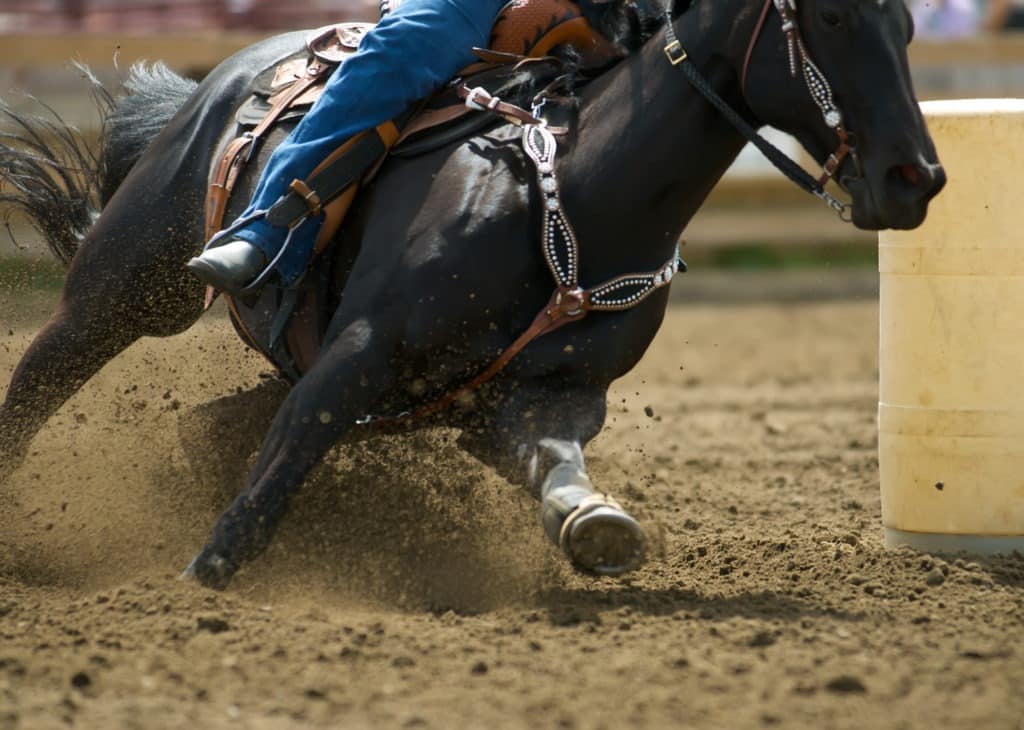
Barrel racing is a timed event in which a horse and rider run a cloverleaf pattern around three barrels. Winning times are measured in fractions of a second, so speed matters. But a fast horse can lose the race by entering too wide, losing its hind end in a turn, knocking over a barrel, or leaving a barrel without enough drive for the next one.
The rider has to prepare the approach, stay with the horse through the turn, and give it room to do its job without losing control. The cleanest runs look smooth because the communication is good. They aren’t smooth by accident.
Read more in Barrel Racing: What Is the Best Horse Breed for You?.
Show jumping
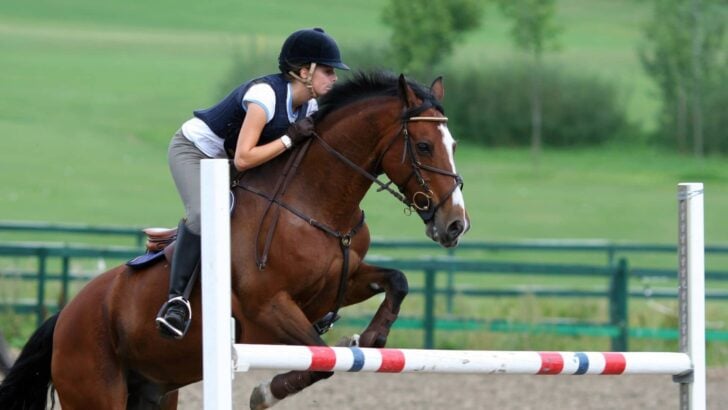
Show jumping requires horse-and-rider pairs to jump a set course of fences in the prescribed order. Depending on the class, riders are judged on faults, time, or both. The fences may look like the whole challenge, but the difficult work often happens between them: maintaining a rhythm, finding the correct track, making a tight turn, and putting the horse at a sensible takeoff spot.
The horse is the one that leaves the ground, yet the rider can make a jump easier or harder by the way they approach it. A rider who rushes, loses the line, or arrives unbalanced can create a problem even for a capable horse. A good rider helps the horse see the fence, stay confident, and use its jump effectively.
If you’re looking at horses for this job, see Best Horse Breeds for Dressage and Jumping.
Dressage
Dressage is judged riding built on training, balance, and communication. Horse and rider perform a prescribed test of movements, and judges evaluate how accurately and correctly the pair completes them. At the higher levels, the work can look almost invisible from the ground because the rider’s aids are small and the horse appears to move freely.
That quiet appearance is the product of training, not proof that the rider isn’t doing anything. The rider has to keep the horse straight, balanced, responsive, and relaxed while preparing every transition, turn, and movement. It takes feel to ask without over-riding, especially when the horse is tense, distracted, or not quite in balance.
For a closer look at a common welfare question, read Is Dressage Cruel to Horses? The Sport and Training Examined.
Eventing
Eventing combines dressage, cross-country, and show jumping. It’s often called an equestrian triathlon because the same horse-and-rider pair must be accurate in dressage, bold and fit across country, then careful enough to jump a stadium course after the earlier effort.
It’s one of the best examples of why riding is a sport. The rider has to know how fit the horse is, set and maintain the appropriate pace, make quick decisions at solid obstacles, and protect the horse’s confidence and energy throughout the competition. It rewards judgment just as much as bravery.
Is Equestrian an Olympic Sport?
Yes. Equestrian competition has been part of the modern Olympic program for more than a century. The three Olympic equestrian disciplines are dressage, eventing, and jumping, and men and women compete against one another as horse-and-rider partnerships.
Olympic status isn’t the only reason horseback riding counts as a sport. The training, fitness, rules, scoring, and competition already make that clear. But it does show that riding is recognized and organized at the highest international level.
The Bottom Line
Horseback riding is a sport when it involves training for or taking part in competition. Horse sports demand conditioning, skill, courage, judgment, and a partnership with a horse that also has to be trained and fit for its job.
A relaxed ride can still be one of the best parts of owning horses, and it doesn’t need a scoreboard to be worthwhile. But no one who’s prepared a horse for a race, show, rodeo, or demanding trail competition should have trouble seeing the difference between taking a ride and competing as an athlete.
Frequently Asked Questions
Is horseback riding considered a sport?
Yes. Horseback riding is considered a sport when horse and rider train for or take part in organized competition. Events such as horse racing, barrel racing, show jumping, dressage, eventing, endurance, polo, rodeo, and reining require skill, conditioning, strategy, and performance under rules.
Do horses do all the work in riding?
No. The horse provides the movement and its own athletic ability, but the rider has to stay balanced, communicate through trained aids, make decisions, and prepare the horse for the job. In competition, a rider’s timing, position, strategy, and judgment can affect the result.
Is horse racing a sport?
Yes. Horse racing is a timed horse-and-jockey sport. The horse supplies speed and stamina, while the jockey contributes balance at speed, pace judgment, tactical position, route selection, timing, and decisions in traffic.
What makes horseback riding different from other sports?
Horseback riding is different because the rider competes with a living partner rather than using equipment. The horse has its own fitness, training, instincts, and ability, while the rider provides communication, balance, strategy, and decisions. Good results depend on both athletes working together.
Related Reading
About Miles Henry
Racehorse Owner & Author | 30+ Years in Thoroughbred Racing
Miles Henry (legal name: William Bradley) is a professional horseman based in Folsom, Louisiana. He holds Louisiana Racing License #67012 and has spent over three decades managing Thoroughbreds at premier tracks including Fair Grounds, Delta Downs, and Evangeline Downs.
Expertise & Hands-On Experience: Beyond the track, Miles has decades of experience in specialized equine care, covering everything from hoof health and nutrition to training protocols for Quarter Horses, Friesians, and Paints. Every guide on Horse Racing Sense is rooted in this “boots-on-the-ground” perspective.
30 of their last 90 starts
Equibase Profile.

Connect with Miles: