
Last updated: October 7, 2026
Ask a racetrack trainer, a dressage rider, and a barrel racer to name a horse sport, and you’ll probably get three different answers. There are dozens of ways to compete with a horse, from flat racing and show jumping to barrel racing, team roping, polo, and endurance riding.
I’ll run through the main horse sports first, then get into which ones are most popular, which carry the most risk, and what it costs to get involved.
Table of Contents
Horse Sports List
Here’s the short list of the ones you’re most likely to run into. Some categories overlap. Quarter Horse racing, for example, is a form of flat racing, but its short sprints are different enough from most Thoroughbred races that it gets its own row.
| Sport | Category | What decides the result |
|---|---|---|
| Flat racing | Racing | First horse across the finish line |
| Quarter Horse racing | Racing | First to the wire in a short-distance sprint |
| Steeplechase and hurdles | Racing | First to finish a race over fences or hurdles |
| Harness racing | Racing | First to finish while pulling a driver in a sulky |
| Endurance riding | FEI | Finishing order among horses that pass all required vet checks |
| Show jumping | Olympic/FEI | Penalties and time, depending on the competition format |
| Dressage | Olympic/FEI | Judges’ scores for a test of movements |
| Eventing | Olympic/FEI | Lowest total penalties across dressage, cross-country, and show jumping |
| Barrel racing | Rodeo | Fastest time around three barrels, including any penalties |
| Team roping | Rodeo | Fastest qualifying run, including any penalties |
| Reining | Western | Judges’ scores for a pattern of spins, stops, and lead changes |
| Cutting | Western | Judges’ scores for how well the horse works a cow |
| Polo | Team sport | Most goals scored by a team of four |
| Combined driving | FEI | Lowest total penalties across dressage, marathon, and cones |
| Vaulting | FEI | Judges’ scores for gymnastics on a cantering horse |
Horse Racing and Endurance
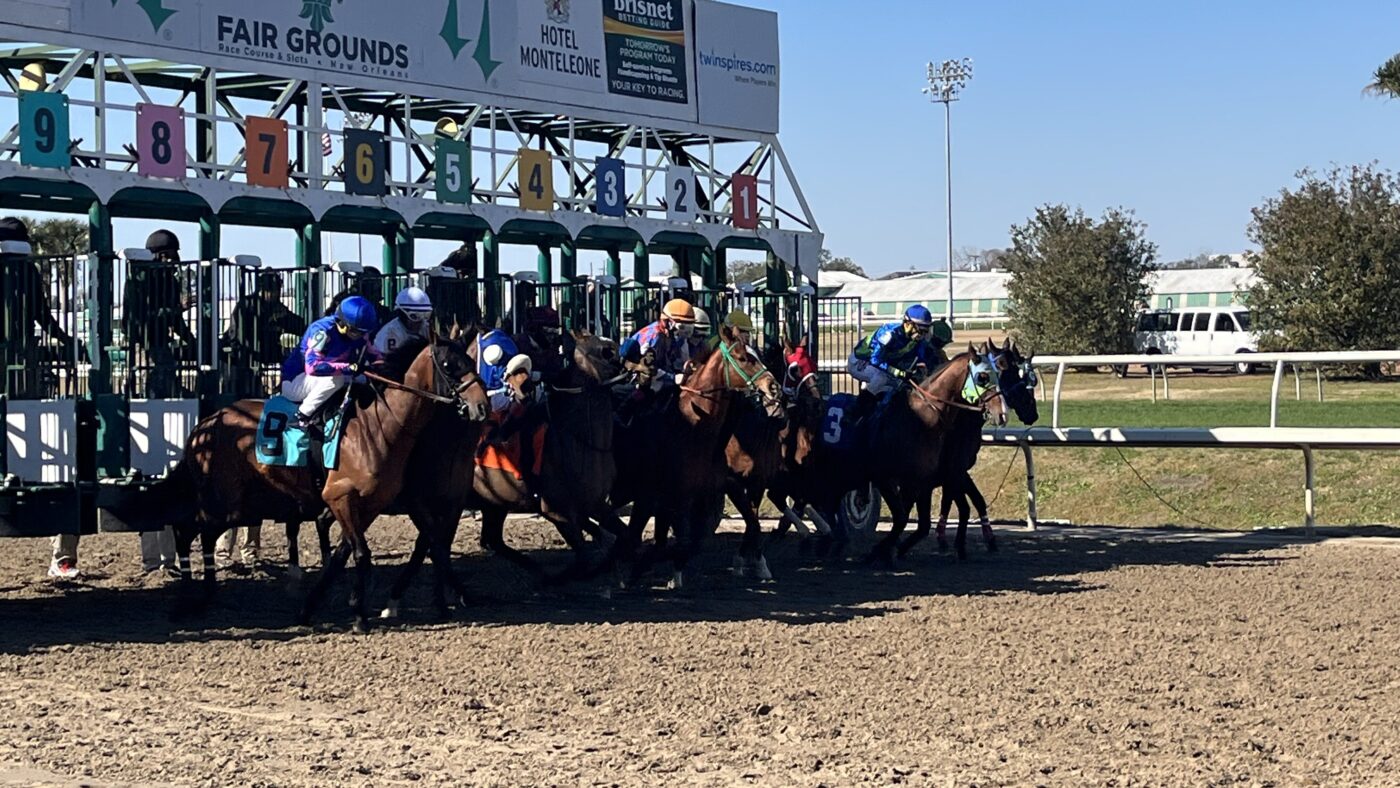
Horse racing includes flat racing for Thoroughbreds and Quarter Horses, steeplechase racing over jumps, and harness racing with a driver in a sulky. A racehorse needs speed, acceleration, fitness, and the temperament to handle the pressure of a race.
Horse racing is especially popular in the United States, Great Britain, Ireland, France, Australia, Japan, Hong Kong, and parts of the Middle East, and the biggest horse races in the world take place in many of those places. Here in Louisiana, racing is part of the horse culture, too. We race at Fair Grounds, Delta Downs, Evangeline Downs, and Louisiana Downs.
Endurance riding tests a horse over long distances and varied terrain. Under American Endurance Ride Conference rules, an endurance ride has to be at least 50 miles in a day, with veterinary checks along the way. Shorter limited-distance rides of 25 to 35 miles give riders another way to get started.
Olympic Horse Sports: Jumping, Dressage, and Eventing

Show jumping, dressage, and eventing are the three Olympic equestrian sports. In show jumping, horse and rider tackle a course of fences, and the horse needs scope, carefulness, and balance. Dressage tests precise movements and transitions, so trainability and balance matter most, and training a horse for dressage takes years. Eventing combines dressage, cross-country, and show jumping on the same horse.
Internationally, these sports fall under the FEI, which also oversees driving, endurance, and vaulting. In the United States, US Equestrian recognizes 11 breeds and 18 disciplines.
Western and Rodeo Horse Sports
Western horse sports grew out of ranch work. Rodeo events like barrel racing, team roping, tie-down roping, and steer wrestling are timed, so the fastest clean run wins. Reining, cutting, and working cow horse classes are judged on how well the horse handles a pattern or a cow, and a good cutting horse needs real cow sense and quick reactions.
Barrel racing looks simple until you watch a good horse do it. The horse has to accelerate hard, rate going into the turn, stay balanced around the barrel, and leave it without losing momentum. Team roping horses need some of the same speed, plus the ability to stop, turn, and hold a steer.
Team, Driving, and Specialty Horse Sports
Polo has two teams of four riders trying to score goals by hitting a ball with long mallets. Playing polo takes fast, handy horses that can stop and turn quickly. Polocrosse is a cousin that uses a racquet with a net instead of a mallet.
Driving sports put the horse in harness. Combined driving has dressage, marathon, and cones phases, and pleasure driving is judged in the show ring. Vaulting is gymnastics performed on a cantering horse, and it’s one of the FEI disciplines, too.
What Is the Most Popular Horse Sport?
There isn’t one horse sport that’s the most popular everywhere, because it depends on what you count. If you count fans and betting, racing is hard to beat. On the international show circuit, show jumping is one of the most recognized equestrian sports. And if you count weekend competitors across the American South and West, barrel racing and team roping fill a lot of arenas. In Louisiana, barrel racing comes out on top.
What Is the Most Dangerous Horse Sport?
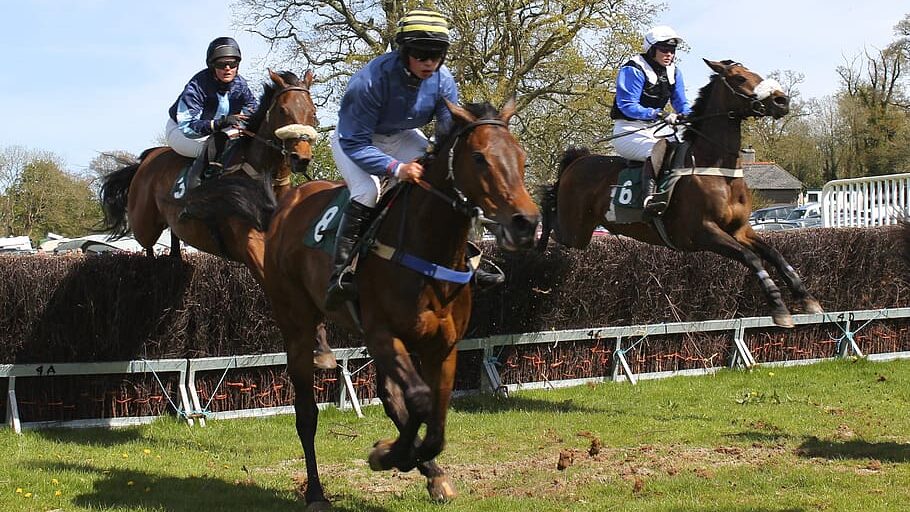
There isn’t a single, directly comparable ranking that says which horse sport is the most dangerous. Racing and eventing are often singled out because both involve speed and falls, but studies measure different things, including rider falls, rider injuries, and injuries to horses.
A UC Davis study of California races from 2007 through 2011 recorded one jockey fall per 502 Thoroughbred rides and per 318 Quarter Horse rides, and more than half of those falls caused a substantive injury. Those are historical figures, not a direct comparison with other horse sports. Racing has kept working on safety, too. The Equine Injury Database’s 2025 fatal injury rate for racehorses was 1.07 per 1,000 starts, down 47% since 2009.
In eventing, the cross-country phase is the biggest concern because a horse can rotate over a solid fence during a fall. Safety changes have helped. Historical FEI figures cited by Horse Illustrated show rotational falls dropping from 1 in 197 starts in 2004 to 1 in 445 in 2013. Frangible pins and deformable logs, which are built to give way under load, are part of the effort to cut that risk. Helmets and air vests serve a different purpose: protecting the rider when a fall does happen.
Whichever sport you pick, take the risk seriously, wear the right gear, and ride a horse that matches your experience.
Are Horse Sports Expensive?
Horse sports can be expensive. Board, feed, vet care, farrier work, training, entry fees, and hauling all add up, and the cost of owning a horse comes before you ever enter a competition. Before buying a horse for a particular sport, take some lessons on a suitable school horse to find out whether you enjoy it.
Costs vary with your setup and how often you compete. If you already have the facilities and experience to handle some of the work yourself, you’ll likely spend less than someone paying for full board and training. In sports with real prize money, a successful horse can offset some or even all of its expenses.
About Miles Henry
Racehorse Owner & Author | 30+ Years in Thoroughbred Racing
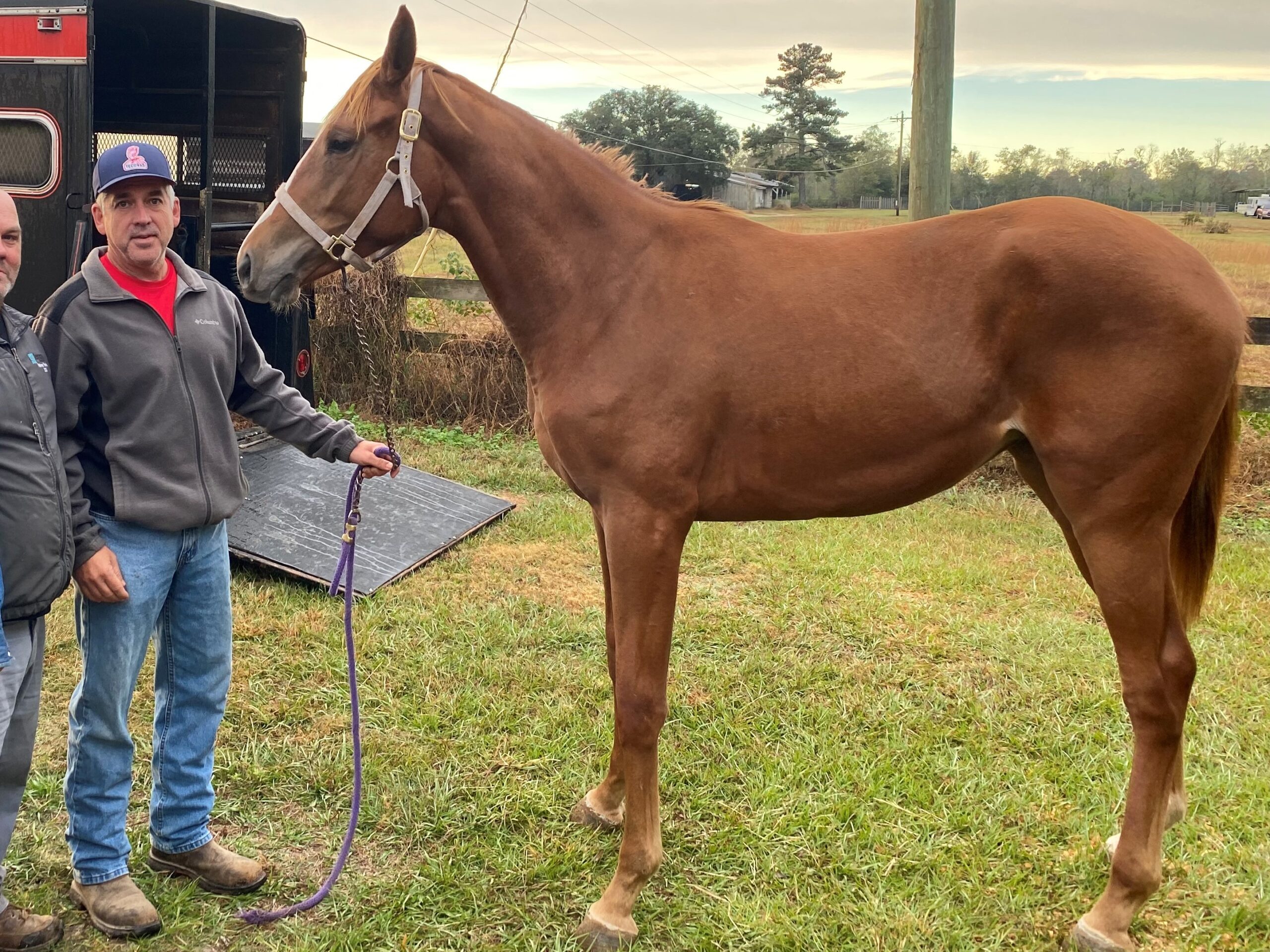
Miles Henry (legal name: William Bradley) is a professional horseman based in Folsom, Louisiana. He holds Louisiana Racing License #67012 and has spent over three decades managing Thoroughbreds at premier tracks including Fair Grounds, Delta Downs, and Evangeline Downs.
Expertise & Hands-On Experience: Beyond the track, Miles has decades of experience in specialized equine care, covering everything from hoof health and nutrition to training protocols for Quarter Horses, Friesians, and Paints. Every guide on Horse Racing Sense is rooted in this “boots-on-the-ground” perspective.
30 of their last 90 starts
Equibase Profile.

Connect with Miles: