
Last updated: October 12, 2026
Any links on this page that lead to products on Amazon are affiliate links and I earn a commission if you make a purchase. Thanks in advance – I really appreciate it!
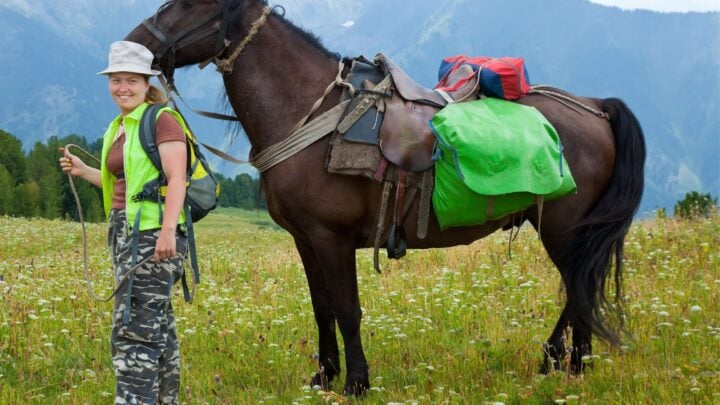
Pommel and cantle bags give you a place to carry water, snacks, and a hoof pick on a trail ride. But which style fits your saddle and the gear you need? If you ride English, there’s no horn to hang a bag from, so the attachment setup matters.
Here’s how the two styles compare, what to check for fit, and which bags are worth considering for English and Western saddles.
Table of Contents
What Is the Pommel on a Saddle?
The pommel is the raised front of the saddle, arching over the horse’s withers. On an English saddle it’s a low, rounded arch. Some English saddles have D-rings or other attachment points near the front, but the setup varies from one saddle to the next. If your saddle doesn’t have suitable front attachment points, look for a bag designed for its setup or ask a qualified saddler about your options.
On a Western saddle, the front is called the pommel or fork, and it carries the horn. The horn, D-rings, and saddle strings give you several places to secure a bag, and knowing your Western saddle parts makes it easier to see where each strap should go.
Pommel Bags vs. Cantle Bags
| Bag | Where it sits | Best for | Fits |
|---|---|---|---|
| Pommel bag | Across the front of the saddle, in front of your legs | Water, snacks, a hoof pick, and small items you want within reach | English and Western versions |
| Cantle bag | Behind the saddle | A jacket, rain gear, lunch, and gear you’ll use when you stop | English and Western versions |
| Horn bag | Hangs from the saddle horn | Small items on short rides | Western saddles only |
Horse and Rider recommends putting lighter gear in the cantle bag and keeping heavier items toward the front, rather than loading everything behind the saddle. On a longer ride, many riders use both: a pommel bag for things they’ll need on the go and a cantle bag for the rest.
English Saddle Bag Options
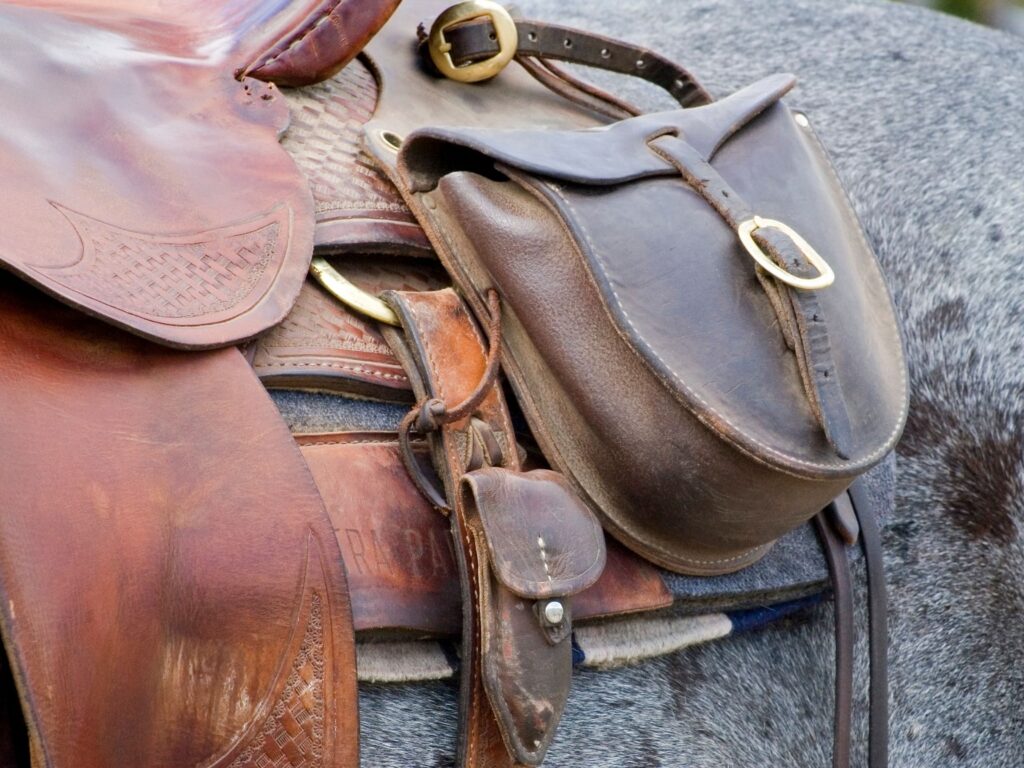
Before you buy an English saddle bag, check how it attaches to your particular saddle. Many front bags use the D-rings plus a second strap to the girth billets, and a second attachment point can help limit movement. Don’t assume a bag will fit just because it’s sold for English saddles. Think about what you’ll carry, too. A compact pommel bag handles small essentials, while a cantle bag gives you room for a jacket or lunch. Most of all, the loaded bag shouldn’t crowd your legs or reins.
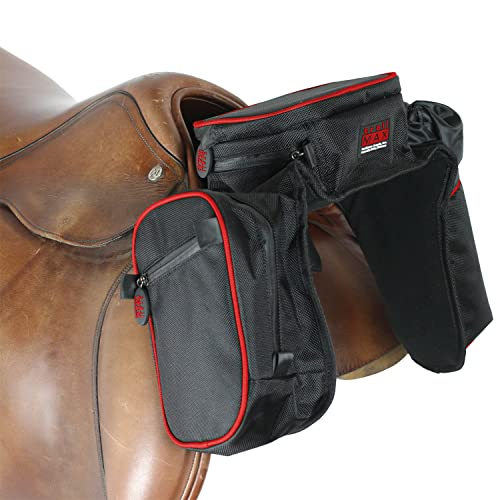
English Pommel Pocket
This compact pommel pocket is made for English saddles, so it’s built to attach without a horn. Look for straps that reach both the front D-rings and the girth billets, since that second attachment point helps keep the bag from swinging. It’s sized for small essentials like a hoof pick and a snack. Before ordering, check the listed dimensions and attachment setup against your saddle, and make sure the loaded bag won’t crowd your leg position.
Pommel and Cantle Bags for Western Saddles
Western saddles have more tie points, so you’ve got more choices. These options include a Western pommel bag plus a pommel pack and cantle bag that may work on other saddles too, so check each listing for fit:
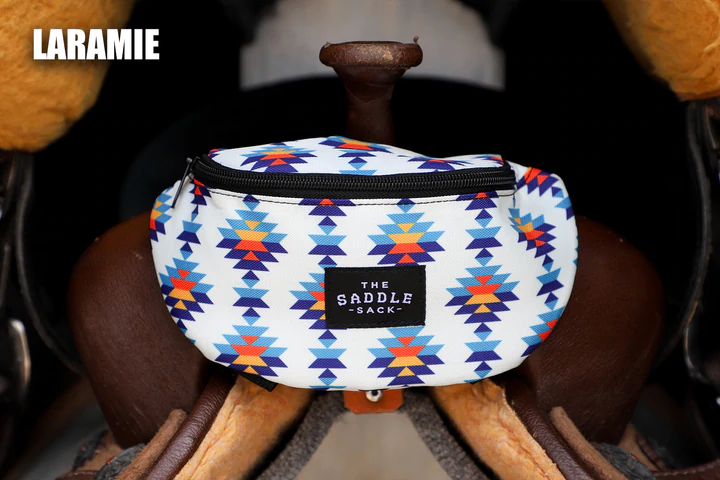
The Saddle Sack
The Saddle Sack is a small pommel bag that clips to the front of a Western saddle, with a hidden back compartment for keys or an ID. It comes in a wide range of patterns and colors.
Y.J TAILS Double-Layer Pommel Bag
The Y.J TAILS double-layer pommel bag is listed for Western and endurance saddles and has divided storage for organizing small essentials. Check its dimensions against what you plan to carry, and confirm how it attaches to your saddle before ordering. Once fitted, make sure it doesn’t interfere with your legs or reins.

Padded Cantle Saddlebag
For gear you won’t need until you stop, a padded cantle saddlebag rides behind the seat and has room for a jacket, rain gear, or lunch on a longer ride. The padding helps protect what’s inside. Before ordering, check the bag’s dimensions and make sure its straps or ties match the attachment points on the back of your saddle.

How to Attach and Pack Saddle Bags
Even a good saddle bag can cause problems if it’s poorly packed or secured, especially on a long trail ride. A few basics go a long way:
- Keep the load light and balanced. Pack heavier items low, don’t overstuff the bag, and split the weight evenly between the pouches of a two-sided bag.
- Test it at home first. Walk, then trot, with the loaded bag before a long ride, and tighten the straps if it shifts or bounces. Check them again after the first few minutes of riding.
- Introduce it gradually. If your horse isn’t used to carrying bags, let him look at and sniff the setup in a safe area. Secure loose straps and check for rattling or flapping before you ride off.
- Keep emergency items on you. Horse and Rider recommends keeping emergency items on your body in case you and your horse get separated, so your phone belongs in a pocket, not on the saddle.
Before heading out, check the loaded bag for movement, loose straps, and anything that interferes with your riding position. A short test ride at home is better than finding a problem miles down the trail.
About Miles Henry
Racehorse Owner & Author | 30+ Years in Thoroughbred Racing
Miles Henry (legal name: William Bradley) is a professional horseman based in Folsom, Louisiana. He holds Louisiana Racing License #67012 and has spent over three decades managing Thoroughbreds at premier tracks including Fair Grounds, Delta Downs, and Evangeline Downs.
Expertise & Hands-On Experience: Beyond the track, Miles has decades of experience in specialized equine care, covering everything from hoof health and nutrition to training protocols for Quarter Horses, Friesians, and Paints. Every guide on Horse Racing Sense is rooted in this “boots-on-the-ground” perspective.
30 of their last 90 starts
Equibase Profile.

Connect with Miles: