Last updated: September 10, 2026
Even people who love riding can get tired of circling an arena—and some horses benefit from a little variety too. Our grandchildren, their friends, and adult riders we know have found that a simple game can turn an ordinary ride into something both horse and rider enjoy.
The best horseback riding games are ones that are fun but still build real horse control and rider confidence. Keyhole Race, Simon Says, Eggs and Spoon, and Red Light Green Light are great choices for groups, while an obstacle course, ball work, and a platform exercise work well when you’re riding or training alone. Most need nothing more than a safe, enclosed riding area and a few cones or barrels.
Below, I’ll walk through how to actually set each one up, what skill it builds, and which ones are best saved for riders who already have solid control of their horse.
| Game | Mounted or Groundwork | Best For | Can Do Alone? | Main Skill |
|---|---|---|---|---|
| Keyhole Race | Mounted | Riders comfortable steering and turning | Yes, as a timed pattern | Bending, balance, and turns |
| Simon Says | Mounted | Small groups of riders | No | Listening and cue response |
| Eggs and Spoon | Mounted and leading | Confident riders with calm horses | No | Control, handling, and mounting |
| Red Light, Green Light | Mounted | Groups with reliable brakes | No | Transitions and stopping |
| Obstacle Course | Mounted or groundwork | One rider or a group | Yes | Confidence and steering |
| Mega Ball | Groundwork | One horse and handler | Yes | Curiosity and focus |
| Platform Work | Groundwork | One horse and handler | Yes | Confidence around footing |
Before you start: keep the game appropriate for the least experienced horse-and-rider pair in the group. Use a fenced riding area with safe footing, have an adult supervise kids, and require properly fitted riding helmets (if you’re buying a helmet, Virginia Tech’s equestrian helmet ratings are a useful place to compare independently tested options). Save speed, sharp turns, and repeated mounting and dismounting for riders who can already control their horse at the walk, trot, and stop.
How to Choose a Horseback Game for Your Horse
Not every horse enjoys the same kind of game. A seasoned, confident horse may enjoy a more active obstacle course, while a green, nervous, or inexperienced horse usually does better with slower, confidence-building exercises. The best game is the one that fits your horse’s personality, fitness, and training level—not whichever one looks the most fun on paper. If you’re newer to horses altogether, our full guide on horseback riding for beginners is a good place to build that foundation first.
Horseback Riding Games for Groups
A fun game can turn sideways quickly if the horse or rider isn’t ready for it. I’ve seen enough horses and riders over the years to know that confidence matters more than speed – keep the game appropriate for the horse underneath you and the rider in the saddle. Every horse in a group game should also be comfortable working around other horses; one that crowds, kicks, bolts, or becomes anxious around other horses needs more preparation before joining a group game.
Riders should keep enough distance from each other to avoid being kicked or crowded, and helmets are a must. See my full guide, Is Riding a Horse Dangerous? 7 Tips for Riding Safe, for more on managing the real risks that come with mounted activities.
Keyhole Race
Keyhole Race is a fun, straightforward game scored by time – though the kids usually forget about the clock and just focus on staying inside the lines and turning quickly.
We use baseball field marking powder to draw two parallel lines about six feet apart, with a wide circle at one end – flour works just as well, or you can lay out cones instead. Once it’s set up, riders go down the lane, enter the circle, turn around, and return to the start at the gait that fits their ability and their horse’s training. Go outside the lines, and you’re disqualified.
More experienced riders can turn it into a timed pattern, but there’s no reason to rush a child or a green horse through it. This game gives riders real practice with balance, bending, and quick turns, and it’s especially useful for pairs who compete in barrel racing.
You can play a similar flag-race variation too: set a flag on top of a barrel with a starting line marked out, and have riders race to the barrel, circle it, snag the flag, and race back to the start.
Simon Says
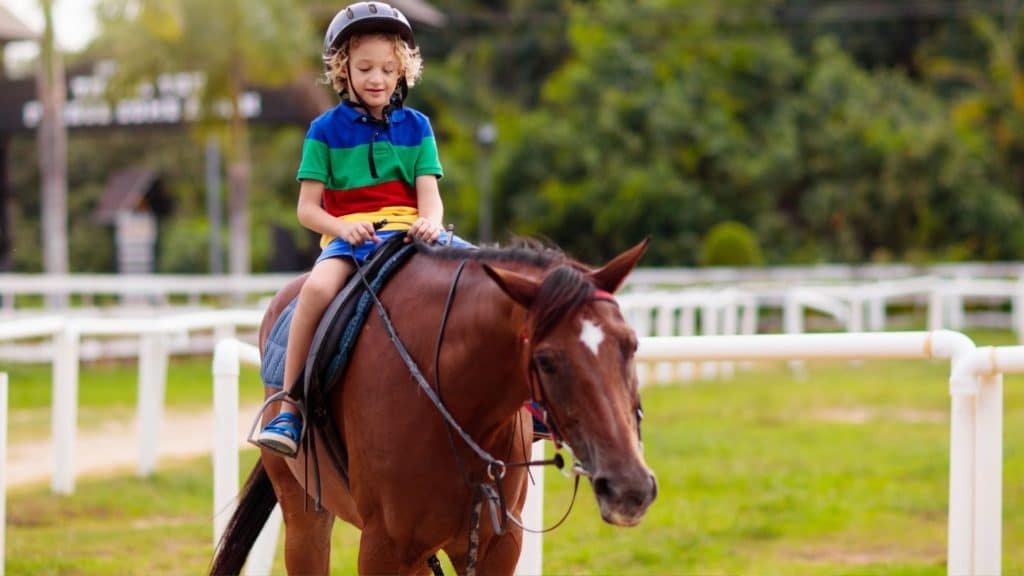
Our kids love being in charge, and this game gives them exactly that. One team – horse and rider – is designated “Simon,” and everyone else has to follow their instructions, but only when the instruction starts with “Simon says.”
If Simon calls out “Simon says trot your horse,” everyone trots. But if Simon just says “trot your horse” without the preface and someone trots off anyway, they’re out. It teaches kids to listen before they react – which turns out to matter just as much when they’re actually riding as when they’re playing a game.
Eggs and Spoon
Eggs and Spoon works best for confident riders on quiet horses, since it combines riding, stopping, dismounting, and leading all in one game. Skip real eggs – they break, make a mess, and don’t add anything to the fun. Plastic Easter eggs, ping-pong balls, or beanbags on a spoon work just as well.
Set a barrel about 30 to 50 yards from a basket, with your chosen items placed on top of the barrel. Riders start at the basket, ride to the barrel, dismount, use a spoon to pick up an item, lead their horse back to the basket, and drop it in – then remount and repeat until everything’s gone.
It’s a real workout for the kids- mounting and dismounting repeatedly while keeping a horse from stopping to graze is harder than it sounds. For younger or less experienced riders, simplify it: have an adult place the item on the spoon, skip the dismount, and have the rider carry it at a walk or trot instead. The goal is calm control, not speed.
Red Light, Green Light

Mark a starting line and a finish line about fifty yards apart, and line up the riders. Have someone call out “green light” and “red light” – riders move toward the finish when they hear “green light,” and stop the moment “red light” is called.
Can’t stop your horse in time when “red light” is called? You restart. This one’s really about brakes – it teaches kids to control their horse’s speed and stop reliably on cue. Mix it up by adding more colors and assigning them different gaits – green for a canter, yellow for a trot, purple for a walk, for example. If you’ve got a lot of riders, split them into smaller groups so it stays manageable.
Solo Horse Games and Groundwork Activities
These next activities are better thought of as solo training games than mounted group games. They’re useful when you don’t have other riders around and want to give your horse a little mental variety. Before you try them, make sure your horse already understands your basic cues – it should back up and move its hindquarters and front end when asked, whether you’re using hand pressure, a stick, or a rhythmic pressure-and-release pattern. Once you and your horse are solid on that, you’re ready to play.
Obstacle Course
Building your own obstacle course is a good way to strengthen your bond with your horse while having some fun. SStart easy with ground poles, cones, or wide, low obstacles, and add difficulty only as your horse becomes more confident.
An obstacle course gives you a controlled way to introduce ordinary objects, changes in footing, and simple steering challenges. For some horses, that kind of patient exposure can build real confidence around things they might meet on the trail – but only if you keep the exercise easy enough that the horse can stay relaxed and actually think it through. Some horses will walk over anything you point them at. Others will stop and stare at a plastic barrel like you’ve asked them to climb Mount Everest.
Good options for obstacles: cones, ground poles, barrels, a tarp secured at the edges, pool noodles, a mailbox prop, or a bridge or mat built for horses. Skip loose items like garbage bins that can blow, roll, or leave sharp edges exposed.
You can also turn this into a competition: time each rider through the course without skipping any obstacles, and whoever’s fastest wins.
Mega Ball Horse Game (Soccer Ball)
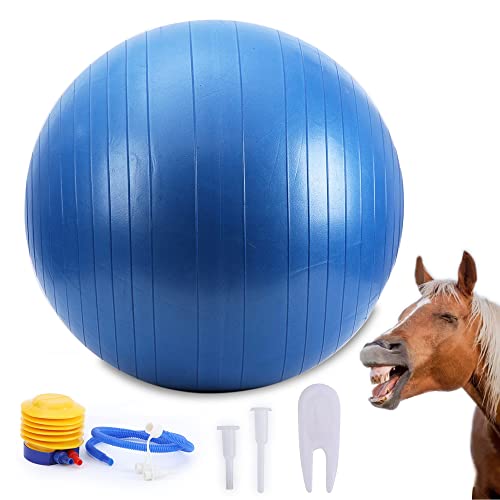
Mega Ball is not an ordinary soccer ball. It is a large inflatable training ball—often around 25 inches across—with a removable cover that is designed to be nudged and rolled by a horse.
Keep the ball nearby and encourage your horse to nudge it, rewarding each push. Over time, you can get your horse moving the ball in different directions and at different speeds. It’s a solid way to engage with your horse on the ground and works well as mental stimulation on an off day from riding, especially if you’re trying to break up boredom in the training routine.
Platform Work
Platform work is more of a groundwork exercise than a game, but some horses seem to enjoy the challenge. Use only a purpose-built, non-slip, stable platform designed to hold a horse safely – don’t improvise with pallets, weak boards, or anything that could shift, break, or trap a hoof.
Start with a low, broad platform on level ground—big enough for all four feet, so your horse feels secure—and reward one calm step at a time. Once your horse is comfortable, ask for a quiet halt on the platform, a step forward, or a careful back-up off it. If your horse is hesitant about stepping onto things, begin with a low platform and work up gradually.
The exercise can help a horse get comfortable placing its feet on unfamiliar surfaces, but it’s not a substitute for teaching safe trailer-loading habits specifically – think of it as building general confidence and body awareness, not a direct trailer-loading lesson.
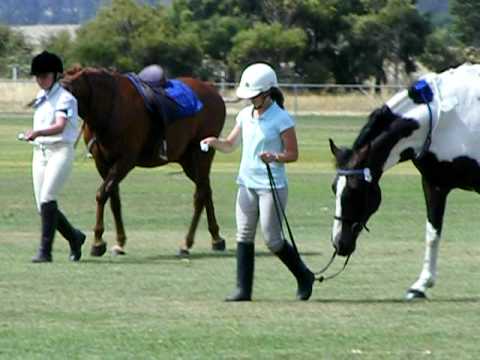
This video gives a visual example of several mounted games – use the safety and skill guidelines above when adapting them for your own group.
FAQ
What are the best horseback riding games?
The best horseback riding games depend on the horse and rider, but good choices include Keyhole Race, Simon Says, Eggs and Spoon, and Red Light, Green Light. A simple obstacle course can also work as a mounted game when the course and pace match the rider’s ability. The best games do more than entertain riders—they improve balance, communication, and confidence.
What games can I play with my horse when I’m riding alone?
A simple obstacle course can be ridden alone or done from the ground. Mega Ball and platform work are groundwork activities rather than mounted games, but they can give a horse mental variety when you don’t have other riders available.
Are horseback games safe for kids?
They can be, with the right precautions. Make sure riders are wearing helmets, match the game to each rider’s actual skill level, and have an adult who understands both the horse and the rider supervise closely – games involving speed or quick turns should only be attempted by riders who are already comfortable and in control of their horse.
What do I need to set up horseback games?
Most of these games need very little: a few cones or barrels, some marking powder or flour to draw lines, and a safely fenced riding area. Keyhole Race and Red Light Green Light are among the easiest to set up with minimal equipment.
Games should leave both horses and riders more confident, not more wound up. If a horse gets tense, rushes, pins its ears, kicks, or stops responding to ordinary cues, back up to an easier exercise or call it a day. Start simple, keep the sessions short, and let the horse’s comfort level – not the kids’ excitement – set the pace.
About Miles Henry
Racehorse Owner & Author | 30+ Years in Thoroughbred Racing
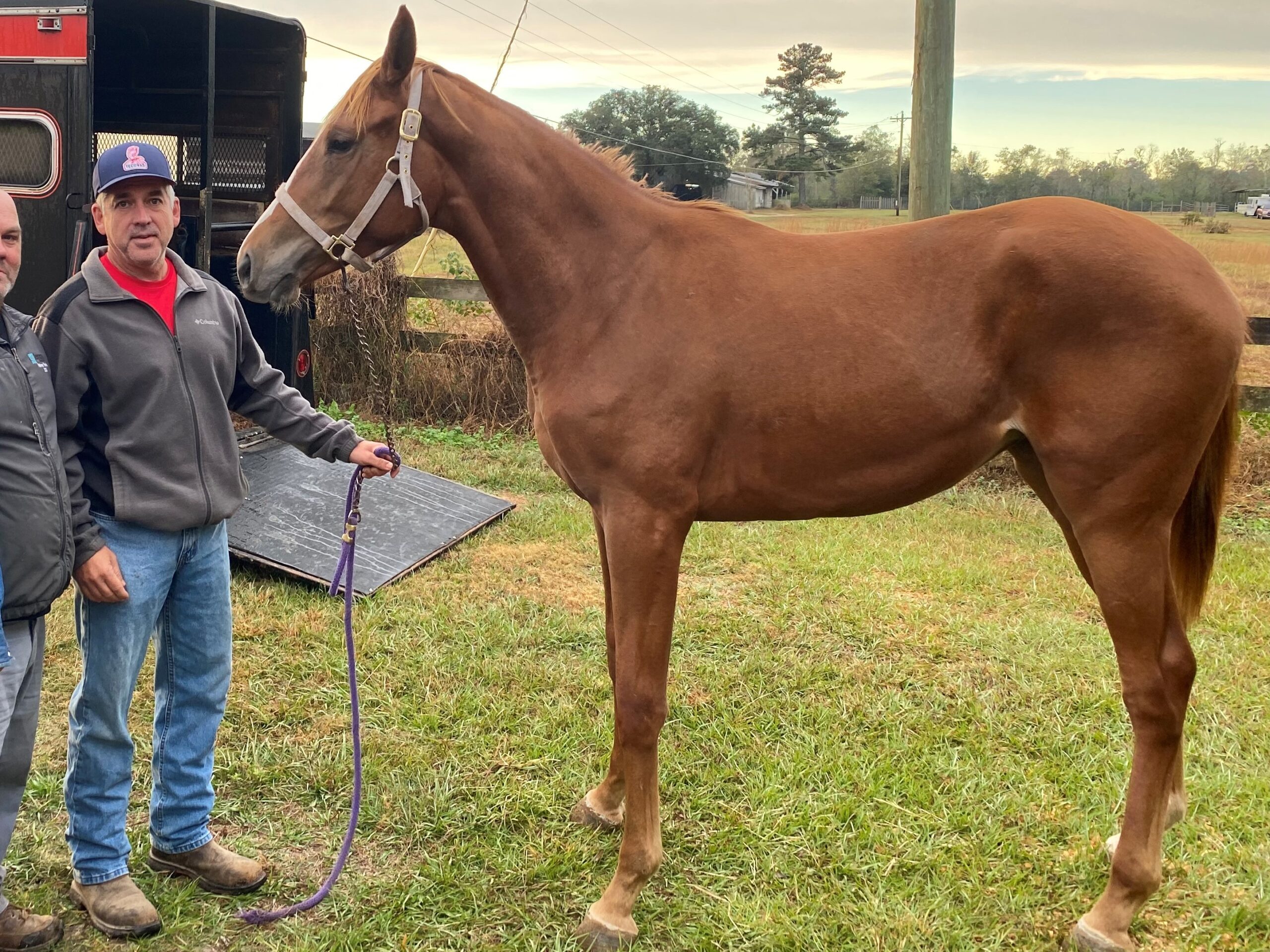
Miles Henry (legal name: William Bradley) is a professional horseman based in Folsom, Louisiana. He holds Louisiana Racing License #67012 and has spent over three decades managing Thoroughbreds at premier tracks including Fair Grounds, Delta Downs, and Evangeline Downs.
Expertise & Hands-On Experience: Beyond the track, Miles has decades of experience in specialized equine care, covering everything from hoof health and nutrition to training protocols for Quarter Horses, Friesians, and Paints. Every guide on Horse Racing Sense is rooted in this “boots-on-the-ground” perspective.
30 of their last 90 starts
Equibase Profile.

Connect with Miles: