
Last updated: September 3, 2026
Any links on this page that lead to products on Amazon are affiliate links and I earn a commission if you make a purchase. Thanks in advance – I really appreciate it!
If you’re buying a riding helmet for a child, I wouldn’t start with color or price. I’d start with certification, fit, and whether the helmet is actually sized to suit your child’s head.
Look for ASTM/SEI certification and a helmet that fits your child’s actual head measurement – not simply the smallest version of an adult-oriented model. “Kids” is a broad label. A helmet that fits a 12-year-old well may be completely wrong for a toddler, which is why I’ve separated these picks by the rider’s size and stage instead of naming one universal “best.”
I’ve spent a lot of time around horses and buying riding equipment, and kids’ helmets are one category where fit and details matter more than the brand name. Below, I cover the options I’d consider for toddlers, younger riders, and older kids – including a toddler-specific option, since sizing is especially important at that age – plus what to check before ordering, how to get the fit right, and when a helmet needs replacing.
This article contains affiliate links. If you buy through one, I may earn a small commission at no extra cost to you.
Table of Contents
Best Horse Riding Helmets for Toddlers and Young Kids
I didn’t rank these helmets by Amazon star ratings or by which one looked nicest. I started with models that meet the appropriate equestrian safety standard, then compared their published size ranges, adjustment systems, ventilation, liner care, availability, and—most importantly—the type of young rider each one is intended to suit.
I haven’t worn these helmets, so I’m not going to pretend to rank them by comfort or feel. My grandchildren have worn the Troxel Youngster, however, which gave me a firsthand look at how it fits and works for a genuinely small rider. For the rest of the helmets here, I am relying on the manufacturers’ published specifications and sizing information. What I can do is point out where each model makes sense, what features are worth paying attention to, and what you should verify before buying.
Every helmet below is listed by its manufacturer as ASTM/SEI certified. For a U.S. riding helmet, look for ASTM F1163 certification with the SEI mark on the label inside the helmet. F1163-23 is the current ASTM edition, while F1163-15 remains accepted by organizations including the United States Pony Clubs for North American competition. If your child rides under a particular organization’s rules, check its current helmet policy before buying because accepted certifications can vary. Certification is not just a sticker; it shows the helmet has been tested to a defined equestrian-headgear standard.
Troxel Youngster Helmet

Best for: toddlers and very small riders.
Why I’d pick it: Troxel built the Youngster Helmet specifically for toddlers and young children. Its XS range starts smaller than many general youth helmets, which matters when you’re fitting a leadline rider or another genuinely small child. My grandchildren wear this model, and that experience is one reason I included it instead of treating the smallest regular youth helmet as the automatic toddler answer. Check Troxel’s current size chart against your child’s exact head measurement before ordering, rather than relying on age alone.
What I’d watch: It uses Troxel’s DialFit adjustment system, along with a removable, washable liner and ventilation. The Youngster is available through Amazon as well as Troxel and tack retailers, but check that you are buying the correct size and current ASTM/SEI-certified model before ordering.
Troxel Spirit Performance Helmet (XS)
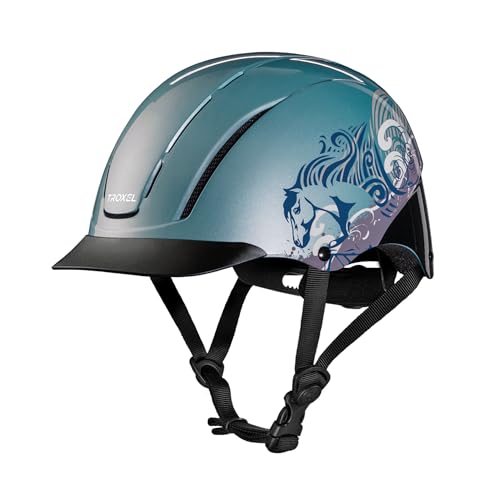
Best for: young riders who’ve outgrown toddler sizing but aren’t into a larger youth or adult helmet yet.
Why I’d choose it: Once a child is past the toddler stage, the Spirit makes sense to me because the DialFit adjustment makes fine-tuning easier, and it’s available in colors and patterns that appeal to young riders. Troxel lists an XS range beginning around hat size 6 1/4 to 6 1/2, so it may suit a small youth rider who’s outgrown a toddler-specific helmet – but measure before ordering.
What I’d watch: Don’t buy the Spirit just because your child falls within the listed size range on paper. Measure the head and actually try it on before you commit – a helmet that doesn’t sit correctly isn’t a bargain, whatever the reviews say.
Troxel Liberty Schooling Helmet

Best for: a kid riding regularly who needs a straightforward, no-frills schooling helmet.
Why I’d choose it: The Liberty is a classic schooling helmet with the same DialFit adjustment and ventilated shell as the Spirit, in a slightly plainer color range. If your kid isn’t fussed about graphics and just needs something dependable for daily barn use, this is the simpler choice.
What I’d watch: Same rule as the Spirit – confirm the size against your child’s actual head measurement rather than the label alone.
Best Horse Riding Helmet for Older Kids and Tweens
Ovation Deluxe Schooler Helmet

Best for: an older child, tween, or teen who measures into its size range and gets a secure fit.
This isn’t a helmet to choose by age alone. Ovation makes the Deluxe Schooler in smaller sizes too, but every child’s head shape is different. Measure first, use Ovation’s current size chart, and skip it if the helmet rocks, shifts, or leaves obvious space around the forehead and temples. Never buy a larger helmet for a child to grow into – that defeats the purpose of a properly fitted helmet.
Why I’d pick it: The Deluxe Schooler is an ASTM/SEI-certified schooling helmet with a rugged Duratec shell, a removable washable liner, and an easy-adjust dial. It’s often priced below many comparable riding helmets, which makes it worth considering if it’s the one that fits your child correctly.
If It Were My Kid
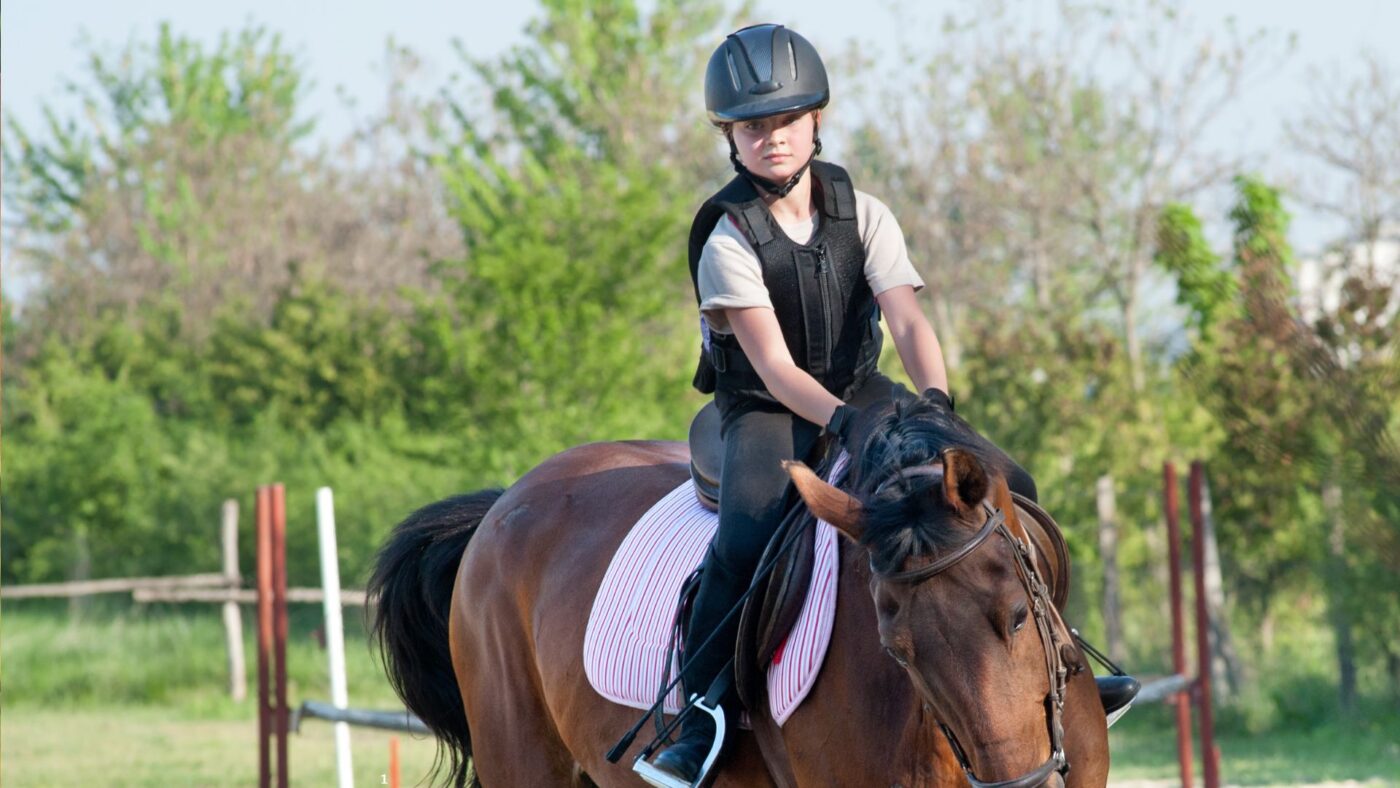
If it were my kid, I’d start with fit rather than trying to pick a winner from a screen. For a toddler at the leadline stage, I’d begin with the Troxel Youngster because it starts in a smaller size range. Once a child has outgrown that range, the Spirit is the one I’d look at first for an adjustable, easy-to-find youth helmet.
For an older child or teen, I’d compare the Liberty and Ovation in the correct size, then keep the one that sits level, feels snug, and stays put once the chin strap is adjusted. The best helmet on this list is the certified one your child will actually wear comfortably and that genuinely fits their head.
What I Look for in a Kids’ Helmet
There’s more to picking the right helmet than the label on the box. Here’s what I’d actually weigh, in order:
- Current ASTM/SEI certification – checked on the tag inside the helmet, not just the outer packaging.
- Correct size for your child’s actual head – for a very small toddler, start by looking at a toddler-specific helmet instead of assuming the smallest youth or adult model will fit.
- Fit and adjustability – a DialFit-style adjuster or similar system makes it easier to keep the fit snug as a kid’s head grows or their hairstyle changes.
- Ventilation and comfort – a hot, uncomfortable helmet is a helmet kids look for excuses not to wear.
- Liner care and durability – a removable, washable liner matters more than it sounds like it would once a kid’s been sweating in a barn all summer.
- Competition requirements – if your child rides under a specific organization (Pony Club, USEF, a breed association), check that group’s current helmet policy before you buy, since acceptable standards can differ.

Getting the Fit Right
A helmet that doesn’t fit properly can’t provide the protection it was designed to provide, no matter how good the certification is. Measure your child’s head according to the manufacturer’s instructions, and match that number to the specific helmet’s own size chart rather than guessing by age alone – kids’ head sizes vary a lot. Once it’s on, the helmet should sit level and snug, without rocking forward, backward, or side to side.
Fasten and adjust the chin strap before you make the final fit check; it should be snug enough to allow roughly one finger between the strap and your child’s chin, not hanging loose below the jaw. Have your child shake their head, look up and down, and move around normally while you watch how the helmet behaves. If it shifts around, leaves obvious empty space, or creates painful pressure points, it’s the wrong size or the wrong shape for that child’s head, even if the label suggests it should fit.
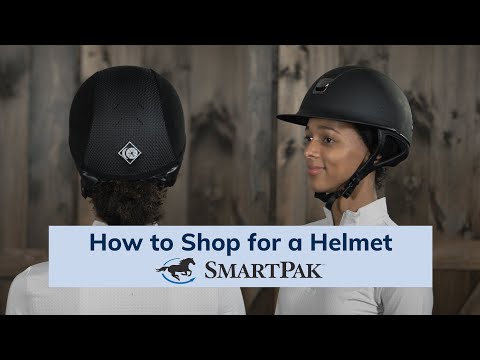
Here’s a short video walking through how to properly fit a riding helmet.
When to Replace a Kids’ Helmet
Replace the helmet after a fall or impact that involves the helmet, even if it looks fine from the outside. Internal damage to the foam isn’t always visible on the shell. For normal aging and wear, follow the specific replacement interval your helmet’s manufacturer recommends, since guidance varies by brand and model. Don’t buy a used or hand-me-down helmet unless you know its full history – if you don’t know whether it’s been through a fall, treat it as compromised.
Getting Kids to Actually Wear Their Helmet
I’ll take a helmet a kid actually wants to wear over a theoretically perfect helmet that sits in the tack room. Obviously, certification and fit come first. But once those boxes are checked, a few things genuinely help:
Explain why, honestly. Kids respond better to a real explanation than a vague “because I said so.” Talk about how helmets protect the head during falls, and point out that even professional riders wear them every single ride.
Let them pick the design. Once certification and fit are settled, let your kid have some say in the color or pattern. If they like the helmet, you’re a lot less likely to have the daily “where’s your helmet?” argument before they mount up.
Get the fit right the first time. A helmet that’s too tight, too loose, or shifts around is uncomfortable, and kids will find reasons to avoid wearing something uncomfortable. Measure carefully rather than guessing.

Make care part of the routine. Show your child how to store the helmet properly – not tossed on the ground or left in a hot car – and how to check it for cracks, dents, or a loose liner. Treating it as gear worth taking care of reinforces that it’s actually protecting them.
If you’re putting together basic safety gear for a young rider, I also have a guide to children’s riding body protectors. For families looking for Western-style footwear, I’ve also reviewed Smoky Mountain toddler boots – whichever boot you choose, make sure it has a defined heel and is appropriate for the riding activity.
FAQ
What helmet is best for a toddler?
Look for a helmet actually sized and designed for toddlers rather than the smallest size of a youth or adult helmet. Troxel’s Youngster Helmet is built specifically for toddlers and young children and is ASTM/SEI certified. Whatever you choose, confirm the size range matches your toddler’s head measurement rather than their age.
How should a child’s riding helmet fit?
It should sit level and snug, with the chin strap fastened, and shouldn’t rock forward, backward, or side to side when your child moves their head. Measure your child’s head according to the manufacturer’s instructions and match it to that specific helmet’s sizing chart rather than guessing by age.
When should a riding helmet be replaced?
Replace it after a fall or impact that involves the helmet, even if it looks undamaged – internal foam damage isn’t always visible from outside. For normal aging, follow the replacement interval your specific helmet’s manufacturer recommends, since guidance varies by brand. Avoid buying a used helmet unless you know its full history.
Does my child’s helmet need ASTM/SEI certification?
Yes. Look for ASTM F1163 certification with the SEI mark on the tag inside the helmet, and make sure the helmet meets the rules for wherever your child rides. F1163-23 is the current edition, and F1163-15 remains recognized by many equestrian organizations – check the specific rules of any competition or club your child rides under.
About Miles Henry
Racehorse Owner & Author | 30+ Years in Thoroughbred Racing
Miles Henry (legal name: William Bradley) is a professional horseman based in Folsom, Louisiana. He holds Louisiana Racing License #67012 and has spent over three decades managing Thoroughbreds at premier tracks including Fair Grounds, Delta Downs, and Evangeline Downs.
Expertise & Hands-On Experience: Beyond the track, Miles has decades of experience in specialized equine care, covering everything from hoof health and nutrition to training protocols for Quarter Horses, Friesians, and Paints. Every guide on Horse Racing Sense is rooted in this “boots-on-the-ground” perspective.
30 of their last 90 starts
Equibase Profile.

Connect with Miles: