
Last updated: April 16, 2026
Any links on this page that lead to products on Amazon are affiliate links and I earn a commission if you make a purchase. Thanks in advance – I really appreciate it!
Head bobbing in horses can have multiple causes. This guide focuses on practical observation and early warning signs based on real-world horse management experience. It is not a substitute for a veterinary examination. Early observation helps catch issues before they become serious problems. If head bobbing is noticeable, ongoing, or increasing, a veterinarian should evaluate the horse.
For more detailed veterinary guidance on equine lameness, see the
Merck Veterinary Manual on Lameness in Horses
.
Many owners ask, “Why do horses bob their heads?” The answer depends on whether you are seeing pain-related lameness or a learned behavioral habit.
Head bobbing in horses signals either pain during movement or learned behavior while standing. Understanding which type you’re seeing—and responding correctly—helps prevent minor issues from becoming major problems. For related patterns, see my guide on early signs of lameness in horses.
In three decades of managing Thoroughbreds in Louisiana, I’ve learned that moving head bobbing during walk or trot rarely means nothing. Some natural head movement is normal at the walk and canter. Concern arises when head motion becomes asymmetric or exaggerated at the trot. The challenge is distinguishing lameness from habit before a treatable issue escalates.
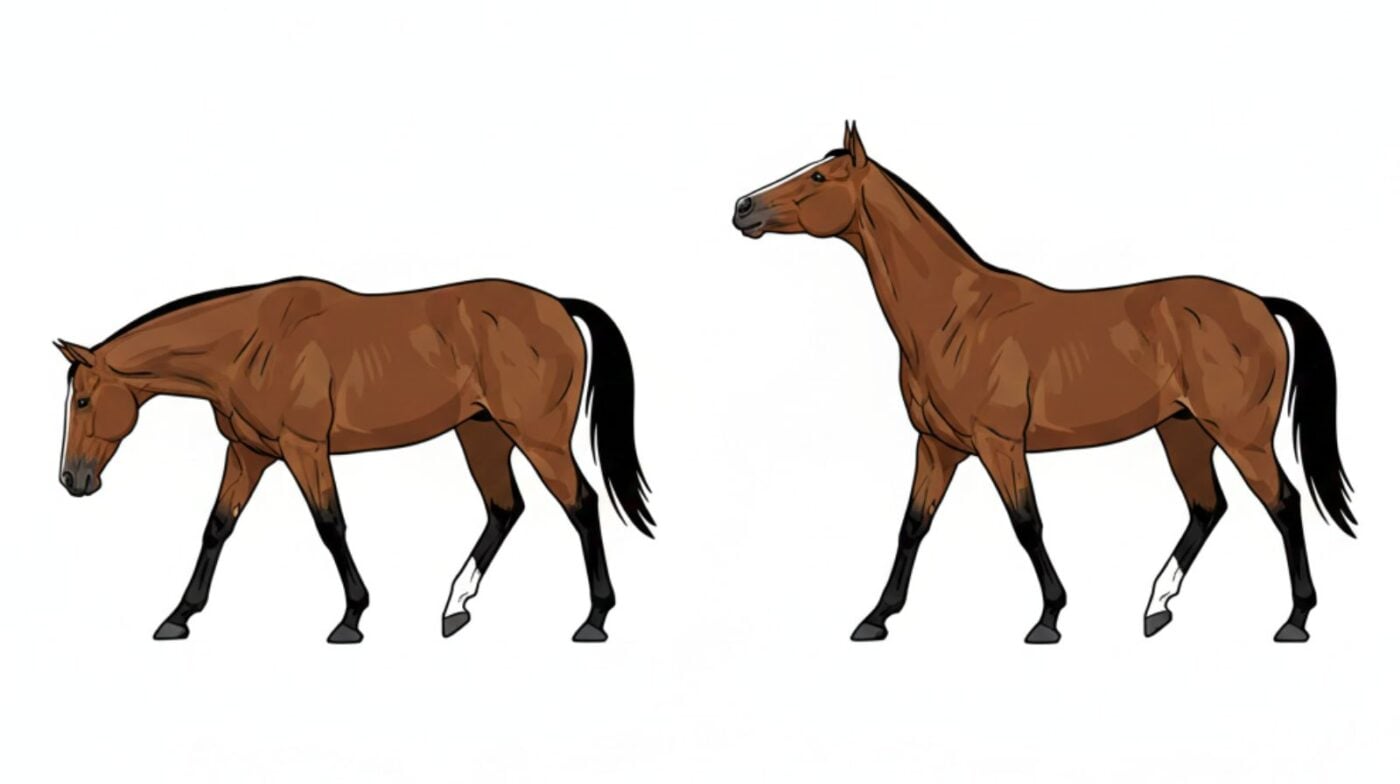
Table of Contents
The ‘Down on Sound’ Rule: Spot Front Limb Lameness Early
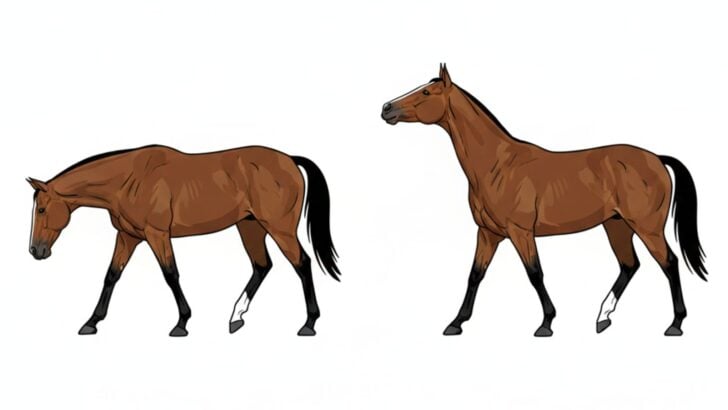
Head bobbing when a horse moves usually signals a front limb problem. Catching it early can prevent small issues from becoming serious. The horse shifts its head and neck to take weight off the sore leg with each step.
🔍 The “Down on Sound” Rule
Head bobs more upward
(The “Ouch” rise is obvious)
Head drops dramatically
(Forceful drop on the sound front)
The pattern works like this:
- Head drops when the sound leg hits the ground
- Head rises when the sore leg hits the ground
- More upward movement = front limb lameness likely
- Dramatic downward drop = hind limb lameness likely
Watch & Learn: This short video demonstrates head bob patterns in motion. See if you can spot which leg is sore before the explanation. (Educational only — not a substitute for a veterinary exam.) Watch the video on YouTube.
I once managed a gelding with subtle bobbing at the trot. Most people missed it, but the farrier noticed an early abscess during a routine trim—caught before it worsened.
How to Observe Head Bobbing Correctly
Subtle head bobbing can be missed. Here’s what works in most barn situations.
The Hard Surface Test
Watch horses trot on asphalt or concrete when checking for lameness. Hard surfaces make compensation patterns more visible.
A walk should have even four beats. A trot should have even two beats. A long beat followed by a short beat often indicates lameness.
Front Leg vs. Hind Leg Lameness Patterns
The direction of the bob reveals the location. Head bobbing more upward suggests front limb issues. Dramatic downward head dropping suggests hind limb issues.
However, subtle rear lameness can sometimes cause a head bob pattern resembling front limb lameness. Multiple limbs may be lame simultaneously. This is where interpretation gets complex.
| Head Bob Pattern | Gait | Most Likely Cause | First Action |
|---|---|---|---|
| Head rises on impact | Walk/Trot | Front limb lameness | Check hooves for heat, swelling, digital pulse |
| Head drops dramatically | Walk/Trot | Hind limb lameness | Watch for hip hike, shortened hind stride |
| Subtle bobbing | Trot only | Mild front limb issue | Compare circles both directions on firm ground |
| Bob worsens on turns | Walk/Trot | Joint or ligament stress | Note which direction worsens; call veterinarian |
| Rhythmic bobbing | Standing | Behavioral/Environmental | Rule out pain first; evaluate context |
The 90% Rule: Start with the Feet
According to veterinary research, approximately 90% of equine lameness originates in the foot. When you notice head bobbing during movement, start there.
Look for the obvious first. A rock in the shoe, overgrown hoof, loose shoe, or a minor hoof abscess is far more common than rare orthopedic conditions.
Check for these common foot issues:
- Heat in the hoof wall or sole
- Increased digital pulse (throbbing at the fetlock)
- Sensitivity when hoof testers are applied
- Bruising visible on the sole
- Foreign objects embedded in the frog or sole
In recent years, objective tools such as AI-powered gait analysis systems and wearable inertial sensors (including accelerometers and gyroscopes) have been developed to help identify subtle movement asymmetry earlier than the human eye alone. These technologies support—but do not replace—traditional hands-on examination and veterinary assessment. Learn more about AI-based early lameness detection in horses.
- Noticeable head bobbing at the walk (not just the trot)
- Reluctance or refusal to bear weight on a leg
- Visible swelling, heat, or strong digital pulse in lower limbs
- Significantly shortened stride with head bobbing
- Pattern worsens or fails to improve over 24–48 hours

Why Do Horses Bob Their Heads? Behavioral vs. Lameness Causes
Not all head bobbing signals pain. Some horses develop head bobbing as a habit when confined, understimulated, or anticipating feed.
- Gait Dependent: Only occurs during walk or trot.
- Rhythmic: Precisely follows the cadence of the gait.
- Impact-Linked: Head rises as the sore leg strikes.
- Worsens: Generally increases with exercise or turns.
- Stationary: Often occurs while tied or in the stall.
- Independent: Continues regardless of leg placement.
- Predictable: Linked to feeding, boredom, or grooming.
- Self-Soothing: Often rhythmic but lacks gait impact.
I’ve seen horses develop rhythmic head bobbing when confined. One mare bobbed whenever someone approached with grain—clear anticipation behavior, unrelated to movement or pain.
Context Questions for Behavioral Assessment
- Does bobbing occur only during grooming, saddling, or feeding time?
- Does it happen while standing in the stall but not during turnout?
- Is it rhythmic and repetitive, unrelated to which leg is on the ground?
- Or does it occur specifically during walk or trot on a straight line?
The first three suggest behavioral causes or handling discomfort. The last suggests lameness requiring veterinary evaluation.
Common Mistake
Assuming all head bobbing is lameness, or dismissing moving head bobbing as “just a habit.” Moving head bobbing at the walk or trot deserves investigation. Standing head bobbing deserves an evaluation of the horse’s environment and handling practices.
Tack and Equipment Issues
Poor saddle fit, uncomfortable bits, and ill-fitting bridles can cause head bobbing under saddle. If a horse bobs only when mounted but not in hand, the saddle is the first suspect.
Tack-related head bobbing typically presents as:
- Saddle fit issues: Head bobbing or tossing when mounted, especially at posting trot
- Bit discomfort: Upward or sideways head tossing, mouth gaping, pulling against contact
- Bridle fit: Head shaking when contact is applied or when headstall presses on ears
I check saddle fit quarterly. Weight changes, muscle development, and saddle settling all affect fit. A saddle that fit in spring might pinch by fall.
Other Causes Worth Knowing
Headshaking Syndrome
Headshaking syndrome causes severe, uncontrollable head shaking in some horses, which can sometimes resemble head bobbing. This differs from lameness-related head bobbing, as it is caused by trigeminal nerve irritation.
Affected horses shake violently, often worsen in bright light or warm weather (seasonal pattern), and show no improvement when suspected triggers are removed. This condition requires specialized veterinary evaluation.
While treatment options remain limited, researchers continue to explore ways to reduce symptoms. A 2025 study from the Royal Veterinary College found that electroacupuncture helped reduce signs of trigeminal‑mediated headshaking in some horses (RVC electroacupuncture study).
Dental Issues
Not all head bobbing is neurological, structural problems like dental issues can also cause this behavior. Horses with sharp points, infected teeth, or mouth ulcers may toss or bob their heads, especially when eating or wearing a bit.
Annual dental exams catch most issues before they escalate. If head bobbing coincides with eating difficulty or bit resistance, schedule a dental check.
Allergies and Insect Irritation
Horses bothered by flies may shake their heads side-to-side or rub their faces, rather than exhibiting rhythmic up-and-down head bobbing. This is irritation behavior, not lameness compensation.
Seasonal patterns (worse in summer, better in winter) and relief with fly masks or repellents confirm insect-related causes.
Avoiding Confirmation Bias
Once you notice head bobbing, you may start seeing it everywhere. Video observation provides objective data and removes emotional interpretation.
Compare your horse to others. Normal horses have some head movement during gaits—the head isn’t static. At walk and canter, the head bobs naturally at each stride. At trot, the head should remain steady since diagonal legs strike simultaneously.
Action Steps at a Glance
Use this consolidated guide to determine your immediate response based on the type of head bobbing you observe.
| Head Bob Type | Most Likely Cause | Step-by-Step Actions |
|---|---|---|
| Bob at walk/trot | Front limb lameness | 1. Pick hooves; check for heat/pulse 2. Check legs for swelling/pain 3. Trot on firm ground & record video 4. Call vet if persists 24+ hours |
| Dramatically drops | Hind limb lameness | 1. Observe hip hike & stride length 2. Record video from behind & side 3. Professional assessment required |
| Subtle (trot only) | Mild front limb issue | 1. Compare circles in both directions 2. Check asymmetry on hard surface 3. Monitor/video for 48 hours |
| Standing/Rhythmic | Behavioral | 1. Rule out pain with hands-on exam 2. Evaluate environment/boredom 3. Assess feeding/handling routines |
| Saddled/Ridden | Tack fit issue | 1. Check saddle, bit, & bridle fit 2. Test ride bareback to see if bob stops 3. Schedule professional saddle fitting |
| During eating | Dental discomfort | 1. Schedule dental exam immediately 2. Check for mouth ulcers/sharp points 3. Evaluate bit type and fit |

Position: Stand 20 feet perpendicular to the horse’s path. Keep your camera stationary—let the horse cross your field of vision rather than following the horse with the lens.
Recording: Use slow-motion from the side and front. Record on three separate days. If you can’t consistently identify which leg appears lame across all three videos, provide the footage to your veterinarian for a professional evaluation.
Frequently Asked Questions
Is head bobbing always a sign of lameness?
No. Head bobbing during movement (walk or trot) typically signals lameness, but head bobbing while standing is often behavioral—related to boredom, anticipation, or confinement. The key difference: lameness-related bobbing follows the gait rhythm and correlates with which leg hits the ground. Behavioral bobbing happens independently of movement and often occurs in specific contexts like feeding time or grooming. Always rule out pain first with a hands-on examination before assuming behavioral causes.
How do I know which leg is lame from head bobbing?
Use the “down on sound” rule: The horse’s head drops when the sound leg hits the ground and rises when the sore leg hits the ground. For front limb lameness, you’ll see more upward head movement. For hind limb lameness, the head drops dramatically downward. The pattern follows the rhythm of the trot—one bob per stride cycle. Video recording from the side on three separate days helps confirm which leg is affected.
Should I worry about subtle head bobbing at the trot?
Yes, subtle bobbing deserves attention. Early detection prevents minor issues from becoming serious problems. Many subtle cases indicate developing abscesses, minor bruising, or early joint inflammation. First steps: Check all four hooves for heat, increased digital pulse, or sensitivity. Watch the horse trot on hard ground (asphalt or concrete) where compensation patterns are more visible. Compare circles in both directions to check for asymmetry. If subtle bobbing persists beyond 48 hours or worsens, contact your veterinarian and bring video footage.
Can saddle fit cause head bobbing?
Yes. Poor saddle fit is a common cause of head bobbing under saddle, especially at the posting trot. If your horse bobs his head only when mounted but not when worked in hand, the saddle is the primary suspect. Test: Ride bareback or with a different saddle to see if the bobbing disappears. Check for saddle fit quarterly, as weight changes, muscle development, and saddle settling affect fit over time. Bit discomfort and bridle fit issues can also cause head tossing or bobbing under saddle.
What’s the difference between head bobbing and headshaking syndrome?
Head bobbing is rhythmic, vertical movement that follows gait rhythm or occurs while standing. Headshaking syndrome involves violent, uncontrollable shaking caused by trigeminal nerve irritation. Horses with headshaking syndrome often worsen in bright light or warm weather (seasonal pattern), shake violently side-to-side or vertically, and show no improvement when suspected triggers are removed. This condition requires specialized veterinary evaluation. Headshaking syndrome is neurological and unrelated to lameness compensation.
Why do I only see head bobbing on hard ground?
Hard surfaces like asphalt or concrete increase concussion with each stride, making subtle lameness more visible. Soft ground (arena footing, grass) absorbs impact and may mask mild compensation patterns. This is why veterinarians and experienced horsemen prefer evaluating lameness on firm ground—it reveals issues that might otherwise go unnoticed. The increased impact forces the horse to compensate more obviously with head movement. If head bobbing appears only on hard ground and disappears on soft surfaces, the horse still deserves evaluation.
When should I call the vet for head bobbing?
Call immediately if you observe: pronounced head bobbing at the walk (not just trot); reluctance or refusal to bear weight on a specific leg; visible swelling, heat, or strong digital pulse in lower limbs; shortened stride combined with head bobbing; or a pattern that worsens or fails to improve over 24–48 hours. For mild, subtle bobbing that’s consistent but not worsening, monitor for 48 hours with video documentation, then consult your veterinarian if it persists.
Can I treat head bobbing at home, or do I need a vet?
You can perform initial observation and basic checks at home (hoof examination, checking for heat/swelling, observing gait patterns), but diagnosis and treatment require veterinary expertise. Approximately 90% of equine lameness originates in the foot, so checking for rocks, abscesses, or hoof sensitivity is appropriate first-aid. However, if head bobbing persists beyond basic intervention or you find no obvious cause, professional evaluation is necessary. Early veterinary intervention costs less and causes less suffering than waiting until a horse can barely walk.
Next Steps
For head bobbing during walk or trot: Perform the step-by-step actions in the table above, starting with hoof examination and progressing to video recording. Call your veterinarian if patterns persist 24+ hours or worsen.
For rhythmic head bobbing while standing: Rule out pain with hands-on examination first, then evaluate environmental stressors and handling practices. If sound during movement, likely behavioral or management-related.
When in doubt: Early intervention costs less and causes less suffering than waiting. If something looks off, check it systematically and call your vet if patterns persist.
About Miles Henry
Racehorse Owner & Author | 30+ Years in Thoroughbred Racing
Miles Henry (legal name: William Bradley) is a professional horseman based in Folsom, Louisiana. He holds Louisiana Racing License #67012 and has spent over three decades managing Thoroughbreds at premier tracks including Fair Grounds, Delta Downs, and Evangeline Downs.
Expertise & Hands-On Experience: Beyond the track, Miles has decades of experience in specialized equine care, covering everything from hoof health and nutrition to training protocols for Quarter Horses, Friesians, and Paints. Every guide on Horse Racing Sense is rooted in this “boots-on-the-ground” perspective.
30 of their last 90 starts
Equibase Profile.

Connect with Miles: