
Last updated: September 25, 2026
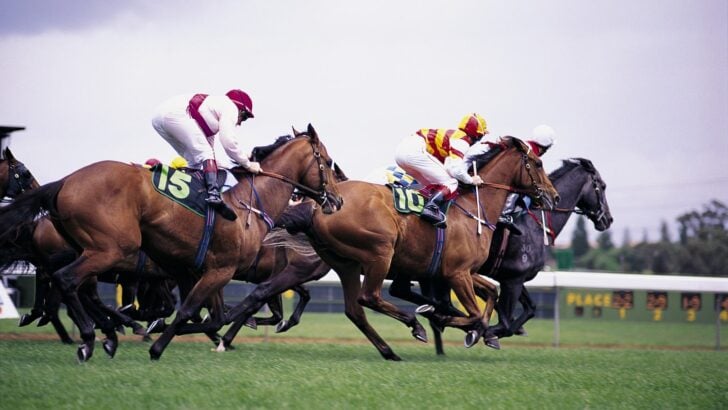
Seeing blood at a racehorse’s nostrils after a race gets your attention fast. Whether it’s your horse, one you’re looking at claiming, or one you just watched pull up after a hard effort, the first question is usually the same: Is this a bleeder, and how serious is it?
Quick answer: Blood at a horse’s nostrils after racing can be caused by exercise-induced pulmonary hemorrhage, or EIPH, but it should never be assumed to be routine. Visible bleeding needs prompt veterinary evaluation because airway injury, guttural pouch disease, sinus problems, trauma, and clotting disorders can also cause a nosebleed.
This guide explains what EIPH is, why most horses with EIPH never show blood at the nose, what your vet is likely to check, how Lasix fits under today’s HISA rules, and the questions I’d ask before sending a horse back to work or putting in a claim.
Table of Contents
What Blood at a Horse’s Nostrils Can Mean
After a hard race or workout, visible blood may be caused by EIPH—often just called bleeding or being a bleeder. But blood at the nostrils isn’t a diagnosis by itself. A horse can bleed from the lower airway, the upper airway, the sinuses, the guttural pouches, or from an injury to the nose or face.
That distinction matters more than most people realize. Most horses with EIPH never show blood at the nostrils. When blood is visible—especially if it’s heavy, keeps coming back, is only from one side, or doesn’t clearly follow hard exercise—the source needs to be identified rather than assumed.
What Is EIPH?
Exercise-induced pulmonary hemorrhage, or EIPH, is bleeding into the airways associated with strenuous exercise. During an all-out race, pressure in the lung circulation rises sharply. In susceptible horses, this can allow blood to enter the airways.
EIPH isn’t contagious, and it doesn’t automatically mean a horse was neglected or poorly managed. It’s common in horses that do intense work, especially Thoroughbreds. The real point for owners is that it can range from a small amount of blood found only on a post-race scope to more substantial bleeding that shows at the nostrils and affects comfort, recovery, or performance.
The Merck Veterinary Manual’s EIPH overview notes that blood may be found in the tracheobronchial tree in 45% to 75% of racehorses after exercise, while visible epistaxis occurs in only a small proportion of those horses.
What to Do If a Racehorse Bleeds
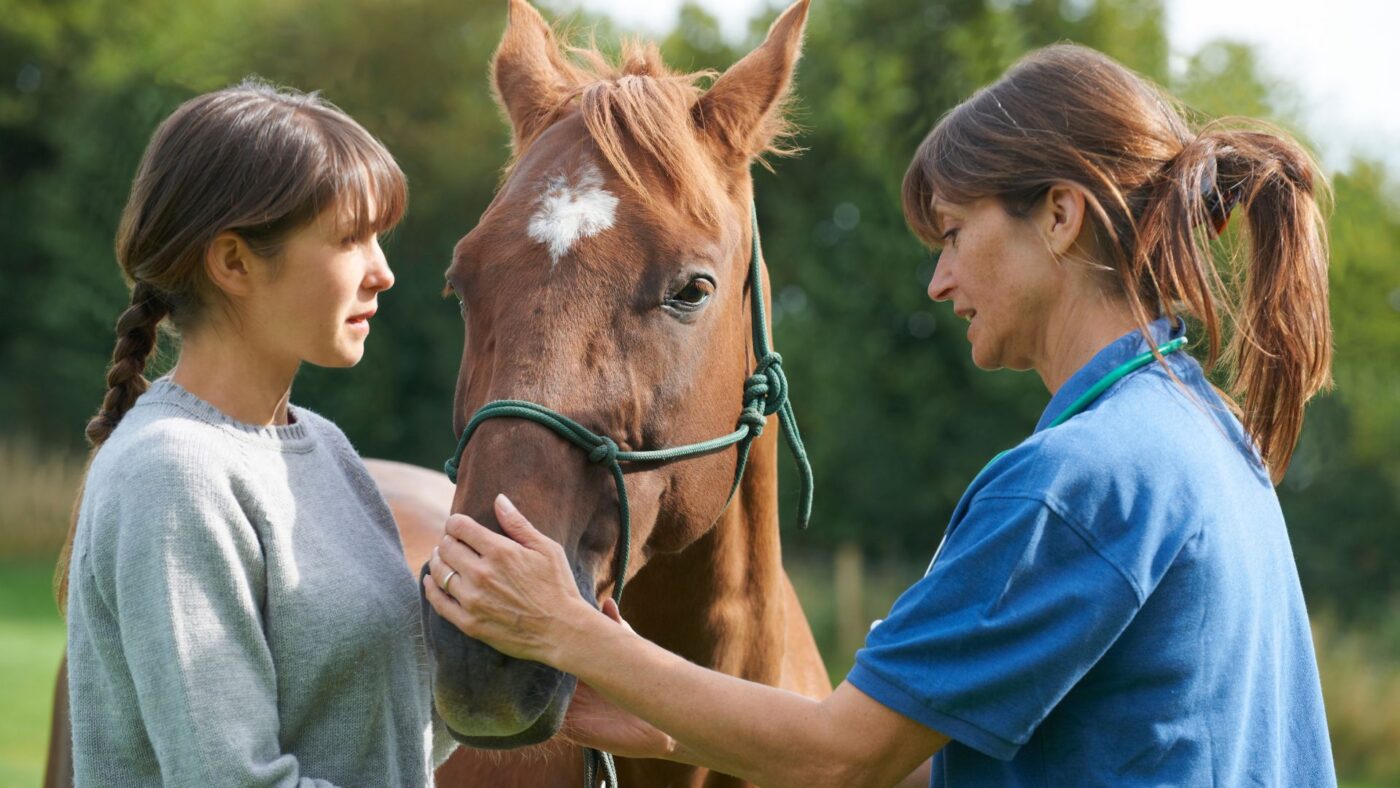
First things first—don’t treat a visible nosebleed like a routine barn issue. Keep the horse quiet, get the track veterinarian or your regular vet on it, and let the exam decide the next step.
- Keep the horse calm and notify a veterinarian promptly.
- Note whether the blood is from one nostril or both, whether it’s free-flowing or mixed with mucus, and whether it followed racing, a workout, trauma, or happened at rest.
- Report related signs—coughing, respiratory noise, slow recovery, fever, poor appetite, facial swelling, or a recent respiratory illness.
- Don’t breeze, race, or re-enter the horse until your veterinarian has evaluated the episode and given you a plan.
- Treat heavy, recurrent, one-sided, or non-exercise-related bleeding as urgent. Causes other than EIPH need to be ruled out.
Call a veterinarian promptly: Blood from the nostrils after exercise—especially when it’s heavy, repeated, one-sided, or paired with breathing trouble, abnormal breathing at rest, fever, facial swelling, weakness, or a big performance change—needs professional evaluation. Don’t try to train through unexplained bleeding.
Other Causes of Blood at the Nostrils
EIPH is common in racehorses, but it’s not the only explanation for blood at the nostrils. Your veterinarian may need to rule out other causes, some of which can be more urgent.
| Possible cause | Clues that may suggest it | Why it matters |
|---|---|---|
| Guttural pouch mycosis | Recurrent or heavy bleeding that may not be limited to hard exercise | Can be life-threatening and needs urgent veterinary care |
| Upper-airway or sinus disease | Nasal discharge, odor, fever, swelling, or a horse that seems ill | Needs a veterinary examination and treatment plan |
| Trauma or nasal injury | One-sided bleeding after a gate incident, fall, or facial injury | May require examination and imaging |
| Progressive ethmoid hematoma | Repeated, often one-sided bleeding not clearly tied to exercise | Requires endoscopic veterinary workup |
| Clotting or systemic disease | Unexpected bleeding, bruising, or bleeding elsewhere | May require blood testing and a broader medical workup |
How Veterinarians Diagnose and Grade EIPH
Veterinarians commonly diagnose EIPH with post-exercise endoscopy—scoping the horse. The scope lets the vet look for blood in the trachea and judge how much is there and where it’s distributed. Timing matters, so follow your veterinarian’s instructions about when the horse should be examined after exercise.
EIPH is often described on a 0-to-4 scale. Grade 0 means no visible blood on that exam; higher grades show more blood in the airway. The grade is useful, but it’s not a stand-alone racing decision. Your veterinarian will also look at the horse’s history, any respiratory signs, how the horse recovered, and whether this is a one-time finding or a repeat pattern.
Horseman’s Take: I had a mare at Delta Downs who worked well, then stopped badly and bled from both nostrils after her next race. The scope showed Grade 3 EIPH. That episode changed how I look at a horse that suddenly fails to finish. I don’t call it quitting from a race chart alone. A big change in recovery, respiratory noise, coughing, or late-race performance is something I discuss with the veterinarian right away.
For an owner, the useful questions are straightforward: What did the scope show? Is there another possible source of blood? Is this new or recurring? What rest, testing, management, or treatment does the veterinarian recommend before the horse goes back to faster work?
Lasix and Current HISA Rules
Furosemide, commonly called Lasix, is a prescription diuretic used in some racehorses to reduce the incidence and severity of EIPH. Research shows that furosemide can reduce the incidence and severity of EIPH, but it does not eliminate the condition. It should only be used under veterinary direction and within the rules that apply to the race.
Under HISA’s current framework, furosemide may be used within 48 hours before a race for Covered Horses except 2-year-olds and horses entered in stakes races. HISA’s board voted in 2026 to keep those rules in place. Read HISA’s Lasix update, then confirm the current requirements with your racing office and veterinarian before entering a horse. Medication rules, race conditions, and local implementation can change.
For the bigger picture on medication, welfare, and racing policy, see my Lasix in horse racing guide. The practical issue isn’t whether one horse fits a label. It’s whether the individual horse can be managed safely and consistently under an appropriate veterinary plan.
What Owners Should Ask Next
An EIPH history doesn’t automatically end a horse’s racing career, and it doesn’t automatically make a horse a good claim or a bad claim. It just means you need better information before you make the next decision.
- Was the blood visible at the nostrils, or found only on a post-race scope?
- What did the veterinarian find, and was another source of bleeding ruled out?
- Is the episode isolated, or is there a repeat pattern after hard exercise?
- How did the horse recover, train, and perform before and after the episode?
- What records, treatment history, and applicable racing rules should be reviewed before the next start or a claim?
My view as a claiming owner is straightforward: a bleeding history is a reason to investigate, not a reason to guess. I want the available veterinary information, the horse’s recent form, and an honest conversation with my veterinarian before I decide whether the risk fits the horse and the operation.
FAQs About EIPH and Racehorse Nosebleeds
Why do racehorses bleed from the nose after a race?
Visible blood at the nostrils after racing can be caused by exercise-induced pulmonary hemorrhage, or EIPH, but it can also come from the upper airway, sinuses, guttural pouches, trauma, or a clotting problem. A visible nosebleed needs prompt veterinary evaluation to identify the source.
Does EIPH hurt a racehorse’s performance?
It can affect performance, especially when bleeding is more substantial, but a poor finish alone doesn’t diagnose EIPH. Horses can fade late for many reasons—fitness, pain, heat, airway disease, race dynamics, or other health problems. Veterinary evaluation after exercise is the reliable way to determine whether EIPH may be involved.
Is Lasix banned in horse racing?
Under HISA’s current framework, furosemide is prohibited within 48 hours of a race for 2-year-olds and horses entered in stakes races. It remains permitted for other Covered Horses within the applicable rules. Confirm the current requirements with the racing office and your veterinarian before entering because rules and race conditions can change.
How common is lung bleeding in racehorses?
EIPH is common in horses doing intense exercise, but visible nosebleeds are much less common. The Merck Veterinary Manual reports blood in the tracheobronchial tree in about 45% to 75% of racehorses after exercise, while epistaxis is seen in only a small proportion of horses with EIPH.
About Miles Henry
Racehorse Owner & Author | 30+ Years in Thoroughbred Racing
Miles Henry (legal name: William Bradley) is a professional horseman based in Folsom, Louisiana. He holds Louisiana Racing License #67012 and has spent over three decades managing Thoroughbreds at premier tracks including Fair Grounds, Delta Downs, and Evangeline Downs.
Expertise & Hands-On Experience: Beyond the track, Miles has decades of experience in specialized equine care, covering everything from hoof health and nutrition to training protocols for Quarter Horses, Friesians, and Paints. Every guide on Horse Racing Sense is rooted in this “boots-on-the-ground” perspective.
30 of their last 90 starts
Equibase Profile.

Connect with Miles: