
Last updated: March 25, 2026
Any links on this page that lead to products on Amazon are affiliate links and I earn a commission if you make a purchase. Thanks in advance – I really appreciate it!
Note: This article is for general educational purposes only and is not a substitute for professional veterinary advice. Always consult your veterinarian for concerns about your horse’s health.
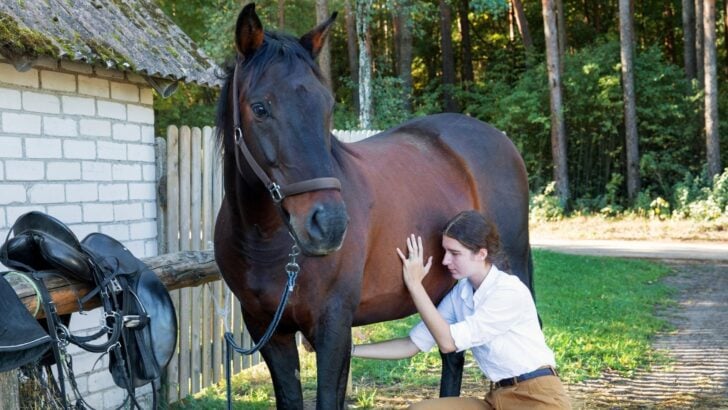
Why horses trip is a question every rider has faced at least once. You’re riding on flat ground, your horse knows the trail, and suddenly—he stumbles. While occasional tripping can happen, repeated stumbling may indicate underlying issues that require attention.
When Is Horse Stumbling a Problem?
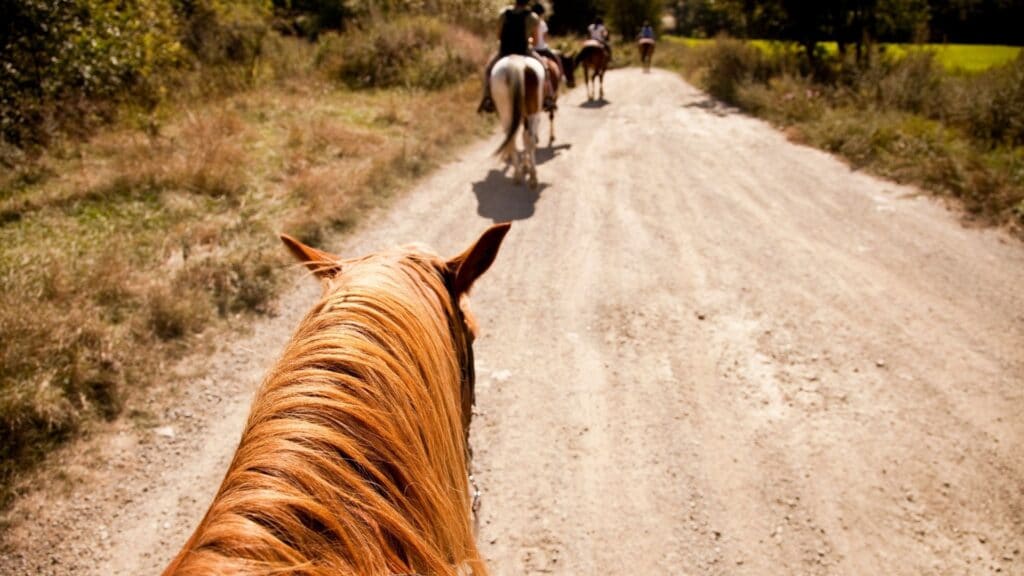
Horses may trip occasionally, especially on uneven ground. But repeated stumbling—especially on flat surfaces or under saddle—is a warning sign. Watch for:
- Tripping on flat, even ground
- Stumbling more when carrying a rider
- Dragging toes or “daisy cutting”
- Repeatedly tripping on the same leg
Subtle gait changes matter. Compare with head bobbing or irregular stride to assess whether it could be pain-related: Why Do Horses Bob Their Heads?
Why Horses Trip and/or Stumble: 7 Common Causes and How to Fix Them
1. Lack of Attention
Some horses simply get distracted. Bored or preoccupied horses may drop their head, drift mentally, or fail to lift their feet properly. I’ve had a gelding in my barn who would stumble during long rides whenever he spotted a deer in the distance. Short breaks and changes in direction usually helped him refocus.
2. Hoof Problems
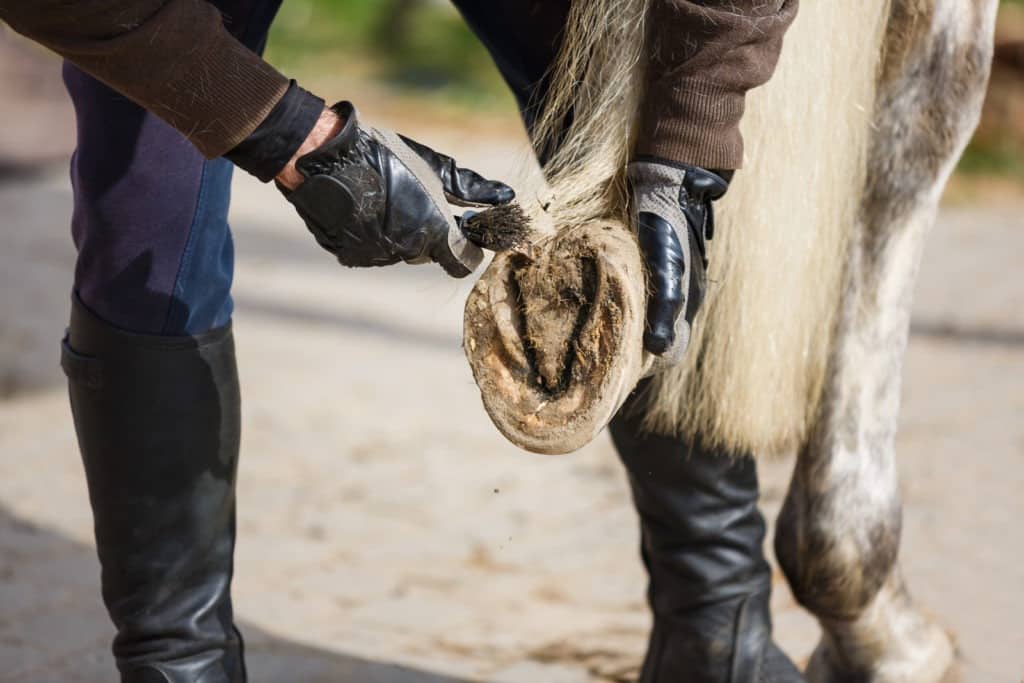
Hoof issues are the most common cause of stumbling. Overgrown toes, poor trimming, abscesses, or imbalanced feet can make your horse trip. I had a mare with long toes who stumbled during slow trot; a farrier trim solved it immediately. Regular hoof care every 6–8 weeks is critical. For details, see Hoof Pain in Horses.
3. Poor Conditioning or Training
An unfit or green horse may lack coordination. Similar to athletes returning from a layoff, they may:
- Lose muscle tone
- Struggle with balance
- Misjudge stride length
Bring horses back slowly—start with walking, then gradually increase workload over several weeks. One young Thoroughbred in my barn stumbled repeatedly until we added pole work and targeted core exercises. This training approach keeps my horses coordinated and confident.
I had a young Thoroughbred, Blue, who kept stumbling during works. I realized he’d been off-training for a few weeks due to mild colic. We brought him back gradually—starting with walking, then poles, then short canters. Within a month, he was confident and coordinated again. This taught me the importance of building up slowly after any layoff.
Miles’ Tip: Bring horses back slowly after a break to avoid stumbling. Small, targeted exercises help coordination—like with my Thoroughbred Blue, who regained his stride after careful pole work.
4. Conformation Issues
Some horses are naturally built in ways that increase tripping risk—like toed-in/out feet, long pasterns, or shallow shoulder angles. I trained two young Thoroughbreds with slightly toed-out fronts; they occasionally caught a toe even on flat ground. Proper shoeing, strengthening exercises, and mindful training help manage this. Learn more about horse conformation and soundness.
My filly, Millie, had a turned-out front foot. It occasionally caught a toe on flat ground, especially when tired. We focused on strengthening exercises and careful shoeing. While I couldn’t change their conformation, mindful training helped prevent falls and kept her sound enough for pleasure riding, but she couldn’t race.
5. Joint Pain or Arthritis
Older horses may stumble due to joint stiffness or arthritis. My mare Bella dragged her hind leg slightly on cold mornings. A vet confirmed mild stifle arthritis, and with warm-ups and joint supplements, she became steadier. Watch for shortened strides or uneven weight. For guidance, see stifle joint problems in horses.
6. Chronic Pain (Often Overlooked)
Low-grade pain can cause stumbling without obvious lameness. Hoof sensitivity, tendon irritation, or back soreness may lead to compensatory gait changes. A two-year-old filly, Jimmy, stumbled repeatedly; a vet found a slight hoof bruise. Correcting it and adjusting her training resolved the issue.
7. Neurological Issues (Most Serious)
Damage to the nervous system affects coordination. This may indicate spinal injury, head trauma, or diseases such as EPM. Early recognition is critical—look for inconsistent stepping, dragging toes, or abnormal limb placement. Prompt veterinary care is essential for best recovery.
I had a gelding named Corked who suddenly started tripping in tight circles. Early recognition and a vet neurological evaluation revealed a mild EPM infection. Prompt treatment prevented further deterioration and he returned to safe riding. This experience reinforced how critical it is to catch neurological problems early.
How Do I Find Out What’s Causing My Horse to Trip?
Frequent stumbling is dangerous for both horse and rider. Start by consulting professionals:
- Farrier: Checks for hoof issues, trims, or fits corrective shoes.
- Veterinarian: Rules out injuries, joint problems, chronic pain, or neurological conditions.
- Trainer: Ensures your riding posture or cues aren’t exacerbating the problem.
Questions to ask your vet:
- Could this stumbling be related to joint pain or arthritis?
- Are there signs of hoof or tendon issues causing gait changes?
- Is neurological evaluation needed for my horse?
- What steps can I take in daily training to support stability and recovery?
By observing carefully, involving the right professionals, and gradually adjusting training, you protect both horse and rider. Even subtle changes can prevent accidents and support long-term soundness.
About Miles Henry
Racehorse Owner & Author | 30+ Years in Thoroughbred Racing
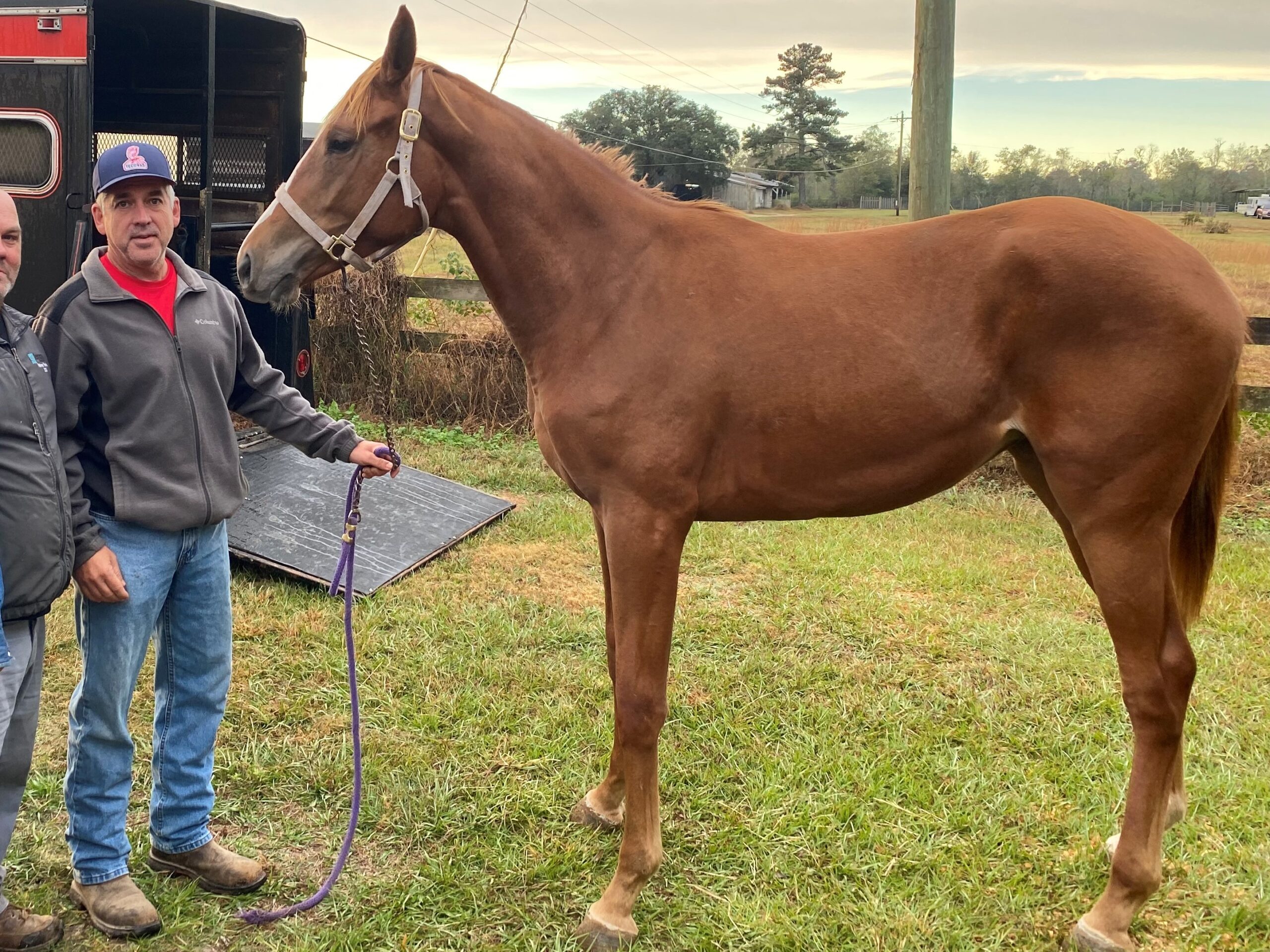
Miles Henry (legal name: William Bradley) is a professional horseman based in Folsom, Louisiana. He holds Louisiana Racing License #67012 and has spent over three decades managing Thoroughbreds at premier tracks including Fair Grounds, Delta Downs, and Evangeline Downs.
Expertise & Hands-On Experience: Beyond the track, Miles has decades of experience in specialized equine care, covering everything from hoof health and nutrition to training protocols for Quarter Horses, Friesians, and Paints. Every guide on Horse Racing Sense is rooted in this “boots-on-the-ground” perspective.
30 of their last 90 starts
Equibase Profile.

Connect with Miles: