Skip to Content

Training Horses for Speed: 3-Phase System From Racing Experience

Training Horses for Speed: 3-Phase System From Racing Experience

Last updated: April 2, 2026

By: Miles HenryFact Checked

Training a racehorse is more craft than calendar. The schedule matters less than knowing when to push and when to back off — and that only comes from watching horses every single morning.

Quick Answer: Racehorses are trained through a structured three-phase process: a foundation phase that builds bone density and aerobic fitness, a speed development phase that introduces timed workouts called breezes, and a race maintenance phase that keeps the horse sharp between starts. The full process from unbroken yearling to first race typically takes four to six months. Every decision — how hard to work, when to breeze, when to back off — is guided by the horse’s daily recovery signals, not a fixed calendar.

This article is part of our Horse Racing Explained beginner guide — a complete breakdown of how the sport works, from race types and class levels to betting and equipment.

Training horses for speed is not about random fast workouts. Over 30 years as a Louisiana-licensed owner (#67012) working racehorses at my Folsom training facility and at Fair Grounds, Evangeline Downs, and Louisiana Downs, I have found that a three-phase system — building foundation fitness, developing race speed, and maintaining performance between starts — works best for my horses. It is the same framework I have used for every horse I have brought to the races, from maiden claimers to allowance horses.

This article walks through the full training process: from first saddle to first race, through the speed development phases, and into the ongoing work that keeps a horse competitive during a racing campaign. Along the way I will point out what to watch for, what the red flags mean, and the mistakes I have seen end careers that should have lasted much longer.

How are racehorses trained — two-year-olds at the Folsom Louisiana training facility.
Young horses in training at our Folsom, Louisiana facility — this is where the foundation work begins, long before any speed work.

From Yearling to Race Day: The Early Stages

Most Thoroughbreds are born in the spring and spend their first year and a half at the breeding farm or a layup facility before formal training begins. The breaking process — teaching a horse to accept a rider for the first time — typically happens when the horse is around 18 months old, in the fall of their yearling year or early in their two-year-old year.

Breaking starts on the ground. The horse learns to accept a bit, a bridle, a saddle pad, a girth, and eventually a saddle — each piece introduced slowly, over days or weeks, until the horse accepts it without anxiety. A rider sits on the horse for the first time only after the horse is comfortable with the weight of a saddle and the feel of someone leaning across their back. The first few rides are at a walk, in an enclosed area, with someone leading the horse from the ground.

From there the young horse learns to respond to basic leg and rein signals, walk and trot in company with other horses, and eventually canter in a controlled way. Gate training — loading into the starting gate, standing quietly, and breaking cleanly — comes later, usually after the horse is comfortable galloping on the track. A horse that has never seen a starting gate before will not load calmly, and a horse that won’t load calmly can’t race. Gate school is a separate process, run by the track’s official gate crew, and horses must pass a gate test before they can be entered in a race.

From the barn: The breaking process is where you learn the most about a horse’s character. Some young horses accept everything immediately — they’re curious, willing, and take each new step in stride. Others are anxious and need more time and patience. I’ve found that the horses who are careful and a little cautious in breaking tend to be the same horses that look after themselves on the track. The bold ones who take every step easily sometimes take bigger risks later. Neither type is better — they’re just different, and you train them accordingly.
Yearling on a walking wheel at the start of the training process.
A yearling on the walking wheel — one of the first steps in conditioning before any ridden work begins.

Core Training Principles

Before getting into the phases, understand the principles that govern everything. These aren’t theory — they’re patterns I’ve watched play out over hundreds of horses across 30 years.

Bone and Soft Tissue Adapt Slowly

A horse’s cardiovascular system responds to conditioning relatively quickly. Bone, tendons, and ligaments take months to remodel and strengthen under progressive loading. Pushing a horse into speed work before that structural foundation is in place is the single most common cause of the career-limiting injuries I’ve seen. Patience in the early phases pays dividends for the horse’s entire career.

Speed Is Built During Rest

Muscle tissue repairs and strengthens during recovery, not during work. I never breeze horses on consecutive days. The adaptation — the actual fitness gain — happens between sessions, not during them. A horse that is worked too frequently doesn’t get fitter; it gets more tired.

Mental State Affects Physical Performance

A sour, resistant horse won’t run fast regardless of how fit it is. I’ve watched talented horses underperform consistently because they were mentally worn out from excessive drilling or too many hard races in a short stretch. Mental freshness is part of fitness, not separate from it. If a horse starts showing resistance — pinned ears, reluctance to go to the track, sulking in the gate — that’s a training problem, not a character flaw, and backing off is the right response.

Watch the Horse, Not the Calendar

The training schedules in this article are frameworks, not mandates. Some horses need more foundation work. Others handle speed earlier. The horse in front of you is always the most important data point. If the legs aren’t tight, the horse isn’t eating well, or the attitude has changed — extend the phase you’re in. A week of extra foundation work has never hurt a horse. A week of pushing through warning signs has ended many careers.

Miles’ Take The trainers I’ve watched make the most of average horses are the ones who pay attention every single morning. They notice when a horse is a little off their feed. They check legs before every work. They know what “normal” looks like for each individual horse, so when something changes they catch it before it becomes a problem. The trainers who burn through horses are usually the ones watching the clock, not the horse.

Phase 1: Foundation — Building the Base

Before asking for speed, build a body that can handle it. This phase typically takes six to eight weeks for young horses or those returning from a layoff. The work is deliberate and patient — the goal is aerobic fitness and structural strength, not speed.

Week Primary Work Duration Pace Focus
1–2 Walk / Trot 20–30 min Easy Rhythm, conditioning, track familiarization
3–4 Extended Trot / Light Canter 30–35 min Relaxed Cardiovascular base
5–6 Steady Gallop 35–45 min 550–600 m/min (~21–22 mph) Distance work, bone loading
7–8 Combination Work 40–50 min Under 650 m/min (~24 mph) Building toward speed readiness
Foundation phase schedule. The goal is aerobic conditioning and structural strength — not speed. Never rush this phase.

I do not move a horse to speed work until they can gallop three miles at 600 m/min (~22 mph) and recover to a heart rate below 60 BPM within 10 minutes. That is my readiness benchmark, built from years of watching what happens to horses who move too soon. If you don’t use heart rate monitors, use breathing recovery and leg condition as your proxy — a horse that’s still blowing hard 20 minutes after a steady gallop isn’t ready for breezes.

Miles’ Take — Signs a Horse Is Ready to Progress Normal breathing within five to ten minutes after work. Strong appetite and energy between sessions. Clean, tight legs with no heat or filling. A willing attitude going to the track. Consistent stride quality without fatigue late in the work. If any of those are missing, stay in the foundation phase another week. In my experience, adding a week of foundation work is always better than dealing with a breakdown two months later.
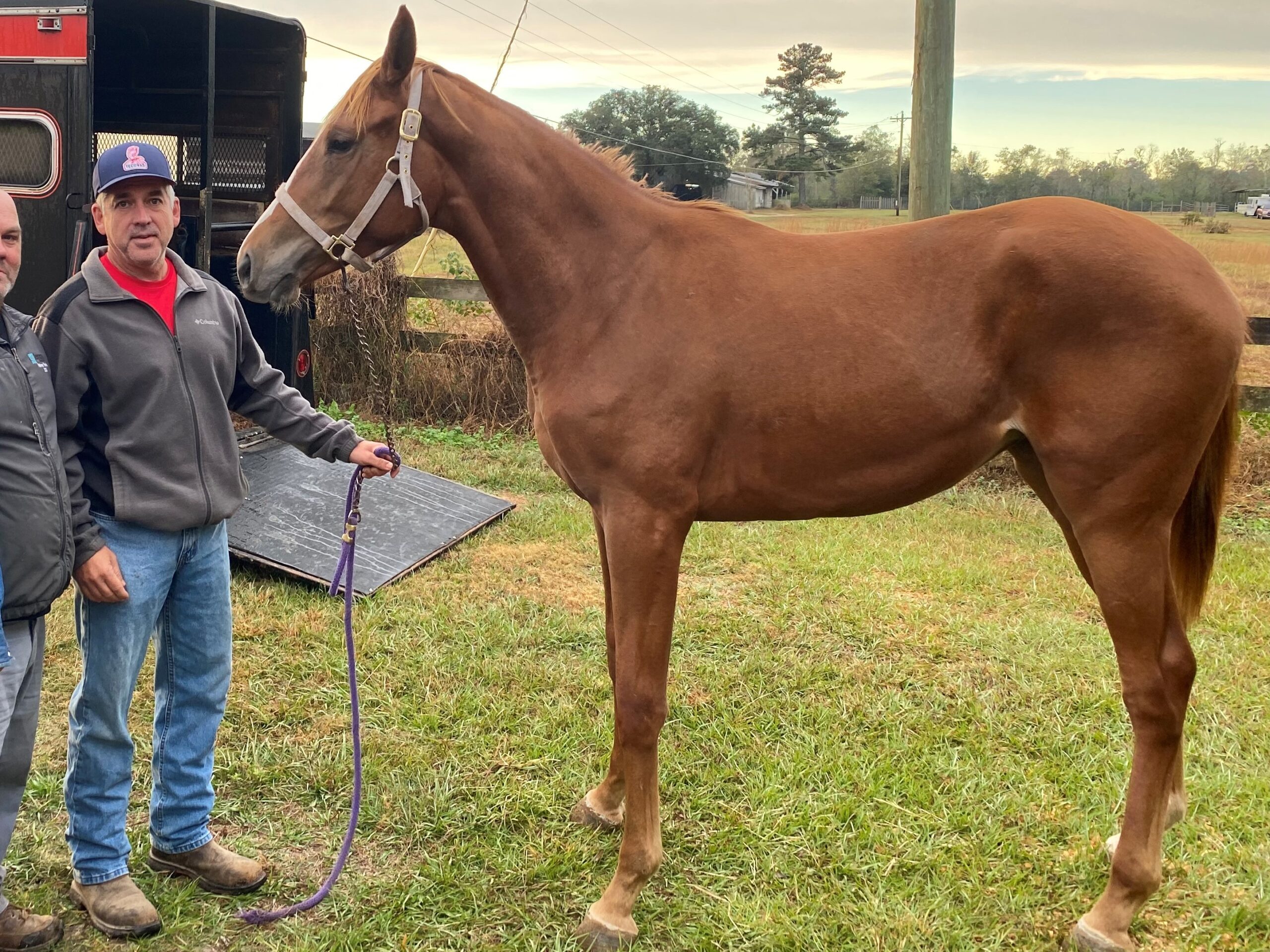
Young racehorse in early training — foundation phase before speed work begins.
Taking a young horse to the training gates — this comes late in the foundation phase, after the horse is comfortable galloping on the track.

Phase 2: Speed Development — Progressive Intervals

Once the foundation is in place, speed work begins through controlled high-intensity intervals called breezes. A breeze is a timed workout at race-like speed — faster than a gallop, shorter than a race, with the horse running under its own energy without being pushed to maximum effort. The goal is developing fast-twitch muscle fibers and race sharpness without depleting the horse.

Stage Intensity Distance Frequency Purpose
Introductory 75% effort 2–3 furlongs Once every 10 days Teach mechanics, introduce race speed
Building 85% effort 4–5 furlongs Once every 7 days Develop speed and stamina
Peak 90%+ effort Race distance Strategic — 10–14 days out from race Race sharpness
Breeze progression. Allow 48–72 hours of active recovery or light work after every high-intensity session.

Understanding Breeze Times

Breeze times are published on Equibase and in the Daily Racing Form. They matter because they’re the clearest public signal of how a horse is training. A horse posting sharp, consistent times in the weeks before a race is telling you something. A horse with erratic or absent works is telling you something different. These benchmarks are from my experience at Fair Grounds and similar tracks — adjust for breed, age, track conditions, and individual horse.

Distance Time Range Context
2 furlongs :21.4 – :22.4 Elite sharp work — flying start
3 furlongs :34.4 – :35.8 Stakes-level breeze
4 furlongs :46.0 – :47.5 Standard sharp work for most horses
5 furlongs :59.0 – :60.8 Stamina-building breeze
Fair Grounds benchmark breeze times (flying start). “Handily” or “Drove” works typically run 1–2 seconds slower. Track moisture and horse maturation affect all figures.
Miles’ Take — The Redline Rule Speed is a finite resource in a young horse. If you use it all up on Tuesday morning, you won’t have any left for Saturday afternoon. High-intensity breezes at 90% or more create real central nervous system and metabolic fatigue — the horse needs 48 to 72 hours of light work or turnout after every hard breeze before it can train normally again. If a horse runs poorly in their second start after a big workout, it’s often because the last hard work was too close to the race or the breeze schedule was too frequent. Respect the recovery. That’s where the fitness is actually being built.
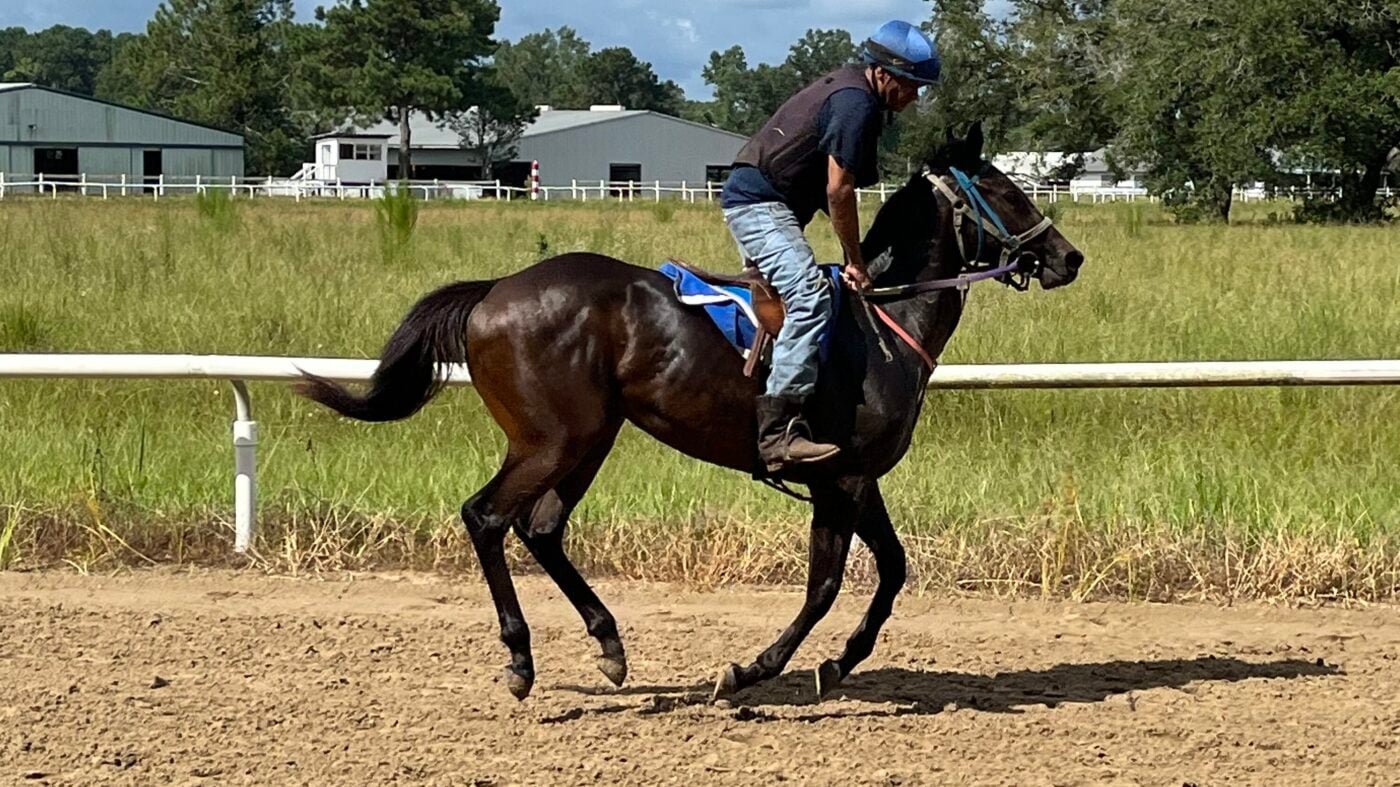
Young Thoroughbred in speed training — breeze work during the speed development phase.
A young horse in speed training — this is Phase 2, after the foundation work has given the body enough structural strength to handle fast work safely.

Phase 3: Race Maintenance — Staying Sharp

Once a horse is racing, the training goal shifts from building fitness to maintaining it. The work between starts is about keeping the horse sharp without wearing it down. The biggest mistake at this stage is treating every week like Phase 2 — pushing hard, breezing frequently, and stacking fatigue that shows up as declining performance two months into a campaign.

Week Schedule Notes
Race week Mon–Wed: Light gallops (1.5–2 miles). Thu: Jog only. Fri–Sun: Race + rest. No hard work within 5 days of the race
Recovery week Mon–Tue: Rest or walking. Wed–Fri: Light gallops. Weekend: Steady 2 miles. Let the body recover from the race effort
Build week Mon–Tue: Gallop + rest. Wed: Breeze 3–4 furlongs. Thu–Fri: Light work. Weekend: Gallop out, gate practice. One quality breeze to maintain race sharpness
Maintenance schedule for horses racing every two to three weeks. Adjust based on the individual horse’s recovery.
From the barn — Longevity is built in the paddock: In my experience, horses with scheduled rest breaks between racing campaigns maintain better form and have significantly longer careers than those raced continuously without recovery periods. A horse that runs six times over three months and then gets six weeks of field time will come back sharper than a horse that runs twelve times with no break. The rest is not wasted time. It’s where the horse mentally and physically resets, and where you find out what you actually have when the horse comes back fresh.
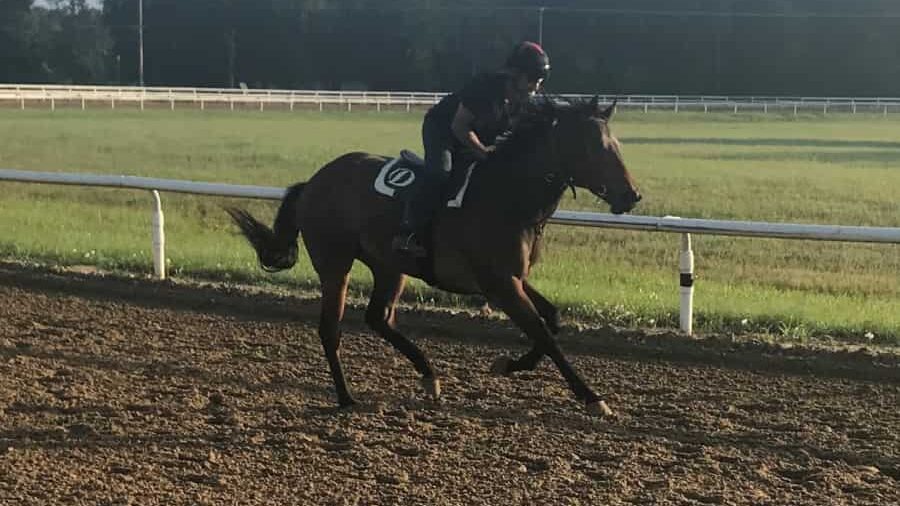
Two-year-old heading to the training track at the Folsom Louisiana training center.
A two-year-old heading to the training track at the Folsom facility — early in the maintenance phase of his first campaign.

Monitoring and Red Flags

Effective training is about reading recovery signals at least as much as it’s about what work you assign. The morning inspection is the most important 10 minutes of a trainer’s day.

Check Normal Red Flag — Do Not Work
Legs Cool, tight Heat, filling, or sensitivity to touch
Attitude Alert, ears forward, interested Dull, resistant, or unusually anxious
Movement Fluid, even stride in hand Short-strided, irregular, or head-bobbing
Appetite Clean feed tub by morning Reduced feed consumption or off water
Post-work recovery Heart rate below 60 BPM within 10–15 min Still blowing hard 20+ minutes after work
Miles’ Golden Rule If you find a red flag on morning check, do not tack up. It is far cheaper to pay a vet for a negative exam than to pay for a catastrophic injury caused by training through a warning sign. One bad decision on a Tuesday morning can end a career that had years left in it. I have never regretted giving a horse a day off. I have regretted not giving enough of them.

Overtraining Warning Signs

Overtraining is common, underdiagnosed, and almost always avoidable. The early signs are behavioral: a horse that used to go to the track willingly starts hanging back or acting up. The physical signs follow: declining performance despite the same or harder work, elevated resting heart rate, persistent minor leg inflammation, weight loss, and dull coat. When you see these, the answer is always the same — back off. Research published in Frontiers in Veterinary Science confirms what experienced trainers have always known: a week of rest typically resolves early overtraining, while pushing through leads to injuries requiring months of rehabilitation.

Miles’ Take — Knowing When to Back Off This is where experience matters most and where it’s hardest to teach. The schedule says work the horse. The horse is telling you something is off. Every time I’ve ignored that signal, I’ve paid for it. Every time I’ve backed off when the signs weren’t obvious — the horse was a little dull, not quite as sharp on the track, just slightly off his feed — I’ve been glad I did. The ones that last in this sport are the ones whose trainers learn to hear that. The ones that don’t make it are usually the ones whose trainers trust the calendar over the horse.

Common Mistakes That Limit Speed

After 30 years I’ve seen the same errors repeatedly derail horses that had every reason to succeed.

Speed Work on Poor Surfaces

The mistake: Breezing on a track that’s too hard, too deep, or poorly groomed — then wondering why the horse comes back sore.

Breezing on excessively hard or deep tracks increases injury risk significantly. I only breeze on properly maintained surfaces and adjust training when conditions are poor. Patience on a bad track day saves careers. For a full breakdown of how surface affects performance and injury risk, see our guide on racetrack surfaces and horse performance.

Inadequate Warm-Up

The mistake: Heading straight from the barn to fast work without adequate warm-up time.

Asking for speed on cold muscles and stiff joints is how you get soft-tissue injuries. Minimum 15 minutes of active walking and trotting before any speed work — this prepares the muscles, lubricates the joints, and mentally focuses the horse on what’s coming.

Ignoring Recovery Signals

The mistake: Seeing a slow recovery after work and pushing harder instead of pulling back.

If a horse is still breathing hard 20 minutes after work, their cardiovascular system is not keeping pace with the demands you’re placing on it. The right response is to reduce intensity and rebuild the aerobic base more thoroughly before pushing harder. The wrong response is to push harder hoping they’ll adapt. They won’t — they’ll break down.

Training a Sour Horse

The mistake: Interpreting resistance and reluctance as a discipline problem and responding with more work.

A horse that is mentally done — sour, resistant, showing pinned ears and reluctance — will not run fast no matter how fit they are. The fix is almost never more work. It’s variety: trail rides, turnout, lighter days, a change of scenery. Mental freshness directly impacts physical performance, and burning a horse’s mind is as damaging as burning their legs.

Using the Same Program for Every Horse

The mistake: Running every horse through the same schedule regardless of how they’re responding.

The biggest mistake a trainer can make is treating horses as interchangeable. Some horses need 10 weeks of foundation work. Others are ready in six. Some handle weekly breezes without any problem. Others need 10 days between hard works. The schedule is a starting point. The horse in front of you is the authority.

Equipment in Training

Equipment decisions made during training often follow the horse to the races. How a horse responds to blinkers, tongue ties, or shadow rolls during morning works tells the trainer whether those pieces belong in the race-day setup. A horse that settles and focuses better with blinkers in training is a good candidate to race in them. A horse that fights a tongue tie on the track is telling you something that needs to be worked out before race day.

The training period is also when bit choices get refined. Most young horses start in a simple snaffle or D-ring bit. As they develop and the trainer learns how they respond to different pressures, the bit may change to give the jockey better communication. For a full breakdown of how trainers approach equipment decisions — from blinkers and shadow rolls to tongue ties and leg wraps — see our complete racehorse equipment guide.

Miles’ Take I introduce equipment changes during training, not on race day. If a horse is going to wear blinkers for the first time, I want to see how they react to them in a controlled morning work before I commit to them in a race. The same goes for tongue ties and shadow rolls. Race day is stressful enough without adding an unfamiliar piece of equipment to the equation. Whatever goes on in the paddock should already be something the horse has worn and accepted on the training track.

FAQs: How Are Racehorses Trained?

How long does it take to train a racehorse?

From unbroken yearling to race-ready typically takes four to six months for Thoroughbreds. Horses returning from a layoff need two to three months depending on how long they were out and what condition they’re in. The timeline varies significantly by individual — some horses progress faster through foundation work, others need more time. Never rush the foundation phase, as it determines long-term soundness.

What is a breeze in horse racing?

A breeze is a timed workout at near-race speed — faster than a gallop, shorter than a race. Horses breeze at roughly 85–95% of maximum effort over two to five furlongs. The times are recorded by track clockers and published on Equibase, where bettors and trainers can review them. A horse with sharp, consistent breeze times in the two to three weeks before a race is generally considered well-prepared.

What is the difference between galloping and breezing?

Galloping is controlled work at roughly 70–85% effort, building stamina and maintaining fitness between races. Breezing is faster work at 85–95% effort, developing race speed and sharpness. Think of galloping as the maintenance work and breezing as the quality work. Most horses gallop several times between races but breeze only once or twice.

How often should a racehorse be worked?

During the speed development phase, horses typically gallop every day or every other day and breeze once every seven to ten days. During race maintenance, the schedule is lighter — mostly gallops with one strategic breeze about 10–14 days before the next race. Recovery days and light work are not wasted time; the fitness adaptation happens during rest, not during the work itself.

What does ‘gate schooling’ mean?

Gate schooling is the process of teaching a horse to load into the starting gate, stand quietly, and break cleanly when the gate opens. It’s conducted by the track’s official gate crew and must be passed before a horse can be entered in a race. Some horses take to the gate immediately; others need multiple schooling sessions before they’re certified to race. A horse that won’t load or breaks poorly from the gate can’t compete effectively regardless of how fit it is.

How do trainers decide when a horse is ready to race for the first time?

Three things need to line up: the horse is physically sound with clean legs and good recovery after works, the breeze times are consistent and the horse is finishing with energy, and there is a suitable race in the condition book at the right distance and class level. Most trainers also want to see the horse handle the paddock environment — the crowd, the saddling process, the post parade — without excessive anxiety before committing to a race entry.

How does equipment affect training?

Equipment decisions made in training often carry into racing. Trainers introduce blinkers, tongue ties, and shadow rolls during morning works to see how a horse responds before committing to them on race day. A horse that focuses better with blinkers in training is a good candidate to race in them. One that fights a tongue tie on the track needs the issue resolved before the equipment goes on in the paddock. Race day is too stressful to introduce unfamiliar equipment for the first time.

What causes a racehorse to ‘go wrong’ during training?

Most training-related injuries are not accidents — they are the result of cumulative fatigue from inadequate recovery, pushing through early warning signs, or moving to fast work before the structural foundation is in place. The specific causes include: breezing too frequently or too close to a race, training on poor surfaces, ignoring leg heat or changes in gait, and not adjusting the program when a horse’s attitude or appetite changes. Almost all of these are preventable with attentive daily monitoring.

Conclusion

Speed training is not about getting a horse to run fast once. It’s about building an athlete who can sustain speed safely over a long career. The three-phase system — foundation, speed development, race maintenance — exists because horses’ bodies have a specific sequence of needs that can’t be reordered without consequences. The structural work has to come before the speed work. The recovery has to be respected. The individual horse always takes priority over the schedule.

Every horse has a genetic ceiling on how fast they can run. The trainer’s job is to get them to that ceiling safely and keep them there consistently. That requires patience in the early phases, attentiveness every morning, and the discipline to back off when the horse is telling you something isn’t right.

To understand how training connects to race-day decisions — how class placement, weight assignments, and equipment choices all flow from what the trainer sees in morning works — see our guides on horse racing class levels, why racehorses carry different weights, how claiming races work, and the complete racehorse equipment guide. For the full picture of how the sport works from the barn to the finish line, the Horse Racing Explained hub is the place to start.

Are you training a horse for the first time, coming back from a layoff, or trying to understand what the morning works on Equibase are telling you? Drop it in the comments — the specific situations are always more useful than the general questions.

Sources and Further Reading

  • UC Davis Center for Equine Health — Research on progressive loading and equine musculoskeletal adaptation: vetmed.ucdavis.edu
  • PubMed / NCBI — Peer-reviewed research on racehorse training loads and performance: pubmed.ncbi.nlm.nih.gov
  • Frontiers in Veterinary Science — Overtraining and recovery in performance horses: frontiersin.org
  • Equibase — Official source for workout times and past performances: equibase.com