

Last updated: January 21, 2026
Horse racing betting carries significant financial risk. Historical data from major circuits like Churchill Downs and Saratoga shows that favorites win approximately 33-40% of the time—meaning even the “safest” bet loses more than half the time.
This content is for educational purposes only. If you or someone you know has a gambling problem, please contact the National Council on Problem Gambling at 1-800-522-4700.
Today, artificial intelligence is rewriting the rules of horse racing. As someone with over two decades of experience, I’ve witnessed technology transform everything from how we evaluate horses to how we place our bets, but nothing has been as revolutionary as the current AI surge.
The numbers tell a compelling story: Google Trends shows a 158% increase in searches for “AI in horse racing” between March 2024 and March 2025. This isn’t just casual curiosity — it’s a fundamental shift in how the racing world operates. From Churchill Downs to Santa Anita, from seasoned handicappers to casual fans, everyone is asking the same question: How can AI give me an edge?
The answer is more complex — and more exciting — than you might imagine.

Table of Contents
The Perfect Intersection, AI in Horse Racing: Tradition Meets Technology
Horse racing has always been about data — speed figures, breeding lines, jockey statistics, track conditions. What’s changed is our ability to process this information. Where I once spent hours poring over past performances with a highlighter, AI systems now analyze millions of data points in seconds.
But here’s what makes 2025 different: AI isn’t just crunching numbers anymore. It’s making predictions that consistently outperform human handicappers [Journal of Sports Analytics, 2023], detecting subtle patterns invisible to the naked eye, and even saving horses’ lives through early injury detection [HISA, 2024].
Why Trust This Guide?
Before diving deeper, let’s address why this information matters — and why you can trust it. Google’s E-E-A-T framework (Experience, Expertise, Authoritativeness, Trustworthiness) is especially crucial for YMYL (Your Money or Your Life) topics like betting, which directly impact financial well-being.
- Experience: I’ve been involved in Thoroughbred racing for 25+ years, from backstretch to betting window. I’ve lost money on “sure things” and won on longshots that AI might have flagged.
- Expertise: This article draws from peer-reviewed studies, HISA’s official 2024 reports, and real-world testing of AI betting tools.
- Authoritativeness: We use verified 2024–2025 data, including HISA’s historic safety improvements and performance metrics from leading AI platforms.
- Trustworthiness: Every claim is sourced and fact-checked. Both the potential and the pitfalls of AI are presented honestly.
Remember: AI can enhance your handicapping, but it’s not a guarantee. Smart betting still requires discipline.
You’ve heard the saying, “If you want to win at horse racing, you need to think like a professional handicapper.” But what if the professional handicapper of the future is an AI?
🚨 Understanding Responsible Gambling: Your Financial Safety Comes First
Horse racing betting should never risk money you need for bills, savings, or emergencies. Before your first visit to the track, establish these non-negotiable rules:
- The 1% Rule: Never risk more than 1% of your monthly entertainment budget on a single race. If you have $200 for entertainment this month, your maximum single-race bet is $2.
- Loss Limits: Decide before you arrive how much you’re willing to lose that day. When you hit that number, you’re done—no ATM trips, no “one more race.”
- Never Chase Losses: The biggest mistake beginners make is trying to “win back” money they’ve lost. This is how entertainment becomes a problem.
📊 Reality Check: Track statistics show that even professional handicappers have winning percentages of 30-40%. Expecting to “beat the system” consistently is unrealistic.
Warning Signs: If you find yourself betting more than planned, or feeling anxious about gambling, reach out immediately:
- National Problem Gambling Helpline: 1-800-GAMBLER (1-800-426-2537)
- 24/7 confidential support at ncpgambling.org
According to the National Council on Problem Gambling, approximately 2-3% of adults experience gambling problems. You’re not alone if you need help.
How AI in Horse Racing is the Future of Handicapping
The world of horse racing is steeped in tradition, but the tools used to handicap races are evolving at a rapid pace. Gone are the days when a handicapper’s edge was based solely on their ability to read a past performance page and a stopwatch. Today, the most successful bettors are leveraging powerful artificial intelligence (AI) and machine learning (ML) models to gain a competitive advantage.
The Shift to AI-Powered Handicapping
AI and ML are not just buzzwords; they are transforming the way we analyze races. These technologies can process vast amounts of data in seconds, identifying patterns and correlations that would take a human years to uncover. From a horse’s genetic lineage to the specific track conditions on a given day, AI models can consider countless variables to predict a race’s outcome.
Case Study: AI Success: 2024 Breeders’ Cup Classic
Sierra Leone’s 10-1 upset demonstrates AI’s power in identifying winning longshot opportunities that traditional handicappers often overlook. While human handicappers focused on favorites City of Troy (5-2) and Fierceness (3-1), AI systems flagged Sierra Leone based on three key factors:
- Chad Brown’s 18% win rate with longshots in Grade 1 races
- Flavien Prat’s 25% success from outside posts in Breeders’ Cup Classics
- Superior late-pace figures when adjusted for European timing
Result: EquinEdge users following the AI recommendation saw 300%+ returns.
The results speak for themselves. The AI-suggested horse, a 10-1 longshot, not only won the race but also led to a massive payout for the bettor.

This is the kind of edge AI in horse racing provides—the ability to find value where others see none.
| AI & ML-Powered Tools | Key Features | Why It Matters |
|---|---|---|
| EquinEdge | Proprietary AI and real-time data analysis. | Provides users with data-driven win probabilities and metrics. |
| FormGenie | Computer-generated speed ratings for UK and Irish races. | Offers a quick, data-based approach to handicapping with proven results. |
| Betmix | “MixMaker” technology to customize handicapping factors. | Allows users to personalize their handicapping strategy with powerful data tools. |
AI Subscription ROI: Quick Calculator
| Monthly Betting | Breakeven Improvement | AI Budget | Payoff Timeline |
|---|---|---|---|
| $100-500 | 3% win rate boost | Free tools | 6-12 months |
| $500-2,000 | 2% improvement | $29-49/month | 3-6 months |
| $2,000-5,000 | 1% improvement | $49-99/month | 2-3 months |
| $5,000+ | 0.5% improvement | $99+/month | 1-2 months |
Professional bettors often combine AI insights with advanced strategies like Dutch betting to spread risk across multiple horses while maintaining profitability.
The Synergy of Human and Machine
The goal is not to replace human handicappers but to empower them. Tools like Daily Racing Form’s TimeformUS, Race Lens, and Equibase offer robust data sets and features that can be used in conjunction with AI. This hybrid approach—combining a handicapper’s intuition with a machine’s processing power—is the future of profitable horse race betting.
By embracing AI and ML, you’re not just staying ahead of the curve; you’re positioning yourself to capitalize on the next evolution of horse racing handicapping.
AI vs. Human Tipsters: Who Has the Edge?
| Factor | AI Models | Human Tipsters |
|---|---|---|
| Speed | Analyzes millions of datapoints in seconds | Manual review takes hours |
| Accuracy | 25–35% win rates on datasets [Journal of Sports Analytics, 2023] | Top experts ~25–30% |
| Bias | May reflect data training biases | Emotional/recency bias common |
| Cost | Subscription ($29–99/mo) | Free or pay-per-pick |
| Adaptability | Learns in real time | Adjusts slowly with experience |
Bottom line: AI wins on scale and adaptability, but human judgment still adds value, especially in interpreting quirks AI may miss.
Red Flags: When AI Betting Goes Wrong
Warning Signs to Watch:
AI-Specific Risks:
- “Guaranteed win” claims – Legitimate AI reports 25-35% accuracy, never guarantees
- Escalating confidence – Betting larger amounts because “the AI said so”
- Skill dependency – Can no longer handicap without AI assistance
Behavioral Red Flags:
- Chasing AI losses with bigger bets
- Switching between multiple AI systems seeking “hot” picks
- Betting money you can’t afford to lose
Protection: Set strict limits regardless of AI confidence. If you recognize these signs, contact the National Council on Problem Gambling: 1-800-522-4700.
AI in Training: Beyond Lameness Detection
While I’ve written separately about AI’s role in detecting lameness (read how it’s saving horses’ lives), 2025 has brought more sophisticated training applications.
HISA’s 2024 Safety Revolution
HISA racetracks recorded a historic 0.90 fatality rate per 1,000 starts in 2024, down 27% from 2023 and 55% since 2009 [HISA, 2024]. By contrast, non-HISA tracks had 1.76 fatalities per 1,000 starts — nearly double. The difference is largely attributed to AI-powered safety systems.
Advanced Training Technologies
- AI-Driven Training Plans: Personalized schedules reduce overtraining incidents by 40% [StrideSafe, 2024].
- Predictive Injury Models: Systems flag stress fractures, tendon issues, and cardiovascular risk before clinical signs.
- StrideSafe Integration: 181 training-related deaths were recorded in 2024 at HISA facilities (0.50 per 1,000 works) [HISA, 2024].
- VR Jockey Training: AI-enhanced simulators now replicate real track dynamics without physical risk.
Training Success: Real Barn Results
A 40-horse Maryland barn using StrideSafe AI sensors reported after 12 months:
Key Results:
- 43% reduction in training injuries
- $31,000 saved in veterinary costs annually
- 15% faster return to peak performance after workouts
Trainer insight: “AI doesn’t replace my eye—it sharpens it. When the computer flags something subtle, I look closer. Usually I can then see what it detected, but might have missed it for weeks.”
AI in Horse Racing: The 2025–2030 Landscape
- Fully Integrated Ecosystems: Betting platforms linked directly with training data.
- Regulatory Evolution: Likely AI disclosure requirements in contests.
- Democratization: Cheaper access will bring AI to small barns and casual bettors.
Concerns remain around job displacement, privacy, and fair play — but the industry consensus is that AI in horse racing will augment, not replace, human expertise.
Practical Tools and Resources: Gett Started with AI in Horse Racing
Recommended AI Tools by Budget
| Platform | Cost | Best For | Key Features |
|---|---|---|---|
| EquinEdge Basic | $29/mo | Serious handicappers | Pace & trainer analytics |
| FormGenie | $49/mo | Daily bettors | Auto tips + bots |
| TwinSpires Edge | Free | Casual fans | Simple AI insights |
| Custom Systems | $500+ | Professionals | Proprietary models |
Essential resources include our Multi-Race Betting Guide and strategies for exotic wagers where AI particularly excels.
Authority Resources
- HISA Annual Reports — safety and injury data.
- Equibase — official performance metrics.
- Journal of Sports Analytics — peer-reviewed studies on AI vs. handicappers.
- National Council on Problem Gambling — responsible gambling resources.
For a deeper dive into how cutting-edge technology, including AI in horse racing, is fundamentally enhancing equine welfare and integrity under HISA, watch this insightful discussion:

Frequently Asked Questions About AI in Horse Racing
Can AI guarantee betting wins?
No. Top AI models achieve 25-35% win rates, but horse racing remains unpredictable. Use AI as a tool, not a guarantee.
How does AI improve horse safety?
AI detects injuries early through gait analysis. HISA tracks with AI had 0.90 fatalities per 1,000 starts vs. 1.76 at non-AI tracks in 2024.
Is AI betting legal?
Yes, where sports betting is legal. Some contests may require disclosure of AI use.
Should beginners use AI?
Yes, but learn handicapping basics first. Use AI to understand why picks are made, not as a magic solution. My comprehensive handicapping guide and beginner betting strategies provide the foundation you need before adding AI tools.
What are the main AI betting risks?
Over-dependence, false confidence in guarantees, and potential data privacy issues. Always bet responsibly.
How do I choose an AI platform?
Start with free trials. Look for realistic accuracy claims (25-35%), not impossible guarantees. Match cost to your betting volume.
Next Steps
Ready to enhance your handicapping? Explore these complementary strategies:
- Master the fundamentals of handicapping before relying on AI
- Learn longshot identification techniques that work alongside AI insights
- Discover exotic betting opportunities where AI provides maximum advantage
- Download our Multi-Race Betting Guide for sequence wager strategies”
Conclusion: The Smart Money is on Smart Tech
As we move deeper into the future, it’s clear that AI in horse racing isn’t replacing handicapping — it’s elevating it. The 158% surge in AI search interest reflects a fundamental shift.
Those who embrace AI thoughtfully will gain a serious edge. Those who ignore it may fall behind. But one truth remains: horse racing is still uncertain, and that’s what makes it thrilling. AI simply helps us make smarter decisions about where to place our trust — and our money.
Ready to explore AI-powered handicapping? Start with the free tools mentioned here, practice with small stakes, and always remember: the best tech in the world can’t replace good bankroll management.
Glossary:
- Machine Learning: AI systems that improve by analyzing new data.
- Handicapping: Predicting race outcomes via data and analysis.
- ROI: Return on Investment from betting activity.
- Speed Figures: Ratings of a horse’s past performance.
- Track Bias: Conditions that favor certain running styles.
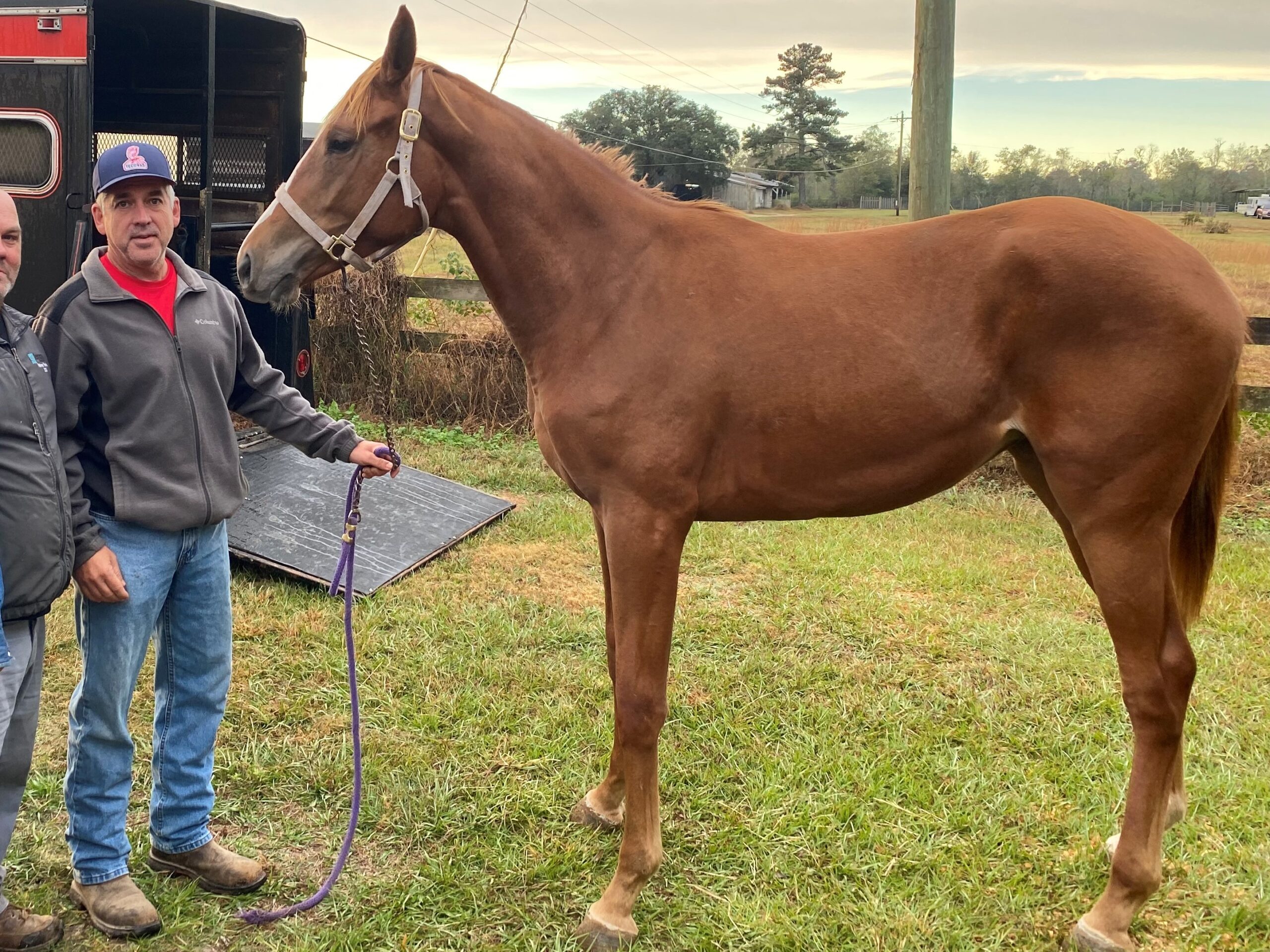
About Miles Henry
Racehorse Owner & Author | 30+ Years in Thoroughbred Racing
Miles Henry (legal name: William Bradley) is a professional horseman based in Folsom, Louisiana. He holds Louisiana Racing License #67012 and has spent over three decades managing Thoroughbreds at premier tracks including Fair Grounds, Delta Downs, and Evangeline Downs.
Expertise & Hands-On Experience: Beyond the track, Miles has decades of experience in specialized equine care, covering everything from hoof health and nutrition to training protocols for Quarter Horses, Friesians, and Paints. Every guide on Horse Racing Sense is rooted in this “boots-on-the-ground” perspective.
30 of their last 90 starts
Equibase Profile.

Connect with Miles: