
Last updated: March 9, 2026
Horse racing betting carries significant financial risk. Historical data from major circuits like Churchill Downs and Saratoga shows that favorites win approximately 33-40% of the time—meaning even the “safest” bet loses more than half the time.
This content is for educational purposes only. If you or someone you know has a gambling problem, please contact the National Council on Problem Gambling at 1-800-522-4700.
After 25 years as a racehorse owner, I’ve stood at the rail with betting slip in hand, torn between contenders at races like the 2024 Santa Anita Handicap. Picking one horse often led to heartbreak when another won.
Then I discovered Dutch betting, also known as Dutching—a strategy that spreads your stake across multiple horses to guarantee the same profit no matter which wins. Searches for this technique have surged 40% in 2025, per Google Trends, as bettors seek consistent returns over risky single bets
Table of Contents
Quick Start: Dutch Bet in Horse Racing
- Choose a Race: Select a competitive 8-12 horse race, like a Kentucky Derby prep.
- Pick 2-3 Horses: Choose contenders with strong form using our handicapping guide.
- Calculate & Bet: Use our calculator to split your stake and place bets on DKHorse.
Start Now: Try a $10 bet this weekend!
Ready to try it? Start with a $10 bet this weekend using our interactive calculator!

Real World Example: 2025 Kentucky Derby
Result: Target $141.50 profit regardless of which of my picks wins
For the 2025 Kentucky Derby, you identify three contenders based on form, jockeys like Irad Ortiz Jr., and track conditions:
- Journalism at 7/2 (4.5 decimal)
- Sovereignty at 7/1 (8.0 decimal)
- Baeza at 14/1 (15.0 decimal)
How to calculate decimal odds? Most bookmakers display these automatically. For fractional odds like 3/1, divide the first number by the second and add 1 (3÷1+1 = 4.0).
Using our calculator with a $100 stake:
- Stakes Required: $53.61 (Journalism), $30.20 (Sovereignty), $16.11 (Baeza)
- Total: $100.00
- Target Return: ~$241.60 (profit ~$141.60) if any wins, before commission/Rule 4.
The Math Behind Dutching
The principle is simple: divide your stake so each selection gives the same profit.
Formula for each horse:
Stake = (Total Stake × (1 ÷ Odds)) ÷ (Sum of (1 ÷ Odds) for all selections)
Example (using Derby odds 5.0, 7.0, 10.0 with $100 total):
- Sum of reciprocals = (1/5) + (1/7) + (1/10) = 0.414
- Horse A: (100 × 0.20) ÷ 0.414 = $48.31
- Horse B: (100 × 0.143) ÷ 0.414 = $34.54
- Horse C: (100 × 0.10) ÷ 0.414 = $24.15
Result: Whichever horse wins, your profit stays roughly the same.
Why Dutch Betting Works
Dutch betting lets you bet on multiple horses in one race, with stakes calculated to ensure equal profit if any selected horse wins. Instead of putting all your money on one horse and hoping for the best, you cover your top contenders strategically.
Simple Example: Bet $50 total on three horses with odds of 3/1, 5/1, and 7/1. Our calculator automatically splits this into stakes of $23.06, $15.41, and $11.53. Result: approximately $42 profit regardless of which horse wins.
Core Concept
What It Does: Distributes your total stake based on each horse’s odds to lock in identical profit across all selections
Key Tool: Our calculator converts odds automatically—no math required
Best Use: Competitive races where you identify 2-3 legitimate contenders
Pros and Cons
| Pros | Cons |
|---|---|
| Spreads risk across multiple horses | Lower profits than single bets |
| Guarantees equal profit if any pick wins | Requires accurate horse selection |
| Ideal for competitive races | Bookmaker fees reduce returns |
| No complex math needed with calculator | Odds changes can affect profits |
Finding Value in Imperfect Markets
While bookmakers build profit margins into their odds, horse racing markets aren’t perfectly efficient. Dutch betting can generate profits when you identify situations where public perception diverges from actual winning probabilities.
Market Inefficiencies to Target:
- Recency bias: Horses coming off poor performances in unsuitable conditions often carry inflated odds despite strong underlying form
- Public favorites: Media darlings and popular trainers sometimes attract disproportionate money, creating value elsewhere in the field
- Track specialization: Horses with strong records at specific tracks may be undervalued when racing at familiar venues
- Class confusion: Horses dropping in class after competing at higher levels often offer value as casual bettors focus on recent poor results rather than class relief
Quantifying Your Edge: Before Dutch betting, calculate implied probabilities from your selections’ odds. If your three horses are priced at 4.5, 8.0, and 15.0 decimal odds, their combined implied probability is 22.2% + 12.5% + 6.7% = 41.4%. For profitable Dutch betting, you need genuine confidence that these horses collectively have a greater than 41.4% chance of winning.
Market Timing: Place Dutch bets 15-30 minutes before post time to avoid early money movements while capturing any late value before odds solidify.
How to Dutch Bet: 3 Simple Steps
Follow these steps whether betting at the track or on platforms like FanDuel or DKHorse.
Step 1: Pick a Competitive Race
Choose races with 8-12 runners where multiple horses have realistic winning chances. High-profile events like the 2025 Blue Grass Stakes at Keeneland or Kentucky Derby preps work perfectly.
Why this matters: Fields with clear favorites and no realistic challengers don’t suit Dutch betting. You need genuine competition.
Check race cards on Racing Post or explore top venues in our guide to the world’s greatest horse racing tracks.
Step 2: Select 2-3 Strong Horses
Choose horses with realistic winning chances:
- Recent Form: Horses with wins or placings in their last three races (look for 90+ Equibase speed figures)
- Jockey/Trainer: Favor combinations with 15%+ win rates, like Irad Ortiz Jr. partnerships/
- Track Conditions: Match horses to current going (firm, soft, etc.)
- Value Option: Consider including a live longshot (10/1+) with improving form—learn how in our guide to spotting winning longshots
Download our free handicapping checklist from our handicapping guide for beginners to refine your selections.
Rigorous Contender Evaluation
Beyond basic form analysis, systematic evaluation separates profitable Dutch betting from educated guessing.
Speed Figure Analysis:
- Benchmark standards: In Grade 1 races, winning speed figures typically range 100-110+ (Equibase). For Grade 2/3 races, look for figures of 90-100+
- Figure comparison: Your selections should have top-3 speed figures in the field within their last three races
- Track variants: Adjust figures for track conditions—a 95 figure on a slow track may equal 100+ on a fast surface
Pace Scenario Mapping:
- Early pace: Identify likely leaders and pressers using fractional times from recent races
- Closing opportunities: In pace-compromised scenarios (multiple speed horses), include proven closers in your Dutch selections
- Tactical advantage: Horses with tactical speed (can press or close) offer more versatility than one-dimensional runners
Class and Condition Matching:
- Class par: Calculate average winning speed figures for the race level over the last 12 months
- Distance suitability: Verify each selection has won or run competitively at today’s distance ± 1 furlong
- Surface transitions: Horses switching from dirt to turf (or vice versa) require demonstrated ability on both surfaces
Trainer Pattern Recognition:
- Situation specialists: Some trainers excel in specific scenarios (layoffs, class drops, distance changes) with 20%+ win rates versus 15% overall
- Stable form cycles: Track 30-day trainer statistics—surging or declining win percentages can indicate current stable form
Jockey/Horse Combinations:
- Partnership success: Look for jockey-horse combinations with multiple wins or consistent high finishes
- Riding style fit: Match aggressive jockeys with speed horses, patient riders with closers
Step 3: Calculate and Place Bets
Use our calculator below to determine exact stakes for each horse. Place bets in the “win” market with trusted bookmakers. Always verify odds before confirming, as shifts from 3/1 to 5/2 can impact your returns.
How Dutch Betting Compares to Other Strategies
Dutch betting is unique, but it helps to see how it stacks up:
- Straight Win Bets – You’re backing one horse only. Simpler, but higher risk if your selection loses.
- Arbitrage Betting – Similar math, but spread across different bookmakers to lock in profit. Requires accounts with multiple operators.
- Due-Column Betting – A progressive staking system that increases bets after losses. Higher risk and bankroll exposure compared to Dutching.
👉 Dutch betting is often a middle ground: more coverage than a single win bet, but without the escalating risk of due-column betting.
Bankroll Management: Bet 2-5% of your total bankroll per race (example: $100-$250 from a $5,000 bankroll).
Interactive Dutching Calculator
Enter your total stake and odds below. Our calculator handles all conversions and splits your stake for equal profit across all selections.
Dutch Betting Calculator
Calculate stakes and profits for horse racing bets
Betting Results
Returns are equalized before rounding. Cents rounding can create a few-cent variance. Adjust the last stake to tidy totals.
Our calculator provides quick, accurate Dutch betting calculations. For added peace of mind—or to test advanced scenarios like commission adjustments—you can also use tools such as the AceOdds Dutching Calculator for complementary verification.
Protecting Your Dutch Strategy from Odds Fluctuations
Odds movements can destroy Dutch betting profitability faster than poor horse selection. Understanding and managing this risk is crucial for consistent results.
Quantifying Movement Impact:
A horse moving from 3/1 (4.0 decimal) to 5/2 (3.5 decimal) requires a stake increase from $25 to $28.57 on a $100 total bet—reducing your profit margin by approximately 15%. More dramatic shifts can eliminate profits entirely.
Real-World Example:
- Original calculation: Horse A at 4.0 odds requires $25 stake for $100 return
- After movement: Horse A at 3.5 odds requires $28.57 stake for same return
- Impact: Your $100 Dutch bet now needs $103.57 total, reducing profit by $3.57 per winning scenario
Movement Patterns to Expect:
- Opening to closing: Average odds movement in competitive fields ranges 10-20%
- Late money: Final 15 minutes often see 5-15% swings as informed money enters
- Scratches: Horse withdrawals can shift remaining runners’ odds by 10-30%
Protection Strategies:
Timing Windows:
- Optimal entry: Place bets 20-30 minutes before post when early movements settle but before late money arrives
- Avoid dead periods: Don’t bet immediately after odds open (volatile) or in final 5 minutes (limited reaction time)
Movement Thresholds:
- Acceptable range: Plan for 5-10% odds movement in your calculations
- Abort triggers: If any selection moves more than 20% against you, consider abandoning the Dutch bet
- Partial hedging: In severe movements, consider reducing stakes on affected horses rather than canceling entirely
Technology Assistance:
- Odds comparison sites: Monitor multiple bookmakers to find best available prices before committing
- Alert systems: Set notifications for significant odds changes on your target races
- Mobile access: Ensure you can adjust or cancel bets quickly if odds move unfavorably
Scratch Contingencies: Modern betting platforms typically void bets on scratched horses, but this creates new calculations for your remaining selections. Pre-plan alternative Dutch combinations if key horses withdraw.
How Fees and Deductions Affect Returns
Keep in mind that:
- Commissions: Some betting exchanges take 2–5% of net winnings.
- Rule 4 Deductions: If a horse is withdrawn close to race time, bookmakers may reduce payouts to adjust for the smaller field.
Both can slightly reduce your returns, so always double-check potential adjustments before placing your bet.

When NOT to Dutch Bet
Dutch betting isn’t suitable for every race. Avoid this strategy in these situations:
Overwhelming Favorites
Skip races with odds-on favorites (1/2, 1/3) where one horse dominates the market. In these scenarios, the favorite’s low odds require such a large stake that your profit margins become minimal. For example, if a horse is 1/2 (1.5 decimal), you’d need to bet $67 of a $100 stake just on that horse, leaving little room for meaningful profit.
Small Fields (6 Horses or Fewer)
Limited fields reduce your selection options and often feature clear class distinctions between horses. With fewer runners, there’s typically less value in spreading risk since the market prices are more accurate. Focus on single-horse bets in these situations where you can identify clear value.
High-Confidence Single Selection
When your handicapping identifies a horse with significant edge—perhaps a class dropper with perfect conditions at 3/1 odds—betting to win offers better returns than Dutch betting. Reserve Dutching for races where you identify multiple legitimate contenders without a clear standout.
High-Juice Markets
Avoid Dutch betting when bookmaker margins exceed 115-120%. The combined effect of multiple bets amplifies the house edge, eroding your profits. Check odds comparison sites like Oddschecker to find the best available prices before implementing your strategy.
What Happens When You Lose: Realistic Expectations
Kentucky Derby Example – All Horses Lose
In our Kentucky Derby example with $100 staked across Journalism, Sovereignty, and Baeza, what if none of these horses win? Perhaps Fierceness or Sierra Leone—horses you didn’t select—finish first.
Result: You lose your entire $100 stake. Unlike win/place betting, where you might recover some money with a second-place finish, Dutch betting is all-or-nothing on your selections winning.
Why This Matters: This scenario illustrates why proper bankroll management is crucial. Betting $100 from a $2,000 bankroll (5%) is manageable. Betting $100 from a $500 bankroll (20%) puts you at serious risk of depleting your funds quickly.
Managing Losing Streaks
Dutch betting reduces variance but doesn’t eliminate losses. Expect to lose approximately 60-70% of races even with solid selections. Professional bettors plan for streaks of 5-10 consecutive losses and adjust stakes accordingly.
Practical Example: If you Dutch bet 10 races at $50 each ($500 total), winning 3 races with $35 profit each ($105 total profit) while losing 7 races ($350 total loss), your net result is a $245 loss. This demonstrates why starting small and tracking results over larger samples is essential.
Essential FAQs About Dutch Betting in Horse Racing
What is Dutching in horse racing?
Dutching is a betting strategy where you place calculated stakes on multiple horses in the same race to guarantee equal profit regardless of which selected horse wins. The strategy works by distributing your total stake proportionally based on each horse’s odds, ensuring identical returns if any of your picks finishes first. This approach reduces risk compared to single-horse betting while maintaining profit potential across multiple contenders.
Is Dutch betting profitable?
Dutch betting can be profitable but offers lower returns than successful single-horse bets. The strategy trades maximum profit potential for reduced variance and more consistent results. Professional bettors typically see 15-25% lower profits per winning bet compared to straight win bets, but experience fewer dramatic swings in their bankroll. Success depends on accurate horse selection and disciplined bankroll management over extended periods.
How many horses should I Dutch?
Limit Dutch betting to 2-3 horses for optimal balance between risk reduction and profit potential. Including more horses dilutes your profit margins significantly while increasing the complexity of stake calculations. Two horses work well when you identify a clear top pair, while three horses suit races with multiple legitimate contenders. Beyond three selections, consider whether you truly have edge on all horses or are simply hedging due to uncertainty.
How much should I bet using this strategy?
Bet 2-5% of your total bankroll per Dutch betting opportunity, similar to single-horse wagering guidelines. For a $5,000 bankroll, this means $100-$250 per race across all your selections combined. Start at the lower end (2%) until you develop confidence in your selection process and understand the strategy’s variance. Never increase stakes to chase losses, as this violates fundamental bankroll management principles that protect your long-term betting capital.
Can I include longshots in my Dutching?
Including one live longshot (10/1 or higher) can boost overall payouts when selected judiciously. The key is identifying longshots with legitimate winning chances based on improving form, favorable conditions, or class relief rather than simply chasing high odds. A longshot should represent genuine value, not a lottery ticket. Learn proper longshot evaluation techniques in our winning longshots guide to avoid including false favorites at inflated odds.
How do I get started with Dutch betting?
Begin with small stakes ($5-$10 total) on competitive races at major tracks like Keeneland or Churchill Downs where you can access reliable form information. Focus on Grade 2 and Grade 3 stakes races initially, as these typically feature balanced fields without overwhelming favorites. Track your results over at least 20-30 races before evaluating the strategy’s effectiveness for your handicapping style. Join our Horse Racing Sense community to share experiences and learn from other Dutch betting practitioners.
Real-World Example in Action
In a recent 10-horse allowance race at Keeneland, a bettor applied Dutching to three mid-priced horses at odds of 4.5, 6.0, and 9.0. With a $120 stake, the calculator split the wagers so that whichever horse won, the bettor cleared about $95 profit.
This shows Dutch betting can provide consistent, predictable returns when used in competitive fields with multiple live contenders.
Responsible Gambling
Dutch betting reduces risk but doesn’t eliminate it entirely. Always set a clear budget before betting and never wager money you cannot afford to lose. Avoid chasing losses by increasing stakes after unsuccessful bets.
Need support? Contact the National Council on Problem Gambling or call their confidential helpline at 1-800-522-4700.
Start Dutch Betting Today
Dutch betting offers a mathematically sound approach to horse race wagering that balances risk and reward. By following our three-step process—selecting competitive races, choosing strong contenders, and using our calculator—you can start implementing this strategy immediately.
Take action: Try Dutch betting with a $10-20 stake this weekend at tracks like Keeneland or Churchill Downs. Use our interactive calculator above to determine exact stakes, then place your bets with confidence and share your first Dutch bet experience below!
For additional betting strategies, explore our world’s greatest horse racing tracks guide. Join our Horse Racing Sense community for weekly insights and tips from experienced bettors.
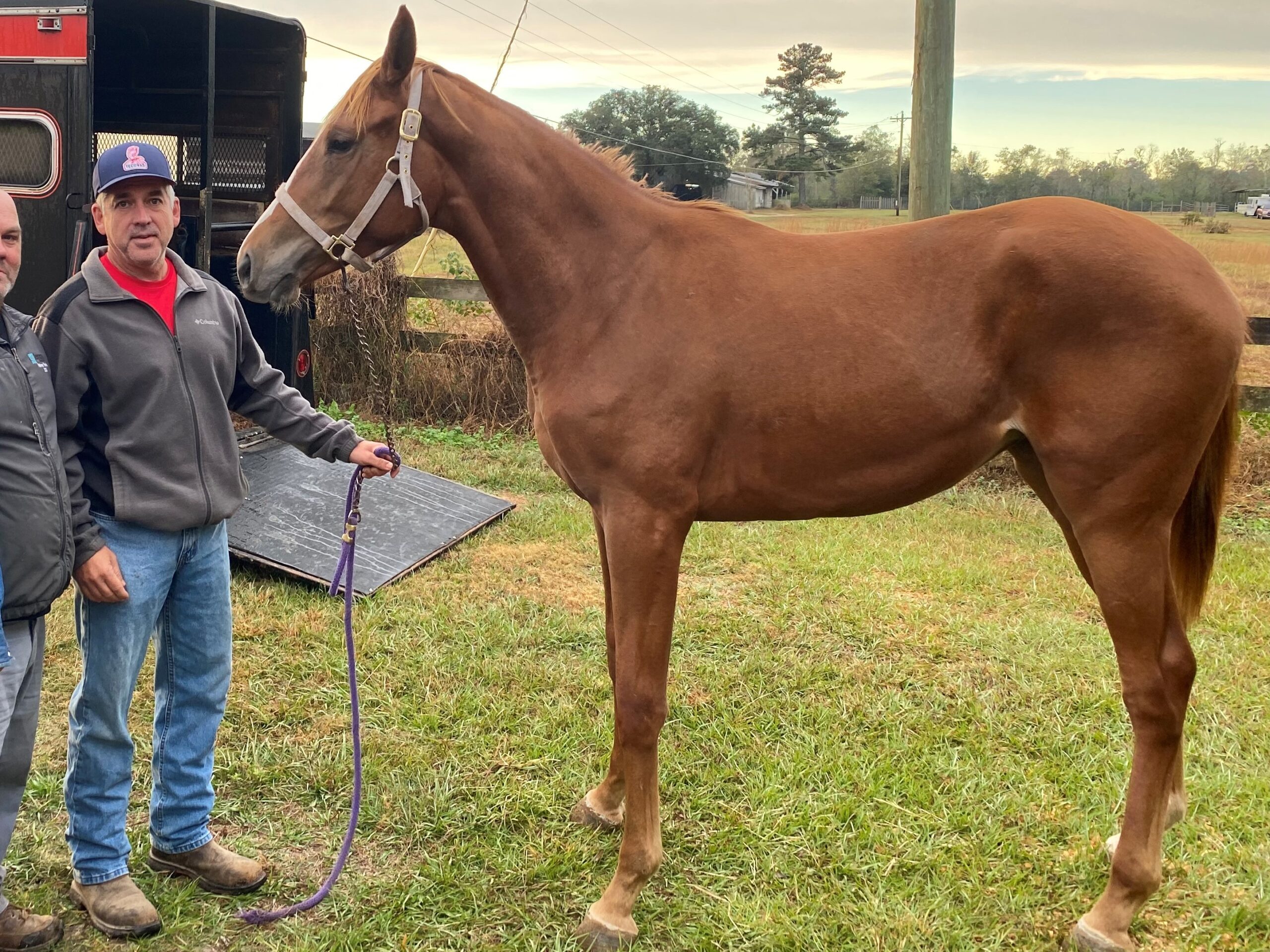
About Miles Henry
Racehorse Owner & Author | 30+ Years in Thoroughbred Racing
Miles Henry (legal name: William Bradley) is a professional horseman based in Folsom, Louisiana. He holds Louisiana Racing License #67012 and has spent over three decades managing Thoroughbreds at premier tracks including Fair Grounds, Delta Downs, and Evangeline Downs.
Expertise & Hands-On Experience: Beyond the track, Miles has decades of experience in specialized equine care, covering everything from hoof health and nutrition to training protocols for Quarter Horses, Friesians, and Paints. Every guide on Horse Racing Sense is rooted in this “boots-on-the-ground” perspective.
30 of their last 90 starts
Equibase Profile.

Connect with Miles: