
Last updated: September 3, 2026
Any links on this page that lead to products on Amazon are affiliate links and I earn a commission if you make a purchase. Thanks in advance – I really appreciate it!
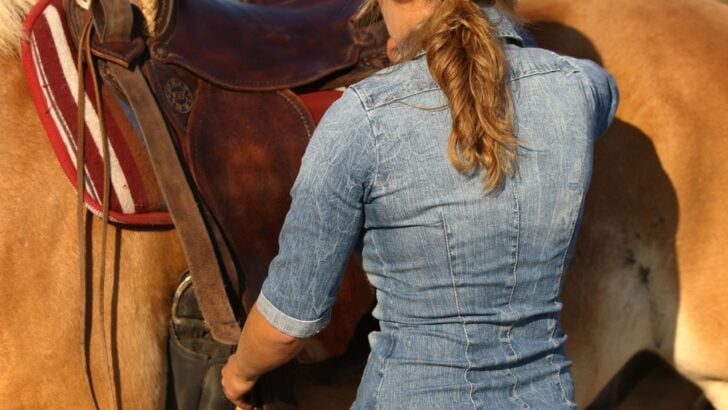
When my daughter finally got her own horse after six years of asking, she wanted to know whether saddles are actually bad for horses. It’s a fair question – plenty of people saddle up because that’s what horse people do, without stopping to ask what the horse feels underneath it.
A well-fitted saddle isn’t bad for a horse, but a poorly fitted one can be. A good saddle should give the horse enough spinal clearance, sit securely on the back, and distribute the rider’s weight without creating obvious pressure points. Whether it’s English, Western, Australian, treed, or treeless matters less than whether that particular saddle fits that particular horse and stays balanced when you ride.
That led us into the same questions many new owners face: what a saddle tree does, whether treeless and flex-tree saddles are worth considering, and how to choose a saddle that’s comfortable for both horse and rider. For us, that search eventually led to an Australian stock saddle.
What Makes a Saddle Good or Bad for a Horse?
It comes down to the tree – the frame the rest of the saddle is built over. Its shape is what determines how the saddle fits the horse and the form of the seat. Trees are made from several materials, including wood, rawhide-covered wood, fiberglass, and synthetic composites, depending on the maker and the type of saddle. A saddle with a well-shaped tree, correctly fitted, spreads the rider’s weight across a broad area of the horse’s back instead of concentrating it in one spot. That’s the whole reason tree shape matters as much as it does.
Below is a YouTube video that shows how saddles are made, if you want to see how the tree and the rest of the saddle come together.
What I Look for in Saddle Fit
- The saddle sits balanced, without tipping noticeably forward or backward.
- It provides clearance over the withers and along the spine, including with the rider mounted.
- The bars or panels make stable, appropriate contact across the horse’s usable weight-bearing area, without obvious bridging or concentrated pressure.
- The saddle doesn’t rock excessively from front to back or roll from side to side.
- It stays stable once the rider mounts and the horse begins moving, not just while the horse is standing in the aisle.
- The horse doesn’t show new or obvious discomfort when being saddled or ridden.
- The fit is reassessed as the horse’s body, workload, or condition changes.
If you’re unsure, have an experienced saddle fitter assess the saddle with the rider mounted and, ideally, while the horse is moving. If the horse has new back pain, marked behavior changes, or obvious soreness, involve your veterinarian as well. This list is meant to help you recognize a problem, not replace a hands-on fitting – if you want the full step-by-step process for checking saddle position, panel contact, and clearance by hand, I’ve laid that out in a separate guide on fitting a saddle to you and your horse.

What Makes a Poorly Fitting Saddle a Problem?
A saddle doesn’t have to look obviously wrong to bother a horse. The trouble usually comes from poor fit, poor balance, damaged or compressed panels, a saddle that shifts while the horse moves, or a rider who can’t stay centered in it. The longer and harder the horse works, the less forgiving those problems become.
- Too narrow: the saddle may perch high, pinch behind the shoulder, and create concentrated pressure.
- Too wide or unstable: it may drop down around the withers, roll from side to side, or sit too low in front.
- Too long: it can extend past the horse’s usable weight-bearing area and interfere with the loin.
- Bridging or rocking: a saddle that touches mainly at the front and back, or moves like a rocking chair, concentrates pressure instead of sharing it.
- Inadequate spinal clearance: the saddle shouldn’t press on the withers or spine, including once the rider is mounted and the horse is moving.
- A saddle that no longer fits: a horse can change enough over time – through conditioning, weight change, muscle development or loss, age, pregnancy, time off, or a change in workload – that a saddle which once fit well no longer does. Wool flocking and foam panels change over time too.
It’s worth knowing that correctly sizing a saddle isn’t just about the seat size you sit in – it’s about matching the tree and bar angle to your horse’s actual back shape.
Signs Your Horse May Be Uncomfortable
No single sign proves the saddle is the problem, but I pay attention when a horse that was previously easy to tack up or ride starts changing. Watch for pinned ears while saddling, girthiness, hollowing the back, moving away from the saddle, reluctance to go forward, bucking, short or uneven steps, resistance in one lead, new white hairs or areas of hair change, rubbed areas, swelling, dry spots after work, or soreness along the back.
Those signs can also come from training, teeth, feet, ulcers, lameness, pain elsewhere in the body, or rider imbalance. If a horse suddenly starts acting different under saddle, I don’t assume it’s a training problem and I don’t assume it’s a saddle problem either – I treat it as a reason to investigate, checking the saddle before and after a ride and ruling out other causes before I blame the tack. If the behavior is new, persistent, or paired with obvious pain, don’t keep riding through it. Have the horse examined by a veterinarian and have the saddle assessed by a qualified fitter.
Saddles With Trees vs. Treeless Saddles
Some saddles are built without trees. Which is better for a horse – one with a tree, or a treeless saddle? The idea behind a treeless design is to avoid pressure points by letting the saddle flex with the horse’s back.
Treeless doesn’t automatically mean less pressure. A 2012 study published in The Veterinary Journal compared a conventional dressage saddle with a treeless dressage saddle on the same horses and found the conventional saddle spread the rider’s force over a larger area, with lower average and peak pressures, than the treeless saddle tested. That doesn’t prove every treed saddle beats every treeless saddle for every horse—it was one specific comparison under defined conditions—but it does support not treating the word “treeless” as a synonym for “less pressure.” Saddle design and individual fit still matter more than the category.
If you’re weighing a treeless saddle, my guide to choosing one goes into more detail on what to look for.
What About Flex-Tree Saddles?
A flex-tree saddle is another option worth considering. It retains a tree but allows some movement in it, although I wouldn’t assume flexibility automatically makes a saddle a better fit. The individual horse, the saddle’s specific design, the rider, and the intended use still matter. A flex-tree saddle still needs adequate wither and spinal clearance, stable contact across its bearing surface, and a rider who can stay balanced in it.
Rider size and balance matter too, especially as rides get longer or the work gets harder. A saddle that works well for one horse-and-rider pairing may not work as well for another. A saddle that collapses, bridges, shifts, or lacks spinal clearance can create concentrated pressure and may contribute to soreness, hair changes, skin lesions, reduced performance, or behavior changes.
Choosing the Right Saddle Style
Beyond tree type, there’s the broader question of style: English, Western, and Australian stock saddles. These saddle families are built for different jobs and rider positions, but no category automatically fits a particular horse – the individual saddle still has to match the horse’s back. My daughter was new to riding, but that wasn’t really the deciding factor. She tried both English and a standard Western saddle and simply didn’t feel comfortable in either one, so she started researching Australian stock saddles in earnest.

Why We Chose an Australian Stock Saddle
For my daughter’s horse, an Australian stock saddle ended up being the best fit after she tried other options. It combined features she liked from English and Western styles and gave her a secure position that felt more natural than the Western saddle she had been riding in.
That was the right answer for that horse-and-rider pairing at that time—not a rule for every horse. A saddle’s style, price tag, horn, knee pads, or flexibility matter less than whether it fits the horse, allows the rider to stay balanced, and suits the work you expect to do. If you are considering that style, I cover Australian stock saddle features and benefits in more detail in my Australian saddle guide.
The Bottom Line: Are Saddles Bad for Horses
A saddle isn’t bad for a horse simply because it has a tree, costs more, or belongs to a particular riding style. A well-fitted saddle should stay balanced, leave room for the withers and spine, distribute the rider’s load across an appropriate part of the back, and allow horse and rider to move comfortably together.
Don’t shop based only on what looks comfortable to you or what someone says is best for every horse. Match the individual saddle to the individual horse, rider, and job. In our case, that turned out to be an Australian stock saddle. For your horse, it may be something entirely different.
About Miles Henry
Racehorse Owner & Author | 30+ Years in Thoroughbred Racing
Miles Henry (legal name: William Bradley) is a professional horseman based in Folsom, Louisiana. He holds Louisiana Racing License #67012 and has spent over three decades managing Thoroughbreds at premier tracks including Fair Grounds, Delta Downs, and Evangeline Downs.
Expertise & Hands-On Experience: Beyond the track, Miles has decades of experience in specialized equine care, covering everything from hoof health and nutrition to training protocols for Quarter Horses, Friesians, and Paints. Every guide on Horse Racing Sense is rooted in this “boots-on-the-ground” perspective.
30 of their last 90 starts
Equibase Profile.

Connect with Miles: