
Last updated: August 26, 2026
Any links on this page that lead to products on Amazon are affiliate links and I earn a commission if you make a purchase. Thanks in advance – I really appreciate it!
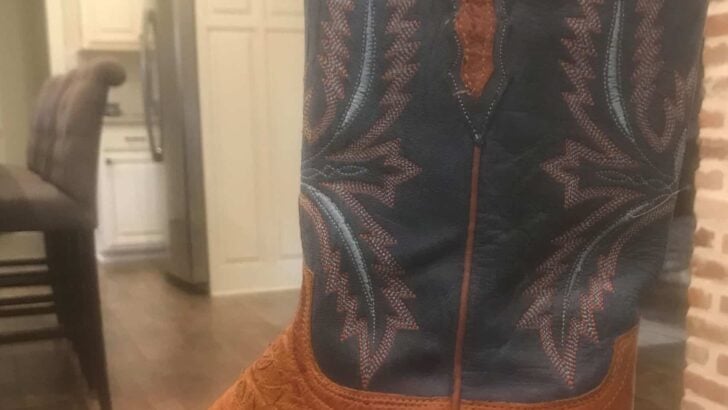
For trail riders, barn riders, and everyday Western riders, a good boot needs a defined heel, a sole that releases cleanly from the stirrup, and enough comfort for the time you spend walking around the barn. My all-around pick is the Ariat Heritage Roper; the Justin Temple Roper is the comfort-first choice for long days on foot; and Tecovas The Doc is the pair I personally reach for when I want a more traditional leather boot with a roomier toe. Riders whose main focus is competitive barrel racing or another fast, spur-intensive discipline should shop specifically for that job.
I’ve spent years riding, handling horses, and working around Louisiana barns. I judge a riding boot less by stitching or brand name than by its heel shape, fit in my stirrup, traction on the ground, and whether I still want it on after a long day.
How I chose these boots: I’ve personally worn the Ariat Heritage Roper, Justin Temple Roper, and Tecovas The Doc. The Laredo Breakout is a research-based budget recommendation selected for its listed construction, heel, and shaft – I haven’t personally ridden in that model. Specifications, pricing, and availability can change, so verify the current manufacturer listing before buying. If you’re brand new to Western riding, start with my guide to riding boots for beginners before diving into the specifics here.
| Boot | Best for | Testing note |
|---|---|---|
| Ariat Heritage Roper | All-around barn, trail, and arena use | Personally worn |
| Justin Temple Roper | Long days on foot, comfort-first | Personally worn |
| Tecovas The Doc | Traditional leather boot with a roomier toe | Personally worn; my regular riding boot |
| Laredo Breakout | Budget-conscious riders wanting a taller shaft | Research-based pick, not personally tested |
Boot Reviews
All-Around PickAriat Heritage Roper

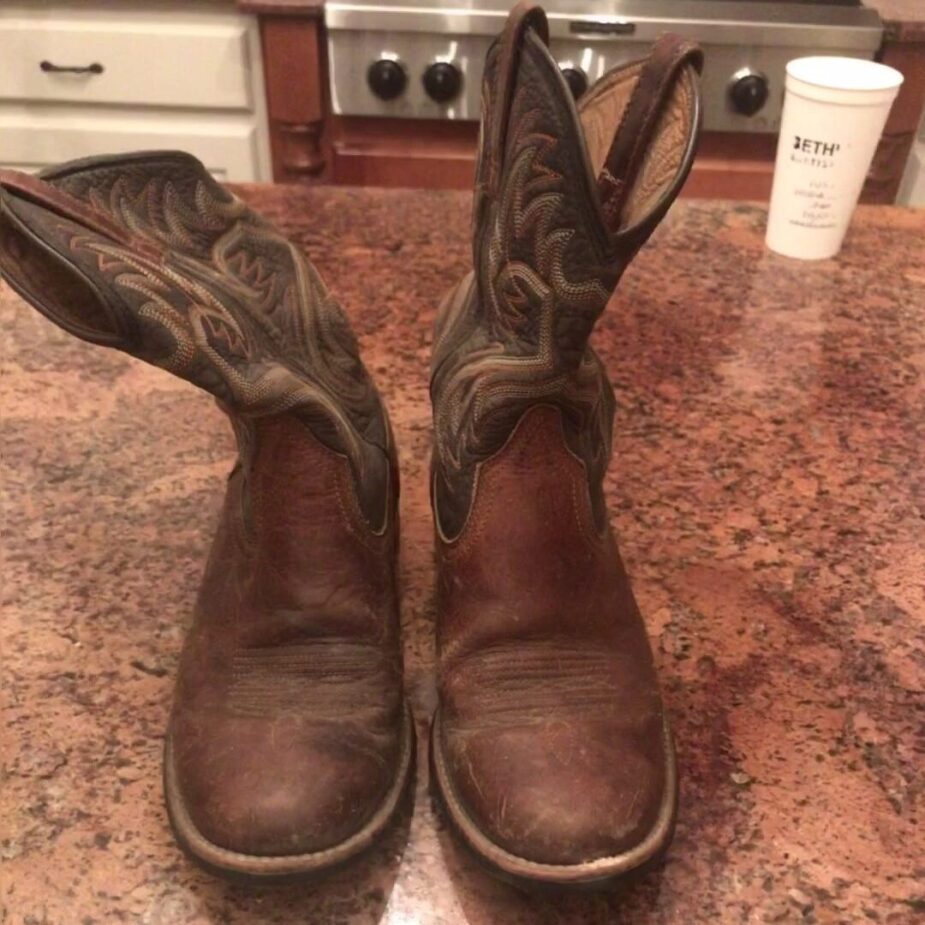
I switched from a heavier lug-soled work boot to the Heritage Roper because the outsole felt less bulky in my stirrup. The flatter Duratread profile gives cleaner stirrup contact than a deep-lug sole while still working well for the ordinary barn footing I use it on. It has a roper-style heel, a removable ATS footbed, and Goodyear welt construction according to the listing, which should allow resoling down the line.
Who should skip this one: The moderate heel and flatter sole are built for everyday riding and barn use, not for competitive disciplines that call for a taller heel or a deeper spur ledge. Confirm the exact heel height and shaft measurements on the current listing, since specs can vary slightly by size and colorway.
Best for Long Days on FootJustin Temple Roper

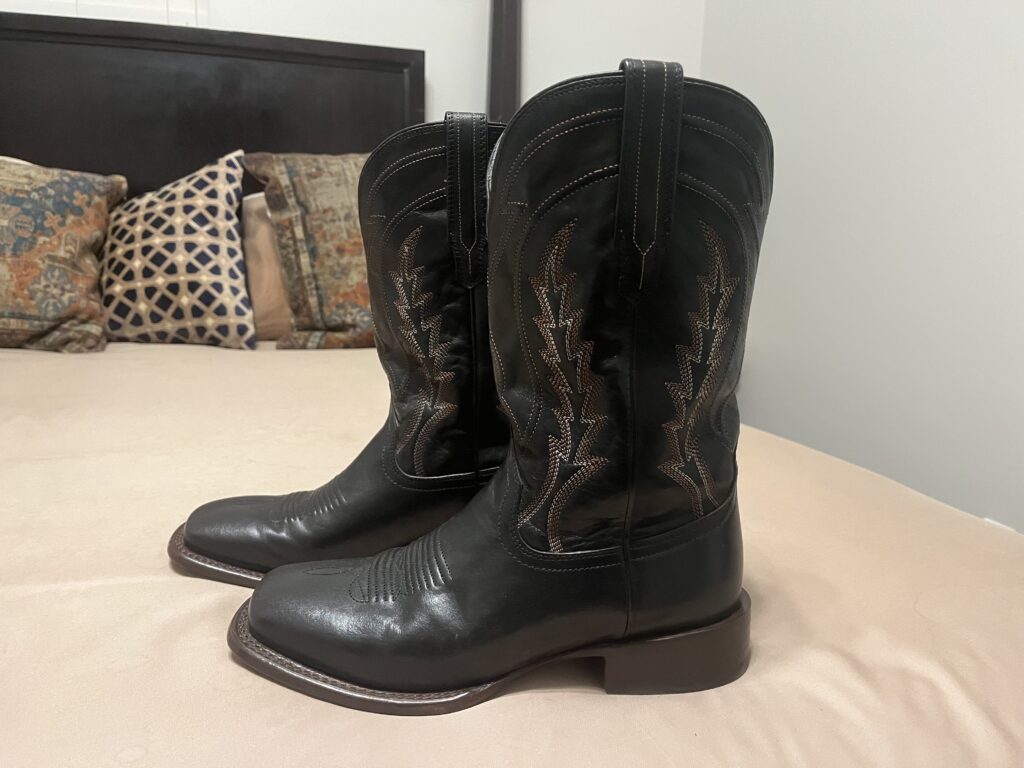
I’ve worn a lot of boots over the years, and the Justin Temple is one I keep coming back to. The wide round toe is comfortable on long days, and for me the J-Flex system made the initial break-in easier than many traditional boots – though fit and break-in still vary by foot shape. For me, the rubber outsole has provided useful walking traction without the bulk of a deep-lug work boot.
Who should skip this one: The lower roper heel and shorter shaft mean less brush and leg protection than a taller boot, and less of a defined spur ledge if you ride with spurs regularly. If you need more coverage or a more pronounced heel, the Heritage Roper or Tecovas below fit that better.
My Regular Riding BootTecovas The Doc
I had long thought of Tecovas mainly as a dressier, style-forward boot brand, then I tried The Doc. The leather felt more substantial than I expected, and the wider toe box suited my foot after a long day – that’s what sold me. It’s built on a Goodyear welt with a Cuban-style riding heel and a leather sole with a rubber pad, according to the listing.
Who should skip this one: This isn’t the boot I’d reach for in hard competitive spur work, and the leather sole needs more care in wet conditions than a full rubber outsole would. It’s also a direct-order boot rather than something you’ll find with Amazon Prime shipping.
Budget PickLaredo Breakout Square Toe

The Laredo Breakout is a research-based recommendation for riders who want a taller shaft and a traditional Western heel without spending much. The listing describes a 12-inch shaft, a cowboy heel, and Goodyear welt construction with a removable orthotic insole – features that are harder to find together at this price point.
Who should skip this one: I haven’t personally ridden in this model, so treat this as a starting point to research rather than a tested verdict. Verify the current specifications, size availability, and return policy before buying – budget models can vary by retailer and production run.
What Matters
A boot is safety-relevant equipment when you’re in the saddle, not just an outfit choice. The central principle: the heel needs to help keep your foot from sliding through the stirrup, and the sole needs to release cleanly rather than hang up if you have to dismount quickly. Beyond that, the right heel height and shape depend on your stirrup, your discipline, and how the boot fits your foot – there isn’t one number that’s correct for every rider.
A Horseman’s Take: I had an emergency dismount years ago where a boot with a sharper, taller heel caught the stirrup just long enough to spin me off balance near a spooked horse. Nothing came of it beyond a scare, but it made me more deliberate about matching heel shape and sole profile to the stirrups I actually use. I prefer a lower roper-style heel for barn work and everyday riding now, because it suits how I get on, off, and walk around the property – not because it’s the only correct choice for every rider.
A few things worth checking before you buy, regardless of brand:
- Heel shape and height: A defined heel matters more than a specific number. Try the boot with your actual stirrup if you can.
- Spur ledge: If you ride with spurs, look for a heel shape with a clear enough ridge to hold your spur strap in place. Try your own spurs on the boot before relying on it, rather than trusting a manufacturer’s marketing copy alone.
- Sole and outsole: A flatter sole generally gives cleaner stirrup feel than a thick lug sole, which is better suited to walking on rough or muddy ground than to riding.
- Break-in: Comfort will vary with foot shape, sock thickness, and leather variation. Give any new leather boot time before trusting it for a long day.
- Fit for how you’ll actually use it: Barn chores, trail riding, and competitive disciplines each put different demands on a boot – match the boot to the job, not just the look.
Match Boot to Riding
None of the four boots above are built for dedicated barrel racing or other fast, spur-intensive competition – they’re strongest for trail riding, barn work, and everyday riding. If competitive arena work is your main use, look specifically at boots marketed for that discipline with a taller, more defined heel, and confirm the spur-ledge design directly with the manufacturer or a specialty tack shop rather than relying on general Western boots.
| If you mostly… | Prioritize |
|---|---|
| Ride trail and dismount often | A lower roper-style heel and a sole that releases cleanly |
| Work around the barn and ride occasionally | A flatter, more walkable sole over a tall arena heel |
| Rope or do ranch work | A moderate heel and a boot you can be on and off horseback in all day |
| Compete in fast, spur-intensive events | A discipline-specific boot, not a general Western riding boot |
New to Western riding? My guide to riding boots for beginners covers heel height, toe shape, and what break-in actually means in practice. For technique, see my guide to using spurs correctly.
Care
Brush dry dirt off after every barn day before it works into the leather grain, and wipe the boots with a damp cloth as needed. Condition the leather when it begins to feel dry or after repeated wet and muddy use – frequency depends on the leather and how hard you use the boot. Never dry wet boots near direct heat. Stuff them loosely with newspaper and let them air dry at room temperature instead.
FAQs About the Best Cowboy Boots for Horseback Riding
Is a spur ledge necessary for trail riding?
Not if you ride without spurs – it’s cosmetic in that case. If you ride with spurs, look for a heel shape with a defined enough ledge to keep the strap in place, and try your own spurs on the boot before relying on it. For trail riding specifically, a comfortable walking heel and good outsole traction matter more than ledge depth alone.
Which boots hold up best for barrel racing?
None of the boots in this guide are built specifically for competitive barrel racing – they’re strongest for trail, barn, and everyday riding. Dedicated barrel racing calls for a taller, more defined heel and a proven spur ledge; look at boots marketed specifically for that discipline and confirm the details with the manufacturer or a specialty tack shop.
Leather vs. exotic hide – which holds up better for barn use?
Full-grain cowhide is generally the more practical choice for daily barn use, since it’s built to handle regular exposure to dust, moisture, and stirrup friction. Exotic hides like ostrich or caiman can still be durable, but how well they hold up varies by the specific hide, construction, and care – they’re often better suited to lighter, occasional wear.
Are Tecovas boots true to size?
In my experience, The Doc has fit true to size with a roomier toe box than some other Tecovas styles. Sizing can still vary by individual foot shape, so check the manufacturer’s fit guide and buy from a retailer with an easy return or exchange policy.
Can English-style boots be used for Western riding?
Use boots intended for the saddle and discipline you’re riding. Western spurs, fenders, and stirrups call for different fit considerations than English tack, and English riding boots generally aren’t built with those in mind. If you ride both disciplines regularly, it’s worth having a boot suited to each rather than compromising on one pair.
How do I clean and maintain cowboy boots?
Brush dry dirt off after every barn day before it works into the leather grain, and wipe with a damp cloth as needed. Condition when the leather begins to feel dry or after repeated wet and muddy use. Never dry wet boots near direct heat – stuff loosely with newspaper and air dry at room temperature instead.
Key Takeaways
- All-around pick: Ariat Heritage Roper – personally worn, flatter sole for cleaner stirrup contact
- Best for long days on foot: Justin Temple Roper – personally worn, easier break-in for me
- My regular riding boot: Tecovas The Doc – personally worn, roomier toe box
- Budget pick: Laredo Breakout – research-based, not personally tested
- Heel shape matters more than a specific number – match it to your stirrup, discipline, and how the boot actually fits
- None of these are built for competitive barrel racing – look at discipline-specific boots for that
About Miles Henry
Racehorse Owner & Author | 30+ Years in Thoroughbred Racing
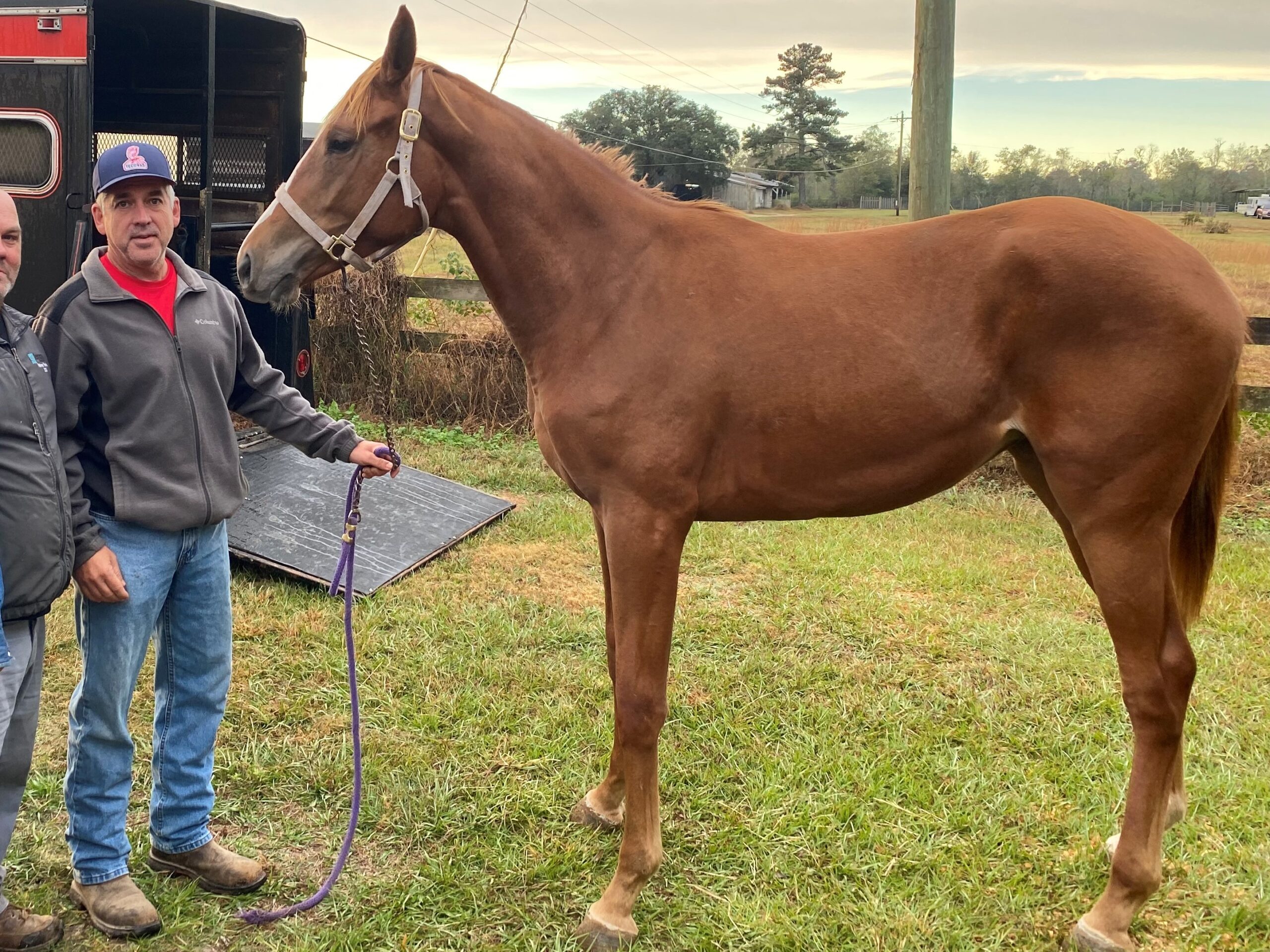
Miles Henry (legal name: William Bradley) is a professional horseman based in Folsom, Louisiana. He holds Louisiana Racing License #67012 and has spent over three decades managing Thoroughbreds at premier tracks including Fair Grounds, Delta Downs, and Evangeline Downs.
Expertise & Hands-On Experience: Beyond the track, Miles has decades of experience in specialized equine care, covering everything from hoof health and nutrition to training protocols for Quarter Horses, Friesians, and Paints. Every guide on Horse Racing Sense is rooted in this “boots-on-the-ground” perspective.
30 of their last 90 starts
Equibase Profile.

Connect with Miles: