
Last updated: November 11, 2026
Any links on this page that lead to products on Amazon are affiliate links and I earn a commission if you make a purchase. Thanks in advance – I really appreciate it!
Chaps are easy to recognize, but their purpose isn’t always obvious. Why do cowboys and bull riders wear them?
The style depends on the job. Here’s how the main types differ, where chaps came from, and why riders still wear them on ranches and in rodeo arenas.
Table of Contents

What Are Chaps?
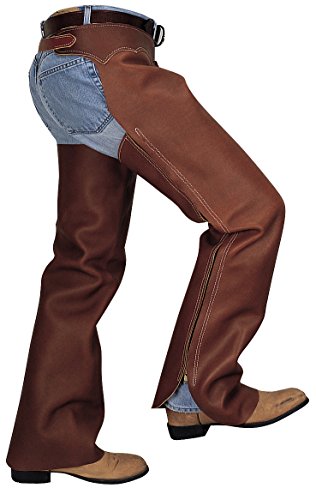
Chaps have two separate leather legs joined by a belt at the waist. Unlike pants, they leave the seat and crotch open. Most riding chaps are cowhide, either smooth leather or suede, though the cut varies with the style, according to Wikipedia.
The name comes from the Spanish word chaparreras. You’ll often hear riders pronounce it “shaps.”
Why Cowboys Wear Chaps
Chaps are work clothes first. Here’s where they help:
- Leg protection. Mesquite, cactus, and briars can tear through jeans and scratch your legs. Chaps take the beating instead and add a layer against rubbing and scrapes during cattle work.
- Warmth. Leather helps shield your legs from wind and cold, and woolies use fleece or hair-on hide for extra warmth.
- Less wear on your jeans. Chaps catch mud and manure and take much of the rubbing that would otherwise wear out your pants.

Where Chaps Came From
Chaps grew out of Mexico’s ranching tradition and became part of the American cowboy’s working outfit. Earlier Mexican riders used leather shields called armas, attached to the saddle to cover their legs. How armas turned into modern chaps isn’t as clear-cut as a neat timeline suggests, and accounts of their development differ.
As cowboys adopted them, different cuts suited different country. Close-fitting shotgun chaps held in warmth and kept brush out, while wider batwings let air through and made work on foot easier, according to American Cowboy’s history of chaps. They became as much a part of what Old West cowboys wore as boots and hats.
Types of Chaps
| Style | What they look like | Common uses |
|---|---|---|
| Shotgun | Narrow legs that close around the full leg, usually with a zipper | Brush, cold weather, and trail riding |
| Batwing | Wide, flared legs held on by a few fasteners at the thigh | Hot weather, work on foot, and rodeo |
| Chinks | Half-length chaps ending a few inches below the knee, usually fringed | Warm climates and ranch work |
| Armitas | Short, closed leggings worn like pants, with a fringed belt | Traditional buckaroo work |
| Woolies | Shotgun-style chaps made with fleece or hair-on hide | Cold country and winter riding |
Shotguns wrap closely around the legs and hold in more heat than open styles. Batwings and chinks allow more airflow, though chinks leave the lower legs exposed, and woolies provide extra warmth for cold-country riding. You’ll find more on each style in American Cowboy’s history of chaps.
English riders wear chaps, too, and many wear half chaps, which cover just the lower leg over a paddock boot.
If you’re shopping for a basic pair of work chaps, Weaver makes a full-grain leather shotgun style:
Why Rodeo Cowboys Wear Chaps
In roughstock events like bull riding, saddle bronc, and bareback riding, competitors wear chaps for leg protection and showmanship, often in a batwing style. Rodeo chaps are often brighter and more decorative than working ranch chaps, with long, flowing fringe. Leatherworkers have lengthened the flaps over the years to show off the motion of a bull or bronc, according to American Cowboy.

Do Cowboys Still Wear Chaps?
Yes, but not every cowboy wears them for every job. A rider working through thick brush has a different reason to wear chaps than someone crossing an open pasture. They’re working gear, not a requirement for looking like a cowboy.
Horseshoers wear specialized farrier’s aprons to protect their legs during hoof work. They’re designed for shoeing, not riding.
Here’s a look at wearing chaps when you ride:

About Miles Henry
Racehorse Owner & Author | 30+ Years in Thoroughbred Racing
Miles Henry (legal name: William Bradley) is a professional horseman based in Folsom, Louisiana. He holds Louisiana Racing License #67012 and has spent over three decades managing Thoroughbreds at premier tracks including Fair Grounds, Delta Downs, and Evangeline Downs.
Expertise & Hands-On Experience: Beyond the track, Miles has decades of experience in specialized equine care, covering everything from hoof health and nutrition to training protocols for Quarter Horses, Friesians, and Paints. Every guide on Horse Racing Sense is rooted in this “boots-on-the-ground” perspective.
30 of their last 90 starts
Equibase Profile.

Connect with Miles: