Last updated: August 11, 2026
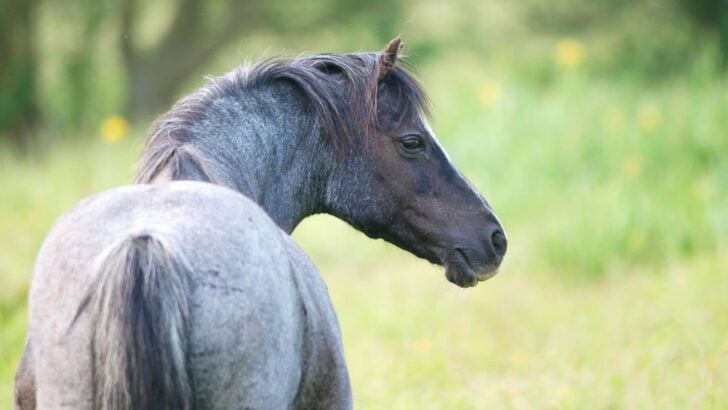
A blue roan can look almost black in winter and steel-blue after shedding, which is why it is often mistaken for gray or grullo – especially in sale photos or under arena lights.
A blue roan is a black-based horse with the classic roan pattern: white hairs are mixed evenly through the body, while the head, mane, tail, and lower legs usually remain darker.
- Unlike gray, a blue roan does not progressively turn white with age.
- Seasonal coats change the shade, not the underlying roan pattern.
- Grullo and blue dun may look similar, but they show dun dilution and primitive markings rather than mixed white hairs.
Below, I’ll show you how to separate a true blue roan from gray, grullo, and other look-alikes, understand the basic genetics, and know what to check before buying or breeding one.
Table of Contents
What Is a Blue Roan Horse?
Blue roan is a coat pattern, not a breed: classic roan on a black base coat. White hairs are mixed evenly through the body, while the head, mane, tail, and lower legs usually remain darker. The shade can look darker in winter and lighter after shedding, but a true blue roan does not progressively turn white with age.
How to Tell a Blue Roan From Gray or Grullo
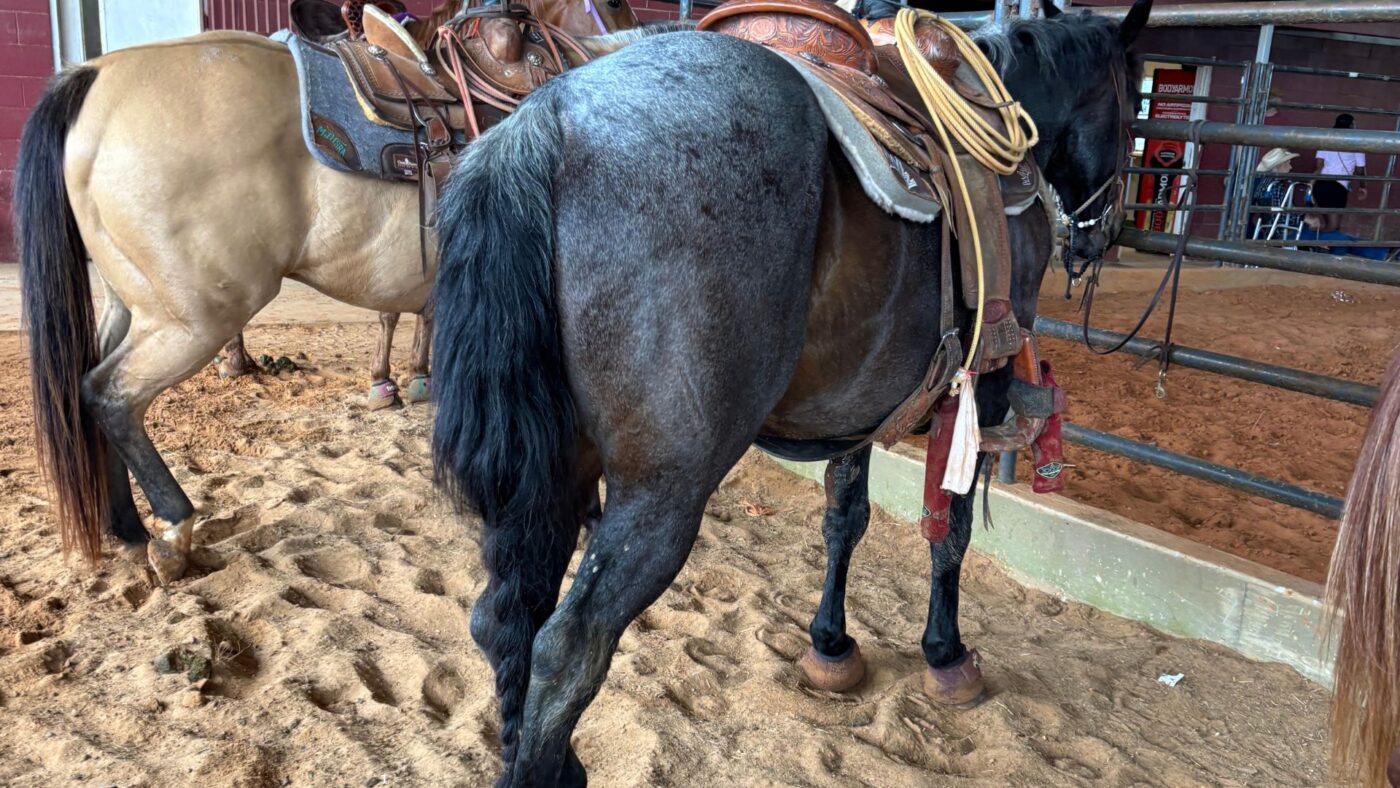
Blue roans are often confused with gray horses and grullos. They can all look blue-gray from a distance, but the body hair, markings, and changes over time tell a different story.
| Color Type | What to Look For | What Changes Over Time? |
|---|---|---|
| Blue Roan | Evenly mixed black and white hairs across the body, with a darker head, mane, tail, and lower legs | The seasonal shade changes, but the overall roan pattern remains stable |
| Gray | White hairs increase as the horse ages, including through the head and face | The horse progressively lightens, often becoming nearly white later in life |
| Grullo | A smoky or mouse-gray coat with a dorsal stripe, leg barring, and other primitive markings – not mixed white hairs | The basic color remains stable, though the shade may shift slightly with the seasons |


For a full comparison of grulla against the other look-alikes, see my dedicated Blue Roan vs. Gray vs. Grullo field guide.
How to Identify a True Blue Roan
When you are trying to identify a blue roan, look at the individual hairs across the body instead of judging the overall shade from a distance. A true blue roan has black and white hairs mixed evenly through the body coat, while the head, mane, tail, and lower legs usually remain much darker. A dorsal stripe, leg barring, or other primitive markings point more toward grullo than roan; a horse that keeps lightening with age is gray.
Corn marks can be another useful clue. These are solid dark patches where white hairs do not return after an old injury, scar, or rub. They can support a roan identification in a horse that already shows the broader pattern, but they do not confirm color on their own.
Foal Coats and Seasonal Changes
Roan is present from birth, but it can be difficult to see in a dark foal coat before the first shed. A foal that begins showing evenly mixed white hairs as that coat comes off may be developing into a blue roan, but color becomes easier to judge with time. If color matters to a purchase or breeding decision, use clear photos of the horse and parents – or DNA testing – instead of relying on a young foal’s first coat.

Blue Roan Genetics and Breeding Basics
Blue roan results when classic roan appears on a black base coat. The same roan pattern on a chestnut base produces red roan, while a bay base produces bay roan. Classic roan is inherited as a dominant trait, so one copy is enough for a horse to show the pattern – but a foal also needs the right black-base genetics to be blue roan specifically.
If color matters to your breeding plans, do not rely on appearance alone. UC Davis offers testing for the classic-roan haplotype it uses for zygosity results; the test is currently $42 for one coat-color test, plus $16 for each additional test submitted with it. Testing the roan pattern and base coat gives you a clearer picture of what a pairing can produce. For the full genetics and inheritance breakdown, see my horse coat colors and patterns guide.
Breeds That Commonly Produce Blue Roans
Blue roan is well established in Quarter Horses, Paint Horses, and some Mustang populations, and it also appears in several draft and gaited breeds. In every case, the horse needs both classic roan and a black base coat. It is not an established classic-roan pattern in Thoroughbreds or Arabians: UC Davis notes that the classic-roan haplotype used in its testing has not been detected in either breed. For Quarter Horse-specific roan history and genetics, see AQHA’s guide to roan Quarter Horses.
What to Check Before Buying a Blue Roan
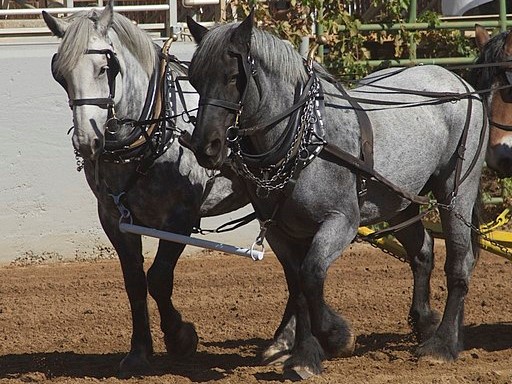
Blue roans can attract a color premium in some markets, especially when the horse is registered, correctly identified, and otherwise desirable. But color does not improve soundness, performance, or temperament. That is not a reason to avoid a blue roan; it is a reason to make sure the coat is not the only thing you are evaluating.
Before you pay a color premium:
- Verify the horse is actually roan. Review clear photos, registration information, and DNA testing if color affects the price or a breeding plan.
- Judge soundness, disposition, training, feet, and conformation before color. A correct, capable horse in a common color is a better long-term investment than a striking coat on a horse with real problems.
- Ask for registration and test records when a seller advertises the horse as genetically confirmed or is asking a meaningful premium for the color.
- Do not let a striking coat replace a proper pre-purchase exam. That step matters regardless of what color is standing in front of you.
FAQs About Blue Roan Horses
What is a blue roan horse?
A blue roan horse has a black base coat with white hairs mixed evenly throughout the body, producing a smoky blue-gray appearance. The head, mane, tail, and lower legs remain darker. The pattern is stable for life and inherited as a dominant trait acting on a black base coat.
How is a blue roan different from a gray horse?
A blue roan’s coat pattern is permanent – it does not change with age. A gray horse progressively lightens from birth until it eventually turns white or near-white. The head of a gray horse lightens first; on a blue roan, the head stays darker than the body throughout life.
Can two blue roans produce a healthy foal?
Yes. Modern genomic testing has disproven the historical claim that homozygous roan pairings are lethal. Homozygous roan horses are healthy and viable. Genetic testing through a laboratory such as UC Davis is still recommended before pairing to confirm zygosity and predict offspring color accurately.
What breeds carry the blue roan color?
Blue roan appears most frequently in Quarter Horses, Paint Horses, and Mustangs. It is very rare in Thoroughbreds, where the classic-roan haplotype used in UC Davis testing has not been detected. The color can appear in any breed where classic roan is present on a black base coat.
How do I confirm my horse is a true blue roan?
Visual identification through even body roaning, a dark head and legs, and corn marks is a strong indicator. For definitive confirmation, DNA testing through a genetics lab such as UC Davis verifies the presence of the classic-roan haplotype. Testing costs $42 for one coat-color test, plus $16 for each additional test.
Are blue roan horses rare?
Yes, relatively, though AQHA doesn’t publish an exact registration percentage specifically for roan. The color requires both classic roan and a black base coat – if either is absent, blue roan does not express, which is part of why it’s less commonly encountered than bay or chestnut horses.
Does a blue roan cost more than other colors?
Often, yes – blue roan typically carries a real color premium in Western performance and breeding markets. The exact amount varies widely by region, discipline, training, and individual horse. Color adds interest, but it never substitutes for a sound, well-made horse – evaluate the actual horse before paying extra for the coat.
What are corn marks on a blue roan horse?
Corn marks are small patches of solid color, matching the base coat, where white hairs are absent – typically where the coat has been injured and healed. They support a roan identification but aren’t a standalone confirmation on their own. They’re unique to roan horses, completely normal, and require no treatment.
What is the difference between blue roan and grullo?
Blue roan comes from classic roan on a black base coat, producing an even mixture of white hairs throughout the body with dark points. Grullo comes from the dun gene on a black base coat, producing a mouse-gray body with primitive markings – a dorsal stripe and leg bars – but no white hairs mixed in. The two look superficially similar but are genetically and visually distinct.

Key Takeaways: Blue Roan Horse
- Blue roan is a coat pattern, not a breed – it appears across many breeds when classic roan is present on a black base coat
- The pattern is permanent – unlike gray, which lightens with age, blue roan is stable for life; only seasonal shedding changes the appearance temporarily
- Corn marks are a supporting clue, not standalone proof – they’re unique to roans, but the surrounding coat pattern is what actually confirms the color
- Homozygous roan is healthy – the lethal homozygous theory has been disproven by modern genomic testing
- Color adds a price premium but not performance value – verify soundness, training, and temperament before paying extra for the coat
About Miles Henry
Racehorse Owner & Author | 30+ Years in Thoroughbred Racing
Miles Henry (legal name: William Bradley) is a professional horseman based in Folsom, Louisiana. He holds Louisiana Racing License #67012 and has spent over three decades managing Thoroughbreds at premier tracks including Fair Grounds, Delta Downs, and Evangeline Downs.
Expertise & Hands-On Experience: Beyond the track, Miles has decades of experience in specialized equine care, covering everything from hoof health and nutrition to training protocols for Quarter Horses, Friesians, and Paints. Every guide on Horse Racing Sense is rooted in this “boots-on-the-ground” perspective.
30 of their last 90 starts
Equibase Profile.

Connect with Miles: