
Last updated: September 9, 2026
Any links on this page that lead to products on Amazon are affiliate links and I earn a commission if you make a purchase. Thanks in advance – I really appreciate it!
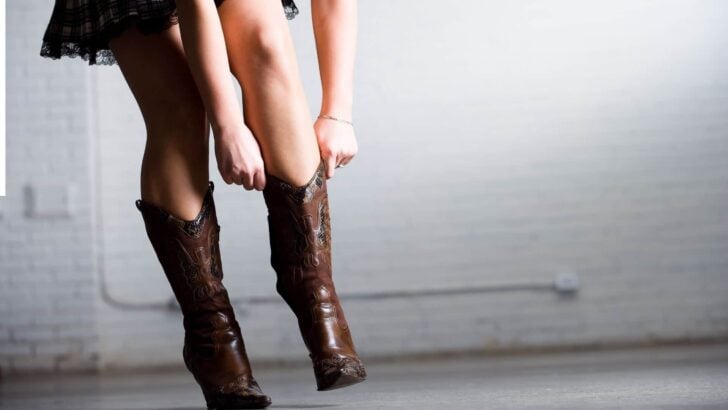
New cowboy boots can be harder to pull on than sneakers or work boots, especially the first few times. The question is whether you’re feeling normal resistance at the instep or trying to force a boot that simply doesn’t fit your foot.
A correctly fitted cowboy boot may take a firm, steady pull to get on when it’s new, but it shouldn’t cause sharp pain or require a daily wrestling match. Expect a snug fit across the instep, room to move your toes, and a little heel slip at first. If the boot pinches, crushes your toes, leaves deep marks, or is still extremely difficult to put on after several wears, check the size, width, and instep fit rather than trying to force a break-in.
Below, I’ll show you how to pull on a stiff pair without abusing the leather, what normal new-boot resistance feels like, and the signs that tell you it’s time to try a different size, width, or style.
How to Put On Stiff Cowboy Boots
- Use the pull straps or a boot hook. Hold the pull straps – not the top edge of the shaft – and keep the boot upright as you put your foot in. A boot hook gives you more leverage without yanking on the leather.
- Wear the sock you actually plan to wear with the boots. Sock thickness changes the fit. When you try on a new pair, wear the same type of sock you expect to wear most often—not bare feet, thin dress socks, or an extra-thick pair meant to hide a tight spot.
- Slide your toes in first and work your heel through the throat. Point your toe down into the boot, then apply steady downward pressure while pulling evenly on both straps – you’re guiding your heel past the tightest point, not forcing your whole foot straight down at once.
- Listen for the heel to settle. Many cowboy boots give a soft “pop” as the heel moves past the throat and settles into the heel pocket—that is commonly normal in a pull-on boot. Ariat’s cowboy boot fit guide describes the same faint pop and initial resistance around the arch as the foot settles into place. Sharp pain, numbness, or a boot that won’t let your heel settle at all is not normal.
- Don’t use force to solve a fit problem. If you have to yank hard enough to strain the pull straps, can’t get your heel seated, or feel crushing pressure across the top of your foot, stop and reassess the size, width, and instep fit instead of pushing through it.
Why New Cowboy Boots Can Be Hard to Put On
New leather boots commonly feel firmer across the vamp, throat, and shaft than they will after regular wear. As the leather flexes and warms to your foot, it usually becomes less stiff and starts conforming to your normal movement. That said, break-in has real limits: leather can give a little, but it can’t add meaningful length or correct the wrong width. A boot that’s fundamentally too narrow, too short, or wrong across the instep won’t reliably become the right fit just because you wore it more.
For the actual step-by-step process – including a 3-day ground break-in method and how to introduce riding sessions safely – see my full guide: How to Break In Leather Cowboy Boots. For more on what leather can and can’t fix once it’s stretched, see how cowboy boots stretch and mold to your feet.

Normal Resistance vs. a Genuine Fit Problem
Difficulty putting a boot on isn’t only a new-boot issue. If a boot doesn’t fit correctly from the start, it’ll stay hard to put on no matter how long you’ve had it, because the underlying fit – not just the leather’s stiffness – is off. Here’s how I tell the difference:
| What You Notice | Usually Normal | Likely a Fit Problem |
|---|---|---|
| Pulling the boot on | Firm resistance while your heel passes the throat; easier with a steady pull | You can’t get your heel fully seated, or you have to pull hard enough to strain yourself or the pull straps |
| Instep | Snug, secure pressure that doesn’t hurt | Burning, numbness, throbbing, or painful pressure across the top of the foot |
| Toe box | Toes can lie flat and move slightly | Toes are bent, jammed, rubbing the front, or pinched at the sides |
| Heel | A small amount of initial heel lift while walking | Excessive slipping, rubbing that raises a blister, or a heel that won’t settle into the pocket – for the full diagnostic, see below |
| After several wears | Leather feels less stiff and more familiar | The same pressure points are still painful, or the boot is still extremely difficult to pull on |
One boot fitting noticeably differently than the other is also worth paying attention to – feet are often slightly different in size or volume, so always try on and walk in both, not just one. Heel slip specifically deserves its own closer look – how much is normal depends on your arch type and foot width, and the way you test it matters (walking vs. standing still gives different answers). For the full walking-test method and what’s normal for different foot types, see my dedicated guide: Should Cowboy Boots Slip at the Heel? What’s Normal.
How Cowboy Boots Should Fit
A well-fitted cowboy boot should hold your foot securely across the instep—an especially important part of the fit because cowboy boots do not lace up like sneakers—without creating pressure or pain. Your toes should lie flat, not touch or curl against the front of the boot, and the ball of your foot should sit near the widest part of the boot rather than being pushed forward into the toe box.
Tony Lama’s cowboy boot fit guide offers a similar baseline: a snug instep, comfortable toe room, the ball of the foot near the broadest part of the boot, and slight heel movement in a new pull-on boot.
Fit also varies more between brands, and even between styles from the same brand, than most first-time buyers expect – I’ve had Ariat boots fit me true to size in one style and run a full size different in another. If you’re not sure whether a boot’s tightness is normal break-in or a wrong size, my guides on whether cowboy boots fit true to size and finding the right fit for wide feet go deeper into brand-specific sizing.
One more thing worth knowing: persistent numbness, altered sensation, swelling, or significant foot pain is a reason to stop wearing a boot and reassess, not a reason to keep pushing through the break-in.
Miles’s Take: Don’t reject a good boot just because it takes a firm pull to get your heel past the throat the first few times. But I also wouldn’t buy a boot hoping it’ll stretch into the right size. If it hurts, crushes your toes, or won’t let your heel settle where it belongs, try a different width, size, or style before you take it home.
Are Cowboy Boots Comfortable Once Broken In?
A well-fitted cowboy boot can be comfortable for a full day, but “broken in” doesn’t automatically mean “comfortable.” The boot still needs the right width, instep shape, toe box, heel height, and underfoot support for your foot and how you plan to wear it – a pair that works fine for short trips or casual wear may not be the pair you want for eight hours on concrete at a show, feed store, or barn. That holds true whether you’re working around the barn or wearing them out for the evening, and regardless of price point – a boot that doesn’t fit correctly won’t become comfortable just because of the label on it. For a full breakdown of what actually makes a cowboy boot comfortable, see my dedicated guide: Are Cowboy Boots Comfortable to Wear?
This video covers a few practical tips for finding the right cowboy boot fit.

FAQ
Do cowboy boots hurt at first?
New cowboy boots can feel stiff and take real effort to put on, but they shouldn’t cause sharp pain. Some initial snugness is normal and eases as the leather softens; ongoing pain, pinching, or marks on your foot point to a fit problem rather than a normal break-in.
Do cowboy boots loosen up?
Yes, cowboy boots typically loosen up over time as the leather molds to your feet. See my full guide on how cowboy boots stretch and mold to your feet for the details – though break-in can’t fix a boot that’s fundamentally the wrong size or width.
How should cowboy boots fit in the toe?
Cowboy boots should give your toes enough room to lie flat and move slightly without rubbing the front or being squeezed at the sides. The ball of your foot should sit near the widest part of the boot. If your toes touch the front when standing or walking, try a different size or toe shape.
What’s the fastest way to break in cowboy boots?
Wear them for short periods at home with the socks you normally use, then gradually increase wear time as the leather flexes and softens. If one small area rubs, a professional boot fitter or cobbler may be able to assess whether a targeted stretch is appropriate. Don’t expect break-in to fix a boot that’s too short, too narrow, or painfully tight across the instep.
How do you put on cowboy boots that feel too tight?
Use the pull straps or a boot hook rather than the top of the shaft, wear the socks you actually plan to wear with them, and angle your foot in toes-first rather than forcing it straight down. A steady, even pull works better than yanking – if you can’t get your heel seated or feel crushing pressure, that’s a sign to check the size and width rather than force it.
Why do cowboy boots make a popping sound when I put them on?
A soft pop often happens when your heel passes through the narrow throat of the boot and settles into the heel pocket. That’s common in a properly fitted pull-on boot. It shouldn’t come with sharp pain, numbness, or the feeling that your toes are being jammed into the front.
A firm pull to get a new cowboy boot past the instep is normal – a daily struggle, sharp pain, or marks left on your foot is not. Give a correctly sized boot real time to break in, but don’t buy one hoping it’ll eventually stretch into the right fit. If something feels genuinely wrong rather than just stiff, trust that and try a different size, width, or style.
About Miles Henry
Racehorse Owner & Author | 30+ Years in Thoroughbred Racing
Miles Henry (legal name: William Bradley) is a professional horseman based in Folsom, Louisiana. He holds Louisiana Racing License #67012 and has spent over three decades managing Thoroughbreds at premier tracks including Fair Grounds, Delta Downs, and Evangeline Downs.
Expertise & Hands-On Experience: Beyond the track, Miles has decades of experience in specialized equine care, covering everything from hoof health and nutrition to training protocols for Quarter Horses, Friesians, and Paints. Every guide on Horse Racing Sense is rooted in this “boots-on-the-ground” perspective.
30 of their last 90 starts
Equibase Profile.

Connect with Miles: