
Last updated: May 23, 2026
Any links on this page that lead to products on Amazon are affiliate links and I earn a commission if you make a purchase. Thanks in advance – I really appreciate it!
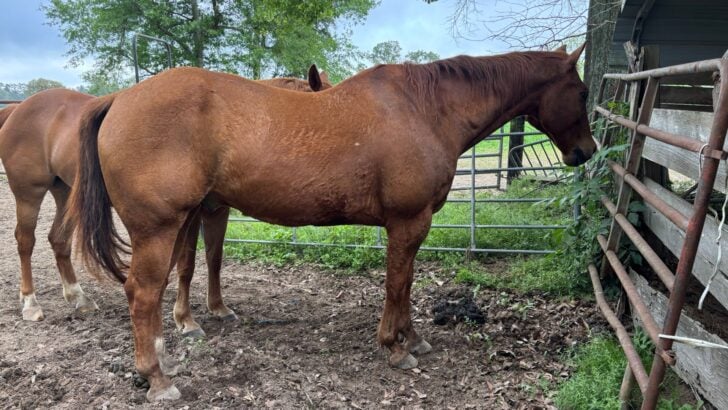
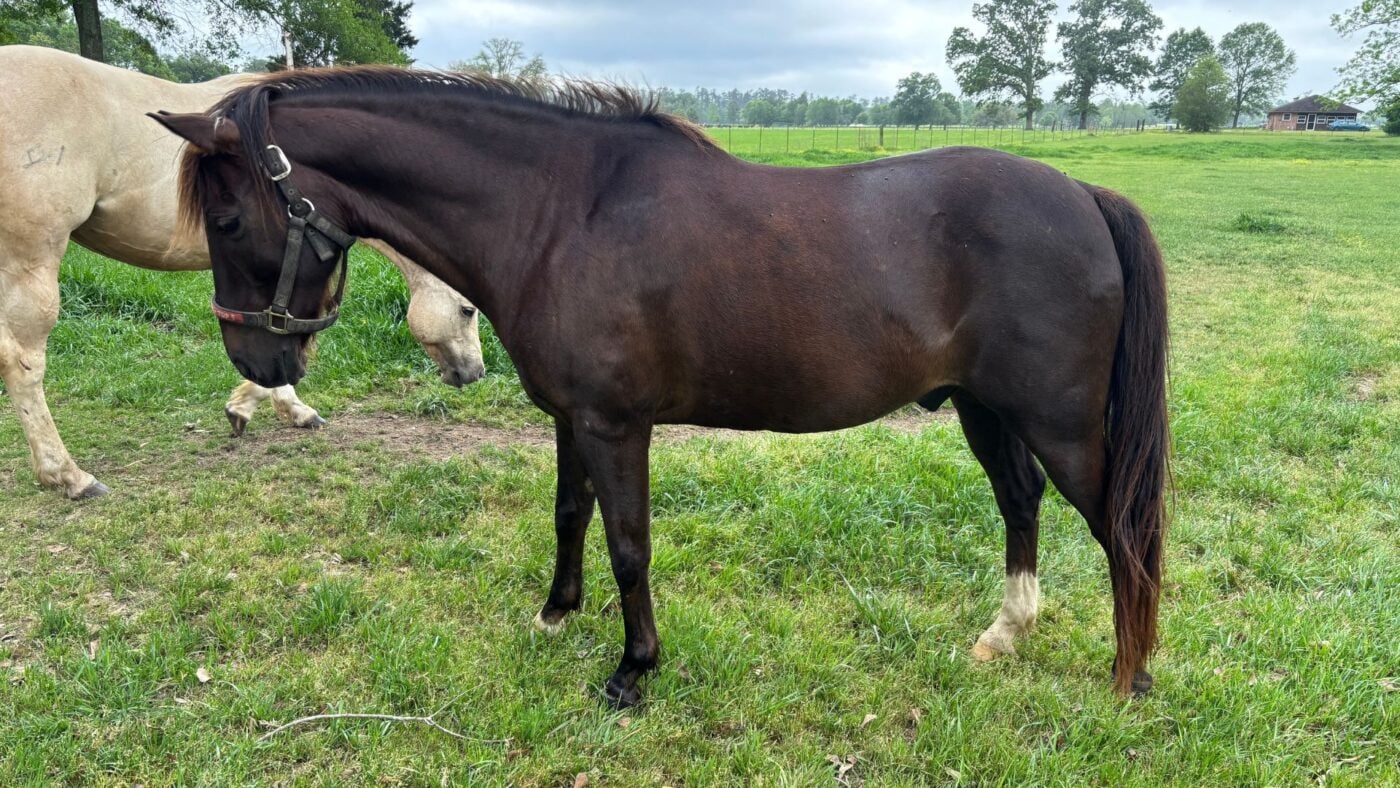
Most horses with PPID do not fall apart overnight. They start with small changes — delayed shedding, more drinking, a topline that quietly disappears — long before the classic curly coat that most owners recognize. I had one 22-year-old Quarter Horse, Rosie, diagnosed early and still on trail rides because her owner caught the coat change in May instead of waiting until late summer.
Managing Cushing’s disease (PPID) in horses — the short version:
- What it is: PPID is a pituitary disorder that drives excess hormone production — progressive, not reversible, but manageable with the right approach
- Earliest sign: Delayed shedding in spring — coat still long after other horses have shed
- Diagnosis: Blood test — resting ACTH, or TRH stimulation test for borderline cases; use seasonally adjusted reference ranges
- Medication: Pergolide (Prascend) — FDA-approved, daily for life, dose adjusted by ACTH retesting
- Diet: NSC under 10% is the common target for horses with confirmed insulin dysregulation; hay must be tested
- Key rule: A horse can be on the right pergolide dose and still develop laminitis if diet isn’t controlled — medication and NSC management must work together
Expertise & Veterinary Disclosure: This guide is based on 30 years of hands-on experience owning and managing Thoroughbreds at Fair Grounds, Evangeline Downs, and Delta Downs (Louisiana Racing License #67012). I am not a licensed veterinarian. The management strategies shared here reflect practices used in my own barn and are provided for educational purposes only. PPID, insulin dysregulation, and laminitis interact in ways that require individual assessment. Always consult with a licensed equine veterinarian before starting, stopping, or changing any medication or making major diet changes for a horse with Cushing’s disease.
Table of Contents
What Is PPID / Cushing’s Disease?
Cushing’s disease in horses — more accurately called PPID (Pituitary Pars Intermedia Dysfunction) — is a pituitary disorder. In a healthy horse, the brain keeps this gland regulated. With age, that control breaks down and hormone production increases — especially ACTH. The result is the symptoms owners recognize: abnormal coat changes, weight loss, and increased thirst. The underlying cause is gradual loss of dopamine-producing nerve cells that normally keep the pituitary in check.
The AAEP classifies PPID as one of the most common endocrine disorders in older horses.
PPID — Key Facts:
- Common in older horses: Most cases diagnosed around 18–20 years of age
- Progressive but manageable: Not curable, but long-term control is achievable with treatment
- Key risk factor: Commonly linked with insulin dysregulation, which increases laminitis risk
- Early detection matters: Outcomes are significantly better before laminitis develops
Miles’s Take — On the Terminology: PPID and Cushing’s disease mean the same thing in horses. I use PPID when I’m talking to vets because it is the more precise term, but if your vet says Cushing’s, they mean the same problem. Don’t get hung up on the name. Get the blood test.
Recognizing the Signs — Checklist and Staging
The goal is to catch PPID before secondary problems develop — especially laminitis. The Equine Endocrinology Group consensus guidelines emphasize that early-stage diagnosis — before laminitis — dramatically improves long-term outcomes.
Common Signs of Cushing’s Disease (PPID) in Horses — If you notice any of these, especially in a horse over 15, call your vet and run an ACTH test:
- Delayed shedding in spring — coat still long after other horses have shed
- Increased drinking and urination — noticeably more water intake than normal
- Loss of topline muscle mass — hollowing behind the withers, weak hindquarters
- Potbelly appearance — despite normal or reduced food intake
- Fat deposits above the eyes, at the tailhead, or along the crest — distinctive “cresty neck” appearance
- Abnormal sweating — either excessive or reduced; wet patches in unusual places
- Recurring or unexplained laminitis — especially without a clear dietary trigger
- Lethargy or reduced performance — less interest in work, slower recovery
- Chronic infections — skin, foot, or dental infections that are slow to resolve
If your horse still has significant winter coat in June in a warm climate — or in July anywhere — that is worth a vet call. By the time the classic potbelly-and-long-coat picture is obvious, the horse has likely had PPID for years.
| Stage | Common Signs | What Owners Often Think |
|---|---|---|
| Early (Stage 1) | Delayed coat shedding in spring; subtle muscle wasting over topline; slightly increased drinking | “Just getting older” / “Bad shedding year” |
| Moderate (Stage 2) | Obvious long, curly coat; potbelly; visible muscle loss over hindquarters; fat pads above eyes and at tailhead | “That coat is really unusual” / “She’s losing condition” |
| Advanced (Stage 3) | Recurring laminitis; chronic infections; weight loss despite adequate feed; lethargy | Damage is already advanced |
Miles’s Take — The Early Warning I Trust Most: The earliest signal I consistently watch for is a horse that still hasn’t shed its winter coat by late spring. In my experience, that single change often appears before weight loss, muscle loss, or laminitis. By the time the more obvious signs are clear, PPID has usually been present for years. Catching it at the coat stage gives you the best chance of long-term control without complications.
Free printable — PPID Symptom Checklist: Take this checklist to your next vet appointment. Covers all nine early and moderate signs of Cushing’s disease organized by stage so you can track changes over time. Download the free PPID Symptom Checklist →
Getting a Diagnosis
If you suspect PPID, call your veterinarian. You do not confirm it by eyeballing the horse alone. Bloodwork is what tells you whether you are dealing with PPID, and in most cases the test gets you the answer quickly.
The ACTH Blood Test
Resting plasma ACTH is the standard first test. A blood sample is drawn and sent to a lab, and an elevated result above the seasonally adjusted range strongly points to PPID. ACTH rises naturally in every horse during the fall, so timing matters — a horse that looks borderline in spring may test clearly positive in autumn. The result still has to be read alongside the horse’s clinical signs, because stress and poor sample handling can skew it.
The TRH Stimulation Test
When ACTH comes back borderline but the horse looks suspicious, the TRH stimulation test is the better tool for early PPID. The vet draws a baseline sample, gives TRH, then draws another sample about 10 minutes later. If the response is exaggerated, that supports the diagnosis even when resting ACTH is still near normal.
Note on Imaging: Pituitary imaging with MRI or CT is rarely done in horses. The risk, cost, and limited availability make it impractical in most older horses. In real-world practice, clinical signs and blood testing are enough to guide treatment.
Medication: Prascend and Pergolide
The standard treatment for PPID is pergolide mesylate, sold as Prascend — the only FDA-approved equine formulation. Pergolide is a dopamine agonist that helps restore hormonal control and lower ACTH. It does not cure PPID, but it does a good job of managing the disease when the dose is right.
| Factor | Details |
|---|---|
| Starting dose | Typically 0.5–1 mg/day; vet-determined based on weight and ACTH level. Some vets now recommend starting at 0.25 mg to reduce side effects. |
| Titration | Dose adjusted based on ACTH retest at 4–6 weeks; many horses stabilize at 1–2 mg/day |
| Early side effects | Reduced appetite in first 1–2 weeks (“pergolide veil”) — usually managed by starting at a lower dose and titrating up slowly |
| Monitoring | ACTH retested 4–6 weeks after any dose change; minimum annually, biannually for advanced cases |
| Seasonal adjustment | Many horses need a proactive dose increase in late summer/autumn (Aug–Oct) to compensate for the natural ACTH seasonal rise |
| Cost | Brand Prascend ~$45–65/month at 1 mg; compounded pergolide available at $20–35/month — see the Cost section for a full breakdown |
Compounded pergolide is widely used and costs less than Prascend. I have seen it work well, but quality depends on the pharmacy, and dosing accuracy is not always equal from one source to the next.
Miles’s Take — The Pergolide Veil Is Real and Manageable: Appetite loss in the first week or two on pergolide is common, and it usually settles if you start low and build the dose slowly. I’d rather begin at 0.25 or 0.5 mg and work up than chase a horse off feed on day one. I have seen owners stop the drug too soon when the better move was simply a slower ramp.
Nutrition: The Most Critical Pillar
Diet often decides whether a PPID horse stays sound. Pergolide controls the hormone side, but diet controls insulin, and both have to work together. I have seen a horse on the right dose of pergolide founder because the feed was wrong.
Insulin Dysregulation — The Driver of Laminitis Risk
High-NSC intake drives excess insulin, and that is what starts the chain that damages the laminae and leads to laminitis.
If Your Horse Has Had Laminitis: Ask your vet to test for insulin dysregulation specifically — a dynamic insulin test or the oral sugar test (OST) — not just ACTH. A horse can have normal ACTH and severely dysregulated insulin. The two conditions coexist but require separate testing to confirm.
The Central Target — NSC Under 10%
NSC (non-structural carbohydrates) is the combined sugar and starch in feed and forage.
| NSC Level | Status for PPID Horse |
|---|---|
| Under 10% | ✅ Safe — target for all PPID horses with confirmed insulin dysregulation |
| 10–12% | ⚠️ Caution — acceptable only for PPID horses without confirmed ID, with vet approval |
| Over 12% | ❌ High risk — avoid in all actively managed PPID horses |
Hay — Test Everything
Hay can change more than most owners think. The same farm, same field, and different cutting can still produce hay that tests very differently from one season to the next. The only way to know is to test it — through Equi-Analytical or your local extension office for $20–40 per sample. That cost is cheap compared with one bad batch. Test every new load before it goes into the ration. For more on choosing low-NSC hay, see the horse hay feeding guide.
| Feed | Status | Notes |
|---|---|---|
| Sweet feed / corn / oats | ❌ Eliminate | High NSC — laminitis trigger regardless of pergolide dose |
| Ration balancers (Enrich Plus, Crypto Aero) | ✅ First choice | Delivers protein, vitamins, and minerals without extra calories; ideal for easy keepers |
| Triple Crown Low Starch | ✅ Safe | 4.7% starch — formulated specifically for insulin-resistant horses |
| Purina WellSolve L/S | ✅ Safe | Low-NSC senior feed; good for horses that need weight support |
| Beet pulp (unmolassed, soaked) | ✅ Safe | High fiber, low NSC; good for horses with dental issues who need soft feed |
| Flaxseed / flax oil | ✅ Safe | Omega-3, anti-inflammatory; 1–2 oz oil or ground flax daily |
| Alfalfa (straight forage) | ⚠️ Caution | High protein, but NSC can be high — test before feeding and limit portions |
Sample Daily Feeding Schedule — 1,100-lb PPID Horse
Sample daily schedule — 1,100-lb PPID horse (NSC-controlled):
- 6:00 AM: 3 lbs tested low-NSC timothy hay (<8% NSC)
- 6:15 AM: 1–2 lbs ration balancer + 1 oz flaxseed oil + daily Prascend tablet (hidden in small amount of soaked beet pulp)
- 12:00 PM: 3 lbs timothy hay
- 6:30 PM: 3 lbs timothy hay + 1 lb soaked beet pulp (if weight support needed) + 1 oz flaxseed oil
Key principle: Feed for the disease, not the appetite. Many PPID horses will beg for grain — they need low-NSC forage and minimal concentrates. Keep forage constant while keeping starch and sugar to an absolute minimum.
Miles’s Take — Hay Testing in South Louisiana: In our area, hay sourcing shifts season to season — what you got in March may not be what’s available in August. I test every new load before it goes into rotation for our Cushing’s-managed horses. I’ve had bermudagrass test at 7% and the same field’s second cutting test at 13% after a dry summer. You cannot eyeball this. The $30 test is non-negotiable.
Exercise for Cushing’s Horses
Exercise is part of the program for a PPID horse that is sound enough to use it. Regular movement helps insulin control, holds muscle better, and keeps the horse from getting stale. If the horse is in an active laminitis episode, that is a different situation. If it is comfortable at the walk, it should be moving.
| Horse Status | Appropriate Exercise | Avoid |
|---|---|---|
| PPID, no laminitis, good muscle mass | Regular light to moderate work — 20–40 min, 4–5 days/week | Hard footing; deep sand if joints are compromised |
| PPID, no laminitis, muscle wasting | Daily handwalking 15–20 min; build to light riding over 8–12 weeks | Long sessions early; downhill work before strength returns |
| PPID, recovered laminitis, vet-cleared | Handwalking only until cleared for gradual return to work | Any riding until vet-cleared; circles before straight-line work |
| Active laminitis episode | Stall rest; deep shavings; vet protocol | All exercise and turnout until episode resolves |
Miles’s Take — Exercise Is Medicine, Not a Bonus: I have seen owners pull back on exercise the moment a horse is diagnosed with PPID — treating it like a fragile condition. Those horses lose condition fast when they stop moving. A PPID horse that is sound and not in laminitis should be moving. Even 20 minutes of handwalking daily makes a meaningful difference in topline and metabolic health over a month.
Hoof Care and Laminitis Prevention
In PPID horses, laminitis starts with metabolism, not mechanics. Diet and insulin control set the risk; hoof care supports the outcome. When insulin runs high, it weakens the laminae and the hoof starts to fail from the inside out. For a deeper look at laminitis management, see the laminitis prevention guide.
The Three Pillars of Laminitis Prevention
Laminitis prevention in PPID horses comes down to three responsibilities that have to work together: diet keeps NSC controlled, medication keeps hormones in range, and farrier care keeps the foot structurally sound while it remains at risk.
Hoof Care Protocol for PPID Horses
Hoof care protocol — PPID horses:
- Farrier every 6–8 weeks without exception — hoof imbalance increases mechanical stress on already-vulnerable laminae; do not stretch the interval
- Provide consistent, forgiving footing — deep shavings year-round, not just during active episodes; PPID horses with thin soles need cushioning as a baseline
- Plan proactively with your farrier — horses at higher risk may benefit from supportive trimming or therapeutic shoeing before problems develop
- Maintain a written laminitis action plan with your vet — contact number, initial steps, when to call vs. when to trailer; speed of response in the first 24 hours changes outcomes
Act immediately — contact your vet if you observe any of these:
- Reluctance to move, shortened stride, or the horse standing with front feet stretched forward to offload weight
- Increased digital pulse or heat in the hooves — especially the front feet — compared to your established baseline
- Sudden stiffness, especially when turning
- Marked appetite loss after starting pergolide — mild reduction is common in the first week; complete refusal is not
- Rapid or unexplained weight loss, or recurring infections that don’t resolve normally
Managing the Whole Horse: Arthritis, Weight, and Dental Health
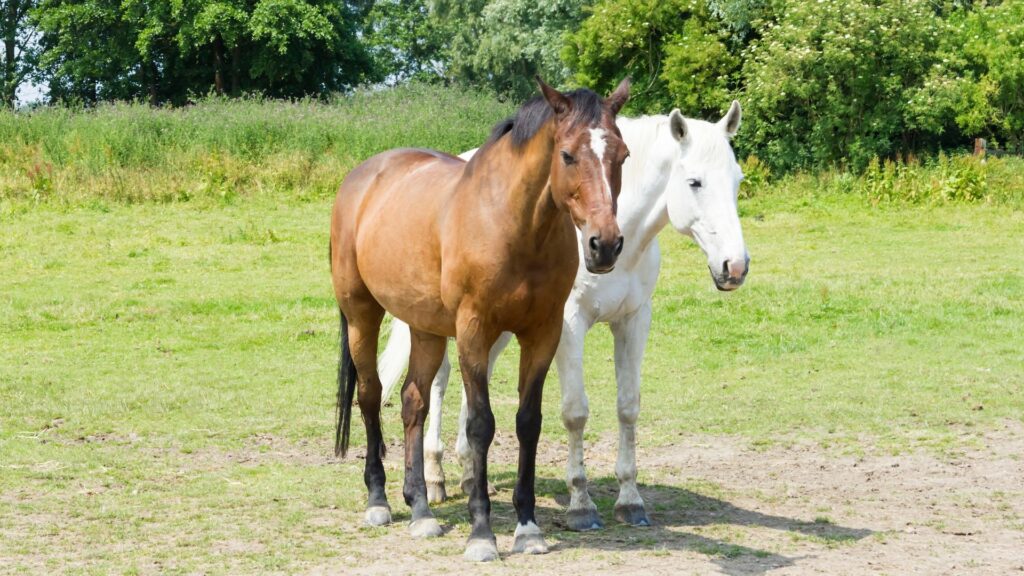
PPID rarely travels alone. Most horses diagnosed with it are already in their senior years, and the same aging process that affects the pituitary also affects joints, muscle, weight, and teeth. Managing a Cushing’s horse well means dealing with the whole horse, not just the bloodwork.
Equine arthritis and joint pain are common in horses aged 18–25, which is also peak PPID age. Hormonal changes associated with PPID may make discomfort harder to recognize in older horses — they may be more uncomfortable than they appear. For an overview of managing arthritis alongside PPID, see the equine arthritis guide for horse owners and the guide to NSAIDs in horses.
Body weight can go either direction. Some PPID horses are obese — PPID combined with insulin dysregulation produces a horse that gains weight despite apparently normal intake and deposits fat at the cresty neck, tailhead, and above the eyes. Others are severely underweight — muscle wasting from elevated cortisol, combined with dental issues and poor nutrient absorption, creates a horse that can’t hold condition. See the guide on why horses lose weight and how to address it — the causes covered there frequently overlap with PPID complications.
Dental health is often the unacknowledged limiting factor in PPID diet management. A horse that can’t chew hay effectively can’t get adequate forage regardless of how well you source it. Annual dental exams are baseline for any horse over 15. For horses with significant dental compromise, soaked hay cubes, beet pulp, and commercial senior feeds replace long-stem forage as the fiber source.
Seasonal Management: Spring Pasture and Autumn Rise
Spring — The Highest-Risk Period
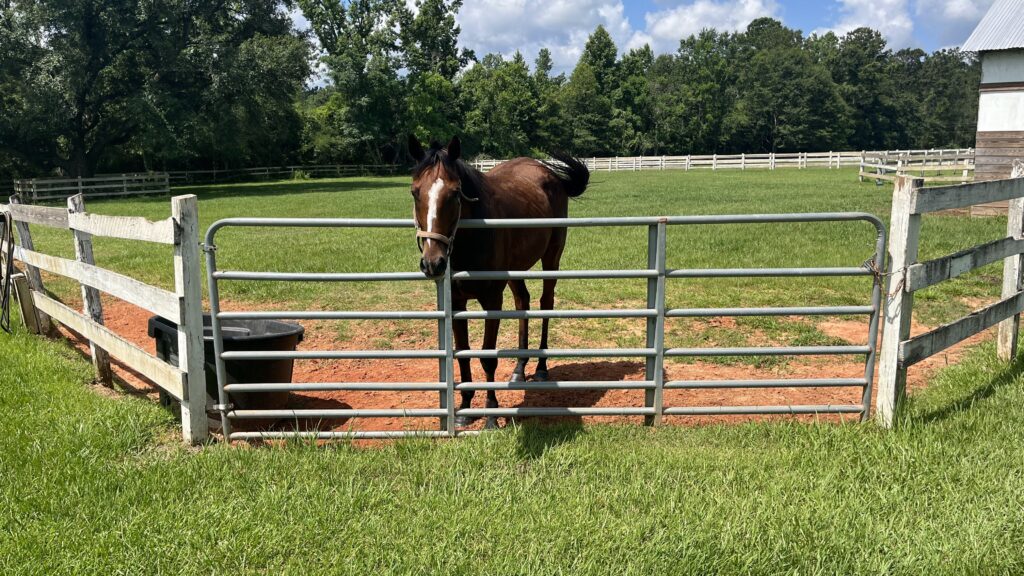
Spring grass can run high enough in NSC to cause real trouble in a sensitive horse. That sugar load drives an insulin spike, and that is where laminitis risk starts. NSC climbs with sunshine and often peaks later in the afternoon, especially after cool nights and bright days — which is why spring turnout has to be managed by timing, not just by the clock.
Spring pasture protocol (Late Feb – June):
- Dry lot or restricted turnout — the most reliable way to control NSC intake
- Grazing muzzle if turnout is necessary — reduces intake by 50–80%, but does not eliminate risk; effectiveness varies by horse
- Early morning turnout only — NSC peaks mid-afternoon
- Hay fed before any turnout — pre-loading the gut moderates the insulin response to grass intake
- Do not rely on limited turnout alone — exposure, not duration, drives risk
Autumn — The ACTH Seasonal Rise
ACTH rises in every horse from August through October, but PPID horses often rise more sharply and lose control right when owners think they are in the clear. A horse that looked steady all summer can start shedding poorly, losing muscle, or getting foot-sore again by late August. By the time you see it, the hormonal shift is already underway.
Autumn management protocol (Aug – Oct):
- Retest ACTH in early–mid September using seasonally adjusted reference ranges — do not use spring ranges for autumn results
- Adjust pergolide dose based on results, not clinical signs alone — waiting for symptoms means the horse has already lost hormonal control
- For horses with prior autumn instability: consider a proactive dose increase in late July or early August; retest in September to confirm
- Do not assume a previously effective dose remains adequate — the seasonal rise regularly breaks through doses that worked all summer
Can Horses With PPID Still Be Ridden?
Yes — many older horses with Cushing’s disease stay in light to moderate work for years after diagnosis. PPID alone is not a reason to retire a horse. What matters is soundness, hoof damage from past laminitis, and how well the horse is being managed.
Riding with PPID — what determines whether it’s appropriate:
- Horse is sound at the walk and trot: Light trail riding, arena work, and handwalking are appropriate and beneficial for most PPID horses without active laminitis
- No active laminitis episode: If the horse is currently in pain from a laminitis event, all riding stops until veterinary clearance
- No significant coffin bone rotation or sinking: Horses with structural hoof damage from past laminitis may need permanent work restrictions — consult your vet and farrier together
- Medication and diet are stable: A horse whose PPID is not yet controlled may benefit more from rest and management adjustment than from working
- Muscle mass is adequate: PPID-related muscle wasting can affect balance and stamina; build back to work gradually
PPID does not have to mean retirement. For guidance on conditioning older horses appropriately, see the senior horse exercise guide.
What Does It Cost to Manage a Horse with Cushing’s Disease?
Cost is one of the first questions owners ask after a PPID diagnosis, and it deserves a straight answer. Managing Cushing’s disease is not cheap, but it is predictable if you stay ahead of it. The big bills come from the problems you let develop. One laminitis episode can cost more than a full year of proper management.
| Expense | Typical Cost | Frequency |
|---|---|---|
| Prascend (brand, 1 mg/day) | $45–65/month | Ongoing — daily for life |
| Compounded pergolide (1 mg/day) | $20–35/month | Ongoing — daily for life |
| ACTH blood test | $40–80 per test | Minimum 2x/year (spring + autumn) |
| Hay NSC testing (Equi-Analytical) | $20–40 per sample | Every new batch — typically 4–8x/year |
| Farrier visits (every 6–8 weeks) | $60–150 per visit | 6–8x/year; more if therapeutic shoeing needed |
| Ration balancer / supplements | $40–80/month | Ongoing |
| Single laminitis episode (vet + farrier + stall rest) | $2,000–10,000+ | Preventable — costs more than a full year of routine management |
Miles’s Take — Where to Save and Where Not To: Compounded pergolide is a legitimate cost reduction, and I have seen it work well in horses that responded to brand Prascend. What I would not cut is hay testing or the autumn ACTH retest. That $30 hay test is cheap insurance, and skipping the fall retest can cost far more when the dose stops being enough in September.
FAQs About Cushing’s Disease in Horses
What is the life expectancy of a horse with Cushing’s disease?
With proper management, most horses with PPID live comfortably for years after diagnosis. Quality of life matters more than a fixed life expectancy. Horses caught early often stay in light work for many years, while horses diagnosed after laminitis or major weight loss have a tougher road.
Can a horse recover from Cushing’s disease?
No. PPID is progressive and does not reverse. What you can do is control it well enough that the horse stays comfortable and secondary problems like laminitis, infection, and weight loss are minimized or prevented.
What is the best hay for a horse with Cushing’s disease?
Tested low-NSC hay is the best choice — usually timothy, orchard grass, or bermudagrass if the numbers are right. The grass species matters less than the actual test result. If a batch is borderline, soaking can help, but testing is still the first step. See the horse hay feeding guide at horseracingsense.com/feeding-horses-hay/ for more detail.
How often should I test ACTH in a horse with PPID?
Test at diagnosis, then retest about 4–6 weeks after starting or changing pergolide. After that, most horses should be tested at least once a year, and many do better with spring and fall testing. If clinical signs change, test sooner.
Should a horse with Cushing’s be on pergolide for life?
Yes. PPID is a lifelong condition, and stopping pergolide usually allows the signs to return. The dose may need to change over time, but long-term treatment is the standard approach.
What triggers laminitis in horses with Cushing’s disease?
In most PPID horses, laminitis is triggered by insulin dysregulation, not PPID alone. High-NSC feed, spring grass, and untested hay are the common problems. That is why medication and diet both have to be managed.
Is PPID the same as insulin resistance in horses?
No, but the two often occur together. PPID is a pituitary disorder, while insulin dysregulation is a metabolic problem tied to how the horse handles sugar. A horse can have one without the other, so both need proper testing.
Can a horse with Cushing’s eat grass?
Yes, but grass has to be managed carefully. Unrestricted spring pasture is risky for horses with insulin dysregulation. Controlled turnout timing helps — early morning is safer than midday or afternoon when NSC peaks. A grazing muzzle and hay fed before turnout both reduce the risk.
What keeps a PPID horse sound — three things that have to work together:
- Diet controls insulin: Keep NSC under 10% for horses with insulin dysregulation. Test every load of hay. No grain or sweet feed.
- Pergolide controls hormones — but only at the right dose: Retest ACTH after any dose change and at least twice a year. A horse can look stable and still be out of range.
- Seasonal management is where programs succeed or fail: Spring grass drives laminitis; manage it with dry lot, muzzle, and early turnout. Autumn breaks hormonal control; retest in September and adjust before symptoms appear.
About Miles Henry
Racehorse Owner & Author | 30+ Years in Thoroughbred Racing
Miles Henry (legal name: William Bradley) is a professional horseman based in Folsom, Louisiana. He holds Louisiana Racing License #67012 and has spent over three decades managing Thoroughbreds at premier tracks including Fair Grounds, Delta Downs, and Evangeline Downs.
Expertise & Hands-On Experience: Beyond the track, Miles has decades of experience in specialized equine care, covering everything from hoof health and nutrition to training protocols for Quarter Horses, Friesians, and Paints. Every guide on Horse Racing Sense is rooted in this “boots-on-the-ground” perspective.
30 of their last 90 starts
Equibase Profile.

Connect with Miles: