
Last updated: June 9, 2026
What are the greatest horse racing tracks in the world?
- Churchill Downs, Saratoga, and Keeneland anchor the American championship calendar — from the Kentucky Derby in May to the Breeders’ Cup in October
- Royal Ascot, Epsom, and Cheltenham define British racing across flat and jump disciplines — the original Derbies, the Gold Cup, and five days of international prestige at Ascot
- Flemington and Royal Randwick represent Australia’s two poles — staying race endurance at two miles versus the world’s richest sprint at 1,200 metres
- Meydan hosts the world’s richest single race day — $30.5 million in total purses in March, anchored by the $12 million Dubai World Cup
- Longchamp, Sha Tin, Tokyo Racecourse, and The Curragh complete the international championship calendar — the Arc, the Hong Kong International Races, the Japan Cup, and the Irish Classics
- Surface, distance, and ground conditions vary dramatically across circuits — the same horse rarely dominates two different continents, and the same condition label means different things in different countries
Churchill Downs is the most famous venue in American sports. Royal Ascot has operated since 1711. Cheltenham is the pinnacle of a discipline that most American fans have never watched. Meydan hosts the richest single race day on earth. Each of these iconic racecourses is the greatest at something specific, and understanding what that something is tells you more about the global sport than any ranking could. This guide covers 13 of the world’s best horse racing tracks — what makes each one matter, what each one tests, and what a bettor or fan needs to know before watching a race there for the first time.
How we evaluated these tracks: A racetrack earns a place on this list by consistently doing at least one of five things: carrying significant historical weight that shaped the sport; hosting races that assemble the highest-quality international fields; attracting global participation from the best horses and connections; generating attendance and atmosphere that makes the event culturally significant beyond racing fans; or influencing how the broader sport develops — through breeding, prize money structures, or formats that other circuits adopt. No track needs to lead in every category. Each one on this list shapes the sport at the highest level within its region or discipline.
Responsible Gaming: Horse racing betting carries significant financial risk. This guide is for educational and fan-experience purposes. Never bet more than you can afford to lose. If you or someone you know has a gambling problem, contact the National Council on Problem Gambling at 1-800-522-4700.
Table of Contents
The Greatest Horse Racing Tracks in the World — At a Glance
| Track | Location | Signature Race | Surface | Signature Purse |
|---|---|---|---|---|
| Churchill Downs | Louisville, KY, USA | Kentucky Derby | Dirt & turf | $5M |
| Saratoga Race Course | Saratoga Springs, NY, USA | Travers Stakes | Dirt & turf | $1.25M |
| Keeneland | Lexington, KY, USA | Breeders’ Cup Classic (host) | Dirt & turf | $7M (BC Classic) |
| Epsom Downs | Surrey, England | The Derby | Turf | $2.5M |
| Royal Ascot | Berkshire, England | Gold Cup | Turf | $12.5M total meet |
| Cheltenham | Gloucestershire, England | Cheltenham Gold Cup | Turf (jump) | $781K |
| Flemington | Melbourne, Australia | Melbourne Cup | Turf | $5.8M USD |
| Royal Randwick | Sydney, Australia | The Everest | Turf | $13M USD |
| Meydan | Dubai, UAE | Dubai World Cup | Dirt & turf | $12M |
| Sha Tin | Hong Kong | Hong Kong Cup | Turf & dirt | $15M total meet |
| Longchamp | Paris, France | Prix de l’Arc de Triomphe | Turf | $5.5M |
| Tokyo Racecourse | Tokyo, Japan | Japan Cup | Turf & dirt | $4.1M |
| The Curragh | County Kildare, Ireland | Irish Derby | Turf | $1.4M |
Which Is the Greatest Horse Racing Track in the World?
There is no universally accepted greatest horse racing track in the world. Churchill Downs is the most famous, drawing 150,000 fans to the Kentucky Derby each May and generating a national television audience that includes millions of people who watch no other race during the year. Royal Ascot is the most prestigious annual meeting — five days of international flat racing dating to 1711, attended by royalty, and carrying more combined heritage than any other racing festival.
Cheltenham is the pinnacle of jump racing, the one venue where the full spectrum of steeplechase ability is tested at the highest level over the most demanding course in the sport. Longchamp hosts the Prix de l’Arc de Triomphe, widely regarded as the world’s premier turf race, assembling the deepest international field of any single flat race each October.
The honest answer is that greatness in horse racing is discipline-specific. A track that is the greatest venue for sprint racing — Royal Randwick with The Everest — is not the greatest venue for staying races. A track that defines jump racing — Cheltenham — has no meaningful comparison to a flat racing track. What the 13 venues on this list share is that each one is the definitive test of something within the sport. That specificity is what makes them matter.
United States
Churchill Downs — Louisville, Kentucky
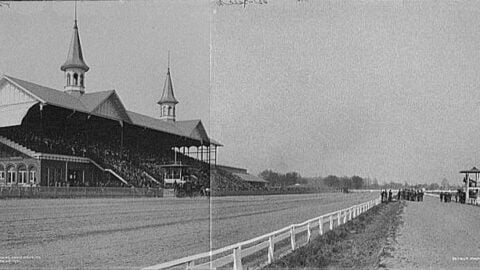
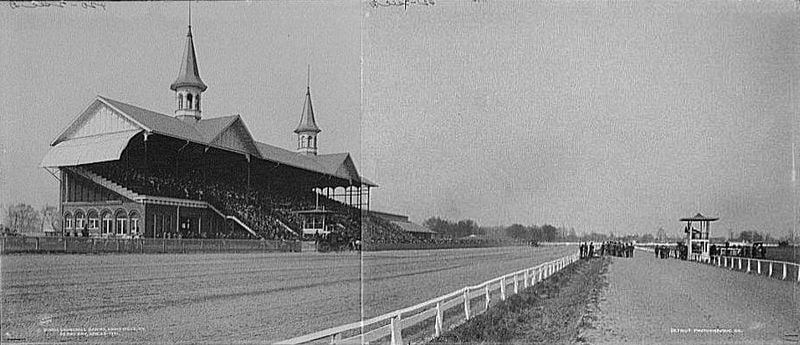
Churchill Downs has hosted the Kentucky Derby since 1875 — the most famous horse race in American sports and the opening leg of the Triple Crown. The track’s twin spires are the most recognized image in American racing, and Derby day draws over 150,000 fans to Louisville each May. The one-mile dirt oval is known for a surface that rewards early speed and tactical positioning, with a short run to the first turn that resolves pace scenarios before most horses have room to adjust.
The $5 million purse and the national television audience that includes millions of casual fans who watch no other race during the year make it the sport’s single most important day. For full handicapping notes on Churchill’s surface, pace tendencies, and track bias, see the US horse racing tracks guide.
Saratoga Race Course — Saratoga Springs, New York
Saratoga Race Course is the oldest major Thoroughbred track in the United States, dating to its first meet in 1863 — though Fair Grounds in New Orleans has operated since 1838 and predates it. What Saratoga has that no other American track can match is a six-week summer meet that consistently produces more upsets per card than any comparable stakes circuit.
The Graveyard of Champions nickname is earned: Man o’ War lost his only career defeat here, and the list of heavily favored horses beaten at Saratoga is long enough to be a cautionary tale about betting chalk at this oval. The dirt track plays fair with a slight bias toward horses that stalk from just off the pace rather than horses who lead wire-to-wire — pure front-runners face more structural resistance at Saratoga than at most American tracks.
Keeneland — Lexington, Kentucky
Keeneland runs only two short meets per year — April and October — yet carries more championship weight than tracks that operate six months. Its limestone-based surface plays fast and honest, and the short meet calendar means the track never develops the deep bias that can emerge at venues running 100-plus days.
Keeneland is the fall championship home: it hosts the Breeders’ Cup World Championships on a rotating basis, with the 2026 running scheduled for October 30-31 with 14 Grade 1 races and more than $34 million in total purses. It is also the site of the most important Thoroughbred auction in the world — the November Breeding Stock Sale — which runs immediately after the Breeders’ Cup and draws buyers from every major racing nation.
Miles’s Take — Why American tracks feel different to an owner: Every track I’ve run horses at has its own character — the way the Fair Grounds oval plays deep and demanding in a wet New Orleans winter, the way Delta Downs favors horses that rate and save ground. What watching the international circuits has taught me is that American dirt racing rewards a specific kind of horse: gate speed, tactical flexibility, and the ability to handle track bias quickly. The horses dominating at Ascot or Flemington are built for something different — longer, more gradual acceleration, stamina over quick fractions. Neither is better. They’re just different tests of a different athlete.
United Kingdom
Epsom Downs — Surrey, England
Epsom Downs has a claim to greatness that no other racetrack in the world can make: every horse race called a Derby — the Kentucky Derby, the Irish Derby, the Italian Derby, the German Derby — is named after the race first run here in 1780. The original Epsom Derby is one of the five British Classics and one of the most influential races in the history of the sport. The track configuration is unlike anything else in international racing: a sharp downhill run from the start, a left-hand turn through Tattenham Corner at pace, and a camber on the straight that tilts the track surface in a way that genuinely disadvantages horses without balance and adaptability.
Horses that win the Epsom Derby have typically demonstrated physical and mental qualities beyond what their pedigree alone would predict — the track sorts out horses that can’t handle its demands regardless of how talented they look on paper. Camelot, Galileo, Sea The Stars — the roll call of Derby winners reads as a who’s who of the horses that later defined European breeding.
Epsom betting note: Horses that race prominently through Tattenham Corner hold a significant advantage over horses that need a wide, sweeping run to produce their best. The camber pushes horses toward the stands rail in the straight, and horses that can handle the gradient while maintaining momentum have historically outperformed their odds. Draw and early positioning matter more at Epsom than at any other British flat track.
Royal Ascot — Berkshire, England
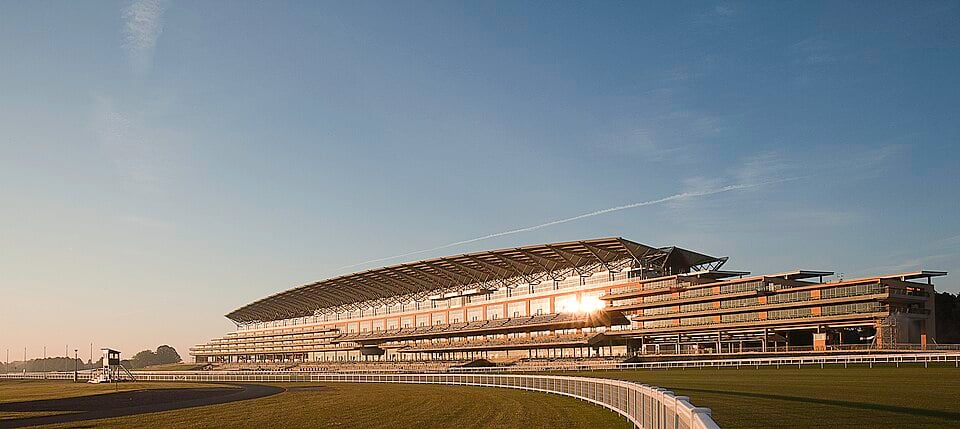
Royal Ascot was established by Queen Anne in 1711 and has run continuously since — one of the oldest and most prestigious racing festivals in the world. The five-day June festival draws approximately 70,000 fans daily, attracts royalty and global connections, and generates more than $12.5 million in total purse money. The track spans distances from five furlongs to two and a half miles on turf — a range requiring genuinely versatile horses and producing some of the deepest fields in international flat racing.
Trawlerman’s 2025 Gold Cup win in a course-record 4:15.02 illustrated what genuine staying form looks like at the highest level. British ground conditions shift meaningfully across the five festival days and can completely change which horses hold a surface advantage — it’s the single most underrated variable for American bettors approaching Ascot.
Ascot betting note: Ground conditions — good, good-to-firm, good-to-soft, soft, heavy — are the variable American bettors most consistently underweight. A horse with a strong record on fast ground can struggle badly when the going softens after rain. Check declared ground conditions and each horse’s ground preferences before anything else when handicapping Royal Ascot races.
Cheltenham Racecourse — Gloucestershire, England
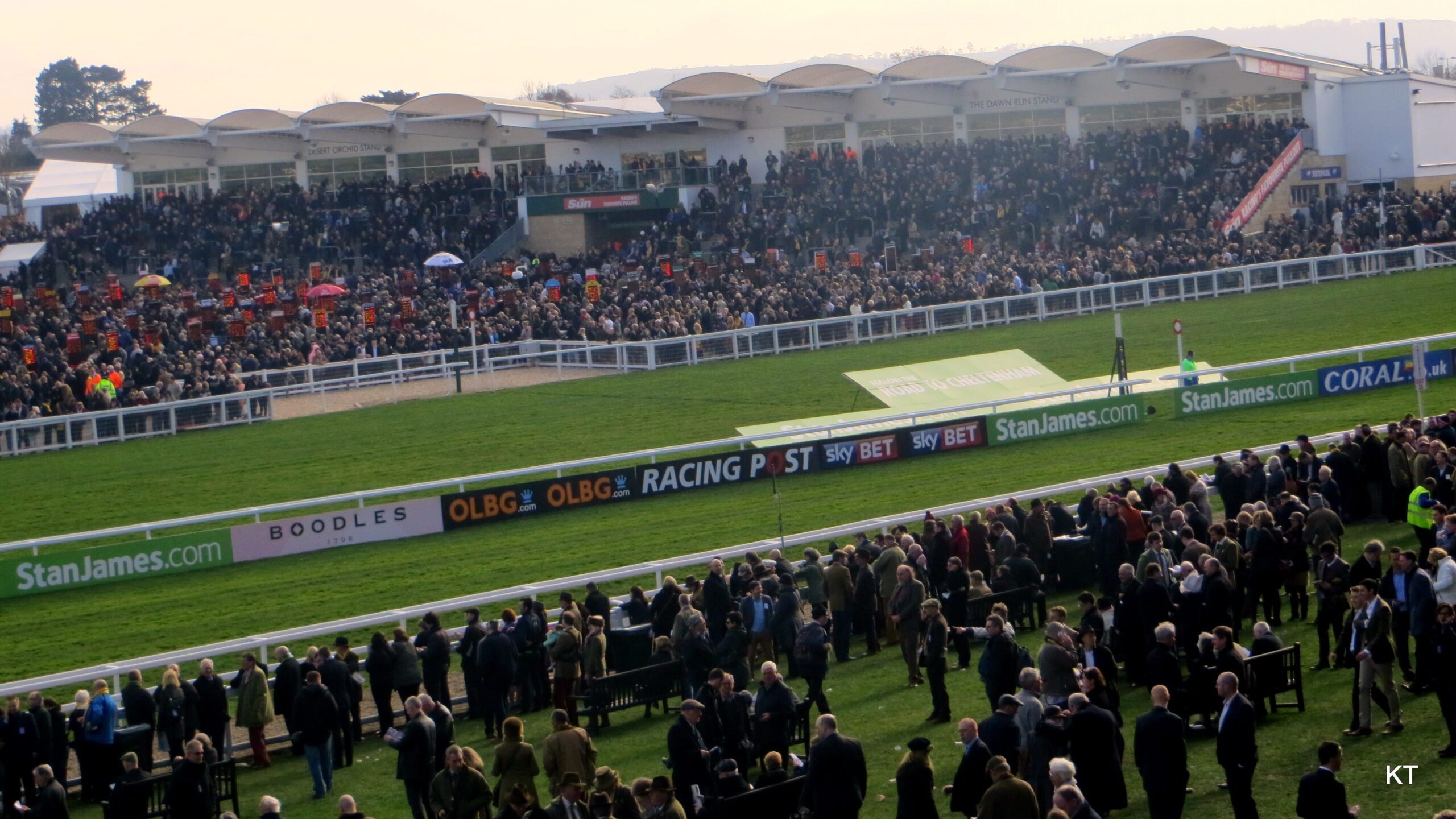
Cheltenham is the home of jump racing — steeplechase and hurdle races over two to three miles of demanding turf with obstacles, culminating in the annual March Festival that draws 68,000 fans across four days. The Cheltenham Gold Cup carries approximately $781,000 and is jump racing’s most prestigious prize. The track tests a completely different athlete than flat racing: jumping ability, stamina, tactical intelligence under a rider navigating fences, and the physical durability to sustain effort over three miles of uneven ground with significant elevation changes.
For an American owner who campaigns horses at six furlongs to a mile and a quarter on dirt, the Gold Cup is a genuine education in what a horse can be asked to do. The field complexity and the variables introduced by jumping consistently produce meaningful exotic payouts even when favorites win.
Australia
Flemington Racecourse — Melbourne, Victoria
Flemington hosts the Melbourne Cup — a two-mile handicap with a $5.8 million USD purse that draws elite international fields and a Spring Racing Carnival bringing more than 285,000 spectators to the track across multiple race days. The handicap format — where horses carry different assigned weights to theoretically level the field — creates the kind of unpredictable outcomes that generate exotic payouts and produce long-priced winners.
Knight’s Choice won the 2024 Melbourne Cup at long odds, a result that rewarded bettors who studied weight assignments and staying form rather than name recognition. What stands out from the perspective of an American owner is the international composition of Cup fields: European stayers, trained specifically for distance over turf, regularly ship to Melbourne and compete with Australian-bred horses on equal or better terms. Makybe Diva’s three consecutive Melbourne Cup victories from 2003 to 2005 remain one of the sport’s most remarkable sustained achievements — endurance and consistency at a distance and under conditions that test every aspect of a racehorse’s ability.
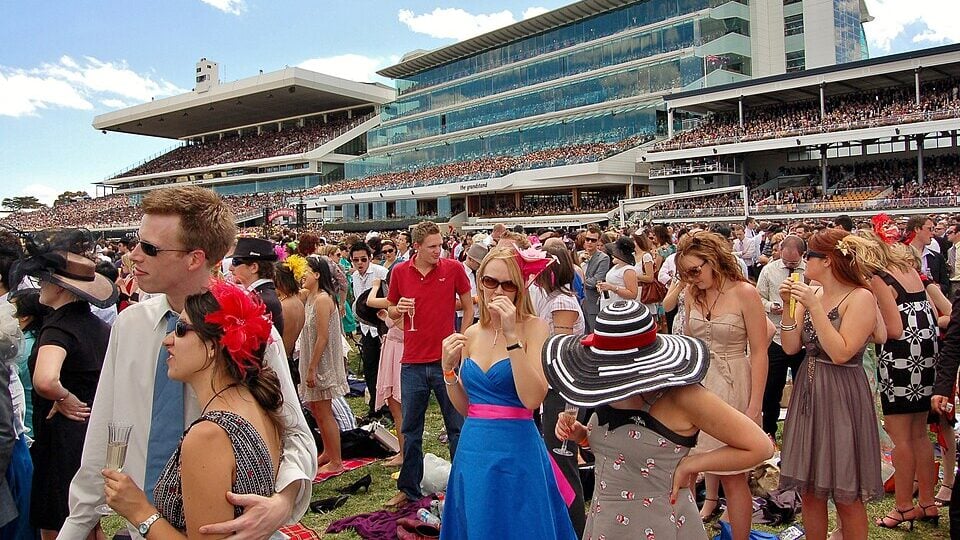
Melbourne Cup betting note: Handicap weight assignments are the variable most American bettors don’t study carefully enough. A highly rated horse carrying top weight over two miles on turf is at a structural disadvantage even if it’s the best horse on paper. Horses near the bottom of the weight range with proven staying form have historically produced the Cup’s biggest surprises — focus there before looking at class and connections.
Royal Randwick — Sydney, New South Wales
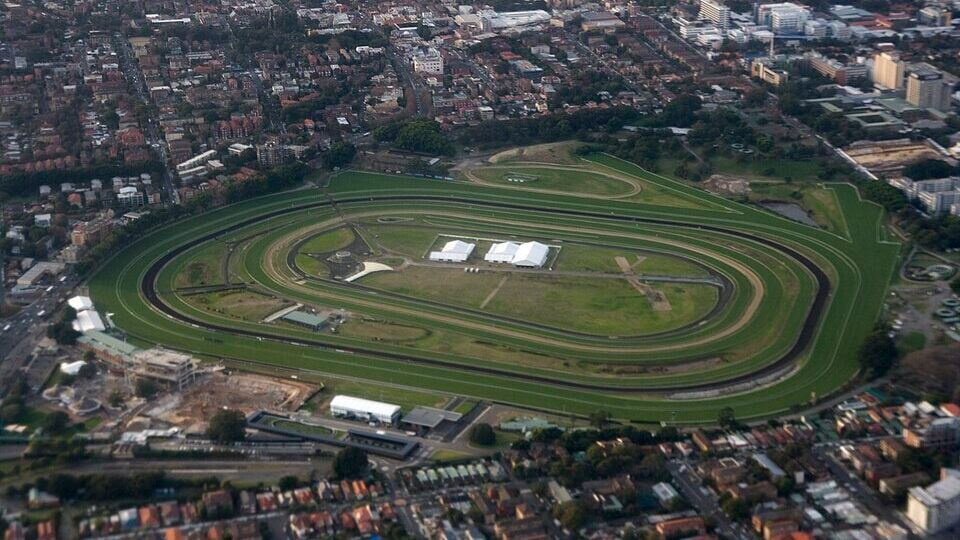
Royal Randwick hosts The Everest — the world’s richest turf race at $13 million USD — a 1,200-metre sprint that is as far from the Melbourne Cup as racing gets. Where Flemington rewards the staying horse that can sustain effort over two miles, Randwick’s Everest rewards explosive speed over a six-furlong sprint on fast turf. The 2022 Everest produced one of sprint racing’s great upsets when Giga Kick won at 20-1, and Bella Nipotina’s 2024 renewal confirmed that Randwick’s fast turf consistently favors horses with gate speed and the tactical ability to find clean running in a compressed field. The Everest’s slot system — where owners purchase nominated slots rather than a traditional entries process — creates a unique commercial structure that has attracted significant international attention as a model for high-value sprint racing.
Middle East and Asia
Meydan Racecourse — Dubai, UAE
Meydan opened in 2010 and immediately redefined what a racetrack could be — a grandstand spanning over a kilometer, capacity up to 60,000, and a race day total prize fund of $30.5 million that makes Dubai World Cup night the richest single race day on the global calendar. The $12 million Dubai World Cup runs over dirt, and the supporting card includes the $5 million Dubai Turf and multiple other Group 1 events.
The Meydan dirt is meaningfully different from American dirt — American horses have historically performed well here when they arrive fit and have demonstrated form on comparable surfaces. Laurel River’s 2024 Dubai World Cup performance illustrated how surface preference separates sharp bettors from casual ones when facing an international field with horses from multiple continents, many running on an unfamiliar surface.
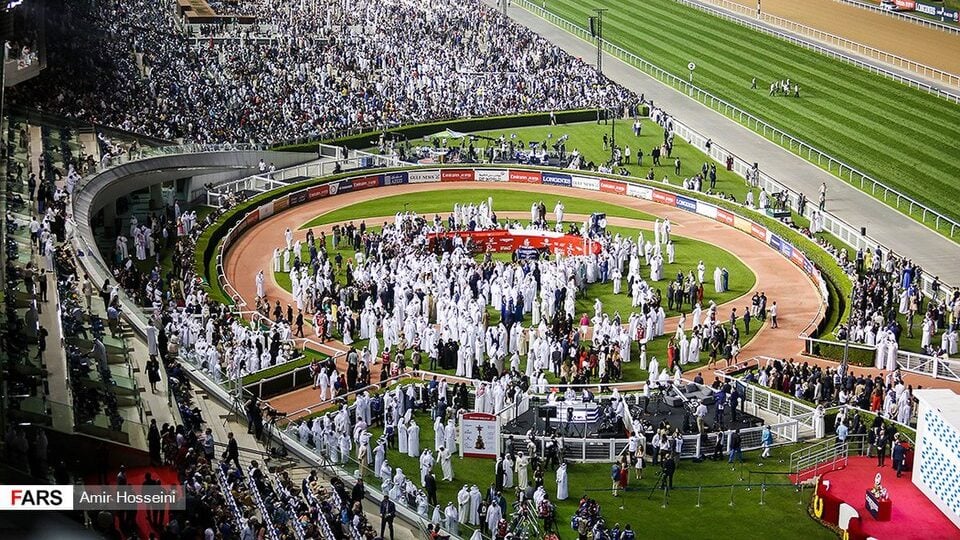
Meydan betting note: Surface form is everything. Horses with turf-only records facing Meydan’s unique dirt profile are at a structural disadvantage regardless of class. Check each horse’s surface splits — specifically whether they’ve shown form on dirt or Tapeta — before building any exotic that includes primarily turf-based runners.
Sha Tin Racecourse — Hong Kong
Sha Tin hosts the Hong Kong International Races each December — a $15 million total prize fund across four races including the Hong Kong Cup, Hong Kong Mile, Hong Kong Sprint, and Hong Kong Vase. The meet draws the best grass horses from Britain, Ireland, France, Japan, and Australia, and regularly produces the most competitive international fields of any single race day outside the Breeders’ Cup.
Romantic Warrior made history by winning the Hong Kong Cup in three consecutive years from 2022 through 2024, sustained dominance on turf that elevated him to all-time status among Hong Kong-trained horses. Sha Tin’s tight turf course with its long straight rewards tactical closers that can settle in traffic and produce a sustained late run — a profile that distinguishes it from the more openly running tracks at Ascot or Longchamp.
Sha Tin betting note: Draw position at Sha Tin matters significantly in large fields — horses drawn wide on the tight turf oval can struggle to find position through the first turn. For the Hong Kong Cup and longer distances, horses with proven tactical ability to settle behind the pace and produce a sustained closing run hold a structural advantage over pure front-runners.
Tokyo Racecourse — Tokyo, Japan
Tokyo Racecourse hosts the Japan Cup — a $4.1 million turf race that drew 223,000 fans to watch Equinox’s dominant 2023 victory over a field that included top European horses. The track’s long straight on a wide turf oval rewards horses that can produce extended acceleration — a different test than Sha Tin’s compressed finish or Longchamp’s uphill straight.
Japanese racing has developed into a genuine world-class operation over the past two decades; the breeding quality, training standards, and prize money have attracted European and American connections who previously bypassed the circuit entirely. The Japan Cup has emerged as a legitimate autumn championship alongside the Arc, and horses occasionally attempt both in the same fall campaign.
Tokyo betting note: Japanese-trained horses carry a significant home advantage at Tokyo Racecourse — they know the surface, the saddling procedures, and the race-day environment in a way that international shippers don’t. When the Japan Cup field includes top European horses, the public often overrates the European form and underrates the Japanese horses’ surface and environmental familiarity. Domestic form at Tokyo in the weeks before the Japan Cup is the most reliable predictor on the card.
Europe and Ireland
Longchamp — Paris, France
Longchamp in the Bois de Boulogne stages the Prix de l’Arc de Triomphe each October — a $5.5 million Group 1 race over a mile and a half on turf that is widely considered the world’s premier test of middle-distance excellence. The Arc field annually draws horses from Britain, Ireland, France, Germany, Japan, and occasionally the United States, assembling a depth of international competition that no other single flat race can match.
The track undulates significantly — Longchamp’s uphill finish in the straight is a genuine physical test that rewards horses with the ability to maintain rhythm and acceleration under pressure, not just horses with raw speed. Alpinista’s 2022 Arc victory was a masterclass in sustained turf acceleration, and the race consistently produces one of the most technically complex handicapping puzzles in world racing. The Arc is the reason Longchamp belongs on any list of iconic horse racing venues — it is the race by which European turf horses are ultimately judged.
Arc betting note: The uphill finish at Longchamp consistently rewards horses that stay on strongly in the final furlong — pure speed horses that produce a sharp burst often fail to sustain it up the gradient. Stamina is the deciding factor between equally talented horses in the Arc’s closing stages, which means middle-distance horses with a staying pedigree tend to outperform their odds against pure milers stepping up in distance.
The Curragh — County Kildare, Ireland
The Curragh is Ireland’s premier flat racing venue, hosting the Irish Derby, Irish Oaks, Irish 2,000 Guineas, and Irish 1,000 Guineas — four of Ireland’s five Classic races on the open Kildare plain. Auguste Rodin’s 2023 Irish Derby was one of the defining performances on European turf that season. The Curragh’s breeding ecosystem defines its international significance: Coolmore, Ballydoyle, and the Aga Khan’s operation are all based within a short distance, which means Irish Classic form is directly connected to the horses that later appear at Royal Ascot, Longchamp, and the Breeders’ Cup. The most important horses in European racing pass through the Curragh — following its Classic results is not optional for anyone tracking the international picture.
What Makes a Racetrack Matter Beyond Its Purse
Purse money gets a track on a list. It doesn’t make a track matter. Meydan has the richest single race day in the world and has earned its place here — but the reason it matters isn’t the $30.5 million. It’s that the Dubai World Cup has become a genuine test of the best older horses in training, and the result shapes breeding decisions and campaign planning in ways that a similarly rich but less competitive race would not.
What separates the tracks that truly matter from the ones that are merely famous is whether winning there means something durable about the horse’s quality. Saratoga matters because its six-week compressed schedule, its surface that penalizes lazy front-runners, and its history of upsets force the sport to continually reassess its assumptions about which horses are good. Cheltenham matters because three miles of jump racing over undulating turf with obstacles is a genuine crucible — you cannot fake your way through it with talent alone. Longchamp’s Arc matters because the field in October is, year after year, the deepest collection of turf horses assembled anywhere on earth, and winning it settles arguments about the best horse in Europe in a way that nothing else can.
Tokyo Racecourse and Sha Tin are on this list not primarily because of their purses but because they have pulled the world’s best horses to Asia, changed the breeding calculus of international connections, and established that the best horse racing is no longer a transatlantic conversation between Britain, Ireland, France, and the United States. The sport is genuinely global now, and the tracks on this list are the ones that make it so.
Miles’s Take — What watching international racing taught me about American horses: Following the Arc, the Melbourne Cup, and the Hong Kong International Races closely over the years has changed how I think about the horses I campaign at Fair Grounds. American dirt racing develops a specific kind of athlete — fast, aggressive, built for relatively short, sharp efforts. When I see what the best European turf horses do at Ascot or Longchamp — the way they sustain pace over two miles on undulating ground — I appreciate that we’re asking our horses to do something genuinely different, and that the skills required don’t transfer automatically. A dominant Fair Grounds claimer would be completely outclassed at Flemington. That’s not a criticism of either horse. It’s an acknowledgment that the sport produces different champions for different kinds of tests — and that following all of them makes you a better student of what a horse can actually do.
Key Takeaways: The Greatest Horse Racing Tracks in the World
- Different circuits test different horses — American dirt, British turf, Australian staying races, and Hong Kong sprint racing each reward a different physical and tactical profile; the same horse rarely dominates two different continents
- The original Derby is at Epsom — every race called a Derby worldwide is named after the race first run at Epsom in 1780; its camber and downhill configuration at Tattenham Corner make it one of the most technically demanding tracks in the world
- The US major circuit runs from Churchill Downs in spring through Saratoga in summer to Keeneland in fall — full handicapping notes on surface, pace, and seasonal timing in the US horse racing tracks guide
- British ground conditions are the most underrated variable in international handicapping — Ascot and Cheltenham can shift from good to soft within a day; always check declared conditions before betting
- Melbourne Cup handicap weights matter more than class — horses near the bottom of the weight range with proven staying form have historically produced the biggest Cup returns
- Meydan and Sha Tin surface form is non-negotiable — turf-only records are a structural disadvantage on Meydan’s dirt; draw position significantly affects outcomes on Sha Tin’s tight oval
- Longchamp’s uphill finish separates pure speed from true stamina — the Arc consistently rewards horses that stay on strongly in the final furlong over horses with a sharp speed burst that fades on the gradient
- Purse money gets a track on a list; what the results mean is what makes it matter — the best tracks on this list shape breeding decisions, career planning, and championship outcomes in ways that outlast the race itself
Frequently Asked Questions
What is the greatest horse racing track in the world?
There is no single answer — it depends on what dimension you’re measuring. Churchill Downs is the most famous. Royal Ascot has the most history and prestige in flat racing. Cheltenham is the pinnacle of jump racing. Flemington hosts the most famous staying race. Meydan runs the richest single race day. Longchamp assembles the deepest international turf field annually. Each is the greatest at something specific to its discipline and tradition.
What is the richest race day in the world?
Dubai World Cup night at Meydan Racecourse, with a total prize fund of $30.5 million as of 2025, is the world’s richest single race day. The Dubai World Cup itself carries a $12 million purse. The Breeders’ Cup World Championships across two days at Keeneland in 2026 total more than $34 million, making it the richest two-day meet.
What is the oldest horse racing track in the world?
Chester Racecourse in the UK, established in 1539, is generally recognized as the oldest active racetrack in the world. Royal Ascot dates to 1711 and Epsom Downs has hosted the Derby since 1780. In the United States, Fair Grounds Race Course in New Orleans has operated continuously since 1838 — predating Saratoga by 25 years and making it the oldest active Thoroughbred track in America.
What is the Prix de l’Arc de Triomphe?
The Prix de l’Arc de Triomphe — commonly called the Arc — is a $5.5 million Group 1 turf race run annually in October at Longchamp in Paris, France, over a mile and a half. It is widely considered the world’s premier test of middle-distance turf excellence and consistently assembles the deepest international field of any single flat race. Past winners include Enable, Frankel, Sea The Stars, and Alpinista.
How does the Melbourne Cup differ from the Kentucky Derby?
The Melbourne Cup and the Kentucky Derby test completely different horses. The Derby is a 1¼-mile dirt race for three-year-olds at Churchill Downs in May — speed and tactical positioning over a relatively short distance. The Melbourne Cup is a two-mile turf handicap at Flemington in November, open to horses of all ages carrying different assigned weights — sustained stamina and handicap weight management over a distance twice as long. European staying horses regularly win the Melbourne Cup; they would be outclassed at Churchill Downs.
Why is Epsom Downs historically significant?
Every horse race called a Derby worldwide — the Kentucky Derby, Irish Derby, Italian Derby, German Derby — is named after the race first run at Epsom Downs in 1780. The Epsom Derby is one of the five British Classics and one of the most influential races in the history of the sport. The track’s unusual configuration — a downhill run, a sharp left-hand turn through Tattenham Corner, and a cambered straight — tests physical and mental qualities beyond what pedigree alone predicts.
What is The Everest horse race?
The Everest is a 1,200-metre turf sprint held annually at Royal Randwick in Sydney, Australia, with a $13 million USD purse — the world’s richest turf race. Unlike traditional racing, The Everest uses a slot system where owners purchase slots and nominate horses, creating a unique commercial structure. The race attracts the world’s best sprinters and typically runs in October as part of the Sydney spring carnival.
What makes Cheltenham different from other racetracks?
Cheltenham is the world’s premier jump racing venue — its races involve horses jumping steeplechase fences or hurdles over two to three miles of undulating turf, a completely different test from flat racing. The physical demands of clearing obstacles at racing pace, sustaining effort over three miles, and navigating the course’s elevation changes require horses built for endurance and jumping ability rather than pure speed. The Cheltenham Gold Cup is jump racing’s most prestigious prize.
Which tracks host the Breeders’ Cup?
The Breeders’ Cup World Championships rotates between premier US tracks. Past and upcoming hosts include Keeneland (2015, 2020, 2022, 2026), Santa Anita Park, Churchill Downs, Del Mar, and the new Belmont Park facility expected to host in 2027. Keeneland’s consistent fall conditions and limestone-based surface make it one of the most reliable Breeders’ Cup venues for form study.
About Miles Henry
Racehorse Owner & Author | 30+ Years in Thoroughbred Racing
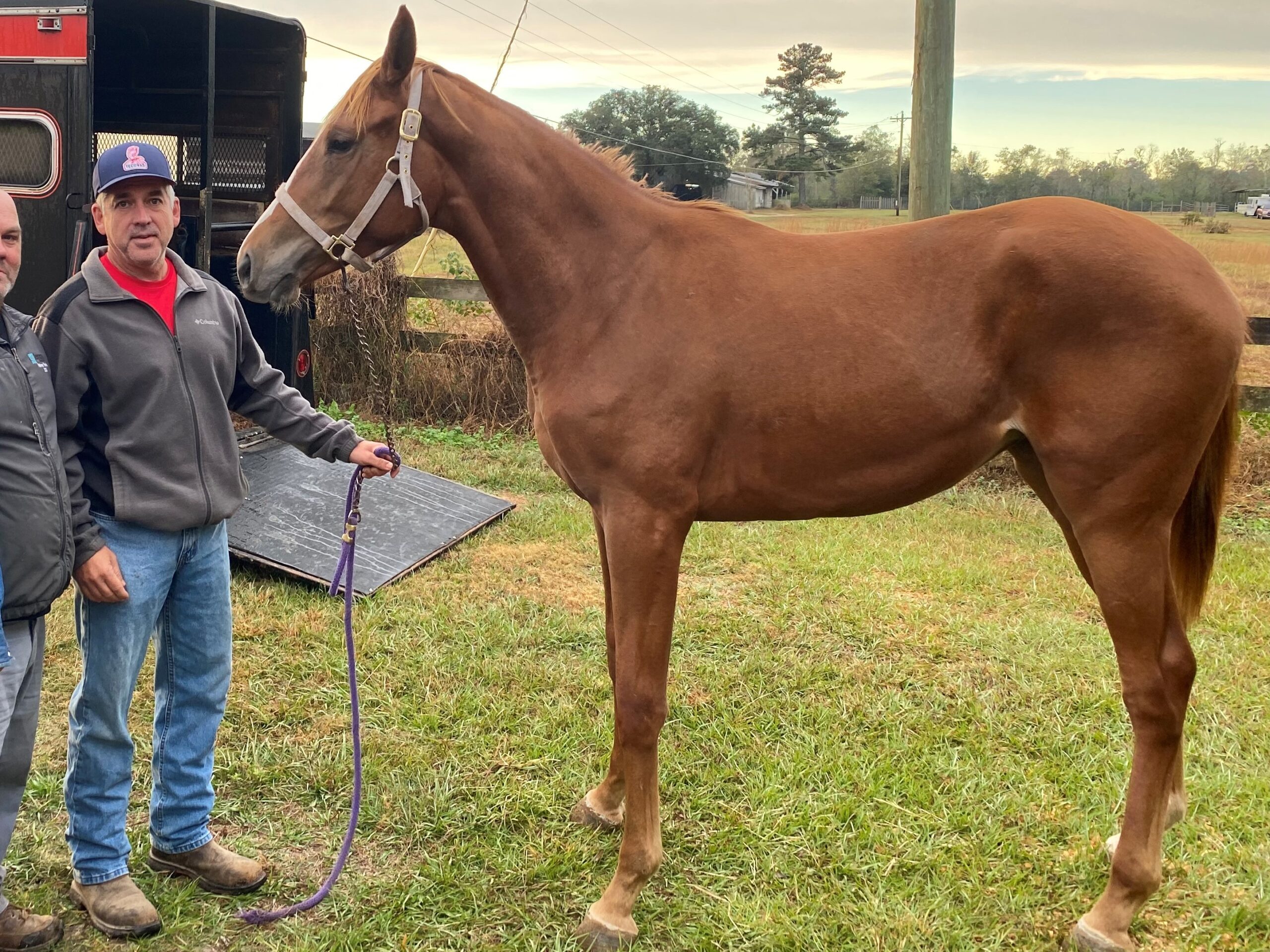
Miles Henry (legal name: William Bradley) is a professional horseman based in Folsom, Louisiana. He holds Louisiana Racing License #67012 and has spent over three decades managing Thoroughbreds at premier tracks including Fair Grounds, Delta Downs, and Evangeline Downs.
Expertise & Hands-On Experience: Beyond the track, Miles has decades of experience in specialized equine care, covering everything from hoof health and nutrition to training protocols for Quarter Horses, Friesians, and Paints. Every guide on Horse Racing Sense is rooted in this “boots-on-the-ground” perspective.
30 of their last 90 starts
Equibase Profile.

Connect with Miles: