
Last updated: August 3, 2026
Understanding horse racing class levels is the foundation of smart race placement — and no classroom taught me that. I learned it the hard way with a bay gelding I ran raced at the Fair Ground. He had enough speed to compete, but every time I placed him in tougher allowance company, he flattened out late.
When I dropped him into softer company at Delta Downs, he looked like a different horse — traveling easier, finishing stronger, jogging back like he owned the place. That was when I stopped seeing race classifications as labels and started seeing them as a ladder.
What are horse racing class levels?
- Class measures competition quality — the level of horses a runner faces, not just a purse number or condition book label
- The ladder runs from Maiden Claiming to Grade I Stakes — eight meaningful rungs, each representing a different population of horse
- Class moves are trainer signals — drops suggest relief or concern; rises signal confidence or ambition
- MSW sits below allowance structurally — but reflects pre-allowance potential, not sub-allowance talent
- The claiming price is a public statement — every tag says “I will sell this horse for this number today”
- Track quality matters — the same condition can be far tougher at Saratoga than at Delta Downs
This guide is written for owners, bettors, and handicappers who want to read class moves the way trainers make them — not just as eligibility labels but as strategic language. For how class fits into the broader picture of race types and disciplines, see the types of horse races guide. If you are new to the sport and want a solid foundation first, start with our Horse Racing 101 guide.
Table of Contents
What Class Really Means When You Are Placing a Horse
On paper, class is just the level of competition. At the barn rail, it is the invisible weight a horse carries into the gate. A fit, sound horse trained right can still look overmatched if the other horses have simply been dancing in tougher company longer.
When I scan a condition book at Fair Grounds, Saratoga, Delta Downs, or Gulfstream, I am not just reading the words — I am mentally comparing the quality of horses that typically fill those conditions at that specific circuit. A first-level allowance at Saratoga often feels like a mini stakes race, packed with blue-blooded barns testing future graded horses. That same N1X allowance condition at Delta Downs or Evangeline usually comes up softer — more like a solid claiming group with a few improving types. Ignore that regional gap and you can put a perfectly good Louisiana horse in deep water at a boutique meet and ruin his confidence in one afternoon.
Every entry decision I make — which race, which level, which claiming price — is a public statement about what that horse is worth right now. Once you learn to read those signals, the overnight sheet becomes less of a mystery and more of a playbook.
The Full Class Ladder — All 8 Rungs
Most people think of class as four broad buckets — maiden, claiming, allowance, and stakes. The real hierarchy has eight meaningful rungs, each representing a different population of horses with different soundness signals and different trainer intent.
| Rung | Class Level | Typical Purse Range | Horse Type |
|---|---|---|---|
| 1 — Top | Grade I Stakes | $500K–$20M+ | Elite proven champions |
| 2 | Grade II / Grade III Stakes | $150K–$500K | Stakes-proven horses |
| 3 | Listed / Black-Type Stakes | $75K–$150K | Talented allowance graduates |
| 4 | Allowance Optional Claiming (AOC) | $40K–$80K | Bridge between allowance and stakes |
| 5 | Allowance (N1X / N2X / N3X) | $30K–$60K | Non-claiming, conditioned by earnings |
| 6 | Maiden Special Weight (MSW) | $30K–$60K | Non-winners — NOT for sale |
| 7 | Claiming Races ($5K–$50K+) | Varies by tag | All horses available for purchase |
| 8 — Bottom | Maiden Claiming | $10K–$25K | Non-winners FOR sale — lowest maiden rung |
One clarification worth making upfront: Maiden Special Weight sits below allowance on this ladder structurally because a horse who wins an MSW race moves up into allowance company. But that does not mean MSW horses are lesser animals. Many are better bred and more talented than the allowance horses above them — they simply have not yet proven it on the track. Think of MSW as pre-allowance, not sub-allowance. For a full breakdown of how purses are funded and distributed at each level, see the guide to horse racing purse money.

The Four Main Class Levels in Practice
The full ladder matters for placement decisions. But day-to-day, four buckets drive most of what I do — maiden, claiming, allowance, and stakes. Each has a different purpose, a different risk profile, and a different long-term strategy for both the horse and the owner.
| Race Class | Typical Use | Risk to Owner | Trainer’s Goal |
|---|---|---|---|
| Maiden | For horses that have never won a race | Low to moderate — no claiming risk in MSW; higher in maiden claiming | Find the right level to build confidence and get the first win without gutting the horse |
| Claiming | Most common level — horses available for purchase at a set price | High — you can lose the horse at the claim box every single start | Trade claiming risk for a winning spot; manage value like a portfolio; keep the horse against the right company |
| Allowance | Non-claiming races for horses meeting specific win or earnings conditions | Moderate — no claiming risk but tougher company and higher training demands | Develop promising horses, earn purses while protecting them, and test if they belong in stakes |
| Stakes | Highest-level races, from listed to graded, with bigger purses and prestige | Moderate to high — travel costs, tough fields, reputation on the line | Prove class, build black type for breeding value, and take a swing at serious purses when the horse is ready |
Maiden Races — The Most Misread Gap in Racing
Maiden races are where every racehorse starts, but not every maiden is created equal. When I look at the overnight sheet, the first question is simple: is this horse a Maiden Special Weight type, or do I need to swallow my pride and look at maiden claiming?
MSW races are the protected maidens — no one can claim your horse out of them, and the fields are packed with well-bred youngsters from big barns taking their first swings. I use MSW when I genuinely believe a horse can develop into at least an allowance runner and I do not want to risk losing him before I find out. Maiden claiming races are the honest alternative. When I drop a horse into a maiden claimer at Delta Downs or Evangeline, I am saying: I am willing to trade this horse at this price in exchange for finding easier company and a better shot at a win.
| Factor | Maiden Special Weight (MSW) | Maiden Claiming |
|---|---|---|
| Can be claimed? | No — owner fully protected | Yes — anyone can buy at the listed price |
| Typical pedigree quality | Moderate to high | Modest to moderate |
| Trainer’s message | This horse has a future worth protecting | This horse needs a win — price reflects current ceiling |
| Future allowance potential | Realistic for top finishers | Unlikely for most; some exceptions |
| Soundness signal | Generally healthy | May have physical concerns that cap upside |
For a deeper breakdown of how maiden races work, how fields are structured, and what makes an MSW field different from a maiden claimer field, see the complete guide to maiden races. Before I ever enter a maiden, I also factor in distance and surface — if a horse is bred to sprint and working sharp, I aim for a shorter maiden at five or six furlongs and make sure the surface sets him up to show his best instead of fighting conditions he is not built for.

Miles’s Take — The filly I protected too long: I once had a long-striding filly at Fair Grounds who worked like a monster in the mornings but kept finishing fifth or sixth in Maiden Special Weight company. I was convinced she was better than the paper showed, so I stubbornly kept her in MSW races instead of dropping her in for a tag at Delta Downs. By the time I finally put her in a maiden claimer at a realistic price, she had taken enough hard races that she was sour and mentally worn out. She still won, but instead of moving forward she tailed off and never became the allowance mare I thought she could be. Protecting a horse in MSW is only smart if the horse is actually thriving there. Otherwise, you are delaying the confidence boost that a softer spot can give.
If you only learn one betting lesson from class analysis, learn this: Not all class drops mean the same thing. Some are confidence-building moves. Others are distress signals. The ability to tell the difference is where real handicapping begins — and it is the section below where most bettors find the most immediate value.
Red Flag vs. Class Relief — How to Read a Class Drop
When a horse drops in class, the question is whether it is a calculated move or a distress signal. The answer lives in the size of the drop, the direction of the move, and — most importantly — what the work tab says before that race.
Red flag — the large MSW to Maiden Claiming drop: A horse that has been running in $50,000 Maiden Special Weight races — where it was protected from being claimed — is now entered in a $20,000 maiden claiming race. The owner is willing to lose the horse for $20,000. The gap between those two prices tells a story: something has changed in how this barn views the horse’s future. The horse may have a physical issue that has not been announced publicly, an attitude problem that surfaced in the barn, or connections who simply need to cash out and move on. Fade this horse unless the work tab shows sharp recent drills and the pace scenario strongly favors front-runners. But read the work tab first — because there is an exception to this rule, and I know it firsthand.
The red flag rule is not absolute, and I know this from direct experience. I bought a colt named Astrology’s Protege as a yearling and had high hopes for him. I started him in an allowance race and he got crushed. I still believed he had talent, so I tried him in a Maiden Special Weight. Crushed again. I dropped him into a claiming race, and he improved. A couple of claiming races later, his confidence had rebuilt enough that he broke his maiden — and he went on to win multiple allowance races and is still competing in allowance company today.

Miles’s Take — Astrology’s Protege: when the drop is about belief, not exit: When I dropped Astrology’s Protege into claiming company after two bad losses, anyone watching from the grandstand could have read it as a white flag. And by the standard red flag framework, they would not have been wrong to wonder. But here is the difference: I still believed in that colt. I was not trying to get out from under him. I was trying to find the level where he could breathe, compete, and remember what it felt like to finish well. The claiming races did exactly what I hoped. He settled into easier fractions, started finishing with energy instead of emptying out, and eventually broke through. From there he climbed back to the allowance level where I always thought he belonged.
Class relief — the measured, strategic drop: A $50K MSW horse dropping to a $35K–$40K allowance or a modest claiming level tells a very different story than a dramatic two-rung fall. The trainer is making a calculated move — not a distressed one — the horse’s potential is still being protected, and the purse reduction is designed to find softer competition, not to exit ownership. What confirms it is a genuine relief play: the drop is one rung, not two or three; recent works are sharp and consistent; the horse was competitive at the higher level but could not quite finish; and there is no significant layoff preceding the move. A measured one-rung drop with sharp works is one of the most reliable patterns in the game — especially when the pace scenario supports it.
What a Trainer Is Actually Thinking
If you only learn one thing in this guide, make it this: trainers do not talk — they place. Class moves are the language trainers use when they cannot say everything out loud. When I move a horse up, I am telling you I see more under the hood than the form line shows. When I drop one, I am either hunting for confidence or managing a problem before it catches up with me.
Miles’s Take — The two reasons I drop a horse in class: When I drop one of my horses significantly in class, it is almost always one of two things. Either I genuinely believe he needs an easier spot to build confidence — maybe he broke poorly twice and just needs a win to settle his nerves — or I already know something is wrong that I have not been able to fix yet. It might be a minor soft-tissue issue, a change in attitude, or simply that his early works flagged the wrong distance or surface. The brutal honest version: sometimes I am dropping a horse because the owner is frustrated and I need to show them a winner before they fire me and move the horse to another barn. That pressure exists at every barn, at every track. When you see a dramatic drop after a long losing streak, ask yourself who is under pressure — the horse, or the connections.
Claiming Races — The Stock Market of Horse Racing
When I put a horse in a claiming race, I am not just picking a level — I am setting a price on that horse like a stock in a volatile market. Every claiming tag is a public statement: this is what I am willing to sell for today, knowing someone can walk in, sign the claim slip, and own that horse five minutes after the gate opens.
At Saratoga or Gulfstream, a mid-level claimer can be packed with horses that would be allowance runners at a smaller track. At Delta Downs, that same claiming price usually gets you a more workmanlike group of solid horses that fit the circuit but do not scare you on paper. I have seen plenty of horses who look like world beaters locally get exposed the moment they ship to a deeper pool. Class is always relative to the circuit, and the overnight sheet does not tell you which circuit you are really dealing with unless you already know it.
Miles’s Take — The class drop that backfired: I once dropped a gelding from a solid allowance at Fair Grounds into a mid-level claimer at a smaller track, thinking I was stealing a purse. On paper it looked like a massive class drop. What I ignored was how sharp the local claiming outfits were at that circuit. They spotted my horse in the overnight, claimed him, and ran him right back at the same level where he wired the field for his new barn. I collected the purse that day but lost a horse that still had a few good races left in him. Easy money on paper can be an expensive illusion once the claim slips start flying.
One pattern I watch closely: horses claimed multiple times in a short window are almost always animals with a known issue getting passed around. It is not bad luck — it is the market repricing a problem that each new owner discovers. Three or more claims in twelve months is a flag worth noting before you handicap anything else about that horse. You can pull complete claiming history and past performances for free at Equibase, the official database of North American horse racing.
Allowance Races — Where a Horse Proves What It Is
Allowance races are where I find out if a horse is more than just a solid claimer. The conditions are built around wins and earnings, not price tags, so when I run in a first-level allowance I am testing whether the horse can handle talented rivals without the safety net of a claiming price. The three common conditions — N1X (never won an allowance), N2X (won once), and N3X or open allowance (won multiple times) — form a staircase of difficulty that a good horse climbs steadily.
A horse knocking on the door in N2X company is a very different animal from one who barely survived his N1X. The condition label tells you where the horse is eligible; watching how he runs within those conditions tells you where he actually belongs. Optional claiming allowances give me extra flexibility — I can run a horse for a tag in an allowance-type race, or keep him protected while others take the claiming risk. I use these spots for horses on the edge between claiming and allowance when I am not yet ready to commit fully to either direction.
Miles’s Take — The most underrated allowance signal: A horse that wins an N1X under a hand ride — never asked for more speed, just jogged to the wire. That tells me the horse may be significantly better than N1X company. A horse like that belongs in N2X immediately, not back in another soft spot. The condition book is a staircase, and some horses take it two steps at a time. Watch how much they had left, not just whether they won.
Stakes Races — When I Finally Take a Swing
Stakes races are where class becomes reputation. Listed stakes sit just below graded races on the ladder — they carry black-type recognition but no Grade designation, making them the natural first swing for a horse graduating from allowance company. When I enter a horse in a listed stakes, I am testing whether his talent holds when the waters get warmer. When I step up to a graded race — Grade 3, Grade 2, Grade 1 — I am making a public statement about what I believe this horse is. A sharp allowance horse from Delta Downs can look like a monster locally, but I have to be honest about whether his figures and running style actually match what it takes in a Grade 3 at Saratoga or Gulfstream.
I do not enter those races hoping for miracles. I enter when the horse has shown me, through allowance and listed stakes efforts, that he can sit closer to that kind of pace and still finish. Post position also starts to matter more at the stakes level — a horse that requires a wide trip at a regional track faces a meaningfully tougher task against stakes fields, so I always check how post position and gate position affect performance for a given class. The most common mistake I see — both from trainers and from bettors handicapping them — is skipping the listed stakes entirely and jumping an N2X allowance winner straight into a Grade 3. Sometimes the figures justify it. More often, it is owner’s ambition outrunning the horse’s actual value. The legitimate signal I look for before taking a stakes horse seriously: an N2X winner whose pace figures in his allowance wins are already scaling toward stakes fractions, who won under a hand ride, and who has a trainer with a documented record of placing horses correctly at this level. For current graded stakes schedules and eligibility standards, the National Thoroughbred Racing Association maintains the official grading criteria used by every major track in North America.
Miles’s Take — The stakes shot I almost skipped: I had a colt that rattled off two allowance wins at Fair Grounds, both in honest fractions on a track playing fair. The logical next spot was a listed stakes, but the field looked salty and I almost talked myself into one more allowance. My gut kept telling me he was winning too easily, so I took the shot. He did not win, but he sat behind a faster pace and held for a solid third against horses who later showed up in graded company. That race told me more about his true class than another easy allowance win ever could. When a horse keeps winning with energy left in the tank, the stakes test usually belongs sooner than you think.
Class and Distance — The Interaction Most Miss
Class and distance do not just interact — they compound each other, and the compounding runs in both directions. A horse dropping in class while cutting back to a preferred distance receives a double advantage — softer competition and a better scenario for its running style. That combination is one of the most reliable betting angles in the game when you can identify it before the public does.
The flip side: a horse dropping in class while stretching out to an unproven distance is riskier than it looks because two unknowns are changing simultaneously. Connections may have a legitimate reason — they may have seen something in the morning works that suggests the horse wants more ground. Or they may be throwing things at the wall after a losing streak. A trainer who changes both class and distance at once is either making a brilliant calculated move or has run out of ideas. The work tab and the trainer’s record in similar spots will almost always tell you which one it is.
The Class Move Cheat Sheet

| Class Move | Signal | What to Do | Confirm With |
|---|---|---|---|
| MSW to Maiden Claimer (large drop) | Major red flag | Fade unless sharp works and clear pace advantage | Work tab — flat drills confirm exit; sharp works suggest confidence move |
| Allowance to Low Claiming (2+ levels) | Red flag | Check layoff and soundness history first; multi-rung drops are rarely innocent | Trainer record + recent layoff pattern |
| Stakes to Allowance Optional Claiming | Caution | Class still ahead of the field — confirm horse was competitive at stakes level, not just present | Pace figures from stakes efforts |
| Large drop + distance change together | Caution | Two unknowns at once — do not assume either way | Trainer record in similar spots + morning works |
| Claiming to lower Claiming (one rung, sharp works) | Opportunity | Legitimate class relief — prime play when pace scenario supports forward position | Work tab + pace scenario |
| Allowance to $40K–$50K Claiming (first time) | Opportunity | Class edge over the field — respect the drop | Pace figures vs. field + trainer win % at this level |
| Freshly claimed, entering slightly above claim price | Strong opportunity | New connections saw something the previous barn missed | New trainer record + claim-to-race turnaround speed |
Frequently Asked Questions About Horse Racing Class Levels
What is the highest class in horse racing?
Grade I Stakes races are the highest class in horse racing. These include the Kentucky Derby, Breeders’ Cup Classic, and Preakness Stakes. They carry the largest purses and attract the best horses in training. Winning a Grade I race is the pinnacle of a racehorse’s career.
What is the difference between a maiden special weight and a maiden claiming race?
In a Maiden Special Weight (MSW) race, horses are not for sale. Owners believe the horse has more long-term value than any claiming price would reflect. In a maiden claiming race, every horse is available for purchase at the listed price. MSW horses are typically better bred, sounder, and have a higher perceived ceiling — making this one of the most meaningful class distinctions in racing. A trainer who drops a horse from MSW to maiden claiming is making a public statement about changed expectations.
What does it mean when a horse drops in class?
A class drop means a horse is entering a lower-quality race than its previous start. A small, measured drop with sharp workouts is usually genuine class relief — the trainer found a softer spot to get a win or rebuild confidence. A dramatic drop, especially into claiming company for the first time after multiple MSW losses, can warn that something is wrong physically or mentally. The size of the drop and the recent work pattern matter most. Read the work tab before drawing a conclusion.
What is an allowance race in horse racing?
An allowance race is a non-claiming race with eligibility conditions based on wins or earnings. The most common conditions are Non-Winners of One (N1X), Two (N2X), or Three (N3X) allowance races other than maiden or claiming. These races sit between maiden or claiming company and stakes races on the class ladder, and their quality varies significantly depending on the circuit and the specific track.
Why would a trainer drop a horse into a maiden claiming race?
Trainers drop horses into maiden claiming races for several reasons: repeated failures in MSW company, owner impatience, a physical limitation that caps upside, or a willingness to let the horse be claimed. A drop from MSW to maiden claiming is often a bearish signal, but not always. If the work tab is sharp and the trainer still believes in the horse, it may be a confidence-building move rather than an exit strategy. Seabiscuit famously ran in claiming company before becoming one of the greatest racehorses of his era.
Does class level differ between racetracks?
Yes — significantly. The same condition can represent very different quality levels depending on the track. A first-level allowance at Saratoga may feature horses capable of competing in graded stakes at smaller circuits. The same condition at a regional track like Delta Downs or Evangeline Downs typically comes up softer. Always evaluate the circuit along with the condition label — class is always relative to where you are standing.
How does class interact with distance when handicapping?
Class and distance amplify each other. A horse dropping in class while cutting back to a preferred distance receives a double advantage — softer competition and a better scenario for its running style. A horse dropping in class while stretching out to an unproven distance is riskier because two variables are changing at once. Trainer patterns and workout signals help clarify whether the trainer has a plan or is guessing.
What is an Allowance Optional Claiming (AOC) race?
An Allowance Optional Claiming race is a hybrid structure. Horses may enter as protected allowance runners or at an optional claiming price where they can be purchased. Owners protect higher-value horses by entering under allowance conditions, while others accept the claiming risk in exchange for access to the field. AOC races bridge pure allowance competition and upper-level claiming races and are often the right spot for a horse on the edge between the two.
Is a claiming race lower than a maiden race?
It depends on the type of maiden race. Maiden claiming sits at the lowest rung of the class ladder — below both maiden special weight and standard claiming races. However, claiming races span a wide range: a $50,000 optional claiming race is significantly higher in class than a maiden special weight at a regional track. The class ladder runs from maiden claiming at the bottom, through claiming and allowance, up to graded stakes at the top.
Can a horse move from claiming races back up to allowance company?
Yes — and it happens more often than most people realize. A horse that is claimed, placed correctly by a new trainer, and develops confidence at the right level can rebuild its way back into allowance conditions. The condition book restricts allowance eligibility by wins and earnings, not by claiming history. My horse Astrology’s Protege did exactly this — dropped to claiming company to rebuild confidence, then climbed back to multiple allowance wins.
Key Takeaways: Horse Racing Class Levels
- Every rung represents a different population of horse — not just a different purse level; class moves are communication, not just placement
- MSW to Maiden Claiming is usually a red flag — but a sharp work tab and trainer context can tell a different story; Astrology’s Protege is the proof
- MSW sits below allowance structurally — but reflects pre-allowance potential, not sub-allowance talent
- A measured one-rung drop with sharp works is one of the most reliable plays in the game — especially when pace scenario supports it
- The claiming price is a public statement — it tells you what the owner honestly believes the horse is worth today
- Class and distance changes together amplify the signal in both directions — double advantages and double unknowns are both real
- Regional track quality matters — the same condition label means different things at Saratoga vs. a regional oval
- Three or more claims in twelve months is a flag worth noting — the market is repricing a problem each new owner discovers
If you are building your handicapping foundation from class up, the natural next read is pace analysis — because class tells you who belongs, and pace tells you who wins today.
Responsible Gaming: Horse racing betting carries significant financial risk. The class analysis in this guide is for educational and handicapping purposes only. Never bet more than you can afford to lose. If you or someone you know has a gambling problem, contact the National Council on Problem Gambling at 1-800-522-4700.
About Miles Henry
Racehorse Owner & Author | 30+ Years in Thoroughbred Racing
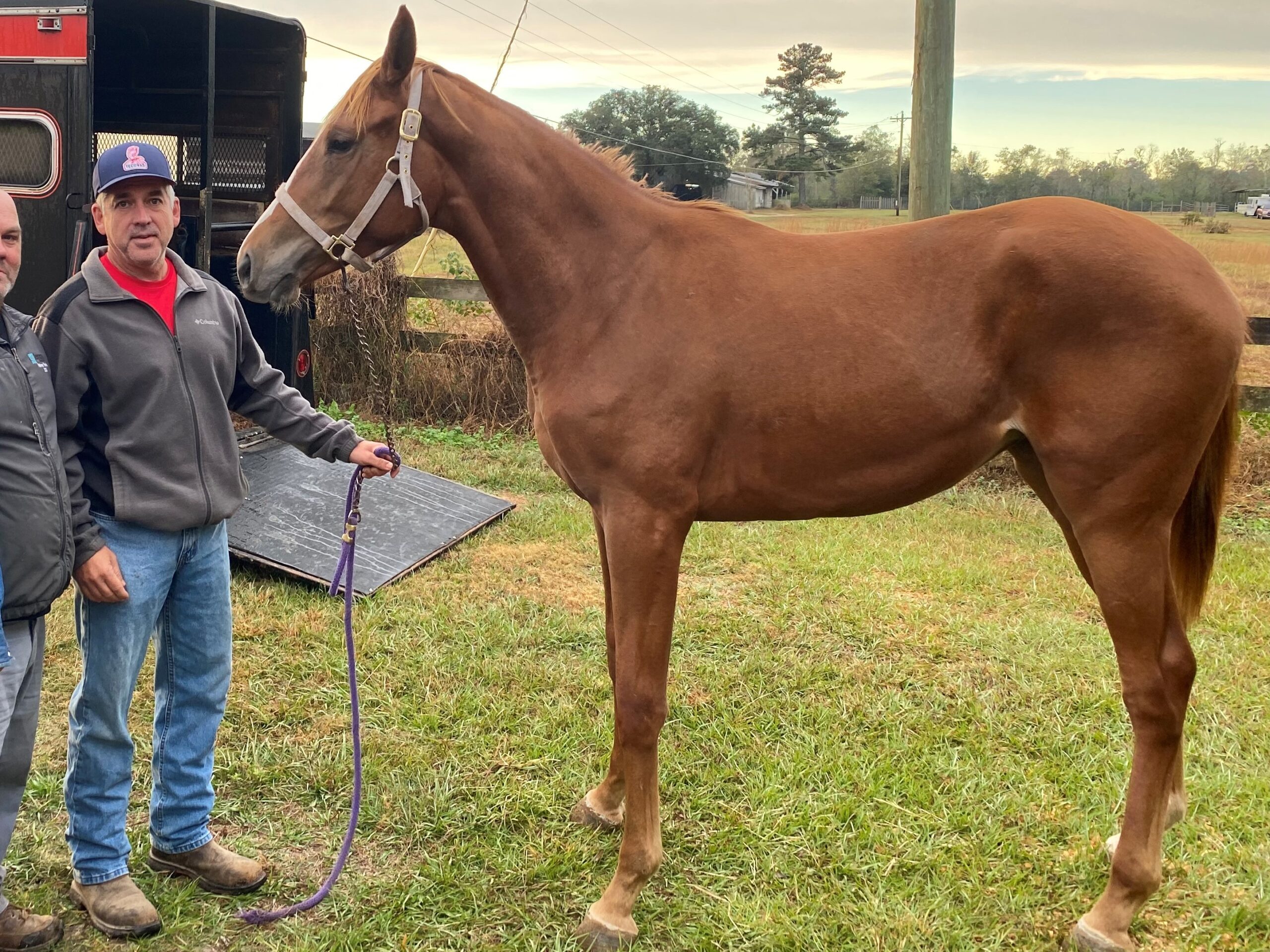
Miles Henry (legal name: William Bradley) is a professional horseman based in Folsom, Louisiana. He holds Louisiana Racing License #67012 and has spent over three decades managing Thoroughbreds at premier tracks including Fair Grounds, Delta Downs, and Evangeline Downs.
Expertise & Hands-On Experience: Beyond the track, Miles has decades of experience in specialized equine care, covering everything from hoof health and nutrition to training protocols for Quarter Horses, Friesians, and Paints. Every guide on Horse Racing Sense is rooted in this “boots-on-the-ground” perspective.
30 of their last 90 starts
Equibase Profile.

Connect with Miles: