
Last updated: August 11, 2026
A grulla can be easy to misidentify, especially under sale-barn lighting where a blue roan, young gray, smoky black, and true grulla may appear similar. That confusion matters because color can influence buyer interest, paperwork, and sale value.
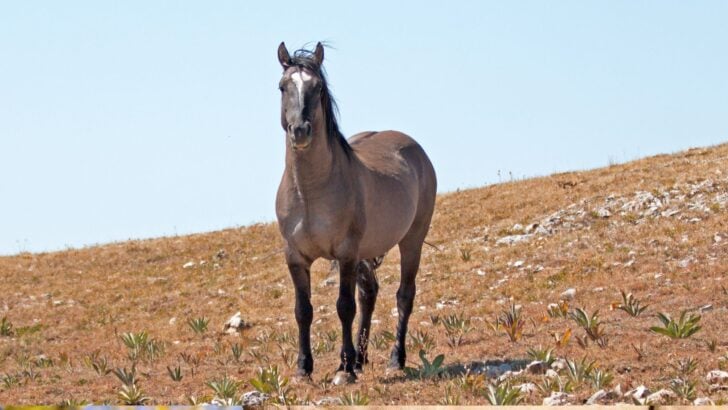
A grulla (also called grullo) is a black-based horse with the Dun gene. The gene alters the black coat, producing the characteristic smoky gray to slate coloring that makes this color rare and highly sought after in many Western-horse markets.
Appearance can strongly suggest grulla, but DNA testing is the most reliable way to confirm color genetics when sales, registration, or breeding decisions depend on the answer.
Table of Contents
What Does a Grulla Horse Look Like?
Grulla is a coat color, not a breed or body type. A grulla can be a pony, a Quarter Horse, a Mustang, or any other horse with a black base coat and the Dun gene. The body color usually falls somewhere between smoky gray and dark slate, while the mane, tail, lower legs, and primitive markings remain darker.
The overall look is what catches your eye: a cool, smoky body coat set off by dark points and a darker line along the topline. Some grullas are light silver-gray, while others are dark enough to be mistaken for black or smoky black in poor light. Shade varies, but the underlying pattern is the same.
Typical grulla features:
- Smoky or slate-colored body: The coat is usually cool-toned rather than golden, red, or orange.
- Dark points: The mane, tail, lower legs, ear edges, and often the face remain darker than the body.
- Primitive markings: A dorsal stripe is the feature most people notice first. Some horses also show leg barring, facial shading, shoulder shading, cobwebbing, or lighter hairs along the mane edges.
Not every marking will be equally visible on every horse. Coat length, sun fading, age, grooming, and sale-barn lighting can all change how clearly the pattern shows. That is why a smoky body color alone is never enough to identify a horse as grulla.
Grulla vs. Bay Dun vs. Red Dun – the most common “which dun is this?” confusion:
- Grulla (black dun): Smoky gray to slate body; black mane, tail, and lower legs; dark gray or charcoal dorsal stripe. Body coat has no red or golden tones.
- Bay Dun (classic dun): Golden-tan to yellow body; black mane, tail, and lower legs; black dorsal stripe. The body coat has warm golden or sandy tones – the most common confusion with grulla in winter coats when lighting flattens color.
- Red Dun: Pale orange to peach body; red or matching mane and tail; red dorsal stripe. No black points anywhere.
The fastest separator between grulla and bay dun in the field: look at the lower legs. Grulla legs are near-black. Bay dun legs are also dark (black points from the bay base), but the body coat of a bay dun reads warm and golden, not cool and gray. A warm reddish or golden cast points more strongly toward bay dun, though natural light and genetic testing are the best way to settle a genuinely close call.
Grullo vs. Grulla
Grullo and grulla describe the same black-based Dun color. Grullo is the masculine Spanish form and grulla the feminine form, although English-speaking horse people often use them interchangeably. AQHA generally uses “grullo” in its color materials, while “grulla” is also common in sale listings and online searches.
Is It Really a Grulla? Avoiding Common ID Mistakes
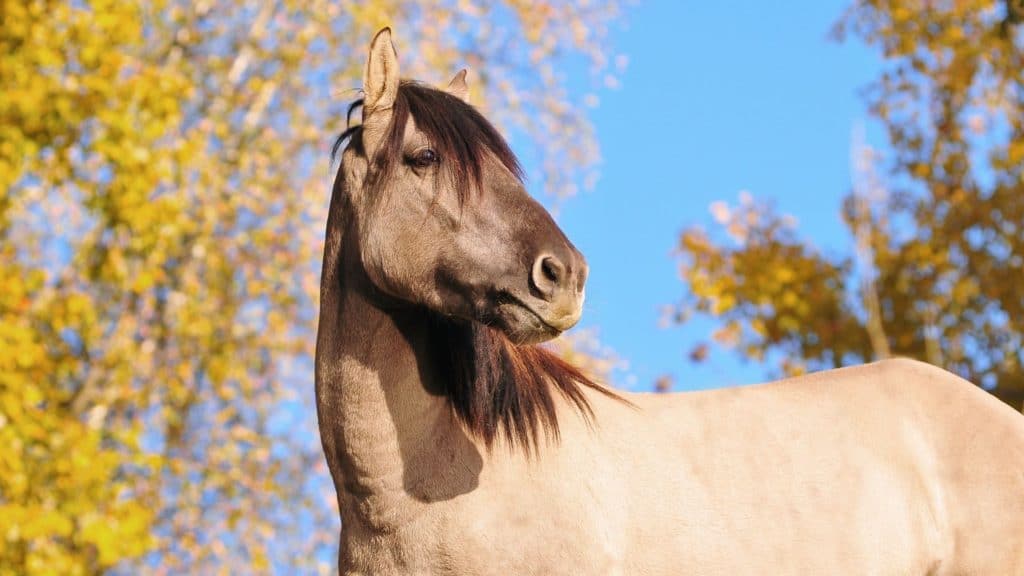
Under artificial lighting, a grulla may resemble a blue roan, young gray, or smoky black, and color alone is not enough to make the call.
The fastest field check: Start with the topline. A defined dorsal stripe from the withers to the tail is the strongest visual clue that Dun may be present, but never judge from one marking alone. Work through the complete pattern: dark points, a darker head, and supporting primitive markings.
Quick grulla identification checklist:
- Check the stripe: Look for a defined dark dorsal stripe rather than a soft shadow or general darkening along the back.
- Check the pattern: A likely grulla usually combines the stripe with other Dun characteristics, such as leg barring, darker points, and facial shading.
- Check the history: Ask how the horse’s color has changed over time. If it has become noticeably lighter year after year, gray should be high on the list.
- Confirm when it matters: When color affects purchase price, registration, or breeding decisions, use DNA testing rather than relying only on appearance.
For a full side-by-side comparison of grulla, blue roan, and gray horses, including the specific field tests used to separate them under sale-barn lighting, see our guide: Blue Roan vs. Gray vs. Grullo: How to Tell the Difference.

Countershading vs. a True Dun Dorsal Stripe
Countershading is one of the most common reasons horses are mistaken for grullas. A dark topline caused by coat color, hair direction, or lighting can resemble a dorsal stripe without indicating Dun. Dark bays, smoky blacks, and seal browns are common examples.
How I separate countershading from a likely Dun stripe:
- Look at the edges: A Dun stripe is usually more defined against the surrounding body coat. Countershading often fades gradually into the sides.
- Follow the line: A convincing dorsal stripe generally runs in a fairly continuous line from the withers toward the tail. Countershading is more likely to be uneven, broken, or concentrated over the hindquarters.
- Check the whole horse: A stripe carries more weight when it appears with other primitive markings, such as leg barring, facial shading, shoulder shading, or cobwebbing. A dark topline by itself is not enough.
- Inspect it in different conditions: Look at the horse outside in natural light and, if possible, compare summer and winter photos. A marking that only appears under certain lighting or coat conditions deserves a closer look.
My rule at a sale: I don’t pay a grulla premium for a dark line down a horse’s back. I want the full Dun pattern, or I want a DNA result.
Other Things That Mimic a Stripe
Countershading is not the only look-alike. Sooty shading can leave darker hairs along the topline of bay or black horses, while rain rot, rubbing, or coat damage can create temporary lines or patches. These are reasons to inspect the horse closely in natural light instead of identifying its color from a sale-ring glance or a single photograph.

Horse Breeds Featuring Grulla Coloration
Grulla can appear in any breed where the dun gene exists. Some breeds carry it at high frequency through deliberate selection; others carry it only in specific bloodlines. For a broader color-by-breed breakdown, see our horse breeds by color guide.
| Breed | Where You May Encounter It | Notes |
|---|---|---|
| Quarter Horse | Common | Frequently encountered in U.S. Western-horse markets; AQHA generally uses “grullo” in its color materials. |
| Mustang | Common in wild populations | Wild Mustangs carry diverse dun genetics; grulla is frequently seen and considered primitive coloring in feral herds |
| Norwegian Fjord | Nearly universal | The dun gene is essentially fixed in the Fjord – most are dun-based; their specific shades are often called by separate names within the breed |
| Icelandic Horse | Occasional | Carries the dun gene in some bloodlines; grulla adds to the breed’s already wide color range |
| Morgan Horse | Uncommon | Grulla occurs but is not a common Morgan color; typically commands significant interest when it does appear |
| Lusitano / Andalusian | Rare | The dun gene is uncommon in Iberian breeds but present in specific bloodlines; grulla examples are highly prized |

Do Grulla Horses Bring More Money?
In the Louisiana and Texas sale barns I have attended, a correctly marked grulla often draws extra attention and can bring a color premium. How much depends on the horse in front of you – its training, soundness, conformation, pedigree, papers, and the buyers in the building that day. Color can make a horse memorable, but it does not make the horse useful.
What color can – and cannot – do in a sale ring:
- It gets attention: A sharp grulla can stand out quickly, especially in Western-horse markets where the color has a strong following.
- It may raise demand: When several buyers want the same look, color can add to the final price.
- It does not replace quality: A flashy coat cannot fix poor feet, questionable soundness, weak conformation, limited training, or a pedigree that does not suit the buyer’s goal.
- It should be verified: When a seller is asking a meaningful color premium, make sure the horse’s registration, DNA results, and sale description support the claim.
Miles’s Take – Buy the Horse First: I have watched average horses sell above better-made bays simply because the color caught buyers’ eyes. That is their business, but it’s not how I shop. Before I pay extra for color, I want a horse that is correct, sound, suited to the job, and represented honestly. If all of that is in place, a grulla is a bonus. If it’s not, the color can become an expensive distraction.

FAQs on Grulla Horses
Can a grulla horse turn gray?
A grulla that does not carry the Gray gene will not progressively turn white the way a gray horse does. However, a horse can inherit both the black-based Dun pattern and Gray. In that case, it may begin life looking grulla and gradually lighten as it ages. If a horse becomes noticeably lighter year after year, Gray is worth considering.
How can you tell a grulla from a blue roan or gray?
Start with the overall Dun pattern. A likely grulla has a smoky body coat, dark points, and a defined dorsal stripe, often with other primitive markings. A blue roan usually has a dark head and a mix of white hairs through the body but no convincing Dun pattern. A gray progressively lightens with age. For close calls, check the horse in natural light and use DNA testing when color affects value or breeding.
Is grulla the same as grullo?
Yes. Grullo and grulla describe the same black-based Dun color. Grullo is the masculine Spanish form and grulla the feminine form, although horse people commonly use both words interchangeably. AQHA generally uses “grullo” in its color materials.
Are grulla horses rare?
Grulla is less commonly encountered than many mainstream horse colors because a horse needs both a black base and the Dun gene. Frequency varies widely by breed, bloodline, and region. The color is more familiar in Western-horse markets and in breeds or populations where Dun is established.
How much does a grulla horse cost?
There is no standard grulla price. In some Western-horse markets, a correctly marked grulla can bring a color premium, but training, soundness, conformation, pedigree, registration, and buyer demand matter far more. Buy the horse on its individual merits, not its color alone.

Key Takeaways: Grulla Horses
- Grulla is a black-based Dun color: The body is usually smoky gray or slate, while the mane, tail, lower legs, and primitive markings remain darker.
- Do not identify a grulla by body color alone: Look for the overall Dun pattern, beginning with a convincing dorsal stripe and supported by dark points and other primitive markings.
- Gray is the main look-alike to rule out over time: A gray horse progressively lightens as it ages, while a grulla generally stays within the same overall color family apart from seasonal and sun-related changes.
- Verify a color premium: If color affects price, registration, or breeding plans, use a DNA result rather than relying on a sale-ring inspection alone.
About this guide: Genetic information is cross-referenced with UC Davis Veterinary Genetics Laboratory coat color panel protocols.
About Miles Henry
Racehorse Owner & Author | 30+ Years in Thoroughbred Racing
Miles Henry (legal name: William Bradley) is a professional horseman based in Folsom, Louisiana. He holds Louisiana Racing License #67012 and has spent over three decades managing Thoroughbreds at premier tracks including Fair Grounds, Delta Downs, and Evangeline Downs.
Expertise & Hands-On Experience: Beyond the track, Miles has decades of experience in specialized equine care, covering everything from hoof health and nutrition to training protocols for Quarter Horses, Friesians, and Paints. Every guide on Horse Racing Sense is rooted in this “boots-on-the-ground” perspective.
30 of their last 90 starts
Equibase Profile.

Connect with Miles: