
Last updated: September 5, 2026
Any links on this page that lead to products on Amazon are affiliate links and I earn a commission if you make a purchase. Thanks in advance – I really appreciate it!
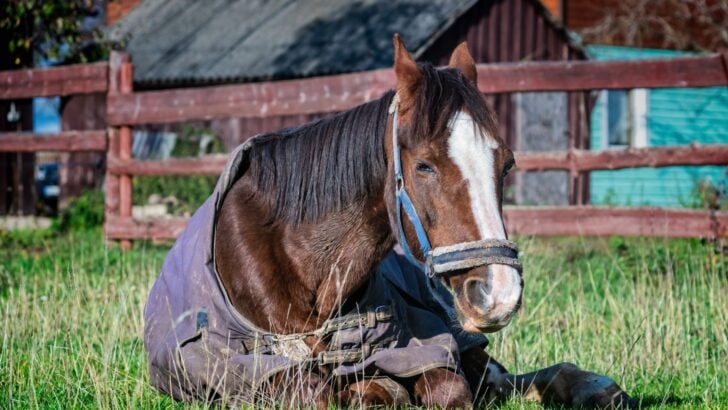
A yearling colt I took in years ago arrived with watery manure pooling beneath him in the trailer. My vet told me plainly that he was in trouble: a heavy parasite load had him in poor shape, and treatment needed to start immediately. That colt taught me something I haven’t forgotten – diarrhea is usually a warning sign, not the actual problem. If your horse has diarrhea, the first question is not “What caused it?” It is “How sick is this horse right now?”
Diarrhea in horses is a symptom, not a diagnosis. It can follow a feed change or stress, but it can also signal parasites, sand, medication-related gut trouble, colitis, or another illness. Watery or rapidly increasing diarrhea, fever, colic signs, poor appetite, reduced drinking, weakness, or a horse that seems dull are reasons to call your veterinarian right away. If the manure is merely loose and the horse is otherwise bright, comfortable, eating, drinking, and fever-free, call your vet for guidance and monitor closely for any change.
Below, I’ll help you sort an emergency from a case that may be less urgent, cover common causes and the signs that go with them, explain what your veterinarian may check, and share practical steps that can reduce the chance of dealing with it again.
This article is for educational purposes and does not replace veterinary care. Horses can lose a large volume of fluid through severe diarrhea in a short time, so do not wait if your horse has the emergency signs covered below.
Table of Contents
Is This an Emergency? Quick Triage for Horse Diarrhea
Use this when you’re standing in the barn aisle trying to decide whether to call right now. Treat any horse that’s getting worse – not simply the manure – as the emergency.
Call your veterinarian promptly if you see: watery or rapidly increasing diarrhea; a temperature above your horse’s normal range, especially 101.5°F or higher; colic signs (pawing, looking at the flank, repeatedly lying down or rolling); poor appetite or reduced drinking; dullness or weakness; tacky, very pale, brick-red, or dark gums; new hoof heat, a stronger-than-usual digital pulse, or a stance suggesting foot pain; or a horse that’s very young, geriatric, medically compromised, or recently treated with antibiotics or anti-inflammatory medication.
If manure is loose but not watery and the horse remains bright, comfortable, eating, drinking, and fever-free, call your vet for advice and monitor closely. Take a temperature, note water intake and manure output, and be ready to describe when the change started, recent feed or turnout changes, travel, medication, deworming history, and whether other horses are affected. If the horse worsens at any point, call again immediately.
Immediate actions: if you can do so safely, separate a horse with unexplained diarrhea from the rest of the herd until you’ve spoken with your vet – especially when the manure is watery, the horse has a fever, or other horses may be affected. Keep plain water available at all times, take a rectal temperature, and do a skin-tent check: pinch the skin over the shoulder and release it. A delayed return can be one sign of dehydration, though it’s not a diagnosis by itself – this guide covers hydration and skin-pinch testing in more detail. If your vet has previously recommended an electrolyte product for your horse, offer it separately – never as a replacement for water. Text or call your vet with what you’re seeing, even if you’re not sure yet how urgent it is.
What Does Normal Horse Manure Look Like?
Knowing what’s normal for your own horse makes it a lot easier to spot when something’s off:
| Manure Appearance | What It May Suggest |
|---|---|
| Well-formed fecal balls | Usually normal when the horse is otherwise acting normally |
| Soft but still formed | A change worth noting; diet, stress, turnout, or early illness are possibilities |
| Soft “cow-plop” consistency | Loose manure that deserves closer observation and a call to your vet for guidance if it persists or the horse changes |
| Watery puddles or a constant stream | A high-priority veterinary concern, especially with fever, colic signs, dullness, poor appetite, or reduced drinking |
| Mucus or slime | Can occur with intestinal irritation; note it and report it to your vet if it persists or accompanies other signs |
This table is a general reference, not a diagnosis – the same appearance can have different causes in different horses, and your vet is the one who can actually tell you what’s going on.
Common Causes of Diarrhea in Horses
Parasites
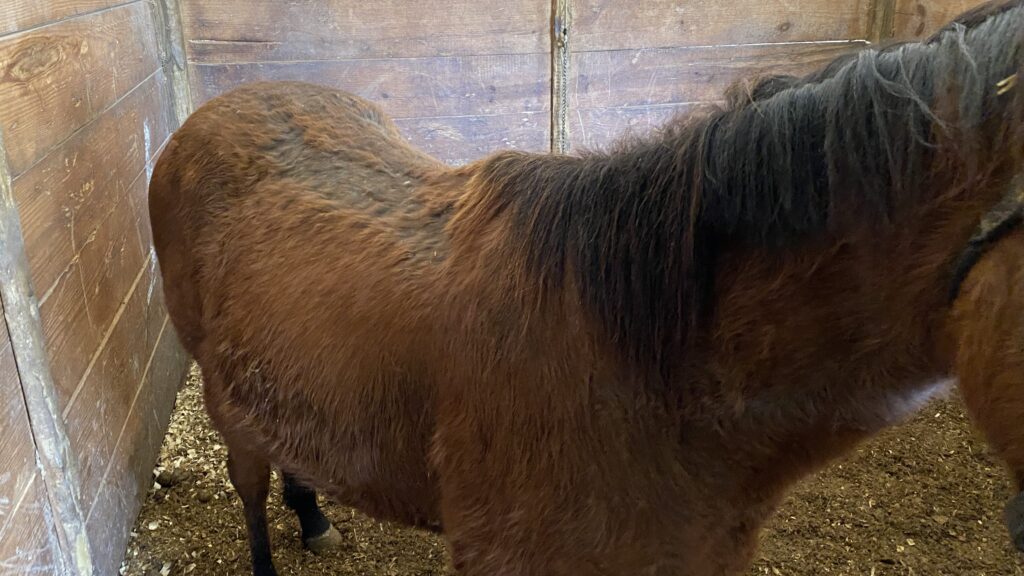
Parasites are one of the first things I think about when I see chronic loose manure, especially in a horse from an unknown background – a horse can look like it’s eating well and still be losing the battle internally. That’s the lesson Jimmy taught me. Strongyles, especially small strongyles (cyathostomins), can be associated with weight loss, poor body condition, loose manure, and in severe cases, intestinal disease, as outlined in reviews of equine cyathostomins and their clinical impact. Other signs include a rough coat, pot belly, and a long coat that doesn’t shed normally.
A fecal egg count is useful for planning routine parasite control and identifying horses that shed more eggs onto pasture. It doesn’t, by itself, prove that parasites are causing an individual horse’s diarrhea, because egg counts don’t reliably reflect the immature parasite stages that can cause disease. Your vet may combine history, age, body condition, fecal testing, bloodwork, and how the horse responds to a carefully chosen treatment plan before deciding parasites are the likely cause – see strategic, FEC-based parasite control for the routine-management side of this.
Miles’s Take: Jimmy had an unknown history, poor condition, and obvious management problems when he arrived. My vet built the deworming plan and adjusted his feed rather than having me throw one product at him and hope for the best. That distinction matters – a sick horse needs a plan based on the horse in front of you, not a generic deworming schedule.

Bacterial Infections
One of the more urgent categories on this list. Salmonella, Clostridium difficile or C. perfringens, and Potomac Horse Fever can all cause sudden, profuse watery manure, fever, depression, refusal to eat, and rapid dehydration, with a real risk of endotoxemia triggering laminitis. The Merck Veterinary Manual’s section on salmonellosis details how quickly these horses can deteriorate and why aggressive IV fluids, anti-inflammatories, and sometimes plasma are needed. Sudden watery diarrhea is especially concerning when it shows up with fever, depression, or dehydration, since infectious colitis can progress quickly.
Risk factors include recent stress (travel, weaning, competition), recent antibiotic use, contaminated feed or water, and a recent colic episode. Some infectious causes, including Salmonella, can spread in a barn through direct contact and contaminated surfaces, and some can affect the people caring for an affected horse. Potomac Horse Fever is different – it’s generally associated with exposure to infected aquatic insects and environmental sources rather than direct horse-to-horse contact, so it calls for its own veterinary and regional-risk discussion rather than the same isolation approach you’d use for Salmonella. Isolate a horse with unexplained watery diarrhea, use separate buckets and tools, wash your hands, and follow your vet’s instructions on testing and cleaning either way.
Sand Enteropathy
Common in Louisiana and other sandy regions. Horses can ingest a lot of sand while grazing short pasture or eating off bare ground; it accumulates in the colon, irritates the lining, and can cause both diarrhea and colic, as detailed in the Merck entry on sand enteropathy. Signs can include chronic loose manure, intermittent colic, and weight loss despite adequate feed. Sand may be detected in manure testing, but a horse can have a sand problem even when it isn’t obvious to the eye or hand.
A home sediment check – fresh manure in a clear bag or glove with water, mashed gently, hung so contents settle – may suggest sand exposure, but it doesn’t replace a veterinary diagnosis. Your vet can confirm the problem with history, manure testing, a rectal exam, and radiographs if needed. Treatment commonly includes veterinarian-directed psyllium; more serious cases may need additional treatment, including products administered by nasogastric tube. Do not assume a horse with colic or significant diarrhea has only a sand problem.
Diet and Feed Changes
One of the most common triggers I see overall. Switching hay or grain abruptly, turning out on lush spring grass for hours from day one, feeding large starchy grain meals, and moldy or poor-quality hay can all disrupt the hindgut microbiome and lead to loose manure. Any feed or turnout change should happen gradually, over roughly 7 to 10 days, changing one thing at a time rather than hay and grain together – see the prevention section below for the full approach.
Miles’s Take: One of the easiest mistakes owners make is changing three things at once – new hay, new grain, and pasture turnout all in the same week. When the manure changes, you have no way to know which one caused it.
Antibiotics and Pain Medications
Antibiotic-associated diarrhea happens when antibiotics wipe out beneficial gut bacteria and let harmful species, including Clostridium, overgrow. NSAIDs like phenylbutazone and flunixin can also damage the gut lining when overused or dosed incorrectly.
Never use leftover antibiotics or medication borrowed from another horse – these need to be prescribed by your vet for your horse’s specific problem. Follow dosing and duration for Banamine and other NSAIDs exactly, and monitor manure daily while a horse is on antibiotics or high-dose NSAIDs.
Miles’s Take: I never judge manure by itself. I look at the whole horse – appetite, attitude, temperature, hydration, and manure together. Manure alone can look worse than the horse actually is, or the other way around.
A Special Note on Foals
Foal diarrhea should always be treated as urgent, since foals dehydrate much faster than adults. “Foal heat” diarrhea around 7-14 days old is usually mild and self-limiting, but it can look similar to more serious causes – rotavirus and other viral infections, Cryptosporidium and other protozoa, Lawsonia intracellularis, or Rhodococcus equi, often alongside pneumonia. Even if you suspect foal-heat diarrhea, call your vet. It’s far better to be told it’s normal than to miss an early warning sign of something serious.
How Vets Diagnose Diarrhea
One thing I tell newer owners: don’t get frustrated if your vet doesn’t immediately give you “the answer.” Diarrhea is a symptom with many possible causes, and a definitive cause isn’t found in every case. The job isn’t just stopping the manure – it’s figuring out why the gut is reacting this way in the first place, and treating the horse appropriately while that’s sorted out.
You can do a few checks safely at home while you’re waiting for your vet or on the phone with them. None of these rules an emergency in or out by itself – they help you give your vet a useful picture of what’s going on:
| Check | How to Do It | What It Tells You |
|---|---|---|
| Skin tent | Pinch neck or shoulder skin, release | Stays up more than 2 seconds – dehydration |
| Gum color and capillary refill | Press gums, time color return | More than 2-3 seconds – poor circulation |
| Temperature | Rectal thermometer | Above 101.5°F is a reason to call your vet; fever can accompany infection or inflammation |
| Manure volume | Note piles vs. puddles | A sudden large volume of watery manure is more concerning |
| Eating/drinking | Watch for 15-30 minutes | Not eating or drinking is serious |
Beyond that, your vet chooses tests based on severity, age, and risk factors. Fecal tests can include an egg count for parasites, flotation and sedimentation for parasites or sand, and cultures or toxin assays for Salmonella and Clostridium. Bloodwork checks for infection, inflammation, and organ function. In less clear-cut cases, a fecal PCR panel that screens for multiple pathogens at once, along with abdominal ultrasound and a rectal exam, may be needed.
In severe cases, your vet will also check digital pulses and hoof temperature, since endotoxemia from severe diarrhea can lead to laminitis.

How Veterinarians Treat Horse Diarrhea
Treatment depends on cause and severity, but the goals are the same: protect life, restore hydration, and address the underlying problem.
Emergency Cases
These are the watery, feverish, dehydrated horses that meet the emergency criteria above. Treatment is built around rapid fluid and electrolyte replacement, pain and inflammation control, and close monitoring for complications such as endotoxemia, protein loss, and laminitis. Depending on the suspected cause and the horse’s bloodwork, your vet may also recommend targeted antimicrobial treatment, plasma or other support for major protein loss, and referral-hospital care. Some severe cases need continuous monitoring and large volumes of IV fluids, so your vet will judge the safest setting from the horse’s condition and how it’s responding to treatment.
Mild, Uncomplicated Cases
Don’t make major feed or medication changes without your vet’s direction. Keep plain water available, and ask your vet whether hay-only feeding, grain restriction, oral electrolytes, or another plan is right for your specific horse – the correct approach depends on hydration, appetite, the suspected cause, and whether hospitalization is needed. Ask before using a probiotic, too; evidence and product quality vary, and it’s not a substitute for figuring out what’s actually wrong. If mild diarrhea doesn’t start improving within a day or two, or new signs like fever, colic, or refusing water show up, treat it as an emergency.
Chronic Diarrhea
Cases lasting weeks need a thorough workup first, not guesswork at home. Management may include a low-starch, high-forage diet, smaller and more frequent meals, gradual one-change-at-a-time feed adjustments, and treating any underlying cause – parasites, sand, or something like inflammatory bowel disease. Don’t give anti-diarrheal products or leftover medication unless your vet tells you to; some products are inappropriate when colitis, obstruction, or a toxin-related disease is a possibility.
Mistakes I See Owners Make
- Giving a random probiotic and hoping it fixes things, instead of asking the vet first.
- Changing feed repeatedly while trying to “fix” loose manure, which just adds more variables to sort out.
- Giving leftover medication from a different horse or a different problem.
- Waiting because the horse “seems okay” – a bright attitude doesn’t rule out a real problem developing underneath.
Reducing the Risk of Diarrhea
Across three decades of owning and caring for horses, most serious diarrhea cases I’ve encountered fit into a few buckets: parasites, feed changes, stress, and infections in already-stressed horses. Here’s what actually reduces the odds.
Strategic, FEC-Based Deworming
Modern parasite control focuses on fecal-egg-count-based programs rather than fixed-interval rotation, per AAEP’s internal parasite control guidelines, which recommend FEC once or twice yearly to categorize horses by shedding level and annual fecal egg count reduction testing to confirm the program is working – not FEC as a way to diagnose disease in a sick horse. In my own barn, that means spring and fall FECs, annual fecal egg count reduction testing, and a program my vet tailors to each horse and our local resistance picture. Low shedders may need only baseline treatment once or twice yearly, while selected high shedders may need additional treatment. Product choice and timing should follow your vet’s advice – this is a framework to review with your vet, not a fixed prescription.
Pasture and Manure Management
Pick manure regularly in small paddocks and dry lots, drag and rest larger pastures during warm, dry weather, rotate grazing to avoid overgrazing down to bare soil, and in sandy areas, avoid feeding directly on the ground.
Make Feed Changes Gradually
Change hay, grain, and pasture access gradually rather than overnight. As a practical rule, give the horse roughly 7 to 10 days to adjust when you can, and avoid changing hay, grain, and turnout all at once. Introduce spring grass in short, controlled periods and increase access only while manure stays normal. Base the diet on clean, palatable forage appropriate for your horse and approved by your vet.
Stress Reduction and Biosecurity
Stress and exposure drive a lot of diarrhea cases. Keep feeding and turnout schedules as consistent as you can, consider vet-approved gut support for travel and competition, and always offer hay and familiar-tasting water on the road. Isolate new arrivals for two weeks with their own buckets and tools. During any outbreak, isolate affected horses, disinfect equipment, and protect people with gloves and good hygiene, especially if Salmonella is suspected.
My Barn’s Emergency Kit: electrolyte powder, a digital thermometer with lubricant, vet-prescribed Banamine with written dosing instructions, a probiotic my vet is comfortable with, my vet’s cell number saved in my phone, and gloves plus a clean bag for collecting a fecal sample if needed. Checking manure consistency daily and noting appetite, water intake, and behavior is just part of my normal barn routine – not a treatment on its own, but it’s how I catch problems early.
FAQs About Horse Diarrhea
How long does diarrhea usually last in horses?
It depends entirely on the cause. A mild feed-related upset may resolve within days once the diet is corrected, while infectious or chronic causes can last weeks and always need veterinary involvement. Rather than watching a clock, call your vet if diarrhea persists, worsens, or comes with fever, colic signs, or a horse that’s off its feed.
Is horse diarrhea contagious?
It depends on the cause. Some causes, particularly Salmonella and certain viral or bacterial illnesses, can create a barn-level biosecurity concern – isolate a horse with unexplained watery diarrhea, use separate buckets and tools, wash your hands, and follow your vet’s instructions on testing and cleaning. Not every infectious cause spreads directly horse to horse: Potomac Horse Fever, for example, is generally associated with environmental exposure rather than direct contact between horses. Parasites, sand, and feed-related diarrhea aren’t directly contagious, though parasite eggs can contaminate the environment through manure.
What should I feed a horse with diarrhea?
Keep plain water available and call your vet before making major feeding changes. Many mild cases are managed with a simple, forage-based plan, but the right approach depends on the horse’s hydration, appetite, suspected cause, and whether hospitalization is needed. Don’t assume hay-only feeding, grain withdrawal, oral electrolytes, probiotics, or psyllium is appropriate for every case without veterinary guidance.
Can stress alone cause diarrhea?
Yes. Travel, competition, weaning, major routine changes, and even herd reshuffles can trigger stress-related diarrhea in sensitive horses. Maintaining routine, offering free-choice hay, and asking your vet whether gut support makes sense can help. Call your vet if stress-related diarrhea persists or worsens rather than waiting a set number of hours.
How do you treat mild diarrhea in horses at home?
Call your vet for guidance, even if the horse still looks fairly normal. While you wait, separate the horse from others if an infectious cause is possible, keep plain water available, take and record a rectal temperature, watch appetite and drinking, and save a fresh manure sample if your vet wants one. Don’t use leftover antibiotics, extra Banamine, anti-diarrheal products, or a borrowed treatment plan. Watery manure, fever, colic signs, poor appetite, reduced drinking, weakness, or rapid worsening warrant urgent veterinary attention.
Jimmy’s case was never really about diarrhea – it was about a heavy parasite load, poor management, and a gut that needed time and support to heal. The diarrhea was just the loudest warning sign. After owning horses long enough, you learn that the small changes matter – a different manure pile, a horse not cleaning up his feed, a little less energy than normal. Those are the things that let you catch problems early. The best chance of a good outcome usually comes from noticing those warnings early, calling your vet promptly when something is off, and following through on the plan for the horse in front of you.
About Miles Henry
Racehorse Owner & Author | 30+ Years in Thoroughbred Racing
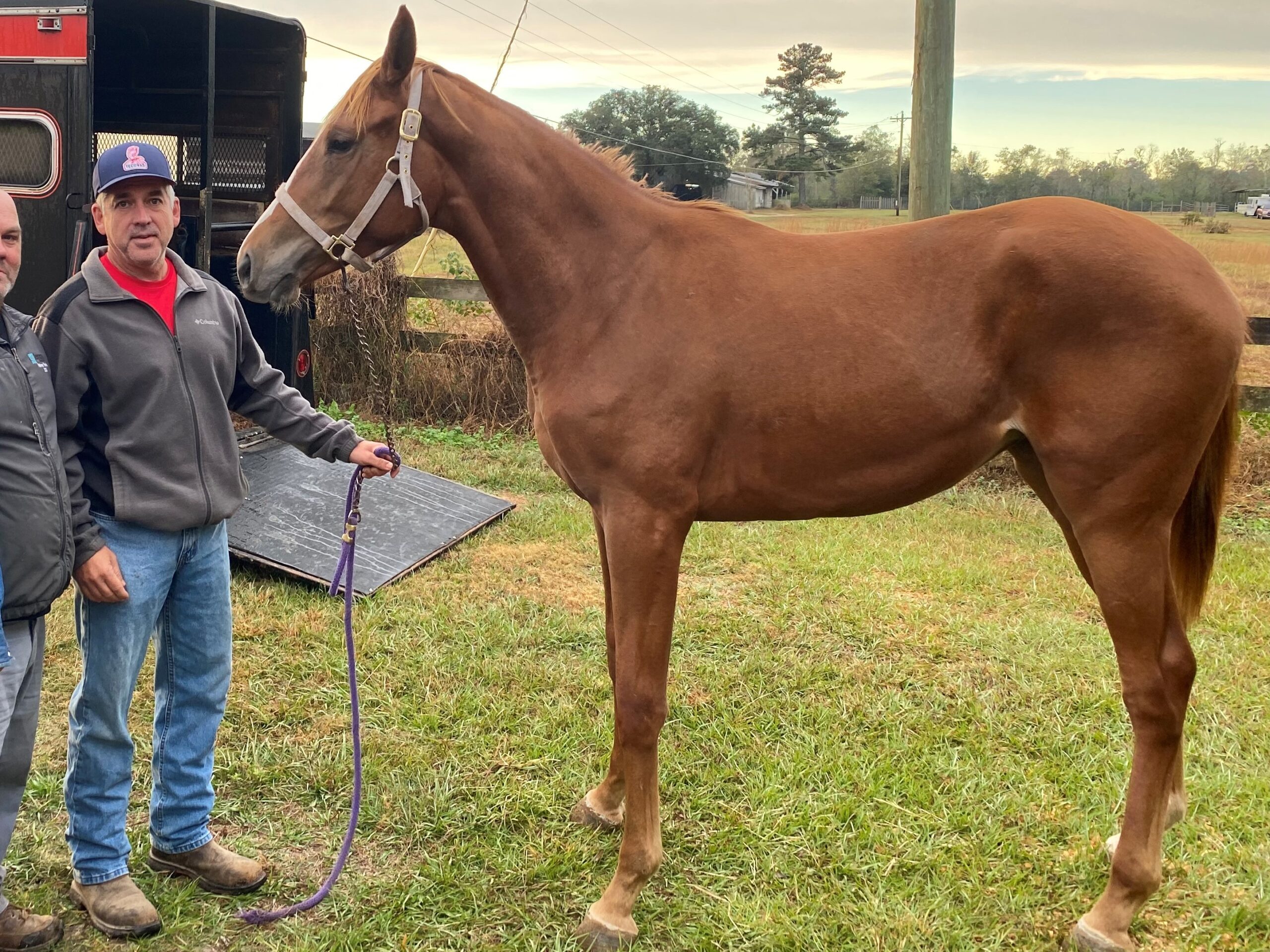
Miles Henry (legal name: William Bradley) is a professional horseman based in Folsom, Louisiana. He holds Louisiana Racing License #67012 and has spent over three decades managing Thoroughbreds at premier tracks including Fair Grounds, Delta Downs, and Evangeline Downs.
Expertise & Hands-On Experience: Beyond the track, Miles has decades of experience in specialized equine care, covering everything from hoof health and nutrition to training protocols for Quarter Horses, Friesians, and Paints. Every guide on Horse Racing Sense is rooted in this “boots-on-the-ground” perspective.
30 of their last 90 starts
Equibase Profile.

Connect with Miles: