
Last updated: September 21, 2026
Any links on this page that lead to products on Amazon are affiliate links and I earn a commission if you make a purchase. Thanks in advance – I really appreciate it!
A horse can look perfectly sound in the morning and be nearly non-weight-bearing by afternoon. I’ve seen it happen with my horses more than once, and a hoof abscess can be the reason.
A hoof abscess can cause sudden, severe lameness – sometimes bad enough to make a horse look like he’s broken a leg. Heat in the hoof and a stronger digital pulse are common clues, but they don’t prove it’s an abscess. A fracture, puncture wound, laminitis, or another painful foot problem can look similar, so don’t assume a severely lame horse has a simple abscess.
In this guide, you’ll learn the common signs of a hoof abscess, what can cause one, when severe lameness needs a veterinarian right away, how farriers and vets commonly manage uncomplicated cases, and what may be behind repeat abscesses.
Table of Contents

Signs of a Hoof Abscess
These are common findings I check while I’m getting the horse looked at, but they don’t confirm an abscess on their own:
| Sign | What to Look For |
|---|---|
| 1. Sudden severe lameness | Lameness can come on quickly and be severe enough that the horse barely loads the foot. That pattern fits an abscess, but it can also fit a fracture, puncture wound, laminitis, or another serious foot problem. Miles’ Tip: Notice which foot the horse is protecting, but don’t try to diagnose the problem from stance alone. Your vet or farrier will combine the history, hoof-tester response, heat, digital pulse, and a full exam. |
| 2. Heat in the hoof | Affected hoof feels noticeably warmer than the others. Always compare it to the opposite foot to establish a baseline. |
| 3. Bounding digital pulse | Strong, throbbing pulse at the back of the fetlock (digital artery). |
A stronger digital pulse in one foot is useful information to give your vet or farrier, but it doesn’t diagnose an abscess. I compare it with the opposite foot and note the difference while I’m waiting for the horse to be examined. The AAEP includes digital-pulse assessment in its field diagnostic guidance for lame horses.
You might also see swelling around the coronary band or smell foul discharge if it’s already burst. Get your vet or farrier to confirm either way – I’ve seen what looked like a textbook abscess turn out to be a fracture.
What Causes a Hoof Abscess?
Think of the hoof capsule as a hard, closed box. A hoof abscess is a localized infection inside that box, and because the wall and sole don’t have much room to expand, pressure can build quickly and make a horse look as though he injured his leg badly overnight. According to Brian Beasley, DVM (University of Georgia), writing in the Merck Veterinary Manual, abscesses are among the most commonly observed hoof disorders in equine practice.
I’ve seen how quickly this can change: one of my horses looked fine in the morning, but by afternoon he wouldn’t put weight on his front left. The farrier found a tiny crack along the white line. We couldn’t prove that was where the infection started, but it was a reminder that small defects can become bigger problems when feet are repeatedly wet, softened, and then dried out.

Bacteria usually get in through a compromised area of the hoof, though you may never find a clear entry point. In Louisiana’s humidity, repeated wet and dry conditions can soften hoof horn, contribute to small cracks, and make it easier for bacteria to enter a compromised foot. Other common contributors:
- “Gravel” migration – Some abscess tracts travel upward and eventually drain at the coronary band; owners often call this a “gravel.” If you see drainage or a new sore spot there, have your vet or farrier examine it rather than assuming you know where the tract began.
- Sole bruising – Working on hard, rocky ground can bruise the sole and leave tissue more vulnerable to infection. Not every bruise becomes an abscess, but persistent or worsening lameness deserves professional assessment.
- Puncture wounds – Nails, wire, sharp rocks. If a nail, wire, screw, or other object is still in the hoof, leave it in place and call your veterinarian immediately – don’t pull it out or let the horse walk around on it. If you safely can, take a photo and note where the object entered; its location and angle may help your veterinarian judge which structures could be involved.
- Hoof wall or sole compromise – Horses with thin walls, poor-quality horn, or mechanically stressed feet may be more vulnerable. In racing barns, I pay especially close attention to Thoroughbreds whose soles or walls need added protection.
Don’t assume you’ll always see where it came in – some start from bruising, hairline cracks, or even internal cracks that don’t show on the surface. If you’re unsure whether lameness is from an abscess or another condition, our lameness guide can help you interpret signs and decide when to call a vet.
When to Call a Veterinarian
Call your veterinarian promptly if your horse has: an embedded object in the hoof, swelling moving up the leg above the fetlock, fever, unmanageable pain (sweating, shaking, refusing to eat), or is non-weight-bearing and you don’t know why. Those signs can also point to a puncture, fracture, laminitis, or another problem that shouldn’t be managed as a routine abscess.
In my barn, an uncomplicated abscess may be managed with a farrier involved early. The mistake I see owners make is waiting because they assume the horse is “just having an abscess.” Sometimes they’re right. Sometimes they’re not. If the horse is non-weight-bearing and you aren’t sure why, that’s not a situation where I like guessing – and no improvement after several days of care is also worth a call, since it could mean a foreign body, bone involvement, or a different problem entirely.
A practical lesson from the barn: A three-legged horse gets your attention fast, but the severity of the lameness doesn’t always tell you how serious the cause is. I’ve seen horses improve dramatically after an abscess drained, and I’ve also seen people miss a more serious problem by assuming “it’s just an abscess.”
Treatment and Aftercare
For a confirmed, uncomplicated abscess, the goal is to establish safe drainage, relieve pressure, and protect the foot while it heals. Don’t dig, pare, or try to drain the hoof yourself. Unless you’re trained, you can damage sensitive tissue, remove protective sole, or miss the actual drainage tract. Don’t give prescription pain medication or antibiotics without veterinary direction.

Usually the first job is figuring out exactly where the pain is coming from. Your vet or farrier will use the exam, hoof testers, and their experience to decide whether there’s an abscess that can be safely opened – unnecessary paring can remove protective sole and create a larger problem than the abscess itself. When an abscess drains, the relief can be striking. I’ve watched a horse that was barely willing to load the foot walk much more comfortably soon afterward. Even then, I keep following the case, because a dramatic improvement doesn’t prove every concern is over.
Soaking isn’t a one-size-fits-all abscess treatment. If my vet or farrier recommends it, I use a short warm Epsom-salt soak – usually 15 to 20 minutes – then dry and protect the foot as directed. Some professionals prefer a poultice instead, and University of Minnesota Extension notes that repeated soaking can soften and weaken hoof horn over time.
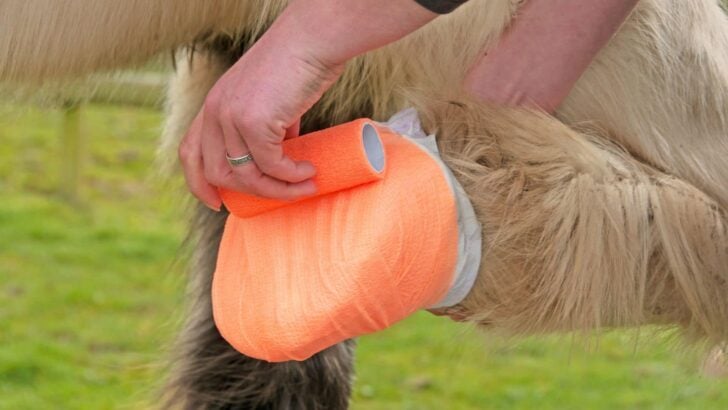
For a foot my vet or farrier has told me to keep protected, I often use a simple diaper-and-tape hoof wrap. Apply only the dressing or poultice your veterinarian or farrier has recommended for that horse and drainage site – in my barn, that has often meant Animalintex or ichthammol, but I don’t treat either as automatic for every sore foot.
- Apply the recommended dressing or poultice directly to the abscess site.
- Take a standard baby diaper that fits the hoof without bunching or putting pressure on the pastern. Place the absorbent side against the hoof sole, use the tabs to secure it around the pastern.
- Wrap with Vetrap to hold it snug – not tight, since that restricts circulation.
- Cover the bottom and toe with duct tape or Gorilla Tape, kept below the hoof capsule, to help keep the dressing clean and dry until the next change.
- Change daily, or sooner if the wrap becomes wet, loose, or damaged.

Your veterinarian may prescribe pain relief such as phenylbutazone or flunixin meglumine (Banamine) when appropriate – don’t dose either without veterinary direction, particularly if the horse is dehydrated, off feed, on other medications, or has a history of gastrointestinal, kidney, or other health concerns. Systemic antibiotics aren’t routinely needed for every uncomplicated hoof abscess, especially once adequate drainage is established; they may be appropriate when your vet is concerned about a puncture wound, infection beyond the hoof, bone involvement, fever, or other complications.
| Situation | What to Expect |
|---|---|
| Uncomplicated abscess with drainage established | Many horses become much more comfortable once pressure is relieved, but the foot still needs protection and monitoring until the drainage tract is clean and the horse is consistently sound. |
| Persistent severe lameness or no clear improvement | Contact your veterinarian – the problem may not be a routine abscess, or further examination and imaging may be needed. |
| Drainage at the coronary band or a large defect in the sole/wall | Healing can take longer because the tract or defect has to grow out or close. Follow your vet or farrier’s plan before returning to work. |
| Return to riding, training, or racing | Resume only when the horse is consistently sound and the professional managing the case agrees the hoof is adequately protected. |
Preventing and Investigating Repeat Abscesses
You can’t prevent every abscess, but you can reduce how often they happen. These are the strategies that have made a real difference in my own barn:
- Keep horses on an individual farrier schedule – my racehorses are often on a four- to five-week cycle, but hoof growth, workload, and shoeing needs decide the right interval. Long toes act like levers, prying the wall away and creating entry points for bacteria.
- Pick feet every morning. It takes about two minutes per horse and gives me a chance to catch stones, cracks, loose shoes, odor, and punctures early.
- Check feet after work or wet turnout, especially when mud may hide sharp objects.
- Good drainage, dry bedding, gravel or other stable footing in high-traffic areas, and regular paddock hazard checks won’t prevent every abscess, but they reduce the conditions that lead to soft feet, packed debris, and puncture risk.
Hoof supplements may help a horse with poor-quality hoof horn, but they aren’t a quick fix for an abscess or a substitute for balanced nutrition, regular trimming, and good management. In my barn, a consistent ration and sound hoof care matter more than chasing a new hoof product whenever a horse chips or cracks. Purdue University’s equine nutrition materials are a good starting point if you want to dig deeper.

If a horse keeps abscessing, I stop treating each episode as an isolated bad-luck event. That’s when I want the vet and farrier to review:
- Is sole depth adequate for the horse’s workload and footing?
- Is hoof balance or shoeing protection contributing?
- Is there evidence of old laminitis, white-line stretching, or chronic hoof distortion?
- Has the horse had repeated exposure to wet footing, poor drainage, or bruising terrain?
- Does the history justify radiographs or evaluation for PPID or another underlying condition?
From my barn: I had a mare who abscessed every March. After her PPID was identified and treated, the seasonal pattern improved. That experience taught me not to write off recurring abscesses as “just spring mud.”
For broader causes of hoof pain and how abscesses compare, see our guide on hoof pain in horses: causes and treatment.
Hoof Abscess FAQs
Should I wrap the hoof overnight or remove it?
Ask your vet or farrier where the dressing should sit and how it should be secured for your horse’s specific situation. Many owners keep a well-fitted wrap on overnight during active treatment and change it once daily, checking drainage progress. A wrap that’s soaked through, loose, or has come off should be replaced promptly rather than leaving the hoof exposed.
Can I turn out my horse during abscess treatment?
Whether turnout is appropriate depends on the horse’s comfort, the drainage site, the condition of the bandage, footing, and weather, and your vet or farrier’s instructions. I avoid muddy turnout and protect the foot when the professional managing the case advises it, rather than using a set number of days as the deciding factor.
What’s the difference between an abscess and a bruise?
A sole bruise is damage and bleeding within the sole from impact or pressure; an abscess is an infection within the hoof. Either can cause heat, tenderness, and lameness, and the severity can overlap. A veterinarian or experienced farrier uses history, examination, hoof testers, and imaging when needed to tell them apart. If the horse is markedly lame, don’t assume it’s only a bruise.
Can a hoof abscess drain through the coronary band?
Sometimes an abscess tract travels upward and drains near the coronary band, which horse people may call a “gravel.” Have your veterinarian or farrier examine it, because the drainage site doesn’t always tell you exactly where the problem started.
How long does a hoof abscess take to heal?
Some uncomplicated abscesses improve quickly once drainage is established, but there’s no dependable timeline for every horse. The location and size of the tract, amount of sole involved, hoof quality, turnout conditions, and whether another problem is present all affect recovery. Your horse should be consistently sound and cleared by the professional managing the case before returning to regular work.
A hoof abscess can make a horse look alarming in a hurry, but not every suddenly lame horse has one. Notice the foot heat, pulse, swelling, drainage, and anything that may have punctured the sole, then get the horse properly assessed. Once an uncomplicated abscess is located and drained, many horses improve quickly – but protecting the foot, keeping the aftercare consistent, and watching for anything that doesn’t fit the normal pattern are what keep a simple case from becoming a bigger one.
Last updated September 2026.
About Miles Henry
Racehorse Owner & Author | 30+ Years in Thoroughbred Racing
Miles Henry (legal name: William Bradley) is a professional horseman based in Folsom, Louisiana. He holds Louisiana Racing License #67012 and has spent over three decades managing Thoroughbreds at premier tracks including Fair Grounds, Delta Downs, and Evangeline Downs.
Expertise & Hands-On Experience: Beyond the track, Miles has decades of experience in specialized equine care, covering everything from hoof health and nutrition to training protocols for Quarter Horses, Friesians, and Paints. Every guide on Horse Racing Sense is rooted in this “boots-on-the-ground” perspective.
30 of their last 90 starts
Equibase Profile.

Connect with Miles: