
Last updated: July 28, 2026
If you’ve ever asked why horses paw the ground, the answer depends on whether the behavior is normal impatience—or a sign of pain. In many horses, pawing is a learned behavior or a response to frustration. But because pawing can also signal pain, I always look at the whole picture before deciding it’s just a habit.
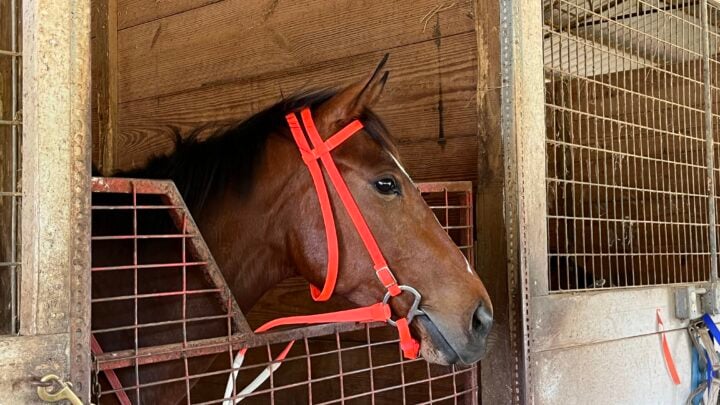
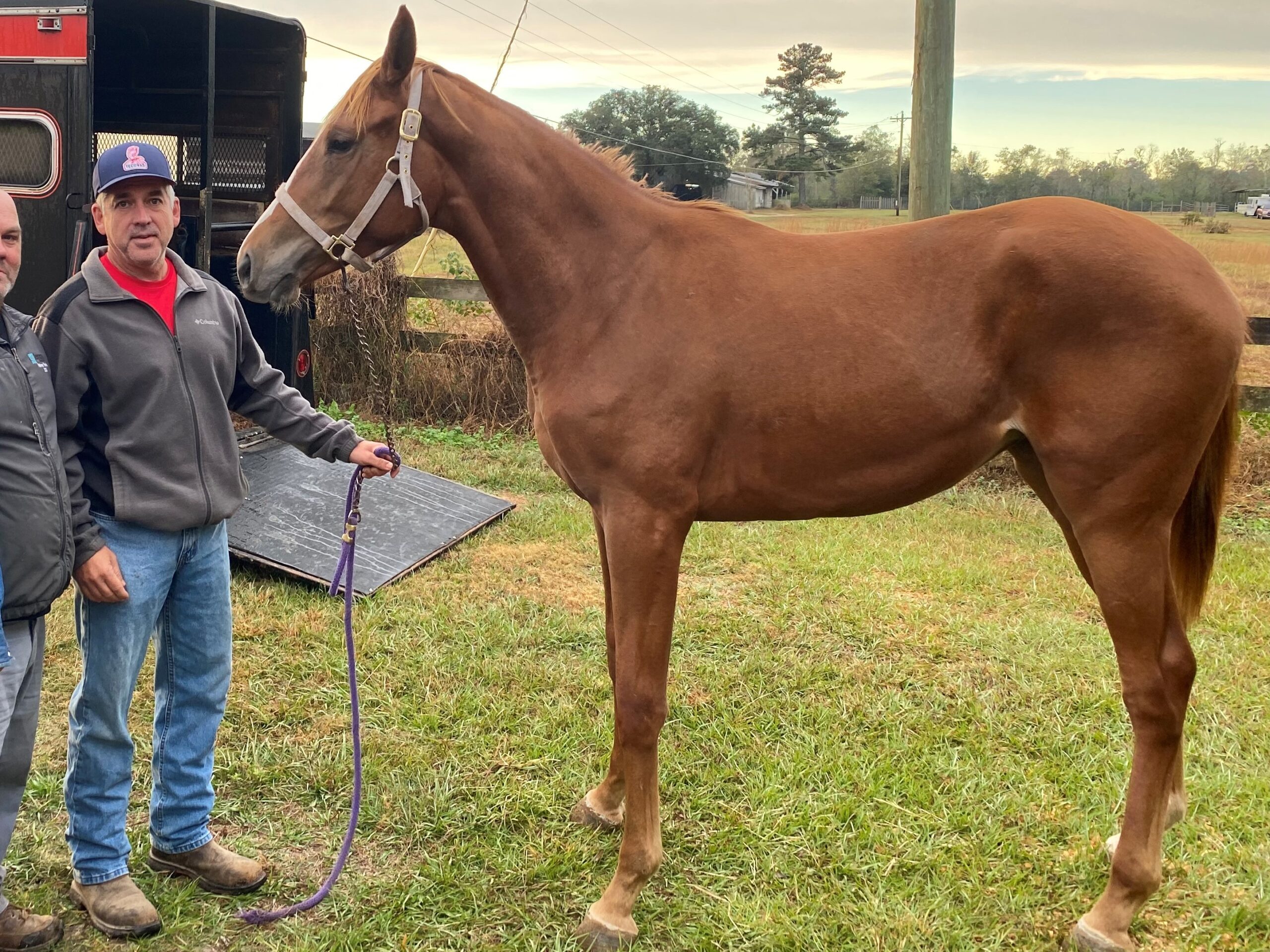
One of ours, a three-year-old filly, started pawing her stall gate every evening and digging holes in the floor. At first I worried about colic, but after watching the pattern develop, it became clear that pawing had become a way for her to get my attention faster than standing quietly.
That’s why I never judge pawing by itself. I look at when it happens, what the rest of the horse is telling me, and whether it’s a new behavior. Pawing can be a habit, but it can also be a warning sign of colic, laminitis, hoof pain, or another issue that needs attention.
Table of Contents
The First Thing I Check When a Horse Starts Pawing
When I walk into a barn and see a horse pawing, I don’t jump straight to colic. I check three things, in this order, before I decide what I’m actually looking at.
- Timing. Does it happen at the same time every day, like right before feed, or is it random? Predictable pawing points to a learned behavior. Pawing that shows up at odd, inconsistent times gets more of my attention.
- The horse’s expression. Ears forward, watching me, waiting on something? That’s a horse asking for dinner. Ears pinned, head low, eyes checked-out or distressed? That’s a different animal entirely, and it changes what I do next.
- Whether it’s new. A horse that’s always pawed a little at feed time isn’t telling me anything new. A horse that’s never pawed in its life and suddenly starts is the one that gets my full attention, the way my three-year-old did recently — see below.
What Pawing Looks Like (And What It Isn’t)
Pawing is a forward scraping motion. The horse extends a front leg and drags the hoof back toward the body, often repeating the motion. Wild horses paw through snow to uncover forage; domestic horses retain this instinct even when food is plentiful.
Pawing is not the same as stomping. Stomping is a vertical motion—lifting and slamming the hoof straight down. It almost always targets irritation in the lower leg, such as flies, mites, or uncomfortable footing. If the leg goes straight up and down, you’re dealing with stomping, not pawing.
Quick Reference: Normal vs. Concerning Pawing
| Pawing Pattern | What It Means | Action Needed |
|---|---|---|
| Brief pawing before lying down | Normal “nesting” behavior | None (Watch for comfort) |
| Pawing right before feeding | Impatience, learned behavior | Training adjustment |
| Pawing when tied or stalled | Frustration or boredom | Management + training |
| Pawing + flank watching + rolling | Possible Colic | Call vet immediately |
| Pawing with weight shifted back | Possible laminitis/hoof pain | Check digital pulse + Vet |
| Sudden pawing in a calm horse | Acute pain or illness | Veterinary exam |
Why Do Horses Paw the Ground? 4 Common Reasons
1. Impatience (Feed-Time Pawing)
This pawing starts predictably—often 10–15 minutes before dinner. The horse knows the routine and demands that it happen sooner.
In our barn, one filly started pawing at 4:45 every evening. We fixed it by feeding her last and only after she stood quietly for two minutes. She tested the rule for three days, then stopped. Once pawing stopped producing results, the behavior disappeared.
Common mistake: Feeding a horse “to quiet them down” teaches them that pawing works. The behavior usually escalates from there.
2. Frustration (When Tied or Confined)
Horses paw when they’re asked to stand still longer than expected. Young horses do this most often. It isn’t aggression—it’s communication.
A common, low-risk approach:
- When the horse paws, calmly untie
- Ask for a simple task (backing up, small circles)
- Return them to the original spot once calm
The goal is to associate pawing with work, not freedom. Expect the horse to test you for the first two to three days — that’s normal, and it means the lesson is sinking in, not failing.

3. Boredom (Stall-Related Pawing)
Horses without enough turnout or stimulation may paw, pace, weave, or crib. This isn’t demand behavior—it’s coping.
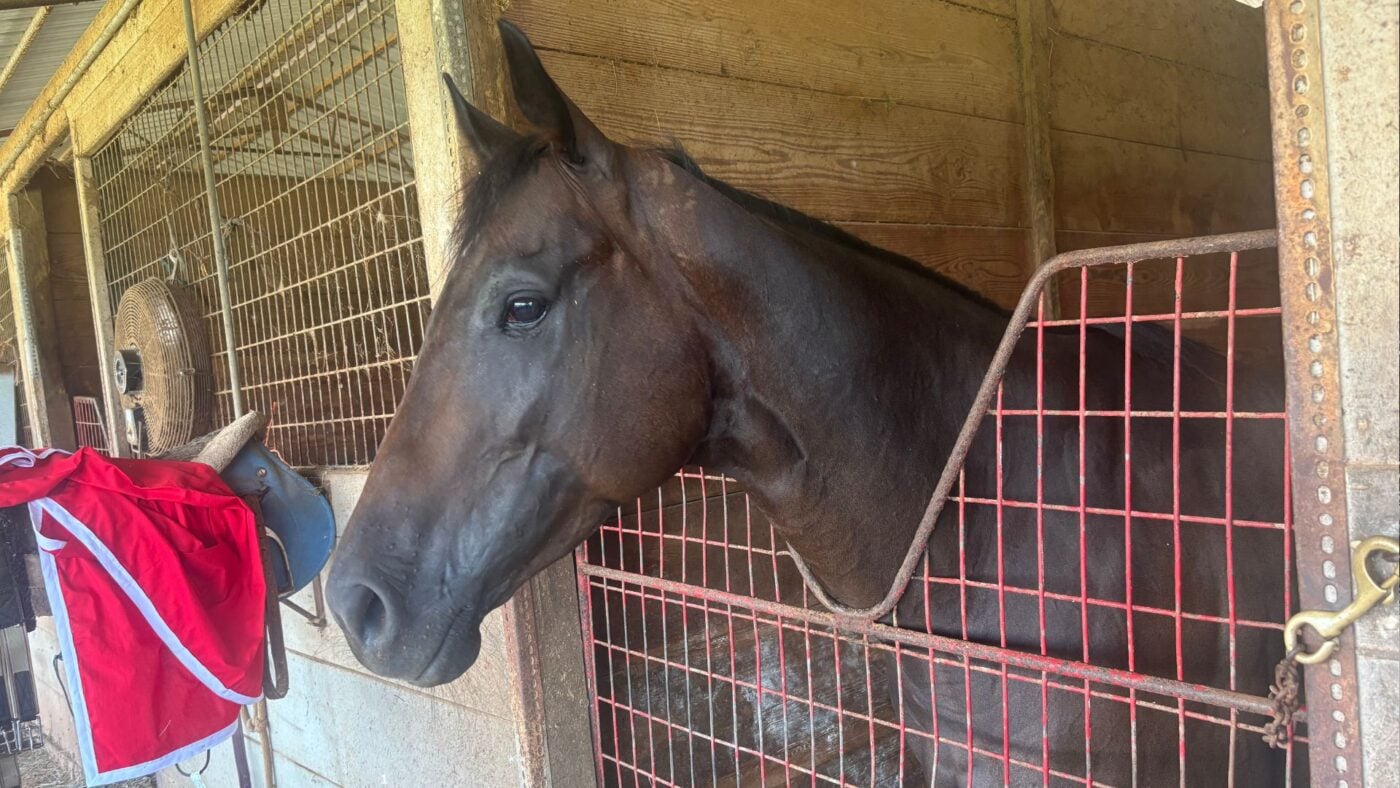
I recently had a three-year-old start pawing his stall floor out of nowhere. I’ve had him since he was a yearling, so the fact that it was new behavior told me something had changed.
He was digging holes in the clay floor, so I put down a rubber mat and covered it with pine shavings to stop the damage. I also gave him more time out in the paddock to help with the underlying issue.
The mat fixes the immediate problem. The extra turnout is aimed at the cause. I’m still watching whether that combination breaks the habit for good.
Best solutions:
- Increased turnout.
- Slow-feed hay nets to extend eating time.
- Light, consistent work, even hand-walking.
Environmental change matters more than correction here.
4. Instinct (Harmless Investigation)
Some horses paw briefly before lying down or at water sources. If it lasts under a minute and doesn’t repeat obsessively, it’s normal and doesn’t require intervention.
When Pawing Signals Pain (Red Flags)
Most pawing is just a habit, but sometimes it’s the first thing a horse does when something hurts. In a pain case, I usually expect to see more than pawing alone—changes in posture, appetite, attitude, or the way the horse carries itself.
Colic-Related Pawing: Pawing combined with flank-watching, repeated lying down and getting up, biting at the sides, sweating, or refusing food is an emergency. According to the American Association of Equine Practitioners (AAEP), colic can escalate from mild discomfort to life-threatening conditions within hours.
Laminitis-Related Pawing: Look for weight-shifting, rocking back onto the hind legs, reluctance to move, and increased digital pulses. The stance often looks “wrong” because the horse is trying to unload painful hooves.
Hoof Abscess Pawing: Usually affects one foot. The horse may favor the leg, resist picking up the hoof, or show heat in the hoof wall.
Emergency warning: Call your veterinarian immediately if pawing appears alongside flank-watching, rolling attempts, sweating without exercise, elevated heart rate (normal resting rate is 28–44 bpm), or sudden refusal to eat.

Stomping: A Different Behavior With Different Causes
Stomping is more commonly associated with lower-leg or skin irritation than the forward scraping motion we call pawing:
- Flies
- Mites (especially in feathered breeds)
- Uncomfortable footing or stall mats
If environmental fixes don’t resolve stomping, a vet check for mites or skin conditions is warranted. Treatment is usually straightforward once a veterinarian identifies the cause. Here is a video you may find helpful to prevent your horse from pawing while tied.
Addressing Demand Pawing: What Actually Works
For non-pain-related pawing, success depends on consistency.
- Remove the reward. Wait for quiet behavior before feeding, untying, or giving attention.
- Redirect calmly. Backing up, moving the feet, or brief, quiet groundwork is effective.
- Improve the environment. Turnout, longer feeding times, and social contact reduce frustration.
Barn reality: If one person gives in “because it’s noisy,” the horse learns persistence works. Consistency matters more than technique.
Vet Call or Training Issue?
Call your veterinarian if:
- Pawing appears with colic signs
- The horse favors one leg or shows lameness
- Pawing starts suddenly in a horse that never pawed before
- Pawing appears after riding or exercise
- The behavior keeps getting worse despite management changes over three days
Address through training and management if:
- Pawing is predictable (feeding, tying)
- The horse is sound and eating normally
- There’s no heat, abnormal stance, or digital pulse
- The behavior can be interrupted easily
Frequently Asked Questions (FAQs)
Is Pawing a Sign of Colic?
Yes, pawing can be a sign of colic, but only when it is frequent, deep, and combined with other symptoms. If your horse is pawing aggressively, looking at its flank, attempting to roll, or showing excessive discomfort, this is a sign of gastrointestinal pain and is an immediate veterinary emergency.
How Do You Stop Pawing in the Trailer?
Pawing in a trailer is usually caused by impatience or anxiety. Start with the basics: good ventilation, enough room, and a horse that’s genuinely comfortable with trailer loading in the first place. One approach that works for some horses is unloading when they paw, asking for a few minutes of work, then reloading once they’ve settled — but that’s one option among several, not a rule that fits every horse or every trailer situation. If pawing in the trailer is severe or the horse seems anxious rather than just impatient, it’s worth working with a trainer on the loading and standing process directly.
Pawing vs Stomping Difference?
No, they are different behaviors with different primary causes. Pawing (scraping the ground with a forward motion) is usually behavioral, signalling boredom, frustration, or demand. Stomping (lifting the foot straight up and driving it down) is usually a response to irritation or pain, such as bites from horseflies, mites, or hoof pain.
Why does my horse paw only when I walk away?
That’s usually a horse testing whether pawing gets your attention — the timing gives it away. If the pawing starts the moment you turn your back and stops the moment you look over, that’s demand behavior, not distress. The fix is the same as feed-time pawing: don’t reward it by turning back around or engaging while the behavior is happening. Wait for quiet, then give attention.
Will Pawing Damage Joints Long-Term?
Occasional pawing is unlikely to cause problems in a healthy horse, but repetitive, aggressive pawing on hard surfaces can contribute to excessive hoof wear and strain over time, especially in young horses whose joints are still developing. If a horse is pawing constantly, I’d focus on finding the reason rather than just treating the symptom.
Why does my horse paw before feeding time?
Horses paw before feeding due to impatience and learned behavior. If pawing reliably produces faster feeding, the behavior becomes habitual. The solution is feeding only after the horse stands quietly for at least 30 seconds, breaking the reward cycle.
Should I punish my horse for pawing?
I wouldn’t. Punishment tends to create anxiety without addressing why the horse is pawing in the first place, and if there’s any chance the pawing is pain-related, correcting it can mean missing a real problem. The better approach is ruling out pain first, then being consistent about not rewarding the behavior — no feeding, no attention, no untying until the horse is quiet. That’s slower than a correction, but it actually changes the behavior instead of just suppressing it.
What to Do Right Now
- Rule out pain first. If any red flags are present, call your vet.
- Identify the pattern. Track when pawing occurs for 2–3 days.
- Remove the reward. Wait for calm behavior before responding.
- Adjust the environment. More turnout and longer feeding time solve many cases.
Most horses with demand-based pawing improve within a week of consistent handling. If nothing changes after that—and pain has been ruled out—that’s a signal to reassess management or get a second set of eyes from a veterinarian or trainer. The goal isn’t eliminating all pawing—some is normal. The goal is a horse that can stand patiently and communicate without escalating behavior.
Bottom line: Pawing is usually behavioral—but when it’s sudden, persistent, or paired with physical signs, it’s your horse asking for help.
Veterinary & Equine Health Resources
- American Association of Equine Practitioners (AAEP) – Equine Health Resources
- AAEP Guidelines & Resources Library – Veterinary Guidelines
- Be Prepared for an Equine Health Emergency — AAEP PDF Guide
- Penn State Extension – Horse Health & Care
- Extension Horses – Equine Education & Resources
Related articles:
- Why Do Horses Crib (Bite) on Wood? the Answer Isn’t Simple
- Why Do Horses Kick, and Can a Horse Kick Kill You?
- Why Do Horses Trip and Stumble So Much? 7 Reasons
- Is Your Horse Too Skinny to Ride? Let’s Find Out!
- What Is a Coggins Test and Why My Horse Needs One?
- Step-By-Step: How to Prepare a Horse for a Long Trip
- Why Does My Horse Have Diarrhea? Tips to Prevent and Treat
About Miles Henry
Racehorse Owner & Author | 30+ Years in Thoroughbred Racing
Miles Henry (legal name: William Bradley) is a professional horseman based in Folsom, Louisiana. He holds Louisiana Racing License #67012 and has spent over three decades managing Thoroughbreds at premier tracks including Fair Grounds, Delta Downs, and Evangeline Downs.
Expertise & Hands-On Experience: Beyond the track, Miles has decades of experience in specialized equine care, covering everything from hoof health and nutrition to training protocols for Quarter Horses, Friesians, and Paints. Every guide on Horse Racing Sense is rooted in this “boots-on-the-ground” perspective.
30 of their last 90 starts
Equibase Profile.

Connect with Miles: