
Last updated: June 9, 2026
Any links on this page that lead to products on Amazon are affiliate links and I earn a commission if you make a purchase. Thanks in advance – I really appreciate it!
What is the purpose of a martingale on a horse?
A martingale restricts a horse’s ability to raise its head too high, giving the rider better control and helping young horses learn correct head carriage. The three main types — standing, running, and Irish — each serve a different purpose. In racehorse training, the running type is occasionally used on horses that work with their heads too high. These are training aids rather than permanent solutions. Running and standing versions are not used during races, although the Irish type may be permitted in some racing jurisdictions because it does not affect head carriage.
Few pieces of tack generate more debate than the martingale. Riders who use them swear by the added control. Critics argue they mask underlying problems and create new ones. Both sides have a point — and if you’re working with young horses, you’ve probably landed somewhere in the middle. The horse martingale purpose is legitimate when the tool is used correctly, on the right horse, for a defined period. The trouble starts when it becomes a crutch.
Table of Contents
What Is a Martingale? Understanding the Horse Martingale Purpose
A martingale is a piece of tack — a strap or set of straps — that limits how high a horse can raise its head. The basic design runs from the girth, up through the horse’s front legs, and either connects to the noseband (standing) or threads through rings on the reins (running). When a horse throws its head up beyond a set point, the martingale creates downward pressure that discourages the behavior.
The primary purpose is training: helping a young or green horse develop the habit of carrying its head at an appropriate height. A secondary purpose is rider safety — a horse that flings its head back at the wrong moment can knock out a rider’s teeth or knock them off balance. Martingales reduce that risk by keeping the head movement within a controlled range.
The important caveat is that martingales address symptoms, not causes. A horse working with its head high usually has a reason — tension, pain, poor balance, or inadequate training. A martingale can manage the behavior while you work on the root issue, but it won’t fix anything on its own.
| Type | Main Purpose | Restricts Head? | Common Uses |
|---|---|---|---|
| Standing | Fixed ceiling on head height | Yes — constant limit | Hunters, some Western events, show jumping (UK) |
| Running | Leveraged correction through the reins | Partially — only when head goes too high | Jumping, early racehorse training, green horses |
| Irish | Keep reins together under the neck | No | European racing safety; not a training tool |

Why Horses Carry Their Heads Too High
Before reaching for a martingale, it’s worth understanding what’s actually causing the behavior. A horse that consistently works with a high head or tosses its head under saddle is telling you something — the question is whether it’s a physical problem, a training gap, or a learned evasion. The answer changes what you do next. Horses naturally use the head and neck as a counterweight for balance, so restricting head movement before identifying the cause can interfere with normal biomechanics — which is exactly the outcome the martingale is supposed to prevent.
Physical causes should always be ruled out first. Dental pain — sharp points, wolf teeth, an ill-fitting bit — can make contact intolerable, and a horse in mouth pain will raise its head to escape pressure. Saddle fit is equally common: a saddle that pinches or bridges will cause a horse to hollow its back and invert, pulling the head up as a direct mechanical response. Soreness in the neck, back, or hindquarters produces the same pattern. Iowa State University’s equine extension program notes that horses process visual and physical stimuli differently from humans — worth reading for anyone trying to distinguish a behavioral issue from a pain response. If a horse that previously worked quietly starts throwing its head, the first call is to the vet and the saddle fitter, not the tack room.
Training and conditioning gaps account for many of the remaining cases, especially in young horses. A horse that hasn’t developed adequate topline strength — the muscles along the neck, back, and hindquarters — physically struggles to carry itself in a relaxed, forward frame. It’s not evasion; it’s fatigue and weakness. Carrying a rider is hard work for a young horse, and high head carriage is often the first sign that the back muscles aren’t yet strong enough to support the job.
Rider imbalance and anxiety round out the common causes. A horse ridden by a rider who braces through the reins, sits crooked, or creates tension through the contact will mirror that tension upward through its neck. Excitement and anxiety in high-stimulation environments — busy tracks, race day atmosphere, new surroundings — can also temporarily push a calm horse into a higher head position than it carries at home.
From the barn: When a young horse comes to me carrying its head high, I don’t touch the martingale for the first several weeks. I want to know if it’s pain, weakness, or habit. A vet check and saddle assessment first. Then I watch how the horse carries itself when it’s loose in the paddock versus under saddle — if the head comes down when no one’s on its back, you’re likely dealing with something equipment-related or rider-related, not a structural issue. The martingale only comes out once I’ve ruled out the physical causes and I’m confident I’m managing a training habit, not masking something the horse is trying to tell me.
Types of Martingales: Standing, Running, and Irish
There are three types you’ll encounter regularly in the horse world. Each works differently and carries different implications for the horse’s comfort and movement.
Standing Martingales
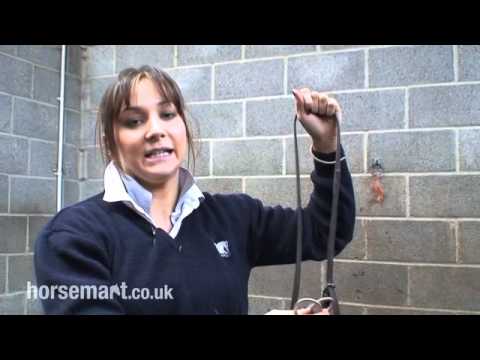
A standing martingale is a single strap that connects the girth to the horse’s noseband, passing through the front legs. It sets a fixed ceiling on head height — when the horse pushes against it, the noseband creates direct pressure on the nose. There’s no give based on rein contact; the limit is mechanical and constant.
The Western equivalent is called a tie-down or head check. Tie-downs run shorter and tighter than English standing martingales and are common in speed and turning events — barrel racing, roping — where a horse uses its neck for balance during quick direction changes and trainers want to control how much. They are show-legal in the United States for hunt seat equitation, show hunter, rodeo, and gymkhana, as detailed in the AQHA permitted equipment guidelines. They are not permitted in most other Western disciplines, and standing martingales are banned from flat classes in the UK, though allowed in show jumping and polocrosse.
The standing martingale’s biggest limitation is that it can’t be adjusted or released while mounted. In most emergency situations — a horse tripping, stumbling on uneven ground — a horse needs its head and neck free to balance itself. A standing martingale prevents that, which is why many experienced trainers use them sparingly if at all.
Running Martingales
A running martingale splits into two straps that each end in a ring, with the reins threaded through those rings. Unlike the standing version, it doesn’t impose a fixed ceiling — instead, it increases downward leverage on the bit when the horse raises its head past a certain point. When the horse’s head is in a normal position, the rings hang slack and there’s no additional pressure.
This makes the running type more forgiving and more appropriate for horses still developing. The horse can move its head freely within a normal range and only encounters resistance when it goes too high. The downside is that it amplifies rein pressure — a heavy-handed rider can cause real mouth pain, because the rings act as an additional pulley on the bit. Always use rein stops (rubber stops on the reins) with a running martingale; without them, the rings can slide forward and catch on the bit ring, which can cause a wreck.
The German martingale is a variation that provides even more leverage. It attaches to the bit and creates a stronger downward pull than a standard running martingale. It is not show-legal in most associations but is permitted for training in some, including certain AQHA contexts.

Irish Martingales
The Irish martingale — also called a semi-martingale — is a different animal entirely. It’s simply a short piece of leather or rubber with a ring at each end, through which the reins pass. It doesn’t restrict head movement at all. Its only job is to keep the reins together under the horse’s neck so they can’t flip over the horse’s head during a race or fall.
This is the martingale you’ll see at European racetracks. It’s a safety device, not a training tool. If a jockey goes down and loses a rein, or if a horse stumbles and the reins go slack, the Irish martingale keeps things from getting tangled. American racing doesn’t use them routinely, but they’re worth knowing about.

How Martingales Are Used in Racehorse Training
In Thoroughbred training, martingales are used occasionally during early groundwork and conditioning — never during racing itself. A horse that works with its head too high travels less efficiently, and for a racehorse, that matters. When a horse inverts — raising its head and hollowing its back — the entire topline chain tightens. The back can’t swing, the hindquarters disengage, and the horse loses the ability to push from behind and drive through to the bridle. Over even a short race, that inefficient posture increases fatigue, makes the horse harder to rate through the early fractions, and costs stride length when it’s needed most in the drive to the wire. Adding a shadow roll addresses a different but related problem — horses that invert in response to ground-level visual distractions rather than habitual head carriage. The two pieces of equipment often work together in the training program before either appears on race day.
Miles’s Take — Let the Horse Tell You: In my experience training horses at Fair Grounds and Evangeline Downs, fewer than 30% of the young horses I’ve started needed a martingale at any point. When I do use one, it’s a running martingale during early training — loose enough that it only engages when a horse really throws his head. Once a horse figures out where its head should be and goes two or three weeks without hitting the martingale, it comes off.
Just this week I suggested putting a martingale on one of my two-year-olds. He’s just learning to run and moves his head all over the place — I wanted more control of his head position before bad habits set in. My exercise rider pushed back hard. Her concern was that a young horse might get frustrated, bow his neck, and throw her. It’s a legitimate worry — I’ve seen it happen. To settle it, I got a second rider, put the martingale on, and the horse went out and did just fine. No frustration, no fireworks. He actually settled into his work better with it on. The exercise rider’s instinct was right to question it — you should always question it — but the horse answered the question himself. That’s the only way to know.
Running and standing martingales are not permitted in U.S. flat racing. The Irish martingale is a different case — because it doesn’t affect head carriage at all, it’s legal in some jurisdictions specifically as a safety device. Check your state racing commission’s equipment rules; American tracks generally don’t require or use them, but they’re not universally prohibited either.
When we’re working with a young horse that travels with its head high — like we occasionally see with horses early in training — a running martingale can help interrupt the habit while the horse’s muscles develop and its balance improves. The key word is interrupt. It should make the horse uncomfortable enough in the high-head position that it searches for something better, not lock it into position mechanically. For the full picture of equipment decisions in the training barn and on race day, our racehorse equipment guide covers how martingales, blinkers, shadow rolls, and tongue ties fit together as a toolkit rather than isolated choices.
How to Fit a Martingale Safely
A poorly fitted martingale causes more problems than it solves. These four checks apply before every use:
Martingale Fit — 4 Checks Before Every Ride
1. The hand rule (neck strap): Fit a flat hand comfortably between the neck strap and the horse’s crest. Too tight restricts movement; too loose risks a foot getting caught.
2. Chest ring position (running only): The center ring should sit at the base of the neck — the point of the chest. If it hangs lower, the equipment loses mechanical advantage.
3. Rein stops (running only): Always use rubber rein stops. Without them, rings can slide forward and catch on the bit or rein hardware. This is a wreck waiting to happen.
4. No resting tension: When the horse holds its head in a normal position, the strap should be completely slack. It should only engage when the head goes too high. If you have resting tension, it is fitted too short.
For a running martingale specifically, a useful length check: bring the rings up to the horse’s withers — they should reach without pulling the girth connection tight. For the standing martingale, bring the strap up to the horse’s throat — it should reach the throat without pulling.

Risks of Misusing a Martingale
The debate in the equestrian world usually comes down to misuse, not the tool itself. When it is set too short, used on the wrong horse, or left on indefinitely, several problems emerge. A horse that can’t raise its head in response to a stumble or loss of balance is at increased fall risk — this is the most serious concern with standing martingales. Chronically restricted movement through the neck also leads to overdeveloped muscles on the underside of the neck, poor topline development, and in long-term cases, biomechanical changes that can shorten a horse’s career.
Running martingales in inexperienced hands cause mouth pain. Because they amplify bit pressure, a rough jerk on the reins doesn’t just affect the bit — it pulls downward with multiplied force. Horses trained under this kind of pressure often become head-shy, resistant, or develop a behind-the-vertical head position that looks like collection but is actually evasion.
For young racehorses in particular, the risk of emotional stress from poorly fitted or overused martingales is real. A horse that associates the training environment with pain or restriction is harder to rate, harder to load, and harder to manage in the paddock. That compounds into problems on race day.
Bottom line on misuse: A martingale that has resting tension — meaning it pulls downward even when the horse’s head is in a normal position — is set too short. If you’re routinely adjusting a horse’s head position by pulling on the reins through a running martingale, you’re using it as a shortcut, not a training aid. Get a trainer involved before the horse develops compensating muscle patterns that are hard to undo.
Where Martingales Are Legal in Competition
| Martingale Type | Where Permitted | Where Not Permitted |
|---|---|---|
| Standing / Tie-Down | Hunt seat equitation, show hunter, rodeo, gymkhana (USA); show jumping and polocrosse (UK) | Flat classes (UK and USA); most Western disciplines; Thoroughbred racing |
| Running | Eventing, show jumping | Dressage; Thoroughbred racing; most flat classes |
| German | Some AQHA training contexts | Not show-legal in most associations |
| Irish (semi-martingale) | European racing; legal in some US jurisdictions | Not routinely used in American racing; check state rules |
Always verify with your specific discipline’s governing body and your state or regional racing commission before using any martingale equipment in competition. The British Horseracing Authority’s equipment and welfare guidelines are a useful reference for understanding how racing regulators approach headgear decisions. Rules change, and what’s permitted in one jurisdiction may be prohibited in another.
Key Takeaways
- A martingale limits how high a horse can raise its head — it’s a training aid, not a permanent piece of tack.
- The three main types are standing (fixed limit on head height), running (leveraged through the reins, more forgiving), and Irish (rein-keeper only, used in European racing).
- In Thoroughbred training, only running martingales have a place — and only during conditioning, not racing.
- Resting tension means the martingale is too short. It should only engage when the horse raises its head too high.
- Always use rubber rein stops with a running martingale to prevent rings from sliding forward onto the bit hardware.
- Misuse — particularly a too-short or constantly-engaged martingale — leads to muscle imbalances, evasion habits, and in serious cases, fall risk.
- Most young racehorses don’t need a martingale; if one is used, the goal is to make it temporary.
Frequently Asked Questions
Can you race a horse with a martingale?
Not in standard American flat racing. Running and standing martingales are not permitted during races. The Irish martingale (a rein-keeper, not a head restrictor) may be legal in some U.S. jurisdictions because it doesn’t affect head carriage, but is not a standard piece of equipment on American tracks. Always check your state racing commission’s equipment rules before race day.
How do I know if my horse needs a martingale?
The main signal is consistent high-head carriage that interferes with training — a horse that carries its nose above the bit, resists contact, or consistently throws its head to evade rein pressure. Before reaching for a martingale, rule out physical causes: dental issues, bit fit, saddle fit, and soreness can all produce high-head behavior. If the cause is habitual rather than physical, a running martingale used correctly during training can help interrupt the pattern while you develop better head carriage through flatwork.
What is the difference between a standing and running martingale?
A standing martingale attaches to the noseband and sets a fixed ceiling — once the horse’s head reaches a certain height, it creates direct nose pressure that doesn’t vary with rein use. A running martingale attaches to the reins through two rings and only increases leverage when the horse raises its head AND the rider has contact on the reins. This makes the running martingale more forgiving and more appropriate for horses still in early training. Standing martingales can’t be released quickly in an emergency; running martingales can be, through rein release.
What does an Irish martingale do in horse racing?
An Irish martingale — also called a semi-martingale — is a short strap with rings through which both reins pass, keeping them connected under the horse’s neck. It does not restrict head movement at all. Its purpose is purely safety: preventing reins from flipping over a horse’s head during a race or fall. It’s commonly used in European racing and is a standard piece of equipment on some European circuits. American racing does not routinely use them.
How tight should a martingale be adjusted?
The key rule is no resting tension. When your horse holds its head in a normal, relaxed position, the martingale should be completely slack — no downward pull on the noseband or reins. It should only engage when the horse raises its head beyond an acceptable point. For the neck strap, you should be able to fit a flat hand between the strap and the horse’s crest. For a running martingale, bring the rings up to the withers as a length check — they should reach without strain. If the martingale is pulling at rest, it is too short.
Can a martingale hurt a horse?
A correctly fitted martingale should only engage when the horse raises its head beyond a normal range, creating brief, mild pressure that discourages the behavior. A martingale that is too short, or that is constantly under tension even when the head is in a normal position, is a different situation — it causes discomfort, encourages resistance and evasion, restricts the horse’s ability to use its neck for balance, and over time leads to poor muscle development and compensating postural patterns. The tool is not inherently harmful; the fitting and how long it stays on are what determine whether it helps or hurts.
About Miles Henry
Racehorse Owner & Author | 30+ Years in Thoroughbred Racing
Miles Henry (legal name: William Bradley) is a professional horseman based in Folsom, Louisiana. He holds Louisiana Racing License #67012 and has spent over three decades managing Thoroughbreds at premier tracks including Fair Grounds, Delta Downs, and Evangeline Downs.
Expertise & Hands-On Experience: Beyond the track, Miles has decades of experience in specialized equine care, covering everything from hoof health and nutrition to training protocols for Quarter Horses, Friesians, and Paints. Every guide on Horse Racing Sense is rooted in this “boots-on-the-ground” perspective.
30 of their last 90 starts
Equibase Profile.

Connect with Miles: