Last updated: March 26, 2026
If you’ve seen horses in the paddock before a race — being saddled, paraded, or led to the track — you might notice that while many horses wear common gear like blinkers, shadow rolls, or leg wraps, the exact combination often varies from horse to horse. Every piece of equipment is chosen for a reason: to improve focus, protect the legs, assist breathing, or give the jockey better control in traffic.
With more than 30 years of owning and racing Thoroughbreds in Louisiana, I’ve spent a lot of time thinking through equipment choices. Some decisions are obvious. Others take observation, patience, and a few bad races to figure out. This guide covers the essential gear racehorses wear, how each piece works, and how trainers decide what goes on each horse.

Table of Contents
What Equipment Do Racehorses Wear?
No two racehorses wear exactly the same tack on race day. Trainers build each horse’s equipment list based on temperament, physical condition, and running style. Here’s a quick overview of the most common gear, with links to dedicated articles where they exist:
Common Racehorse Equipment at a Glance
| Equipment | Primary Purpose |
|---|---|
| Blinkers | Limit peripheral vision to improve focus and reduce distractions |
| Shadow Roll | Block lower vision to prevent shying at shadows or track markings |
| Tongue Tie | Prevent tongue slipping over the bit; helps keep the airway open |
| Bit | Jockey’s primary tool for steering and speed control |
| Earplugs | Muffle crowd noise to keep anxious horses calm before the gate |
| Racing Saddle & Girth | Lightweight (2–10 lbs) saddle designed to minimize carried weight |
| Leg Wraps / Boots | Protect legs from interference injuries and track surface abrasion |
| Racing Plates | Lightweight aluminum shoes for grip and speed on track surfaces |
| Breastplate / Martingale | Prevent saddle from shifting; help manage head carriage |
Each section below explains how these items work and when trainers choose them. Where a dedicated article exists, you’ll find a link to the full explanation.
Why Lightweight Equipment Matters in Horse Racing
In horse racing, weight directly affects speed. Research suggests that adding just two pounds can cost a horse one to two lengths over a mile — serious in a sport decided by fractions of a second. This is why race saddles weigh as little as two pounds, and why racing organizations like The Jockey Club enforce strict weight requirements for jockeys and horses alike.
Some horses carry additional lead weights to meet assigned race conditions — a handicapping tool used to level competition. Trainers must balance all of it: equipment weight, assigned weight, and the horse’s natural racing weight. Our guide to racehorse weight assignments covers how that process works.
Headgear Used on Racehorses
Headgear is often the first thing people notice in the paddock. The choices a trainer makes here reflect how a specific horse thinks and reacts. Some need visual restriction to stay on task. Others need sound management or airway support. The goal is always the same: give the horse the best chance to run its race.
Anxious horses that react strongly to their environment often perform inconsistently. Our article on stress in racehorses covers what drives those behaviors and how trainers manage them.
Blinkers

Blinkers are cups attached to the bridle that limit how much a horse can see to the sides and rear. They range from small quarter-cup blinkers that barely restrict vision to full cups that block nearly everything outside a narrow forward field. Trainers choose cup size based on how distractible the horse is.
I had a colt that spent every workout looking at the grandstand instead of focusing on the track. After adding blinkers, he broke sharper out of the gate and stopped drifting wide through the turns. First race with them, he won. For a full breakdown of types and when to use them, see our guide on why racehorses wear blinkers.
Shadow Roll
A shadow roll is a sheepskin band on the noseband that blocks the horse’s downward line of sight, preventing shying at shadows, track markings, or reflections. It also encourages a lower head carriage, which helps horses with choppy, high-headed strides run more smoothly and efficiently.
The most famous shadow roll moment in racing history came in the 1990 Breeders’ Cup Sprint, when Dayjur jumped a shadow near the finish line and lost a race he had already won. That incident explains why trainers take the equipment seriously even at lower levels. Our article covers what a shadow roll does and which horses benefit most.
Tongue Ties
A tongue tie — typically cloth, rubber, or nylon — keeps the tongue from slipping over the bit, which can cause sudden loss of jockey control. It also helps horses with soft palate displacement by holding the tongue forward and keeping the airway more open during hard effort. Not every horse needs one, and rules around their use have tightened in some jurisdictions. Our full article explains why racehorses wear tongue ties and what trainers look for before adding one.
Bits and Australian Cheekers
The bit is the jockey’s primary steering and control tool. Most racehorses run in a simple snaffle — a direct-pressure bit that’s easy on the mouth. Stronger horses that drift or pull may need a ring bit or Haughton bit for more authority. Australian cheekers are rubber Y-shaped attachments that lift the bit slightly in the mouth, reducing tongue pressure and taking some of the edge off horses that lean too hard on the jockey. Both are routine adjustments that trainers make based on how a horse goes in training.
Earplugs
Earplugs join blinkers/shadow rolls as sensory management tools—most owners never see them coming. Large crowds and gate noise will unsettle some horses. Earplugs — cotton, sheepskin, or foam — muffle that environment and help anxious horses stay focused through the paddock and post parade. Some trainers remove them at the gate for a final burst of alertness; others leave them in for the whole race. American Pharoah wore sheepskin earplugs throughout his Triple Crown campaign. Trainer Bob Baffert credited them with keeping him composed in front of massive, roaring crowds.
Racing Tack: Saddles and Girths

Race saddles are built for one purpose: minimize weight while giving the jockey enough platform to ride effectively. Most weigh between two and ten pounds. Jockeys own their own saddles and are meticulous about keeping them as light as possible.
The girth gets less attention but matters just as much. Some horses are highly sensitive to girth pressure — a condition called girthiness — and a horse that’s uncomfortable in its girth will resist in the saddling ring and run inconsistently on the track. Our guide on girth sensitivity in horses covers how to recognize and address it.
Breastplates and martingales are less common on racehorses than in other disciplines, but trainers reach for them when a saddle is slipping forward on a narrow-chested horse or when a horse needs help carrying its head more consistently. A standing martingale limits how high a horse can throw its head; a running martingale applies pressure through the reins. Our article on martingale purpose and types explains how each works and when trainers use them.
Leg Protection for Racehorses

A racehorse’s legs take enormous stress every time it runs. Trainers use bandages and boots to protect against two main threats: interference injuries, when a horse strikes one leg with the opposite hoof, and track surface abrasion on the fetlocks and pasterns during hard effort.
I had a horse that consistently clipped his own front legs at full speed — an otherwise clean mover with one persistent habit. Light abrasions on his fetlocks after morning works told us what was happening. Front wraps fixed the problem and he stopped compensating for the discomfort in his stride. Some racing commissions restrict certain boot types in official races on the grounds they alter natural movement, so the rules vary by jurisdiction. Our full guide covers leg wraps and boots for racehorses in detail.
Racing Plates (Horse Racing Shoes)
Racing plates are the aluminum horseshoes fitted on race day. A standard steel shoe weighs approximately 10–16 ounces; an aluminum racing plate weighs just 2–4 ounces. At a full gallop, removing that much unsprung weight from the end of each limb meaningfully reduces the energy cost of every stride — and over a mile, that adds up.
Plate design varies by surface. Turf plates typically have small toe grabs or stickers for grip in grass; dirt plates are flatter and smoother. A farrier fits racing plates on the morning of the race in most cases, and getting the shoeing right is one of the quiet details that separates a well-prepared horse from one that slips out of the gate.
We’re covering racing plates in full in an upcoming dedicated article — including plate types, farrier timing, and surface-specific choices. Subscribe to the newsletter to be notified when it’s live. In the meantime, if you’re wondering whether horses can skip shoes entirely, our article on whether horses can race without shoes covers the barefoot debate and what the results have looked like on real tracks.
How Equipment Changes Affect Race Results
One of the most overlooked details on a racing program is the equipment change notation. When a trainer adds blinkers for the first time, removes them, or tries a first-time tongue tie, it’s responding to something specific observed in training or a previous race. Those changes are worth understanding — both as a horseman and as a bettor.
- First-time blinkers — added when a horse has been wandering, losing focus in traffic, or breaking slowly. Most trainers see an immediate response: sharper breaks, more competitive effort through the turn.
- Blinkers removed — often signals a horse burning too much energy early and fading late. Removing them can help the horse relax into a better rhythm and rate behind other horses instead of fighting to get to the front.
- First-time tongue tie — typically follows a race or workout where the horse showed signs of a breathing problem: a roaring sound, sudden fading, or a bled report. When it addresses the root issue, the improvement can be immediate and significant.
- Shadow roll added — usually means the horse has been shying at something on the track: shadows, rail paint, infield reflections. It happens at every level of racing, not just with famous horses.
Additional Barn and Race-Day Gear

Beyond race-day tack, racehorses need several supporting items to stay comfortable, warm, and manageable around race time. Here’s what you’ll typically see used:
- Paddock blankets — keep horses warm and muscles loose before a race, especially in cold or wet weather. A horse that walks to the paddock stiff from a cold barn rarely runs the way it did in morning works. Our guide on when to blanket horses covers how trainers decide when blanketing is necessary and when it isn’t.
- Cooling sheets — used after the race to regulate body temperature during the cooldown. These lightweight sheets wick heat and moisture without letting the horse cool too fast, which can cause muscle cramps. See our guide to cooling sheets and blankets for a full breakdown of options.
- Lip chains — a short chain run through the horse’s mouth or over the gums, giving handlers precise control over high-strung horses between the barn and the paddock. I’ve used them with horses that were genuinely difficult to manage on big race days — a well-placed lip chain kept the whole process safer for everyone involved.
- Poll-pressure strings — encourage a strong-willed horse to lower its head and settle during handling. Work on a similar principle to the lip chain: targeted pressure that produces a calm response without force.
Equipment Rules and Regulations

Every piece of equipment a racehorse wears must comply with the rules of the jurisdiction it’s racing in. These regulations vary more than most people expect and exist for both competitive fairness and horse welfare.
In the U.S., blinkers must be declared before a race so bettors and officials are informed. This transparency requirement exists precisely because blinker changes are known to affect performance. Tongue tie regulations differ between the U.S. and the UK, with Britain applying stricter welfare standards around their use. Some jurisdictions also ban certain boot types in official races on grounds that they alter a horse’s natural stride.
Trainers competing in multiple states need to know these rules cold — equipment violations can result in disqualification. For rules specific to Louisiana racing, the New Orleans Fairgrounds Condition Book outlines what’s permitted and what must be declared.
FAQs: Racehorse Equipment Explained
What equipment do racehorses wear?
Racehorses wear a combination of headgear, riding tack, and leg protection tailored to each horse’s needs. Common items include blinkers, shadow rolls, tongue ties, bits, earplugs, a lightweight racing saddle and girth, leg wraps or boots, and aluminum racing plates. Not every horse wears every item — trainers select equipment based on behavior, physical needs, and the specific demands of the race.
Why do racehorses wear blinkers?
Blinkers limit peripheral vision so horses stay focused on the track ahead rather than reacting to the crowd, other horses, or sudden movements. Trainers add them when a horse loses focus, wanders, or breaks slowly. See our full guide on why racehorses wear blinkers for a breakdown of types and effects.
What is a shadow roll in horse racing?
A shadow roll is a sheepskin band on the bridle noseband that blocks the horse’s downward line of sight. It prevents shying at shadows and track markings and encourages a lower, more efficient head carriage. Our full guide explains what a shadow roll does and which horses benefit most.
Why do racehorses wear tongue ties?
Tongue ties keep the tongue from slipping over the bit and help horses with soft palate displacement breathe more efficiently under hard effort. Read the full explanation in our article on racehorse tongue ties.
What are racing plates?
Racing plates are lightweight aluminum horseshoes fitted on race day. A standard steel shoe weighs 10–16 ounces; an aluminum racing plate weighs just 2–4 ounces. They’re designed for the specific track surface — dirt, turf, or synthetic — and are typically fitted by the farrier on the morning of the race.
Why do trainers change equipment before a race?
Equipment changes usually respond to something specific observed in training or a previous race — a focus problem, a breathing issue, an over-racing tendency. These changes are declared in the official program. Experienced bettors watch them closely because a well-matched equipment addition, especially on first use, can produce a meaningful performance improvement. See the equipment changes section above for a full breakdown of what each common change typically signals.
Do all racehorses wear the same tack?
No. Equipment is customized for each horse. Some race in basic tack with no additions; others need several specific pieces to perform at their best. Part of a trainer’s job is figuring out what each horse needs — and what it doesn’t.
Conclusion
Racehorse equipment is a tool, not a shortcut. The right piece of gear, added at the right time, can unlock a horse that’s been underperforming. The wrong choice, or a poorly fitted piece of tack, can create problems that take months to unravel.
After three decades on the backside, the most important thing I’ve learned is that you have to watch each horse as an individual. There’s no universal answer. The horses tell you what they need — if you’re paying attention.
Which equipment change turned your horse around? Drop it in the comments — these are the details that don’t make it into textbooks but matter every race day.
Sources
- The Jockey Club – Thoroughbred racing rules, weight regulations, and safety research: jockeyclub.com
- American Association of Equine Practitioners (AAEP) – Horse health, welfare, and equipment guidelines including tongue tie research: aaep.org
- Paulick Report – Racing bits explained: paulickreport.com
- New Orleans Fairgrounds – Complete Condition Book (equipment rules and declarations): fairgroundsracecourse.com
- National Museum of Racing and Hall of Fame – Zenyatta and American Pharoah profiles: racingmuseum.org
- British Equine Veterinary Association (BEVA) – Tongue tie welfare position statement: beva.org.uk
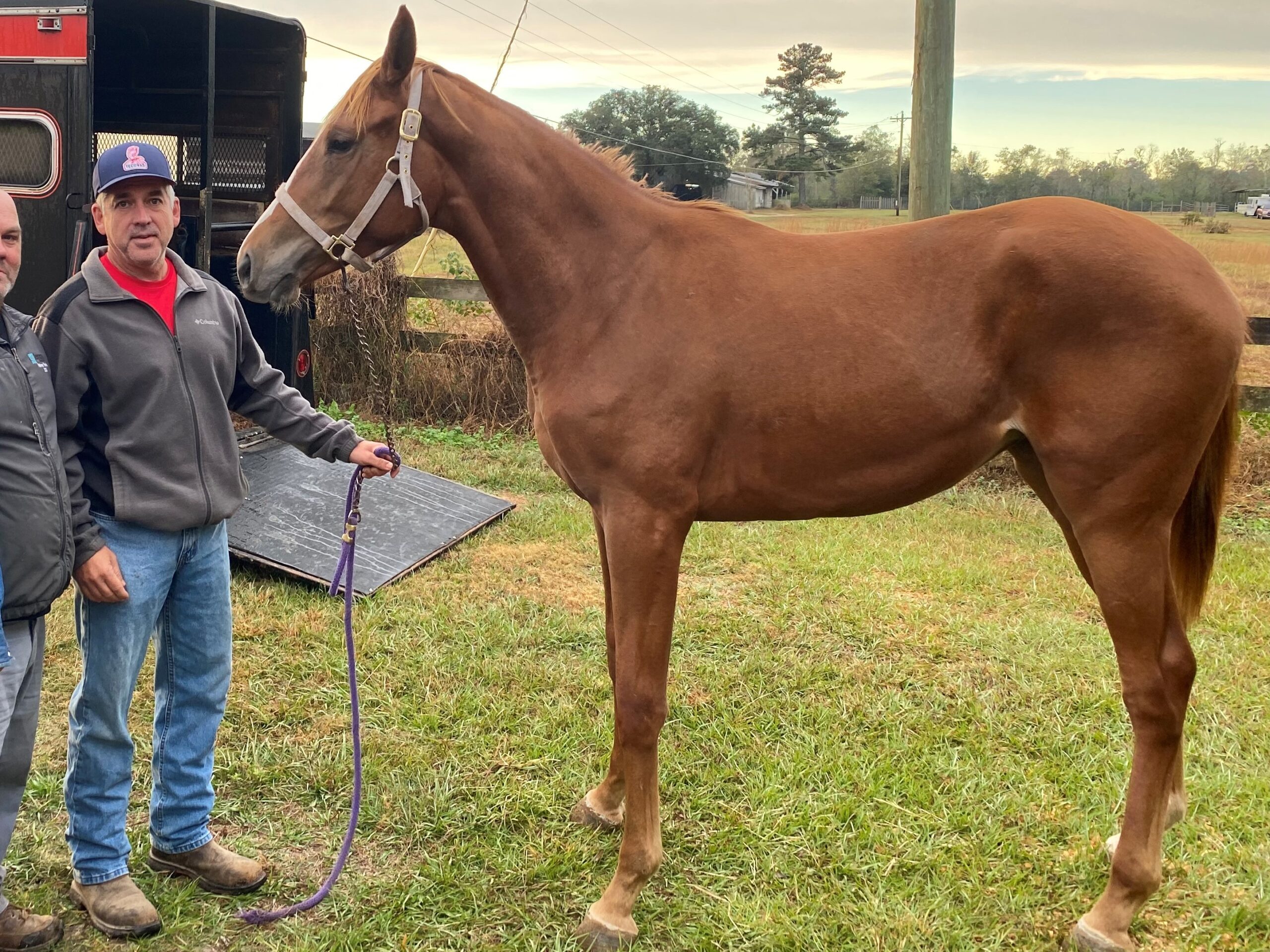
About Miles Henry
Racehorse Owner & Author | 30+ Years in Thoroughbred Racing
Miles Henry (legal name: William Bradley) is a professional horseman based in Folsom, Louisiana. He holds Louisiana Racing License #67012 and has spent over three decades managing Thoroughbreds at premier tracks including Fair Grounds, Delta Downs, and Evangeline Downs.
Expertise & Hands-On Experience: Beyond the track, Miles has decades of experience in specialized equine care, covering everything from hoof health and nutrition to training protocols for Quarter Horses, Friesians, and Paints. Every guide on Horse Racing Sense is rooted in this “boots-on-the-ground” perspective.
30 of their last 90 starts
Equibase Profile.

Connect with Miles: