
Last updated: August 2, 2026
Most people new to betting on horse races learn the names of the bets before they learn when each one actually fits the race. A Win bet, an exacta, and a Pick 5 aren’t just different ways to bet — they’re different ways to put your opinion of a race to work. After decades around horse racing, I’ve found the best bet is usually the one that fits the race and your bankroll, not the one chasing the biggest payout.
The bet should follow your opinion, not the other way around.
What are the types of horse racing bets? Horse racing bets fall into three groups: straight bets, exotic bets, and multi-race bets. If you’re new, start with a Win bet — simple decision, lower takeout, no ticket-building required. Everything else comes once your opinion is strong enough to build around.
Before getting into each bet individually, here’s the simple way I categorize them:
| Bet Type | Difficulty | Takeout | Payout Potential | Best For |
|---|---|---|---|---|
| Win | Low | 17-19% | Moderate | Beginners; straightforward win-or-lose decisions |
| Place | Low | 17-19% | Lower | Beginners; horses you like but aren’t certain will win |
| Show | Very low | 17-19% | Lowest | Learning the game; small-field situations |
| Exacta | Moderate | 19-22% | High | Developing bettors with a strong top opinion |
| Trifecta | High | 22-25% | Very high | Experienced bettors; large competitive fields |
| Superfecta | Very high | 22-25% | Highest | Large fields; use $0.10 minimum to keep cost manageable |
| Daily Double | Moderate | 19-22% | High | Bridge between straight bets and longer sequences |
| Pick 4 / Pick 5 | High | 20-23% | Very high | Best multi-race sequences for experienced bettors; Pick 5 often carries the lowest takeout |
| Pick 6 | Very high | 22-26% | Highest | Carryover and mandatory payout days only — not for everyday play |
Responsible Gaming: Horse racing betting carries real financial risk — most bets lose. If you or someone you know has a gambling problem, contact the National Council on Problem Gambling at 1-800-522-4700 or visit ncpgambling.org.
Table of Contents
Horse Racing Bet Types at a Glance
These are the main types of horse racing bets: straight bets, exotic bets, and multi-race bets. Everything else on the menu is a variation of one of these three.

Straight Bets: Win, Place, and Show
Straight bets are the foundation of horse racing wagering — simple, efficient, and the best place to start while you’re developing your handicapping. If you don’t yet have a strong edge predicting exact finishing orders, straight bets aren’t just easier — they’re smarter.
Win
You bet on a single horse to finish first. If your horse wins, you collect — if not, you lose the wager. Win betting offers the highest payout among straight bets and is the purest form of handicapping. If you believe a horse is undervalued by the public, this is the most direct way to capitalize on that opinion. Understanding how horse racing odds work is the foundation of finding those spots.
Place
You bet on a horse to finish first or second. The place price is typically lower than the win price because the pool is split between holders of first and second place finishers. Place betting makes sense when you’re confident in a horse’s ability but less certain about the margin of competition from one specific rival.
Show
You bet on a horse to finish in the top three. Show betting offers the best chance of cashing among all bet types, but payouts are the lowest. Show bets make the most sense in small fields where the payout on a strong favorite is still acceptable, or when you’re learning the game and want to stay in races without heavy losses.
Horseman’s Perspective: Most new players complicate this too fast. If you can’t explain why your horse should win, stacking three more horses underneath it in an exotic usually doesn’t fix that — it just spreads the same uncertain opinion across more combinations. A straight Win bet on the right horse teaches you more about handicapping than a scattered ticket ever will.
What Is the Safest Bet in Horse Racing?
Show bets usually have the highest hit rate — your horse only needs to finish in the top three — but the lower payouts can make them hard to beat over time. “Safest” and “best value” aren’t the same thing. A $2 Win bet at 3-1 returns $8, while a Show bet on the same horse typically returns only a few dollars.
Which Horse Racing Bet Pays the Most?
Superfectas and Pick 6 wagers often produce the largest individual payouts because they require four horses in exact order, or six consecutive winners. But larger payouts don’t mean better long-term value — they also tend to involve higher takeout (often 22-26%) and much lower hit rates, which is what actually limits their long-term value. A well-priced Win bet on a 15-1 shot can sometimes offer better expected value than a difficult exotic ticket on the same race.

Exotic Bets: Exacta, Trifecta, Superfecta
Exotic bets require predicting the exact finishing order of multiple horses in a single race. They offer higher payouts — but also higher takeout and a much lower margin for error. With exotics, structure matters just as much as selection. A well-built ticket can outperform a better opinion that’s poorly constructed.
Exacta
Bet on two horses to finish first and second in exact order. An exacta box covers both finishing orders (1-2 and 2-1) at double the cost. A part-wheel — keying one horse on top with multiple horses underneath — is the most efficient structure when you’re confident in one runner but uncertain about the rest.
A $1 part-wheel keying one horse on top with three horses underneath costs $3, versus $12 for a full 3-horse box — the tradeoff is that your key horse must win. For full ticket construction, box vs. wheel vs. key math, and worked examples across all three exotic bet types, see the exotic bets deep dive.
Trifecta
Bet on three horses to finish first, second, and third in exact order. Trifectas can be played straight, boxed (all combinations), or keyed (one or two horses in specific positions with multiple horses underneath). Keying a single horse on top with multiple horses underneath is the most common structure — but be careful keying a heavy favorite, since payouts shrink when the chalk runs first.
Superfecta
Bet on four horses to finish first through fourth in exact order. Superfectas can be played for $0.10 minimum at most tracks, which allows wide coverage without large outlays. Even so, a five-horse superfecta box at $0.10 base exceeds $12, and a six-horse box exceeds $36. Superfectas return large when they hit but should be played selectively given the 22-25% takeout and the difficulty of hitting four horses in order.
Horseman’s Perspective: In my experience betting Fair Grounds, I favor exactas over trifectas — not because trifectas are wrong, but because my goal isn’t just hitting a big ticket, it’s finding the best balance between opinion, cost, and probability. The pools are healthy enough for a fair payout without the structural complexity of three-position bets, and a part-wheel with a strong opinion on one horse and two or three second-place options costs $2-$3. Trifectas make more sense at larger meets with bigger pools — the payout is proportionally better when the pool is deeper. One pattern I’ve learned the hard way: never single a favorite in a trifecta unless you have strong pace, figure, and condition alignment all pointing the same direction. One pace collapse and the whole ticket is dead.

Multi-Race Bets: Daily Double Through Pick 6
Multi-race bets offer the highest upside in horse racing — but also the highest volatility. Pick 5 and Pick 6 pools can get huge during carryovers, but the math only really improves on carryover days or reduced-takeout promotions. Without a strong opinion or favorable pool conditions, Pick 6 wagers can be difficult to justify — the probability of sweeping six consecutive races is extremely low.
Daily Double
Bet on the winners of two consecutive races. The Daily Double is the entry point for multi-race wagering — simpler than a Pick 3 or Pick 4, but still requiring analysis across two races. Many tracks run an Early Double (races 1-2) and a Late Double (final two races). Late Doubles often have smaller pools, which means a winning ticket can return disproportionately large if you’re one of few holders.
Pick 3, Pick 4, Pick 5, Pick 6
Select winners across three, four, five, or six consecutive races. Each extends the sequence and increases both difficulty and potential payout. The Pick 4 and Pick 5 are the most commonly played among serious bettors — the Pick 4 balances difficulty and payout well, and the Pick 5 carries lower takeout than the Pick 6 at many major circuits, though rates vary by track.
Pick 5 vs Pick 6 — what the math actually means: A Pick 5 requires selecting winners across five consecutive races, typically with a $0.50 minimum. A Pick 6 spans six races with frequent carryovers and $0.20-$1 minimums. While Pick 6 pools can grow enormous during carryovers, the extra race dramatically lowers hit rates. Most winning Pick 5 tickets return hundreds to a few thousand dollars; Pick 6 wins are rarer and often shared unless hit on mandatory payout days. Many serious players prefer Pick 5 sequences because they reduce the difficulty of a Pick 6 while still offering meaningful payouts. Reserve Pick 6 plays for carryover situations or reduced-takeout promotional days.
How Much Does Each Horse Racing Bet Cost?
Most racetracks use a $2 minimum for straight bets like Win, Place, and Show. Exotic and multi-race bets usually let you play smaller base amounts, which makes them easier to use without spending a lot on one ticket.
- Win / Place / Show: Usually $2 each.
- Exacta: Often $1 to $2 minimum.
- Exacta box: Usually $1 base, so a 2-horse box costs $2.
- Trifecta box: Usually $0.50 base, so a 3-horse box costs $3.
- Superfecta: Often $0.10 per combination, so a 5-horse box costs $12.
- Daily Double: Usually $1 to $2 per combination.
- Pick 4 / Pick 5: Often $0.50 base, so a simple 2x2x2x2 ticket costs $4.
Takeout Rates: What Every Bet Really Costs
Takeout is the percentage the track keeps from every dollar wagered before paying winners. It is the single most important factor in horse racing betting — and the one most bettors ignore. Over time, that difference between bet types compounds into the gap between winning and losing players.
Note: Takeout percentages vary by racing jurisdiction and individual track. The ranges below reflect common rates at major North American Thoroughbred tracks.
| Bet Type | Typical Takeout | Estimated Return per $100 | Strategy Note |
|---|---|---|---|
| Win / Place / Show | 17-19% | $81-$83 | Lowest takeout on the track. Best for bankroll longevity and bettors without a proven exotic edge. |
| Exacta / Daily Double | 19-22% | $78-$81 | Moderate cost. Requires a higher hit rate to stay ahead long-term, but good structure improves the math. |
| Trifecta / Superfecta | 22-25% | $75-$78 | High takeout. Need to catch pricey longshots to profit. Best used selectively, not on every race. |
| Multi-Race (Pick 4/5/6) | 20-26% | $74-$80 | Watch for 14-15% promo days at major tracks — those change the math significantly in your favor. |
Horse Racing Bet Abbreviations
At the betting window or on an ADW app, bet types are usually shortened. Here’s what the common abbreviations mean:
- W / P / S: Win, Place, Show — your horse finishes 1st, 1st or 2nd, or 1st through 3rd.
- EX / TRI / SUPER: Exacta, Trifecta, Superfecta — you pick the first 2, 3, or 4 finishers in exact order.
- DD / P3 / P4 / P5 / P6: Daily Double and Pick 3, 4, 5, or 6 — you pick the winners of 2, 3, 4, 5, or 6 consecutive races.

Example: How a Bettor Might Play One Race
A situation I see often at Fair Grounds: a horse drops in class, owns the best recent speed figure in the field, but draws an outside post with questionable early speed. The public makes him the favorite anyway. That’s where I start asking whether the Win price is still worth taking, or whether an exacta underneath makes more sense — the class edge is real, but the post and the pace shape are working against him.
Here’s how that kind of thinking plays out with a hypothetical field. Say you’re looking at a 7-horse field: Horse A is the 5-2 favorite, Horse B is a 6-1 shot improving off a good work, and Horse C is a 12-1 longshot with a pace-favoring trip. Here’s how bettors at different experience levels might approach it:
- Beginner: $2 to Win on Horse B. One prediction, lowest takeout, easiest to track.
- Intermediate: $1 Exacta part-wheel — Horse B on top, Horse A and Horse C underneath ($2 total). Same opinion, structured for a bigger payout if B wins.
- Advanced: $0.50 Trifecta box with B/A/C ($3 total). Requires all three to hit the board in some order — higher risk, higher payout.
Same opinion on the race, three different ways to express it — and three different risk profiles. That’s the real decision behind every bet type: not which one is “best,” but which one matches how confident you are and how much of that confidence you’re willing to structure into a ticket.
How to Choose the Right Bet
Choosing the right bet type isn’t about complexity — it’s about alignment: your skill level, your bankroll, and the strength of your opinion. The biggest mistake new horseplayers make is choosing a bet before they understand the race, the odds, and their own bankroll — chasing bigger payouts before building the skill to justify it. Our betting strategies guide goes deeper into finding real value once you know the mechanics.
| If You’re… | Consider |
|---|---|
| Brand new to racing | Win |
| Confident in a horse but not certain it wins | Place or Exacta |
| Have a strong top pick with real depth underneath | Exacta or Trifecta |
| Found multiple races you like on the card | Pick 4 or Pick 5 |
| Chasing a carryover or a big score | Pick 6 (carryover days only) |
- New to betting — start with Win and Place bets. The 17-19% takeout is the lowest available. The handicapping guide for beginners covers how to read races before you bet them.
- Developing bettors — move to Exactas using part-wheels once you’re consistently confident in at least one horse per race.
- Experienced bettors — Trifectas and Pick 4/5 sequences make sense when you have strong opinions across multiple legs. Key is pool size.
- All levels — never let bet complexity drive the decision. The race matters more than the bet type.
Bankroll rule — a guideline worth following: Many bankroll-management approaches suggest limiting individual race exposure to a small percentage of your bankroll — often around 5% or less for recreational players. With $1,000 set aside for the season, that’s roughly $50 per race. Push well past that and variance — not your handicapping — starts deciding your results. If racing stops being fun, stop.
Tips for Smarter Betting
Beginners: start with Win and Place bets, set a session budget before you arrive, and learn to read past performances before trying exotics. Experienced bettors: track takeout by bet type at your home track, and target carryover days for Pick 4/5/6 plays. For a complete staking and selection system beyond bet types, see how to bet on horse racing.
FAQs About Types of Horse Racing Bets
What are the types of horse racing bets?
Horse racing bets fall into three categories: straight bets (Win, Place, Show), exotic bets (Exacta, Trifecta, Superfecta), and multi-race bets (Daily Double, Pick 3, Pick 4, Pick 5, Pick 6). Straight bets are among the simplest wagers and typically carry some of the lowest takeout rates. Exotic and multi-race bets offer larger payouts but require predicting the exact finishing order of multiple horses or the winners of consecutive races.
How does horse racing betting work?
Horse racing uses a pari-mutuel system: all bettors’ money goes into a pool, the track takes its percentage (called takeout), and the remaining pool is divided among winning ticket holders. The final payout depends on how much money was bet on your horse relative to others — not a fixed odds contract. The tote board displays live payout estimates that change until the race is off.
What is the easiest horse racing bet for beginners?
A Win bet is the easiest horse racing bet: you pick one horse to finish first. If it wins, you collect. Place bets are the next step if you want a little more coverage.
What is an exacta box in horse racing?
An exacta box covers both finishing orders of two horses — if you box horses 3 and 5, you win whether they finish 3-5 or 5-3. The cost is double the straight exacta. A part-wheel is more targeted: you key one horse on top with multiple horses in second place, at a lower cost than a full box across many horses. Part-wheels are the structure most experienced bettors prefer when they have a strong opinion on one horse.
What is takeout in horse racing betting?
Takeout is the track’s cut of the betting pool before winners are paid. It varies by bet type and track, and it has a real effect on long-term results. Lower takeout usually gives bettors a better starting point.
What is a Pick 5 bet in horse racing?
A Pick 5 requires selecting the winner of five consecutive designated races. The minimum bet is typically $0.50. Pick 5 sequences often carry lower takeout than other multi-race bets — some tracks offer 14-15% takeout on Pick 5 pools as a promotional play, compared to 20-26% on Pick 6 pools. The Pick 5 is generally a better risk-reward wager than the Pick 6 because the lower difficulty produces more frequent winners and more consistent payouts.
About this guide: Written by Miles Henry, a licensed Louisiana racehorse owner (#67012) with 30+ years studying handicapping, wagering, and ownership decisions at Fair Grounds, Evangeline Downs, Delta Downs, and Louisiana Downs. Takeout examples were checked against published track information and industry sources.
About Miles Henry
Racehorse Owner & Author | 30+ Years in Thoroughbred Racing
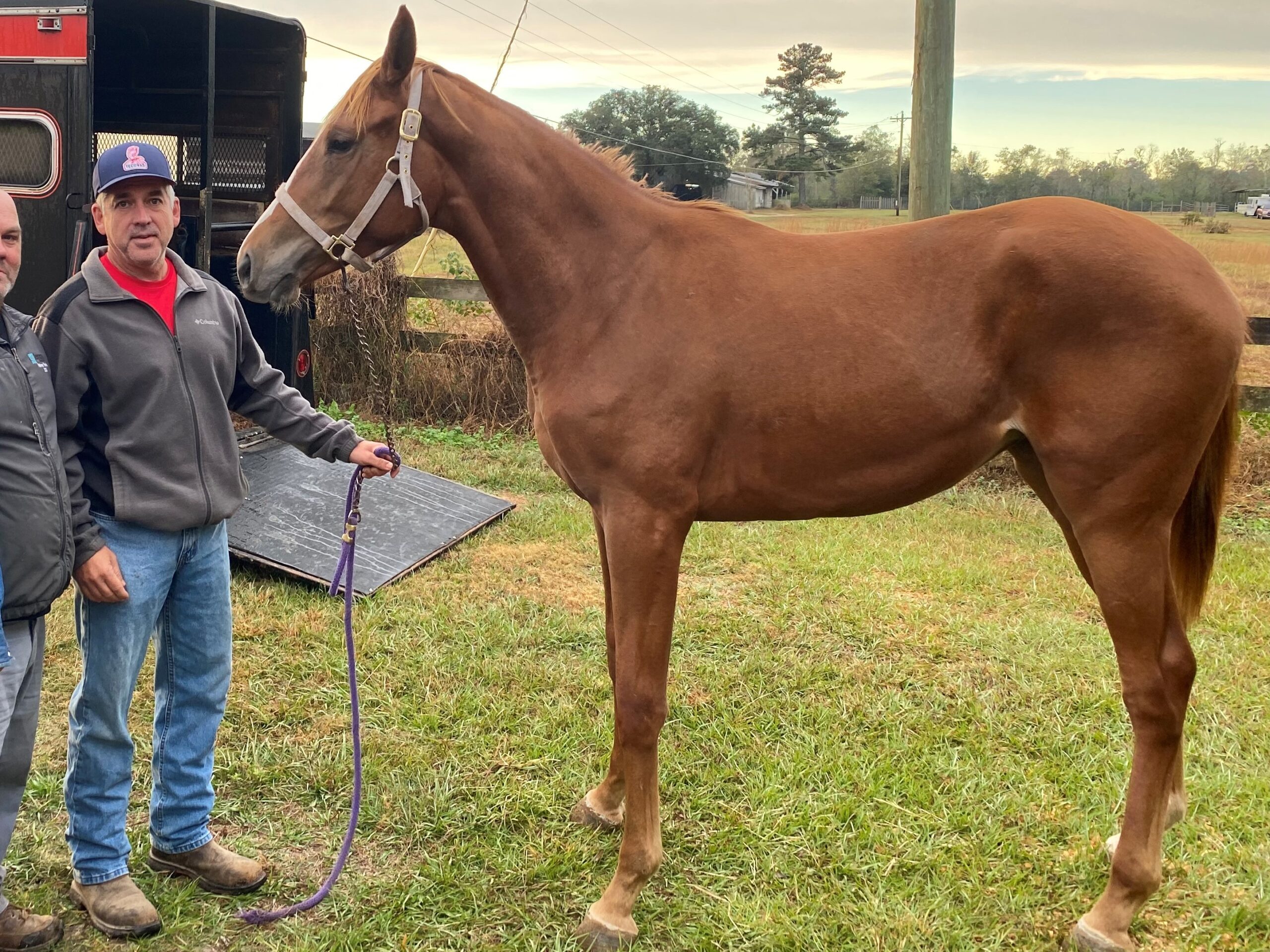
Miles Henry (legal name: William Bradley) is a professional horseman based in Folsom, Louisiana. He holds Louisiana Racing License #67012 and has spent over three decades managing Thoroughbreds at premier tracks including Fair Grounds, Delta Downs, and Evangeline Downs.
Expertise & Hands-On Experience: Beyond the track, Miles has decades of experience in specialized equine care, covering everything from hoof health and nutrition to training protocols for Quarter Horses, Friesians, and Paints. Every guide on Horse Racing Sense is rooted in this “boots-on-the-ground” perspective.
30 of their last 90 starts
Equibase Profile.

Connect with Miles: