
Last updated: August 1, 2026
Horse racing odds reflect where the public’s money is going. Unlike sports betting, where a sportsbook sets the price, horse racing uses a pari-mutuel system, so the bettors create the odds. Sometimes the crowd gets it right. Sometimes it doesn’t. Learning to read that difference is where the tote board starts to make sense.
How horse racing odds work — the short version:
- Pari-mutuel system: All bets go into a shared pool; the track takes its cut (14-25% depending on bet type); the rest is divided among winning tickets
- Odds = money distribution: A horse with 40% of the win pool pays near even money; a horse with 5% of the pool pays roughly 15-1. The crowd sets the price, not the track.
- Morning line: A pre-betting estimate printed in the program. Has zero effect on your payout — ignore it for betting decisions.
- Odds change until post: Your ticket locks in your selection, not your price. A horse you bet at 8-1 can pay 4-1 if late money floods in.
- Where the edge is: Because you bet against other bettors rather than a professional bookmaker, you can profit when the public systematically misprices a type of horse.
I’m a licensed Louisiana racehorse owner (License #67012) with over 30 years at the rail — Fair Grounds, Evangeline Downs, Delta Downs, and Louisiana Downs. I’ve watched my own horses get bet down from 8-1 to 5-2 in the final minutes before post, and I’ve seen clear favorites drift to longer odds when the crowd missed something. The biggest edge in horse racing isn’t picking winners — it’s understanding how the money moves. Miles Henry.
Table of Contents
Horse Racing vs. Other Betting: The Key Difference
In sports betting, the sportsbook sets the odds. A team listed at +150 will pay +150 whether one person bets it or a million people bet it — the house is on the other side of every wager and makes money through the spread or the juice. Horse racing works entirely differently. There is no house on the other side. You are betting against other bettors in a shared pool. The track is simply the administrator — it takes its cut, then distributes the rest to whoever picked the winner.
| Feature | Sports Betting (Fixed Odds) | Horse Racing (Pari-Mutuel) |
|---|---|---|
| Who sets the odds | The sportsbook | The bettors collectively — odds reflect pool distribution |
| Do odds change after you bet? | No — your price locks when you place the bet | Yes — your payout is determined by odds at post time, not when you bet |
| Who is on the other side? | The sportsbook | Other bettors in the same pool |
| House cut | Built into spread or juice (typically 4-10%) | The takeout — explicitly deducted from the pool (typically 15-25%) |
| Can you beat the house long-term? | Difficult — odds are set by professionals | Possible, but difficult — the public can misprice horses, though takeout means long-term profit requires a consistent edge |
Because you’re betting against the public rather than a professional sportsbook, there’s something a fixed-odds book can never offer: the crowd makes systematic errors. It overrates recent winners and recognizable names. It underrates first-time equipment changes, class drops with modest figures, and horses that haven’t shown their hand yet. Find those spots and you’re getting paid at better odds than the horse deserves.
How the Pari-Mutuel Pool Works
Every win bet goes into the win pool for that race. At post time, the pool closes, the track deducts its takeout, and what remains is divided proportionally among winning tickets based on how much was bet on each horse. The math is straightforward.
Odds are just a scoreboard showing where the money is — not how good the horse is. A horse at 15-1 isn’t a 15-1 shot because it’s 15 times less talented than the favorite. It’s 15-1 because only 5% of the pool was bet on it. Understanding this is also why bet type selection matters — the same crowd mispricing that exists in the win pool also exists in exacta and trifecta pools, sometimes more so.

Reading the Tote Board
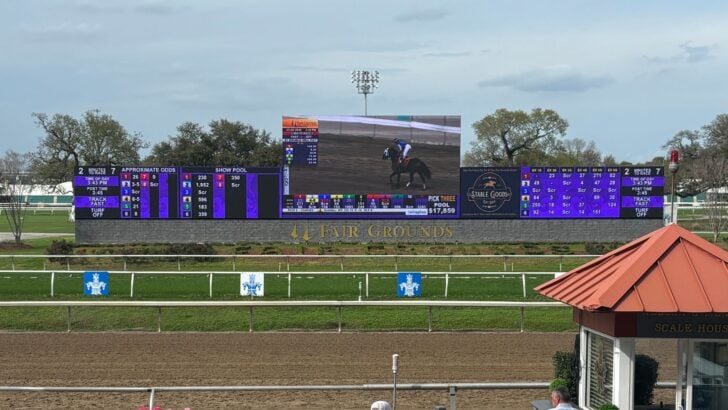
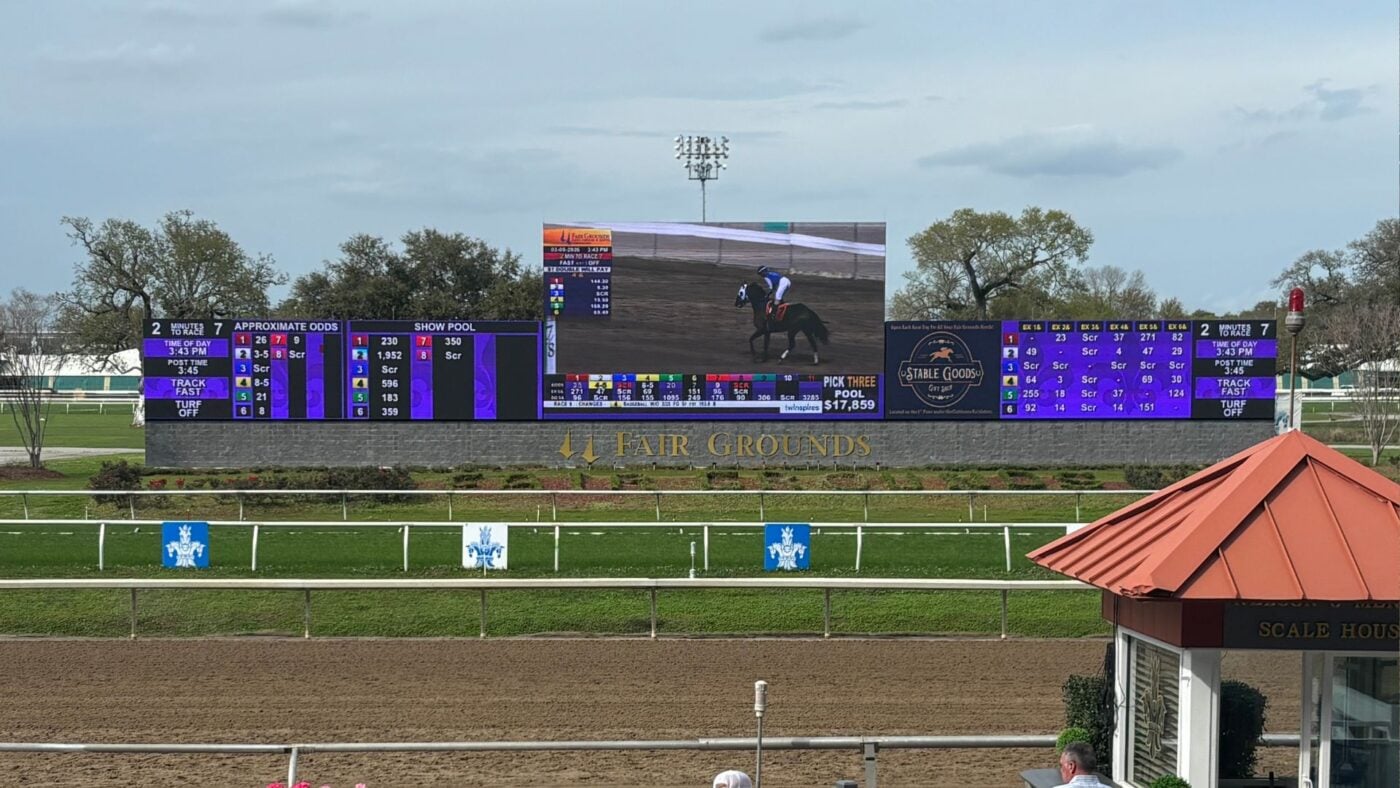
The tote board updates every 60-90 seconds throughout the betting period, showing current odds, total pool amounts, and post-race payouts. See our guide to reading a racing form before you start reading the board — the tote only tells you what the crowd thinks, not whether the crowd is right.
| Tote Board Element | What It Shows | What to Watch |
|---|---|---|
| Odds per horse | Current win odds based on pool distribution | Watch for horses shortening (dropping odds) or drifting (lengthening) in the final minutes |
| Win pool total | Total dollars in the win pool | Larger pools are more stable — small pools produce volatile, less meaningful odds shifts |
| Morning line | Track handicapper’s pre-betting estimate (in program) | Use only for quick orientation. Your payout is determined by live tote odds, not the morning line. |
| PHOTO / INQUIRY / OBJECTION | Race result under review | Hold all tickets until the board shows OFFICIAL |
| Payoff amounts (after race) | Win, place, show payouts per $2 wagered | A $2 ticket paying $12.40 = 5-1 odds. Payouts are always stated per $2. |
The Morning Line: What It Is and Why to Ignore It
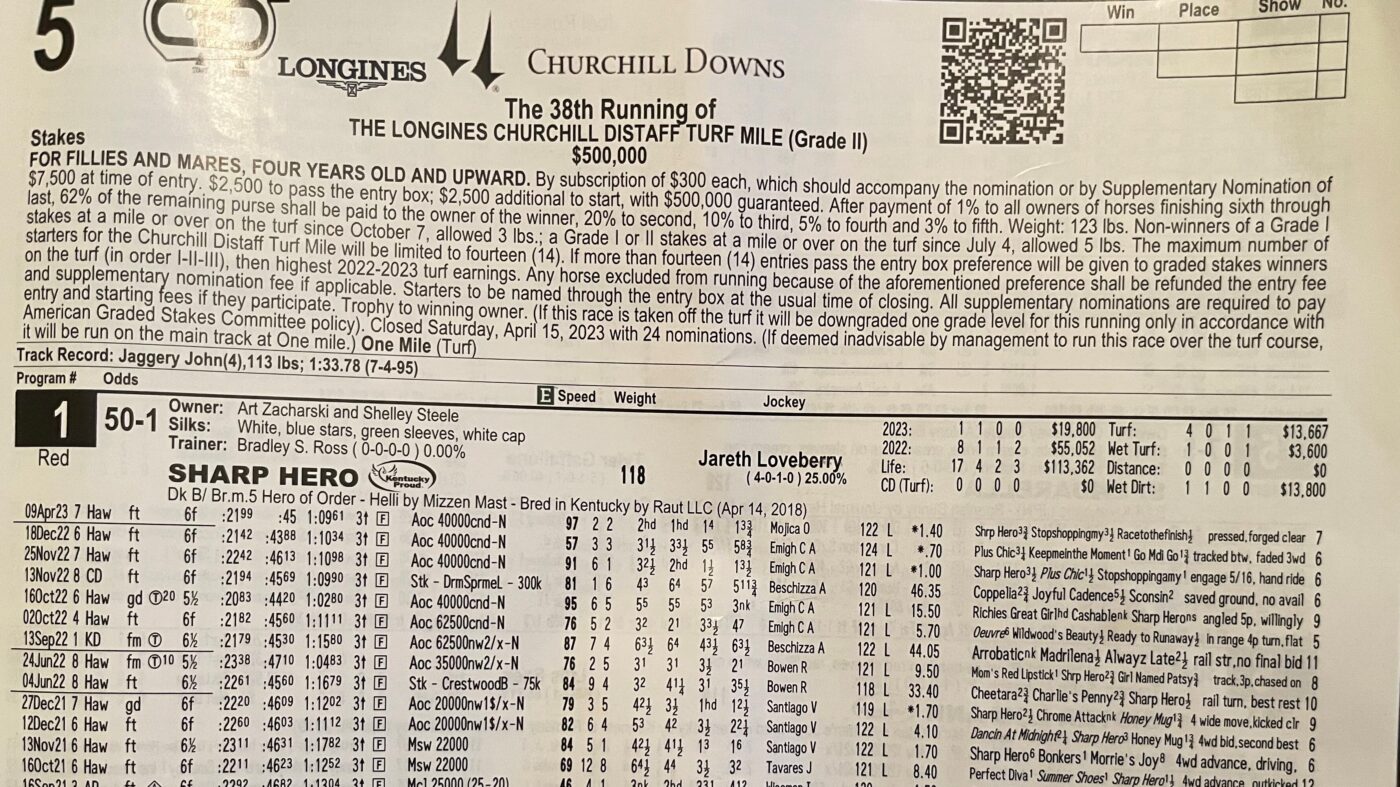
The morning line is the odds printed in the race program — written by the track’s handicapper before a single dollar is bet, as an estimate of where odds might land. Here’s the part most beginners miss: it has zero impact on your payout. Once betting opens, real money flows into the pools and that’s what determines what your ticket pays. Use the morning line to quickly spot likely favorites, then ignore it entirely.
| Morning Line | Live Tote Odds | |
|---|---|---|
| Set by | One track handicapper | The betting public |
| When created | Before betting opens | Updates continuously until post time |
| Represents | An estimate | Real money distribution |
| Impact on payout | None | Determines your payout |
How Horse Racing Odds Are Displayed
Horse racing odds in North America are displayed in fractional format representing profit per dollar wagered — not total return including the stake. A horse at 5-1 means you win $5 for every $1 bet, plus your $1 back, for a total return of $6. This differs from European decimal odds, where the number includes your stake.
| Tote Display | Odds | $2 Payout | $10 Payout | What It Means |
|---|---|---|---|---|
| 1-5 | Odds-on heavy favorite | $2.40 | $12.00 | Win $0.20 per $1 bet. Very low return — heavily backed horse. |
| 1-2 | Odds-on | $3.00 | $15.00 | Win $0.50 per $1 bet. Public sees this as very likely to win. |
| EVN | Even money (1-1) | $4.00 | $20.00 | Win $1.00 per $1 bet. About 50% of win pool is on this horse after takeout. |
| 2-1 | 2/1 | $6.00 | $30.00 | Win $2 per $1 bet. Solid favorite range — about 33% implied win probability. |
| 5-2 | 5/2 | $7.00 | $35.00 | Win $2.50 per $1 bet. Common for second or third choice. |
| 5-1 | 5/1 | $12.00 | $60.00 | Win $5 per $1 bet. Overlay territory if horse has real ability. |
| 10-1 | 10/1 | $22.00 | $110.00 | Win $10 per $1 bet. Longshot — public doesn’t rate this horse. |
| 20-1 | 20/1 | $42.00 | $210.00 | Win $20 per $1 bet. One meaningful ticket can pay for a day at the track. |
Odds-on horses — where the payout is less than double your bet — are displayed with the smaller number first: 1-2, 1-5, 2-5. The minimum legal payout in most jurisdictions is $2.10 on a $2 ticket, which creates the minus pool situation discussed below.
How to Calculate Your Payout
The tote board shows the odds and the cashier pays you automatically — you don’t need to do this in real time. But understanding the calculation lets you quickly assess whether a price represents value before you bet.
Why Odds Change Until Post Time
Every bet placed after yours changes the distribution of money across all horses — and therefore changes the odds for the entire field simultaneously. In a large pool of $200,000 or more, individual bets have minimal effect and odds are relatively stable in the final minutes. In a small pool of $15,000 — typical at a regional track on a weekday afternoon — a single $500 bet can move a horse from 8-1 to 5-1 in one tote board update. Pool size is the critical context for reading any movement.
| Why Odds Shift | What It Looks Like | What It Means |
|---|---|---|
| New money on one horse | Horse drops from 8-1 to 5-1 in final 5 minutes | Someone with real money decided this horse is worth betting — could be connections, a sharp player, or organized action |
| Money spreading across the field | Favorite drifts from 3-2 to 2-1 as pool grows | Public spreading action rather than concentrating on the favorite — common in competitive fields |
| Late exotic action | Win odds stable but exacta pool grows rapidly | Professional bettors often prefer exotics — large late exotic pool can signal sharp money even when win odds don’t move dramatically |
| Small pool volatility | A horse jumps from 12-1 to 6-1 then back to 9-1 | In small pools, individual bets cause significant swings — don’t read too much into movement in pools under $20,000 |
Once you’re comfortable with the basics, learning to read what late movement actually signals — and how pool size changes what a move means — is real skill worth developing. See our betting strategies guide for how to use that information at the windows.
Common Beginner Mistakes with Horse Racing Odds
| Mistake | What Beginners Do | What to Do Instead |
|---|---|---|
| Treating the morning line as real odds | Bet based on program odds; feel cheated when tote shows different prices | Ignore the morning line for betting decisions. Only the live tote board determines your payout. |
| Confusing odds with probability | Think a 5-1 horse has exactly a 1-in-6 chance set by some authority | Recognize that odds reflect money distribution, not inherent probability. The crowd could be right or wrong — that’s the opportunity. |
| Ignoring late odds movement | Bet early and don’t watch the tote again before post | Check the board in the final two minutes. Significant movement in a large pool is real information — and your early bet may now be at very different odds. |
| Betting favorites because they’re favored | Assume the favorite must be the best bet because the crowd picked it | The crowd systematically overrates certain horses. A horse at 3-5 might be the likeliest winner and still a terrible bet if it wins only 55% of the time. See our handicapping guide for how to assess actual win probability. |
| Forgetting the takeout | Calculate expected value as if 100% of the pool is returned to bettors | Start every calculation knowing that 15-25% is already gone. You need to pick winners significantly better than the crowd just to break even. |
What Value Means in Pari-Mutuel Betting
Value doesn’t mean “the horse I think will win.” It means the horse’s actual probability of winning is higher than its odds imply. A horse at 9-1 has an implied probability of 10% — meaning the crowd thinks it will win one time in ten. If you believe it wins two times in ten, you’ve found value. You’re being paid 9-1 odds for a horse that should be 4-1. That math, repeated over hundreds of races, is how pari-mutuel bettors build an edge. It’s also why our betting strategy guide focuses on price rather than just picking winners.
The Takeout: What the Track Keeps
Before any winning ticket is paid, the track deducts the takeout — its percentage of every betting pool. It’s a published percentage that varies by bet type and jurisdiction, but most bettors don’t think about it consciously. The takeout is the structural reason the average bettor loses money over time, even when picking winners at a reasonable rate.
| Bet Type | Typical Takeout | What’s Left for Winners | Long-Run Impact |
|---|---|---|---|
| Win / Place / Show | 14-17% | 83-86 cents per dollar | Lowest takeout — best for value-focused bettors |
| Exacta | 18-22% | 78-82 cents per dollar | Higher takeout offset by larger potential payouts |
| Trifecta / Superfecta | 20-25% | 75-80 cents per dollar | Highest takeout among single-race bets — justified only by large payouts when correct |
| Pick 3 / Pick 4 | 20-25% | 75-80 cents per dollar | High takeout; carryovers can create positive value situations |
| Pick 6 | 24-26% | 74-76 cents per dollar | Highest takeout — rational to play only during large carryovers |
To break even on win bets with a 17% takeout, you need to pick winners at a rate better than the implied odds — which means finding consistent value, not just picking winners. A bettor who picks 33% winners at 2-1 looks profitable on the surface but is actually losing money because the takeout means the effective return is less than 2-1.
Separate Pools for Each Bet Type
Every bet type — win, place, show, exacta, trifecta, Pick 4, and so on — has its own completely separate pool. The win pool and exacta pool for the same race are entirely independent. Money bet into the exacta pool has no effect on win odds, and vice versa. Our complete guide to horse racing bet types covers how each pool is structured and what takeout applies to each.
| Pool | What You’re Betting On | Minimum Bet | Key Point |
|---|---|---|---|
| Win | Horse finishes 1st | $2 | Separate from all other pools — lowest takeout of any bet type |
| Place | Horse finishes 1st or 2nd | $2 | Split between the horse that won and the horse that ran 2nd |
| Show | Horse finishes top three | $2 | Split three ways — often barely above minimum on short-priced horses |
| Exacta | 1st and 2nd in exact order | $1 or $2 | Completely independent of win pool — a horse’s win odds don’t directly affect exacta prices |
| Trifecta | 1st, 2nd, 3rd in exact order | $0.50 or $1 | Higher takeout than exacta; larger payouts when correct |
| Pick 3 / 4 / 5 | Winners of consecutive races | $0.50 or $1 | Each multi-race bet has its own pool spanning multiple races |
Once these basics feel familiar, our betting strategies guide covers the finer mechanics — breakage, minus pools, and how pools can be priced differently by different bettors — for readers ready to go a level deeper.
FAQs: How Horse Racing Odds Work
How do horse racing odds work?
Horse racing uses a pari-mutuel system — all win bets go into a shared pool, the track deducts its takeout (typically 14-25% depending on bet type), and the remaining money is divided among winning tickets proportional to how much was bet on each horse. Odds are not set by the track — they reflect where the crowd’s money went. A horse with 40% of the win pool pays close to even money; a horse with 5% of the pool pays roughly 15-1.
What does 5-1 odds mean in horse racing?
5-1 odds means you win $5 for every $1 you bet, plus your $1 stake back — a total return of $6 per $1 wagered. On a standard $2 win ticket, 5-1 odds pay $12.00. The first number is your profit per unit; the second is your stake. Odds-on horses (favorites) reverse the format: 1-2 means you win $1 for every $2 wagered.
What is a morning line in horse racing?
The morning line is the set of odds printed in the race program before betting opens, written by the track’s official handicapper. It is an estimate of where odds might settle — not a betting price and not the basis for your payout. Your payout is determined by post-time odds on the tote board. Use the morning line only for quick orientation — which horse the track considers the favorite — then ignore it for betting decisions.
Why do horse racing odds change?
Odds change because the pari-mutuel pool is live — every new bet placed changes the distribution of money across all horses and updates the odds accordingly. A horse receiving a large late bet will shorten; a horse receiving no action will drift. Odds update every 60-90 seconds until the gates open. Your payout is based on post-time odds, not the odds when you placed your bet.
What is the takeout in horse racing?
The takeout is the percentage of every betting pool deducted by the track before payouts are made. Win, place, and show bets typically carry 14-17% takeout; exactas and trifectas run 18-22%; Pick 4s and Pick 6s run 20-26%. The takeout is why the average bettor loses money over time even when picking winners at a reasonable rate — every dollar wagered returns only 75-86 cents to the pool before winnings are distributed.
What is pari-mutuel betting?
Pari-mutuel betting is the system used in horse racing where all bets of the same type go into a shared pool, the track takes its cut, and the remainder is divided among winning tickets. There is no house setting odds — you bet against other bettors, not a bookmaker. Odds reflect public opinion rather than professional pricing, which creates opportunities for bettors who handicap more accurately than the crowd.
What does it mean when a horse is odds-on?
A horse is odds-on when its odds are below even money — meaning a winning bet returns less than the amount wagered. Common odds-on prices: 1-2 (win $1 on a $2 bet, total return $3.00), 2-5 (win $0.80 on a $2 bet, total return $2.80), 1-5 (win $0.40 on a $2 bet, total return $2.40). Odds-on horses win more often than not but frequently represent poor value because the public has bet them past their fair price.
What is breakage in horse racing?
Breakage is the difference between the mathematically correct payout and the rounded-down payout bettors actually receive. Payouts in most U.S. jurisdictions are rounded down to the nearest $0.20 per $2 ticket. The rounding difference — typically a few cents per ticket — is kept by the track and represents additional revenue beyond the takeout. Over thousands of tickets, breakage adds up significantly.

- Odds reflect the crowd’s money, not the horse’s quality. A 15-1 horse is 15-1 because only 5% of the pool was bet on it — not because it’s 15 times less talented than the favorite.
- The morning line means nothing for your payout. It’s one handicapper’s estimate before betting opens. Ignore it for betting decisions. Only the live tote board matters.
- Your ticket locks in your selection, not your price. A horse you bet at 8-1 can pay 4-1 if late money floods in. Post-time odds determine your payout.
- Takeout is compounding and unavoidable. Win bets return 83-86 cents per dollar wagered before any payout — see our bet types guide for how takeout varies across wager types.
- You’re betting against the public, not a professional bookmaker. That’s where the edge lives — the crowd makes systematic errors that a sharp bettor can exploit over time.
- Value means mispriced — not likely winner. A 9-1 horse with a 20% actual chance of winning is better value than a 3-5 horse that wins 55% of the time.
- Late tote movement in large pools is real information. Pool size is the critical context — the same movement means different things in a $300,000 pool vs. a $15,000 pool.
- Each bet type has its own independent pool. A horse overbet in the win pool may be underbet in the exacta pool — finding those discrepancies is a source of edge.
For more on applying this framework at the windows, see our guides on horse racing bet types, betting strategies, and how to read a racing form.
Sources and References
- Equibase — Pari-mutuel wagering data and pool information
- Daily Racing Form — Odds and wagering reference
- National Thoroughbred Racing Association
About Miles Henry
Racehorse Owner & Author | 30+ Years in Thoroughbred Racing
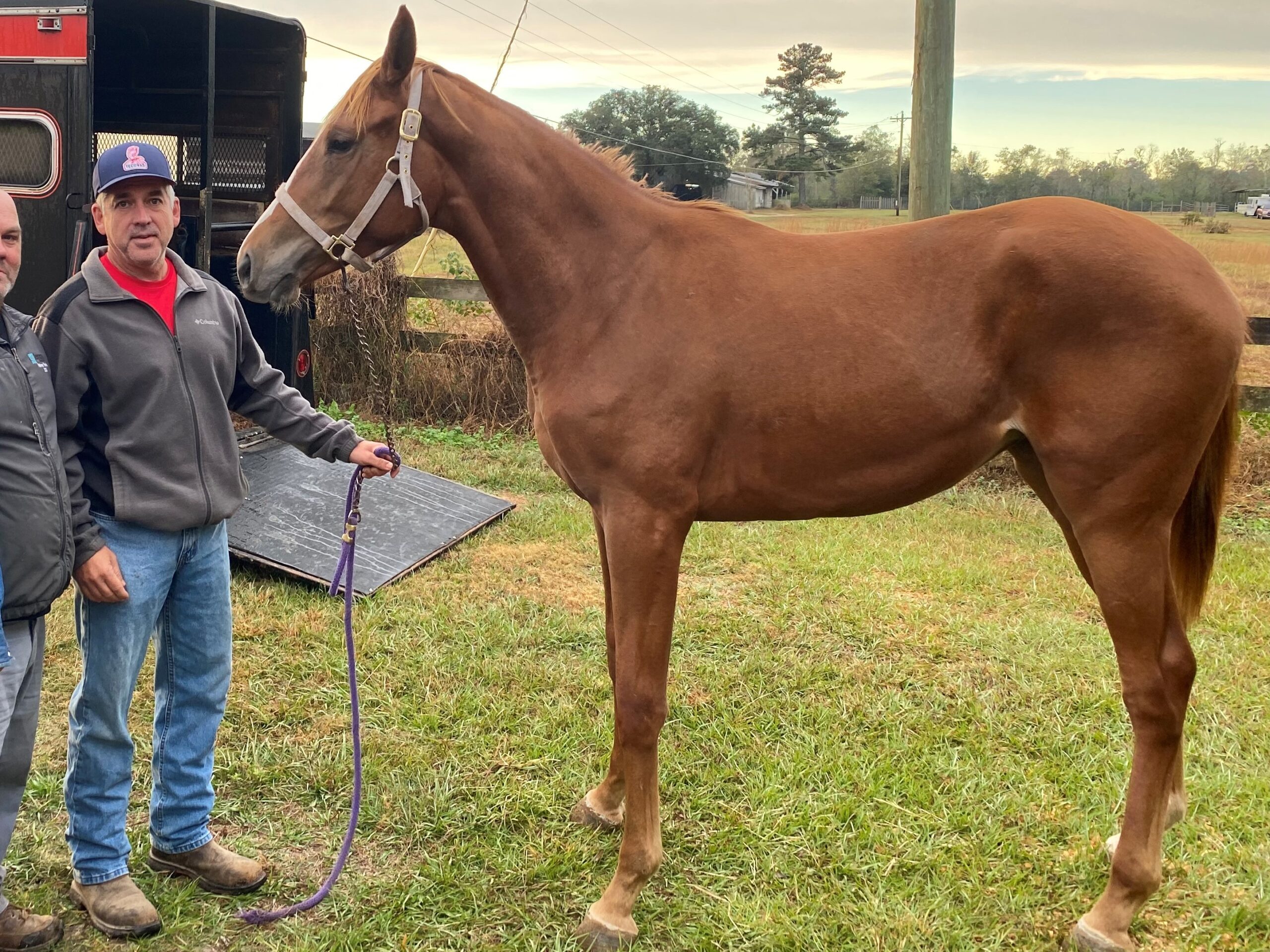
Miles Henry (legal name: William Bradley) is a professional horseman based in Folsom, Louisiana. He holds Louisiana Racing License #67012 and has spent over three decades managing Thoroughbreds at premier tracks including Fair Grounds, Delta Downs, and Evangeline Downs.
Expertise & Hands-On Experience: Beyond the track, Miles has decades of experience in specialized equine care, covering everything from hoof health and nutrition to training protocols for Quarter Horses, Friesians, and Paints. Every guide on Horse Racing Sense is rooted in this “boots-on-the-ground” perspective.
30 of their last 90 starts
Equibase Profile.

Connect with Miles: