
Last updated: May 24, 2026
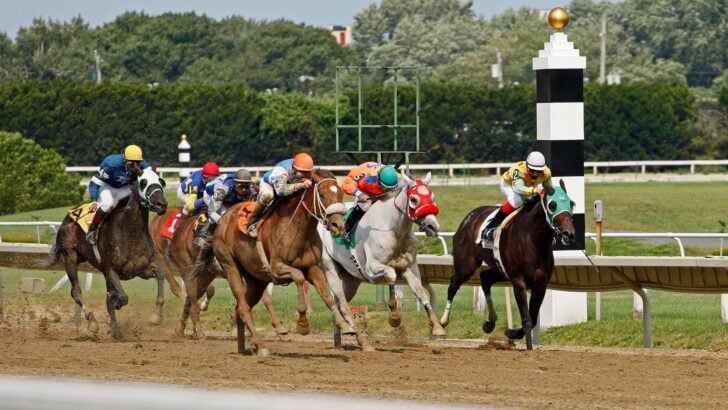
A horse racing condition book is a schedule of races published by a racetrack, showing eligibility requirements, purse amounts, distances, and surfaces. Trainers and owners use it to plan entries and match each horse to races with the right distance, conditions, and class level.
After 30 years of reading condition books at Louisiana tracks, I’ve learned they do more than determine entries — they guide the entire training program. Preparing a horse for a mile race three weeks out requires a different program than prepping for a six-furlong sprint in seven days.
This guide reflects 30 years of using the condition book to place racehorses at Fair Grounds, Delta Downs, and Evangeline Downs in Louisiana. Condition book formats and purse structures vary by track and meet. Always verify current conditions with the racing secretary at your target track before entering. Miles Henry, Louisiana Owner License #67012.
- What it includes: Every available race, with eligibility conditions, purse, distance, and surface
- Who uses it: Trainers use it to plan entries 30–60 days ahead; owners who understand it make better decisions alongside their trainer
- How conditions work: Each race specifies eligibility by wins, earnings, age, sex, or claiming price — a horse must meet all requirements to enter
- Key codes to know: N1X (never won an allowance), N2X (won once), N3L (never won two races lifetime), MSW (maiden special weight), CLM (claiming), STK (stakes)
- Why it determines ROI: A horse sitting in the barn because no suitable race appears in the condition book still costs $3,500–$4,500/month — the condition book directly controls that burn rate
- Where to find it: Equibase publishes condition books for every track in the U.S.; the track’s racing secretary also distributes them directly
This guide covers how to read and use the condition book as a race selection tool. For how class eligibility conditions interact with the class ladder, the full breakdown is in our horse racing class levels guide.
The condition book is the single most important planning tool in racehorse ownership. Today, most trainers and owners check the condition book on their phones, using Equibase.com, the official source for U.S. Thoroughbred racing. The paper copy often sits unused.
Owners who understand what they’re reading make better decisions than those who leave it entirely to their trainer. The condition book directly impacts entries, training, and financial results.
This guide is written for racehorse owners — active or prospective — who want to understand how the condition book works and how to use it strategically. Bettors will also find value here: knowing why a horse appears in a specific race is one of the most underutilized handicapping edges available.

Miles’ Take: I check the condition book before I check the weather. Every Sunday morning, I pull up the upcoming meet conditions at whatever tracks my horses are pointing toward — Fair Grounds, Evangeline, Delta Downs — and I’m mentally slotting each horse against what’s available in the next 30–45 days. A trainer who doesn’t work this way is reactive. I want to be three steps ahead. The condition book is how you do that.
Table of Contents
What Is a Condition Book?
A condition book contains every race available during a meet — typically covering 15 to 45 days of racing — with the complete eligibility requirements, purse, distance, surface, and date for each race. Trainers use it to plan entries weeks in advance. The condition book is not just a schedule; it is the master document that controls every entry decision in your stable.
Every race in the book is written as a condition — a set of rules that define exactly which horses are eligible to enter. A horse either meets those conditions or it doesn’t. There is no room for interpretation at the entry window: if your horse doesn’t fit the written conditions, the entry is rejected. Understanding how to read those conditions is the difference between proactive race selection and scrambling to find any spot that works.
The Equibase condition book database makes these publicly available for every U.S. track. The track’s racing secretary still prints and distributes paper copies to licensed trainers and owners, but most owners and trainers today pull the condition book on their computers or phones through Equibase before the paper version ever makes it to the barn. At Louisiana tracks, the condition book for a new meet is typically available on Equibase the same day it’s released — two to three weeks before the meet begins.
How to Read the Condition Codes
Every race condition is written in a compact shorthand that looks cryptic until you learn the vocabulary. Once you understand the codes, you can read a full race condition in under 30 seconds. Here are the codes that appear most frequently on Louisiana circuits and throughout U.S. racing.
| Code | Full Meaning | What It Means Practically |
|---|---|---|
| MSW | Maiden Special Weight | Open to horses that have never won a race; horses are NOT for sale (no claiming) |
| MCL or MCLM | Maiden Claiming | Open to non-winners; horses ARE for sale at the listed claiming price |
| CLM | Claiming Race | All entered horses available for purchase at the listed claiming price |
| ALW or AOC | Allowance / Allowance Optional Claiming | Non-claiming conditions based on wins/earnings; AOC allows optional claiming entry |
| STK | Stakes Race | Highest class; often requires nominations; horses not for sale |
| N1X | Non-Winners of One (allowance) | Horse has never won an allowance race — first-level allowance condition |
| N2X | Non-Winners of Two (allowance) | Horse has won one allowance but not two — second-level allowance |
| N3X | Non-Winners of Three (allowance) | Horse has won two allowances but not three — upper-level allowance |
| N1L | Non-Winners of One Race Lifetime | Open to horses who have never won ANY race — includes maiden company |
| N2L / N3L | Non-Winners of Two/Three Lifetime | Limits entry to horses with few career wins — common in restricted claiming |
| 3yo / 4up | Three-year-olds / Four-year-olds and up | Age restrictions; some races are open only to specific age groups |
| F&M | Fillies and Mares | Restricted to female horses; often carries separate purse structure |
| LA-bred / Restricted | State-bred restriction | Open only to horses bred in the specified state; often carries bonus purse funds |
| wt. | Weight | Weight carried; allowances may reduce weight for horses meeting certain conditions |
A typical allowance condition written in full reads something like: “Allowance. Non-winners of a race other than maiden, claiming, or restricted since [date]. Three-year-olds and upward. One mile. Purse $32,000.” That single sentence tells you precisely which horses qualify. Any horse that has won a non-claiming, non-maiden race since the date specified is ineligible. Understanding how to read that sentence quickly is how trainers evaluate a full condition book in an hour.
Miles’ Take — The Code That Trips Everyone Up: The phrase “other than maiden, claiming, or restricted” is the one that most new owners misread. When a condition says “non-winners of a race other than maiden or claiming,” it means only wins in non-claiming, non-maiden races count against eligibility. A horse that has won ten claiming races but zero allowance races still qualifies as N1X. The condition book is filtering by type of win, not total wins. Get that distinction wrong and you’ll either enter horses who are ineligible or fail to enter horses who qualify for softer spots than you thought.
The Five Elements Every Race Condition Contains
Every race condition in every condition book, at every track in the country, contains the same five elements. When you open a condition book for the first time, look for all five before making any entry decision.
| Element | What It Tells You | Example | Why It Matters |
|---|---|---|---|
| 1. Eligibility Conditions | Which horses qualify to enter | “N1X, 3yo & up, F&M” | Your horse must meet every eligibility requirement — any mismatch means no entry |
| 2. Purse Amount | Total prize pool distributed after the race | “Purse $28,000” | Determines whether a win or place finish meaningfully offsets your monthly costs |
| 3. Distance | Race length in furlongs or miles | “Six furlongs” / “1 1/16 miles” | Must match your horse’s physical profile and current fitness level |
| 4. Surface | Dirt, turf, or synthetic | “Dirt” / “Turf” / “All-weather” | Some horses perform dramatically differently across surfaces — surface fit is non-negotiable |
| 5. Claiming Price (claiming races only) |
The purchase price at which the horse can be claimed | “Claiming $15,000” | Sets the risk level — enter too low and you may lose the horse; enter too high and you may face tougher company |
A race that looks perfect on eligibility may still be wrong for your horse if the distance is half a furlong longer than his best or the surface switches from dirt to turf. The five elements must align simultaneously, not just one or two of them. Surface fit and class conditions compound each other — our horse racing class levels guide covers how eligibility conditions interact with class, and our racetrack surfaces guide covers how surface type affects horse performance at each level.
Matching Your Horse to the Right Race
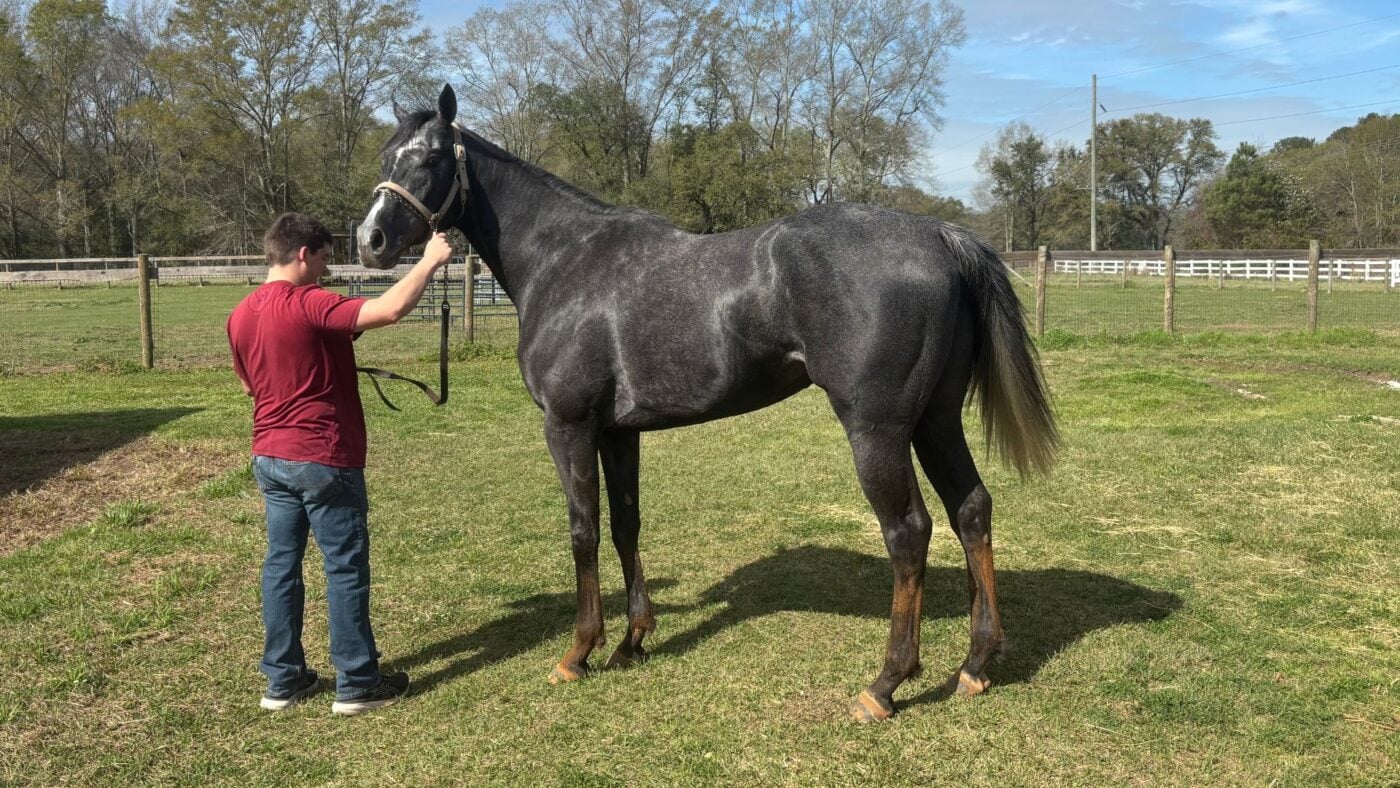
Before you can match a horse to a condition, you need to know the horse’s eligibility record with precision. This sounds obvious, but I have watched owners and even some trainers misread their own horse’s record and target races the horse either can’t enter or is overmatched for. Pull the horse’s full race history on Equibase and record the following before you open the condition book.
- Total career wins: How many races has the horse won, ever?
- Win type breakdown: How many of those wins were maiden? Claiming? Allowance? Stakes?
- Allowance win count: Has the horse won zero (N1X eligible), one (N2X eligible), or more allowance races?
- State-bred status: Is the horse eligible for restricted/state-bred races at your target track?
- Age and sex: Some conditions restrict by age group (3yo, 4up) or by sex (F&M)
- Best distance and surface: Where has the horse performed best historically?
- Current fitness level: Is the horse 30 days from a race or 90 days? This determines which dates are realistic
With that profile in hand, go through the condition book and mark every race your horse is eligible for. Then filter by the five elements: distance fit, surface fit, purse level, claiming price range (for claiming entries), and available dates. What’s left is your legitimate opportunity set — not just any race, but every race where your horse has a genuine reason to run and a realistic path to earning.
| Filter | Question to Ask | Green Light | Walk Away |
|---|---|---|---|
| Eligibility | Does my horse meet every written condition exactly? | Yes — all conditions met | Any condition not met — entry will be rejected |
| Distance | Is this distance within 1 furlong of the horse’s best finishes? | Yes, or trainer has specific reason to stretch/cut back | Unproven distance with no workout evidence for it |
| Surface | Has the horse performed on this surface, or do breeding/works suggest a fit? | Previous positive results on surface | Negative surface history without a clear reason to try again |
| Purse | Does the expected earnings (based on realistic finish) justify the entry? | Win or place covers ≥2 weeks of carrying costs | Expected earnings don’t move the monthly needle |
| Claiming Price | Does the price reflect fair value — not so low you lose a good horse, not so high the competition is too tough? | Price is within 20% of horse’s realistic market value | Price is below 70% of horse’s value OR field is significantly tougher |
Miles’ Take — The Three Races Rule: Before I claim a horse or bring a new horse into training, I require at least three suitable races in the next 45 days of the condition book. Not one great spot. Three adequate spots. One race is a scheduling risk — if that race fills badly, doesn’t go, or the horse doesn’t make the condition, you’re stuck. Three races means you have options. A horse that fits only one race in a 45-day window is a horse I’m probably holding until the next meet, and that changes the financial math entirely. I learned this the hard way when I claimed a horse at the end of a meet with no plan for where he ran next. Three months later he still hadn’t raced and the bills had piled up. The condition book reading saved me from that mistake. Not having one caused it.
Reading Purse Levels Against Your Monthly Costs
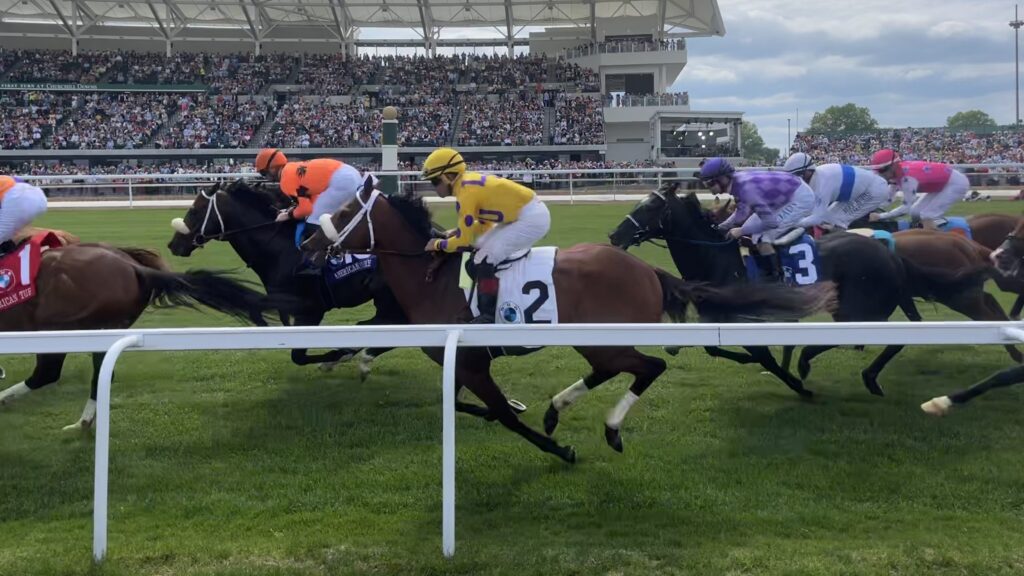
One of the most important uses of the condition book is financial modeling — understanding whether a given race, at a given purse level, makes economic sense for your horse at its current carrying cost. This is a calculation most owners skip, and it is why most owners are surprised at the end of the year.
The starting point is your horse’s monthly burn rate: training day rate, veterinary costs, farrier, and incidentals. At Louisiana regional tracks, a horse in full training runs $3,500–$4,500 per month in training, vet, farrier, and incidental costs. A horse needs to be running and earning regularly — every 45–60 days — to have any chance of offsetting those costs.
| Race Type / Purse | Win (60%) → Owner Net | 2nd (20%) → Owner Net | 3rd (10%) → Owner Net | Monthly Cost Offset (Win) |
|---|---|---|---|---|
| $10,000 Claiming | $6,000 × 80% = $4,800 | $2,000 × 80% = $1,600 | $1,000 × 80% = $800 | ~1.1 months — barely covers one month |
| $20,000 Claiming | $12,000 × 80% = $9,600 | $4,000 × 80% = $3,200 | $2,000 × 80% = $1,600 | ~2.5 months — meaningful but not sufficient alone |
| $35,000 Allowance | $21,000 × 80% = $16,800 | $7,000 × 80% = $5,600 | $3,500 × 80% = $2,800 | ~4.4 months — approaches annual breakeven with consistency |
| $50,000 Allowance / Stakes | $30,000 × 80% = $24,000 | $10,000 × 80% = $8,000 | $5,000 × 80% = $4,000 | ~6+ months — significant financial impact per start |
| Note: Based on $4,000/month carrying cost. A horse running 6–8 times per year needs consistent in-the-money finishes at $20K+ purse levels to approach break-even. See our guide to making money as a racehorse owner for the full analysis. | ||||
The practical implication: when you open the condition book, look at the purse levels available for your horse’s conditions. If the highest purse your horse qualifies for in the next 45 days is $10,000, you are in a financial environment where ownership losses are nearly guaranteed regardless of how well the horse runs. That information changes how you manage the horse — it may justify shipping to a track with higher purses for your horse’s conditions, or it may inform the decision to claim in at a different price point. For a full breakdown of how purse money flows from wagering handle to your check, see our guide to horse racing purse money.
Planning 30–60 Days Ahead: Why This Determines ROI
The most financially damaging thing that happens to racehorse owners is not a bad race — it is a horse sitting in a barn for six weeks because no suitable race appeared in the condition book. That horse is still costing $4,000 per month, still requires daily care and regular workouts, and is generating zero income. The condition book read that should have happened before the horse entered training is the one that prevents that outcome.
Planning 30–60 days ahead requires a specific workflow that runs on two tools: the Equibase condition book, which shows all available races for the upcoming meet, and the Equibase overnight listings, which show races that have been drawn and are accepting entries in the next 48–72 hours. I check both daily. On the first day of a new meet, or when the condition book for the upcoming meet is released, sit down and map every horse in your barn against every available condition. Mark which races each horse fits, on which dates, at which purse level. The result is a racing calendar for your barn — a forward view of income opportunities and timing gaps that you can then use to adjust training schedules, shipping plans, and entry strategies.
| Planning Step | When to Do It | What You’re Identifying |
|---|---|---|
| 1. Pull the condition book and overnight | Day 1 of the new meet; daily from that point forward | Condition book = full meet overview; overnight = which races are accepting entries today, including extra (X) races from previous cards |
| 2. Map each horse to eligible races | Same day | Which horses fit which conditions — and how many options each has |
| 3. Identify gaps | Same day | Which horses have fewer than 3 suitable races — flag for shipping or strategic layup |
| 4. Match fitness to dates | Week 1 of the meet | Which horses will be race-ready for which race dates based on training cycle |
| 5. Set primary and backup targets | Week 2 of the meet | One primary race target per horse + one backup within 10 days of primary |
| 6. Review when horses change conditions | After every race start | A win changes eligibility — re-run the mapping immediately after any race |
Miles’ Take — Why I Review After Every Start: The most common planning mistake I see is owners and trainers who read the condition book once at the start of the meet and then coast. Every race start potentially changes a horse’s eligibility. A horse that wins an N1X race is no longer eligible for N1X conditions — and if there’s no N2X race in the remaining condition book, that horse may be stuck waiting until the next meet. I review eligibility for every horse in my barn the day after a race result, before I even start thinking about the next entry. A win that closes a condition book window is a pleasant problem to have, but it’s still a planning problem that needs a solution immediately.
When the Condition Book Works Against You
The condition book is a tool, but it also creates constraints that cost owners money when they are not anticipated. These are the most common condition book traps I have encountered in 30 years at Louisiana tracks.
Claiming a horse in the final 3–4 weeks of a meet without suitable races available for the next 30–45 days is one of the most expensive planning failures in claiming. The horse arrives in your barn, bills start accumulating, and the next meet may not start for 6–8 weeks. I have seen owners pay $12,000–$15,000 in carrying costs before their newly claimed horse ever runs for them. The rule is simple: before you file the claim slip, confirm at least three suitable races exist in the next 45 days of the condition book. If they don’t exist, either wait or have a confirmed ship-out plan with stall space at another facility.
The condition eligibility gap. A horse that wins out of its current conditions may find no suitable race in the remaining condition book. A maiden winner moving into allowance company, or an N1X winner looking for an N2X race, may face weeks or months before the right conditions become available — especially at smaller meets with limited condition variety. The solution is to look ahead before targeting a specific race: if winning that race creates an eligibility gap, factor that gap into the financial planning before you decide whether to enter.
The condition book purse ceiling. Some tracks have limited purse structures for specific conditions. If your horse’s eligibility conditions only appear in races with $8,000–$12,000 purses at your home track, shipping to a track where those same conditions carry $25,000–$35,000 purses may be worth the transportation cost. Evaluate purse levels across multiple condition books before committing to a single track for a meet.
The state-bred restriction window. State-bred races — restricted to horses bred in Louisiana, or whatever state your track is in — often have the best purses relative to competition quality. But these races have limited slots in the condition book and fill quickly. If you have a Louisiana-bred horse and you are not watching the condition book closely, you can miss the only suitable state-bred race in a 30-day window by filing the entry one day late. State-bred slots require active calendar management, not passive monitoring.
The claiming price mismatch. Setting a claiming price is not just a competitive decision — it is a condition book decision. If you enter a horse at $12,500 claiming and the only available races at your track run at $10,000 or $15,000, you may find your horse ineligible for the available spots. Most claiming conditions specify a price range, not an exact price, so confirm the allowable range before you set the tag.
The condition book lists more races than will run. On any given race day, the condition book typically lists more races than the track will run — at Evangeline Downs, a standard card will list 8 scheduled races plus anywhere from 6 to 10 extra conditions. Entries typically close approximately eight days before the race date — the April 15 card at Evangeline, for example, had entries closing April 7. During the entry period, trainers receive hourly updates on how many horses have entered each condition. The track then selects which 8 races run from those that attracted enough horses.
Of the conditions that didn’t make the card, the track uses discretion to decide which ones reappear as Extra (X) races on subsequent overnight listings. Not every unused condition comes back. A condition that drew only two or three entries is less likely to be brought back because the track has no reason to believe it will fill. Distance duplication is another factor — if similar distances are already on upcoming scheduled cards, the track may hold the extra condition for a better slot. A race that drew seven or eight entries but wasn’t selected because the card was already full has a much stronger case for coming back as an X-race than one that barely attracted interest.
Miles’ Take — Half Way There, April 2026: I entered my horse Half Way There in a Louisiana non-winners of four claiming race at Evangeline Downs. Entries for the April 15 card closed April 7 — eight days out — and when the track made its selections, our race wasn’t among the eight that ran. The question now isn’t just whether the condition comes back. It’s whether the track decided enough horses entered to make it worth bringing back as an X-race. It reappeared the next day as Extra Race X16 on the April 15 overnight: “LA CLAIMING, For Accredited La Bred Four Year Olds and Upward Which Have Never Won Four Races, Claiming Price $5,000, Six Furlongs.” That’s exactly the condition I need for him. So I am back to checking the overnight listings daily to watch whether the race fills and gets selected. When the card runs with that condition, I’ll enter him immediately. He’s fit and race-ready — the condition book has the right race for him. The only variable now is whether it fills.
Real Examples from Louisiana Tracks
These are real planning situations I have navigated on the Louisiana circuit. The details illustrate how condition book reading translates into actual decisions.

Fair Grounds Winter Meet — The N1X Timing Decision
I had a four-year-old gelding coming off two strong allowance efforts where he narrowly missed — second by a neck, second by a head. He was eligible for N1X conditions and was clearly knocking on the door. The Fair Grounds winter meet had N1X races scheduled throughout, and I had to decide whether to target one early in the meet or wait for a spot later when the fields might soften as the meet progressed.
The condition book showed N1X races on Days 8, 19, and 31 of the meet, all at six furlongs on dirt — the horse’s best conditions. The Day 8 race was early enough that we might draw a good field of horses who hadn’t yet warmed up to the meet. The Day 31 race would potentially draw more battle-tested competition from horses who had already run two or three times. We targeted Day 19 as the primary — far enough in for the horse to be perfectly primed, close enough to the beginning of the meet that the field hadn’t yet been culled of its weakest horses. He won. The condition book gave us the strategic window; the training put him in position to take it.
Evangeline Downs Summer Meet — The State-Bred Opportunity
The Evangeline summer meet has historically carried strong Louisiana-bred purses — races restricted to Louisiana-bred horses that run at purse levels significantly higher than their open counterparts. A Louisiana-bred horse I own was eligible for both open claiming conditions and Louisiana-bred restricted conditions. The condition book showed three Louisiana-bred claiming races in a 30-day window, all at $5,000–$7,000 higher purses than comparable open races.
The strategy was simple: target the restricted conditions first. The competition is often softer in state-bred races — not because the horses are worse, but because the pool of eligible horses is smaller, and fields sometimes come up short. We ran her three times in Louisiana-bred conditions that summer and she hit the board in all three. The condition book planning that identified those slots in advance was the difference between a financially neutral summer and a positive one.
Both examples above came from the same discipline: reading the condition book before the meet started, mapping the horse’s eligibility against available conditions, and identifying the races that offered the best combination of purse, competition level, and date alignment. Neither decision required unusual skill or luck — just advance preparation that most owners skip because they assume their trainer is handling it. Your trainer is managing multiple horses. Understanding the condition book yourself is how you participate in decisions that directly affect your financial outcome.
Understanding the condition book is easier once you have the full picture of what owning and managing a racehorse in training actually requires day to day.

Racehorse Ownership and Race Selection Resource Center
The condition book is the foundation of race selection. These guides cover every related decision — from understanding class levels to managing ownership costs and maximizing earnings from each race.
Frequently Asked Questions About the Condition Book
Where can I find the condition book for a specific track?
The Equibase condition book database (equibase.com/static/horsemen/horsemenareaCB.html) lists condition books by track for every U.S. meet and is the most reliable public source. The Equibase overnight listings (equibase.com/static/horsemen/horsemenareaON.html) show races accepting entries in the next 48–72 hours — the daily tool for monitoring whether a specific race has been drawn. The track’s racing secretary also distributes them directly to licensed trainers and owners. Many tracks post them on their official websites. Condition books are typically released 2–3 weeks before a meet begins.
What does N1X mean in a horse racing condition book?
N1X stands for Non-Winners of One race under allowance conditions — meaning the horse has never won an allowance race (excluding maiden and claiming wins). N2X means never won two allowance races, and N3X means never won three. These are the three main allowance condition levels in U.S. racing. A horse eligible for N1X is on the first rung of non-claiming, non-maiden competition.
How far in advance should I be reading the condition book?
Ideally, read the condition book the day it is released — typically 2–3 weeks before a meet begins. Map each horse in your barn against available conditions immediately. The goal is to identify your 30–60 day racing schedule before entries open, not the week of. The most financially damaging scenarios — horses sitting in barns because no race fits — are almost always preventable with advance condition book planning.
What happens if my horse wins and becomes ineligible for its current conditions?
A win changes eligibility immediately. A horse that wins an N1X race is no longer eligible for N1X conditions and must move up to N2X or allowance/optional claiming company. Review your horse’s eligibility the day after any race result and re-map against available conditions in the remaining meet. If the win creates an eligibility gap — no suitable race available for several weeks — that affects your planning and potentially your financial timing.
Can I enter a claiming race at any price I choose?
Within limits, yes — but claiming conditions typically specify a price range (e.g., $10,000–$16,000), and your horse must be entered within that range. Setting the price too low risks losing the horse to a claim; too high and you may face tougher competition or find your horse ineligible for the condition. Most claiming conditions also specify eligibility by wins or earnings in addition to the price range, so confirm all requirements before setting the tag.
What is the difference between a race condition and a race condition book?
A race condition is the written eligibility requirement for a single race — specifying who can enter, at what purse, over what distance and surface. A condition book is the full collection of race conditions for an entire meet, published in advance as a planning document for trainers and owners. The condition book contains dozens or hundreds of individual race conditions organized by date and race type.
Do all tracks use the same condition book format?
The five core elements (eligibility, purse, distance, surface, claiming price) are universal, but formatting and terminology vary slightly by track and region. Louisiana tracks follow national HISA standards, but the specific conditions written — which types of races appear, at what purse levels, how many times per meet — reflect local racing patterns and the track’s horsemen population. A condition book at a regional Louisiana track will look different from one at Churchill Downs or Saratoga, though the codes are consistent.
What is a state-bred race and how does it appear in the condition book?
State-bred races are restricted to horses bred in a specific state — in Louisiana, these are designated LA-bred and run throughout the Fair Grounds, Evangeline, and Delta Downs meets. They appear in the condition book labeled with the state restriction and typically carry higher purses relative to competition quality than open races at the same level. For a Louisiana-bred horse, identifying and targeting state-bred conditions in the condition book is one of the most financially impactful planning decisions an owner can make.
Sources and Further Reading
- Equibase Condition Book Database — official condition books for every U.S. Thoroughbred track, updated when each meet releases its book
- Equibase Overnight Listings by Track — races accepting entries in the next 48–72 hours; the daily companion to the condition book for active race planning
- Equibase — official source for past performances, trainer statistics, and horse eligibility history
- The Jockey Club — Thoroughbred breed registry, racing condition standards, and industry statistics
- HISA — Horseracing Integrity and Safety Authority — national racing regulations, claiming rules, and entry standards effective 2025
- Thoroughbred Owners and Breeders Association (TOBA) — ownership resources, cost data, and condition book guidance for new owners
About Miles Henry
Racehorse Owner & Author | 30+ Years in Thoroughbred Racing
Miles Henry (legal name: William Bradley) is a professional horseman based in Folsom, Louisiana. He holds Louisiana Racing License #67012 and has spent over three decades managing Thoroughbreds at premier tracks including Fair Grounds, Delta Downs, and Evangeline Downs.
Expertise & Hands-On Experience: Beyond the track, Miles has decades of experience in specialized equine care, covering everything from hoof health and nutrition to training protocols for Quarter Horses, Friesians, and Paints. Every guide on Horse Racing Sense is rooted in this “boots-on-the-ground” perspective.
30 of their last 90 starts
Equibase Profile.

Connect with Miles: