Last updated: November 19, 2025
Have you ever wondered what fuels the heart-pounding excitement of horse racing? At the center of it all is horse racing purse money—the prize pool that rewards top performers and drives the sport’s fierce competition. In 2024, U.S. horse racing saw over $11 billion in wagering, generating purses exceeding $1.3 billion, a slight uptick despite economic pressures. This money isn’t just about winnings; it’s the lifeblood that attracts elite horses, trainers, and jockeys, elevating races to legendary status.
In this comprehensive guide, I’ll break down what horse racing purse money is, where it comes from, how it’s split, and why it matters to everyone from casual fans to industry insiders. Drawing on my 25+ years as a Thoroughbred owner and trainer, I’ll share personal anecdotes and expert insights to make this easy for newcomers while providing depth for enthusiasts. Whether you’re curious about betting’s role or major events like the Kentucky Derby’s $5 million purse, you’ll gain a full understanding of horse racing purse money.

What is Purse Money?
Horse racing purse money refers to the total prize pool awarded to the top-finishing horses and their teams in a race. It’s the “pot” that competitors vie for, ranging from a few thousand dollars at local tracks to millions at prestigious events like the Kentucky Derby or Breeders’ Cup. This money is funded through various channels and distributed based on finishing positions, making it a key motivator in the sport.
Unlike salaries in other sports, purse money is performance-based, rewarding excellence and risk-taking. In a typical race, the winner might claim 60-70% of the purse, with decreasing shares for lower places. This structure ensures that even non-winners can recoup some costs, fostering broader participation and encouraging owners to enter horses even in competitive fields.
As someone who’s owned and trained Thoroughbreds for over two decades, I’ve seen firsthand how purse money influences decisions. Early in my career, I entered a horse in a modest claiming race with a $10,000 purse—small by Derby standards but enough to cover training fees when we placed third. It’s not just about the cash; it’s about sustaining the ecosystem of breeders, owners, and tracks that keeps the sport alive.

Why Purse Money is Critical to Horse Racing
Purse money is the engine driving horse racing’s competitiveness and appeal. Without substantial purses, top talent wouldn’t compete, leading to lackluster events and declining interest. It motivates owners to invest in breeding and training, trainers to hone strategies, and jockeys to push limits—ultimately benefiting fans with higher-quality races.
Economically, purses support jobs across the industry, from grooms to veterinarians. In 2024, U.S. purses totaled around $1.309 billion, up slightly from prior years despite a 3% drop in wagering. This funding helps offset the high costs of horse care, which can exceed $50,000 annually per animal. For small operations like mine, a solid purse structure means the difference between breaking even and going under.
On a broader scale, purse money enhances the sport’s prestige. Events with massive purses, like the Breeders’ Cup with $34 million in total prizes in 2024, draw global attention and boost tourism. Higher purses correlate with increased wagers, creating a virtuous cycle that benefits everyone from track operators to local hotels.
Sources of Purse Money
Horse racing purse money doesn’t materialize out of thin air—it’s compiled from multiple revenue streams, ensuring sustainability even in fluctuating economies. Understanding these sources reveals how interconnected the sport is with betting, media, and business.
| Wagering Type | Purse Contribution | Volume Impact |
|---|---|---|
| Live On-Track | 7.25% | Highest per-dollar rate |
| ADW (Online Off-Track) | ~4% | Growing rapidly |
| Simulcast | ~1.5% | Steady contributor |
| Online Platforms | <1.5% | High volume, lower rate |
Betting Revenues
Betting is the largest contributor to horse racing purse money. When fans wager, a portion—known as the “takeout”—funds purses. The contribution percentages vary significantly by wagering type:
- Live on-track betting: About 7.25% goes to purses, the most generous rate reflecting the value tracks place on in-person attendance.
- Advance Deposit Wagering (ADW): Roughly 4% allocated to purse accounts.
- Simulcast wagering: 1.5% contributed from interstate betting.
- Online platforms: Smaller percentages, but high volume adds up significantly.
In 2024, U.S. horse racing saw over $11.265 billion in wagering, generating purses exceeding $1.309 billion, according to industry data from Equibase and BloodHorse. Tracks with casinos boost purses by 20-30% in some states. From my experience, betting dips directly impact purse levels, underscoring its critical importance.

Historical Racing Machines and Gaming Innovation
One of the most significant modern developments in purse funding has been historical horse racing machines—specialized gaming terminals that have transformed the economic landscape. Churchill Downs Incorporated has invested over $1 billion in these facilities since 2018. This dramatically increased purses statewide, particularly in Kentucky. These machines allow gaming operations at racing facilities, with substantial revenue streams directed to purse accounts.
The impact has been remarkable: the Kentucky Derby’s purse jumped from $3 million (2019-2023) to $5 million starting in 2024, largely due to this historical racing revenue. Other states have followed suit, with Wyoming seeing 40% purse increases after implementing similar gaming partnerships. This innovation represents the future of sustainable purse funding in an era of evolving entertainment options.
Television and Simulcast Revenues
Broadcast deals inject significant funds into purse pools. Networks like NBC pay for rights to air major races, with portions earmarked for purses. Online simulcasts expand reach globally, generating fees from viewers worldwide. For major events, this can add millions; the Kentucky Derby’s TV deal alone contributes substantially to its $5 million purse. International simulcasting has become particularly lucrative, connecting American racing to betting markets in Europe and Asia.
Entry Fees and Nominations
Owners pay nomination, entry, and starting fees to compete, directly feeding the purse. In stakes races, these can total hundreds of thousands of dollars. For the 2025 Kentucky Derby, owners paid $25,000 entry fees plus an additional $25,000 to start, along with $600 for Triple Crown nominations. For the Belmont Stakes, entry fees helped build its $2 million purse. These fees ensure only serious contenders enter major races while providing guaranteed baseline funding.
Sponsorships and Corporate Partnerships
Corporations sponsor races for branding opportunities, like Longines for the Breeders’ Cup or Woodford Reserve for the Kentucky Derby. These deals can increase purses by 10-20%, making events more attractive to top owners. In 2024, sponsorships helped elevate the Breeders’ Cup total to $34 million. Corporate involvement adds both monetary value and marketing reach, raising the profile of sponsored races.
Additional Contributions
Tracks, state breeding funds, and racing associations add supplementary funds, especially for signature races. Some states subsidize purses via lottery or tax revenues, varying by region. State breeding funds, financed through stallion registration fees, often provide bonuses for state-bred horses, effectively increasing purses for qualifying participants.

Variations Across the US:
- Most of the 33 states in the US pay out to all horse entries.
- Ten states limit payouts to the top five finishers.
- Three states have diverse payout methods, including added money and starter money, affecting distribution at different tracks.
These varied payout methods influence the quality of horses entering races and ensure fair compensation.
| Distribution Method | Number of States | Description |
|---|---|---|
| Pay All Starters | 20 states | Every horse receives purse money regardless of finish |
| Top Five Only | 10 states | Only horses finishing 1st through 5th receive purse shares |
| Mixed Systems | 3 states | Payout structure varies by track or race type |

How Purse Money is Distributed
Once funded, horse racing purse money is split systematically, ensuring fairness while rewarding top performers. Distribution varies by race type, track rules, and region, but clear patterns have emerged across the industry.
How Purse Money is Split Between the Horses
Most modern purses pay the top 5-8 finishers, with some jurisdictions paying all starters:
- Winner: 60-70% of the total purse
- Second: 15-20%
- Third: 8-12%
- Fourth: 4-6%
- Fifth: 2-4%
- Lower places: 1% each in systems that pay all starters
For example, New York’s 2018 model allocates 55% to the winner, scaling down through sixth place. The Kentucky Derby pays only the top five finishers, with the 2025 winner earning $3.1 million from the $5 million total purse—maintaining the traditional winner-take-most approach for this premier event.
Here’s a chart illustrating a typical purse distribution for a standard $100,000 race:
This chart shows how a standard purse might be divided based on common industry practices, with the winner receiving the lion’s share while ensuring lower finishers receive some compensation.
Regional Variations
Of the states conducting Thoroughbred racing:
- 20 states pay purse money to all starters
- 10 states limit payments to the top five finishers
- 3 states employ mixed systems where payout structures vary by track
Florida pioneered paying all starters in 1975, allocating 1% to horses finishing below fourth place. This innovation encouraged full fields and discouraged scratches, improving race quality. California adds starter bonuses from separate funds—$400 per horse at Los Angeles-area tracks for horses finishing worse than fifth.
The Stakeholders’ Share: Owners, Trainers, and Jockeys
From each horse’s purse earnings, the typical distribution among stakeholders is:
- Owner: 80-85% of the purse share (covers expenses and represents profit potential)
- Trainer: 10-15% of the purse share (compensation for preparation and strategy)
- Jockey: 5-10% of the purse share (plus mount fee of $75-$135 per ride regardless of finish)
These percentages can be negotiated differently, particularly for claiming-level horses or in special contractual arrangements. Some tracks mandate breeder shares as well, typically 5% in breeding-incentive states. In the 2025 Belmont Stakes, the winning owner took home approximately $960,000-$1,020,000 from the $1.2 million first-place share, depending on specific agreements with trainer and jockey.

Real-World Examples
To bring horse racing purse money to life, let’s examine major races and how the money actually flows.
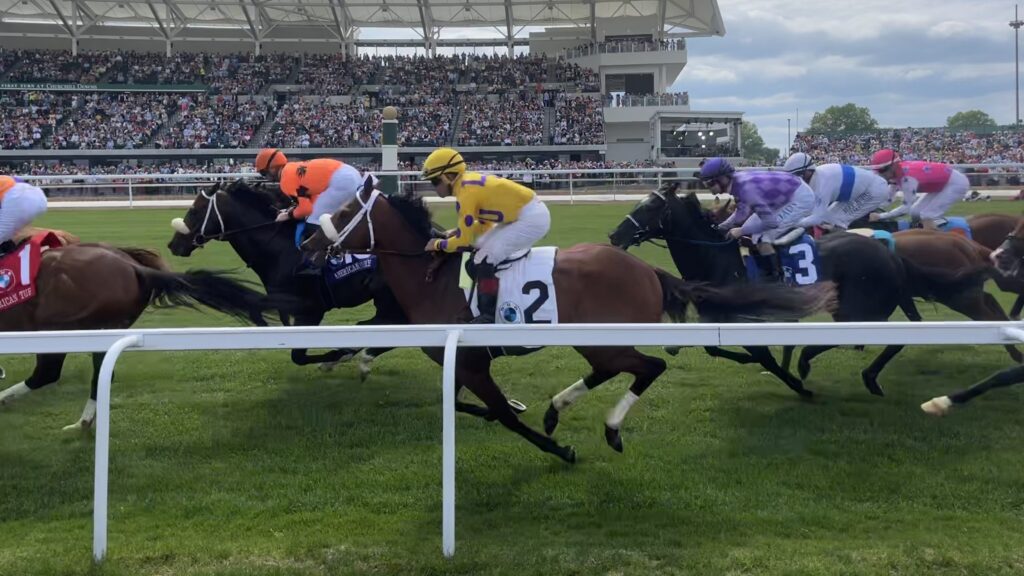
Kentucky Derby 2025
Total Purse: $5 million
Distribution:
- Winner: $3.1 million (62%)
- Owner receives: ~$2.48-2.64 million (80-85%)
- Trainer receives: ~$310-465,000 (10-15%)
- Jockey receives: ~$155-310,000 (5-10%)
- Second: $1 million
- Third: $500,000
- Fourth: $250,000
- Fifth: $150,000
This record purse, up from $3 million through 2023, highlights the impact of historical racing machine revenues and Churchill Downs’ strategic investments. The increase makes the Derby even more attractive to international competitors and top domestic horses.
Belmont Stakes 2025
Total Purse: $2 million
The Belmont now pays the top eight finishers:
- Winner: $1.2 million (60%)
- Second: $360,000 (18%)
- Third: $200,000 (10%)
- Fourth: $100,000 (5%)
- Fifth-Eighth: Remaining percentages down to 1%
Held at Saratoga in 2025 due to Belmont Park renovations, the race maintained its purse structure while adapting to a new venue, demonstrating the sport’s flexibility.
Breeders’ Cup 2024
Total Purses: $34 million across all events
The Breeders’ Cup Classic alone offered $7 million, up from previous years, with the winner taking 55-60%. Since 2016, the Breeders’ Cup has paid the top eight finishers in each race, with sixth through eighth each receiving 1%—recognizing that deep, competitive fields enhance racing quality.
A Personal Example
I finished second in a $20,000 allowance race in Louisiana. The second-place share was $4,000 (20% of the purse), and after paying my trainer and jockey their percentages, I netted about $3,200 as owner. After months of training bills, vet costs, and travel expenses, that check didn’t cover everything, but it kept us in the game and inspired me to keep competing.

Horse Racing Purse Trends and Future Challenges
Horse racing purse money faces headwinds but shows remarkable resilience through innovation.
Current Challenges
- Economic fluctuations: Wagering dropped 3.35% in 2024, pressuring purse accounts despite slight overall growth. Inflation affects both betting budgets and operational costs.
- Regulatory complexity: Stricter gambling laws in some jurisdictions and the implementation of HISA (Horseracing Integrity and Safety Act) add compliance costs that must be absorbed by the industry.
- Competition for entertainment dollars: Online sports betting, daily fantasy sports, and casino games compete directly with horse racing for discretionary spending.
- Sponsorship volatility: Corporate cutbacks during economic downturns can eliminate key funding sources for major races.
Future Trends
- Digital betting expansion: Mobile apps and online platforms could stabilize revenues. The global sports betting market is projected to reach $127 billion by 2027, with horse racing positioned to capture growing share.
- International market development: Expanded simulcasting to Asian and European markets offers significant growth potential, with untapped betting pools in emerging economies.
- Gaming partnerships: More states are exploring historical racing machines and casino integrations, following Kentucky’s successful model. Wyoming’s 40% purse increase after implementing gaming demonstrates this potential.
- Sustainable funding models: Hybrid approaches combining traditional betting, gaming revenues, and innovative financing (including potential cryptocurrency integrations) may provide more stable purse structures.
- Responsible gambling frameworks: Well-designed player protection programs can sustain long-term betting revenues by maintaining healthy, engaged betting populations.
As an insider, I’m optimistic. The industry has weathered challenges before, and the current blend of traditional funding with innovative gaming partnerships offers a path to sustainable growth.

Impact on Horse Racing
Horse racing purse money profoundly shapes every aspect of the sport, from breeding decisions to race-day competition.
Driving Competition and Excellence
Purse size directly correlates with horse quality. When Del Mar announced an 8% increase in overnight purses for its 2025 summer season, bringing most maiden dirt races to $100,000, it wasn’t arbitrary—it was strategic. Higher purses attract better horses, creating more competitive racing, generating more betting interest, which funds even better purses in a virtuous cycle.
I’ve experienced this dynamic personally. When deciding where to run a promising young horse, purse size weighs heavily. A $75,000 maiden race versus a $100,000 maiden race might determine whether I ship across several states or stay home. Multiply this decision across hundreds of owners, and you understand how purse levels shape the competitive landscape.
Economic Multiplier Effects
Purse money circulates through the racing ecosystem. Owners use winnings to purchase additional horses or invest in breeding stock. Trainers employ more grooms and exercise riders. Jockeys support agents, valets, and other service providers. This circulation creates employment and economic activity extending well beyond immediate participants.
Higher purses attract more owners, increasing demand for yearlings at sales, elevating breeding values, encouraging breeding farm expansion and employment. The financial health of racing purses ripples through the entire Thoroughbred industry.
Sustaining Participation at All Levels
Even modest purses matter tremendously. That $10,000 claiming race represents someone’s dream and livelihood. For smaller owners and trainers, a $6,000 winning share might cover several months of training bills. These everyday purses sustain the broad base of the racing pyramid upon which elite levels rest. Without adequate purse levels throughout claiming and allowance ranks, the sport would lose the depth that makes it vibrant.
FAQs for “The Dynamics of Purse Money in Horse Racing”
What is purse money in horse racing?
Purse money is the prize pool distributed to top finishers in a race, funded by betting revenues, entry fees, sponsorships, and other sources. It serves as the primary financial incentive motivating owners, trainers, and jockeys to participate.
How does betting contribute to purses?
Different betting types contribute at varying rates: live on-track wagering contributes approximately 7.25% to purses, advance deposit wagering contributes about 4%, simulcast wagering contributes roughly 1.5%, and online platforms contribute smaller percentages. In 2024, over $11 billion in total wagering directly supported purse funding.
How is purse money split among owners, trainers, and jockeys?
From a horse’s purse earnings, owners typically receive 80-85%, trainers receive 10-15%, and jockeys receive 5-10% (plus a guaranteed mount fee of $75-$135 per ride). These percentages can vary based on individual agreements and regional customs.
Why do purses vary so dramatically between races?
Purse sizes reflect multiple factors including betting handle, race prestige, sponsorship support, entry fees, and track funding structures. Major events like the Kentucky Derby ($5 million) attract enormous betting pools and sponsorships, while local claiming races might offer $10,000-$25,000 purses based primarily on daily betting revenues.
How much do jockeys actually earn from major race wins?
For a Kentucky Derby win with a $3.1 million first-place purse, a jockey receiving 10% of the owner’s share would earn approximately $310,000. However, jockeys typically pay 25% to their agent and 5% to their valet, leaving them with roughly 7% of the purse earnings, or about $217,000 before taxes.
What are historical racing machines and how do they affect purses?
Historical racing machines are specialized gaming terminals at racing facilities that allow wagering on past races with outcomes unknown to the bettor. Churchill Downs has invested over $1 billion in these facilities since 2018, with substantial revenues directed to purse accounts. This innovation increased the Kentucky Derby purse from $3 million to $5 million and is being adopted in other states to boost purse levels.
What are future trends in purse funding?
Digital betting expansion, international simulcasting growth, gaming partnerships (like historical racing machines), and hybrid funding models combining traditional and innovative revenue streams are expected to increase purse sustainability. Responsible gambling frameworks and global market development offer additional growth potential.

Conclusion
Horse racing purse money is more than prizes—it’s the catalyst for competition, innovation, and passion in the sport. From betting revenues contributing 7.25% of on-track wagers to historical racing machines generating billions in new funding, from distributions rewarding owners with 80-85% shares to the Kentucky Derby’s $5 million purse attracting global attention, purse money touches every aspect of racing.
Understanding these dynamics reveals why purse structures matter to everyone involved, from the owner of a $5,000 claimer to the connections of Derby contenders. As the sport evolves with digital betting and gaming partnerships, purse money will continue adapting, sustaining the ancient thrill of horse racing for future generations.
Share your thoughts in the comments—have you ever bet on a race or owned a horse? What aspects of purse money surprise you most? Sign up for our newsletter for more insider insights on horse racing, and share this article on social media to help other racing enthusiasts understand the economics that power our sport.
References and Further Reading
- The Jockey Club – The premier organization dedicated to improving Thoroughbred breeding and racing. www.jockeyclub.com
- Equibase – Official database for Thoroughbred racing in North America, providing detailed race results and purse information. www.equibase.com
- Racing Post – International horse racing news and analysis with detailed purse information. www.racingpost.com
- BloodHorse – Leading publication covering Thoroughbred breeding, sales, and racing economics. www.bloodhorse.com
- Horse Racing Nation – Comprehensive racing news and analysis with focus on industry trends. www.horseracingnation.com
- Sports Business Journal: For insights into the business side of sports, including horse racing. Visit Sports Business Journal
Related Articles You Might Enjoy
- The History and Evolution of the Kentucky Derby
- The True Cost of Racehorse Ownership: A Reality Check
- Triple Crown Races: History, Tradition, and Modern Evolution

About Miles Henry
Racehorse Owner & Author | 30+ Years in Thoroughbred Racing
Miles Henry (legal name: William Bradley) is a Louisiana-licensed owner
#67012.
Beyond the racetrack, he’s cared for Quarter Horses, Friesians, Paints, and trail mounts for 30+ years—bringing hands-on experience to every breed profile, health guide, and gear review on this site.
His racehorses have finished in-the-money in
30 of their last 90 starts
Equibase Profile.
Connect: