

Last updated: October 16, 2026
Any links on this page that lead to products on Amazon are affiliate links and I earn a commission if you make a purchase. Thanks in advance – I really appreciate it!
Maybe you’ve just started lessons, and you’re thinking about buying your own saddle. Maybe you’re coming over from Western, or you’ve moved from flatwork into jumping, and the saddle you have doesn’t feel right anymore. Then you walk into a tack shop and the English saddles all look alike. The tags say dressage, close contact, all-purpose, and eventing, and the prices are all over the map. Pick the wrong type, and you’ve paid for a saddle that doesn’t fit your needs.
Below, I’ll compare the main types side by side, explain how jumping and dressage saddles differ, and help you choose the right one for you and your horse.
Table of Contents
Types of English Saddles at a Glance
| Saddle | Seat | Flap | Best for |
|---|---|---|---|
| All-purpose | Moderately deep | Slightly forward | Beginners, flatwork, small jumps, trail |
| Dressage | Deep | Long and straight | Flatwork and dressage |
| Close contact (jumping) | Shallow, with a square cantle | Forward | Show jumping and hunters |
| Eventing | Shallow but a little deeper than close contact | Forward, with more knee support | Cross-country and eventing |
| Saddle seat | Very flat, with a cut-back pommel | Straight, usually no knee rolls | Saddlebreds, Morgans, Arabians, and gaited show horses |
| Racing | Tiny and flat | Very short | Galloping and racing |
| Endurance | Padded, built for long hours | Varies, often with extra rings for gear | Long-distance trail riding |
Compared with the types of Western saddles, every one of these is lighter, has no horn, and spreads the rider’s weight over padded panels on either side of the spine. What changes from type to type is the seat depth, the flap angle, and where that puts your leg and balance.
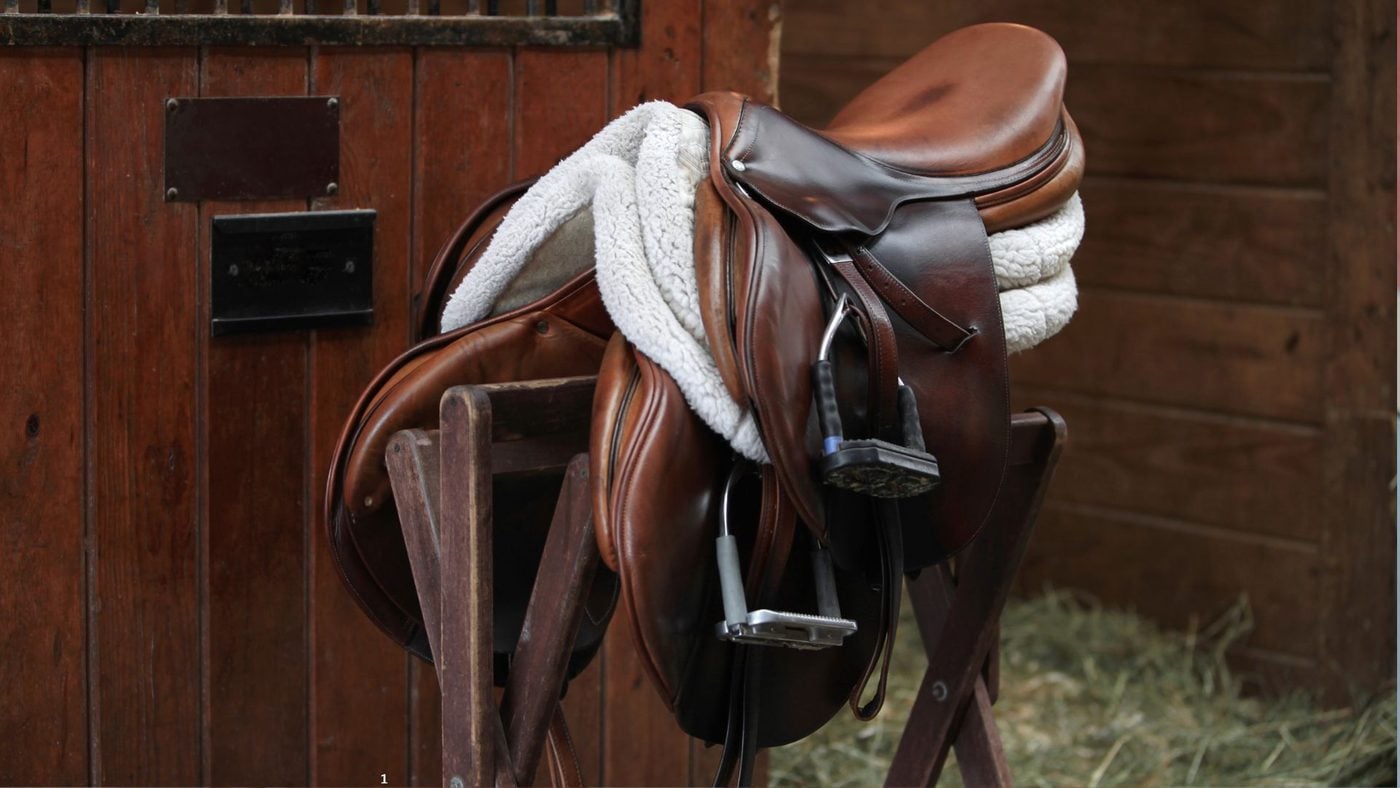
The Main Types of English Saddles
All-purpose saddle
An all-purpose, or general-purpose, saddle splits the difference between a dressage saddle and a jumping saddle. Many lesson programs use them for that reason. The Kentucky Horse Council’s guide to English saddle types recommends all-purpose saddles for beginners because it handles flatwork, small jumps, and trail riding without locking you into one position. It won’t put you in a true dressage position or give you the support of a jumping saddle over bigger fences, but it’s a sensible first saddle.
Dressage saddle
A dressage saddle typically has a deep seat, long, straight flaps, and long billets that buckle the girth below the flap, so there’s less bulk between your leg and the horse. It’s built for a long leg and a tall, balanced position on the flat. Most have knee or thigh blocks, though their size and shape vary by model. The long flap also means dressage saddle pads are cut longer and straighter than jumping pads.
Close contact or jumping saddle
A close contact saddle, also called a jumping or hunt seat saddle, has a flatter, more open seat and forward-cut flaps. Jumping calls for shorter English stirrups and a bent knee, and the forward flap gives that knee somewhere to go when you fold into a two-point position over fences. Hunter and jumper riders like the close feel of the horse’s back, but it also means there’s less saddle between you and a mistake.
Eventing saddle
Eventing saddles are close cousins of the jumping saddle, built for the cross-country phase. They keep the forward flap, but usually add a slightly deeper seat and more knee support. Over solid fences and uneven ground, security matters more than a close feel, and that extra support is there for a reason.
Saddle-seat saddle
A saddle-seat saddle is the odd one in the group. It has a very flat seat and a cut-back pommel that clears the horse’s withers and suits the rider’s long leg. It’s built for saddle seat showing, mainly with American Saddlebreds, Morgans, Arabians, and some gaited breeds. Outside those show circles you won’t see many, so unless that’s the riding you plan to do, it probably isn’t the saddle you need.
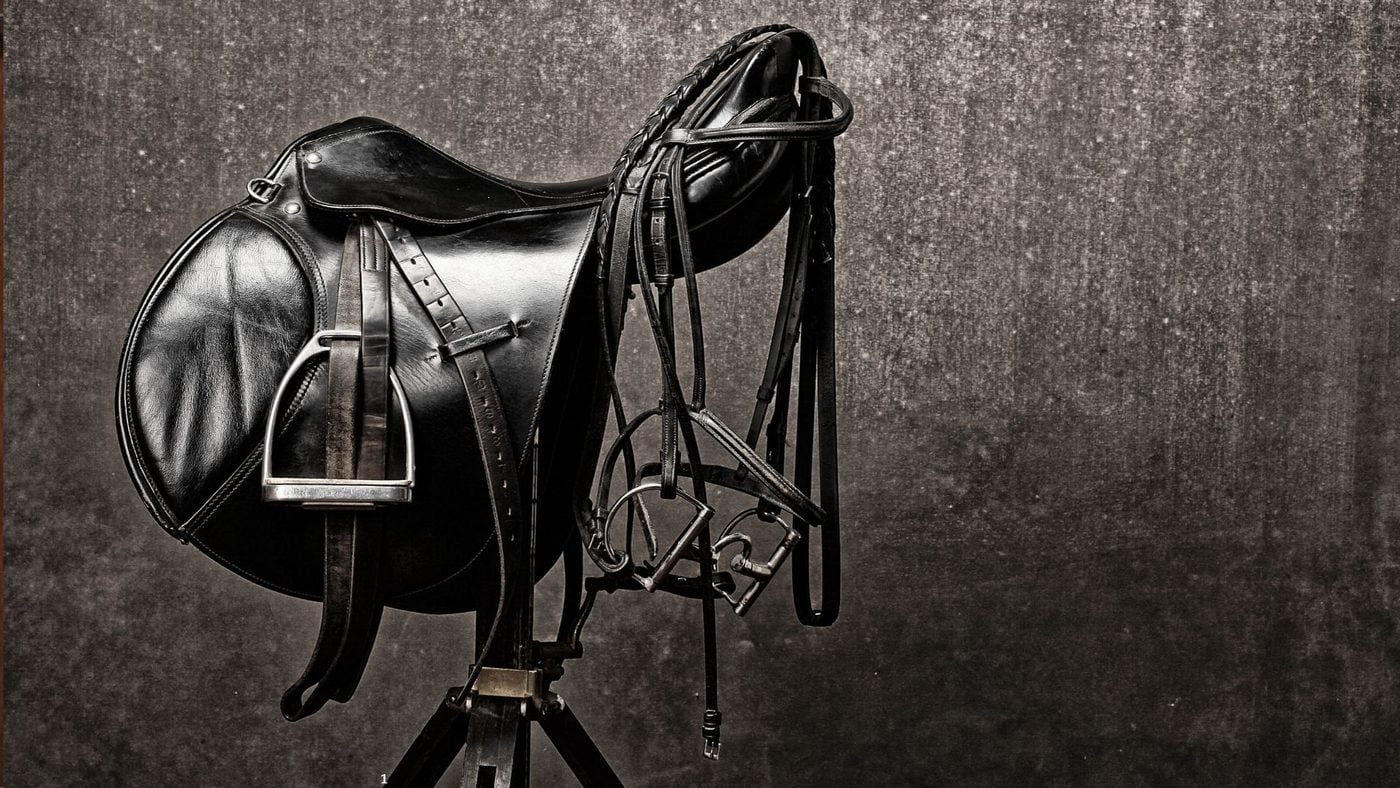
Jumping Saddle vs. Dressage Saddle
Dressage and jumping saddles look similar at first glance but ride very differently. One holds you deep and tall on a long leg. The other gives you room to shorten up and get off the horse’s back.
| Feature | Jumping saddle | Dressage saddle |
|---|---|---|
| Seat | Flatter, with the deepest point farther back | Deeper, to keep the rider centered |
| Flap | Shorter and cut forward | Longer and straight |
| Stirrups | Shorter, for a two-point position | Longer, for a long, relaxed leg |
| Knee and thigh support | Smaller blocks in front of the knee | Larger blocks to steady the thigh |
| Rider position | Room to fold into two-point | Tall and centered for flatwork |
Can you jump in a dressage saddle?
You can for a few small fences, but it isn’t a good idea for regular jumping. A dressage saddle’s deep seat and long, straight flap leave little room for your knee when you shorten your stirrups, so you end up perched on top of the saddle. As saddle fitter Jochen Schleese puts it, occasional swapping won’t do lasting harm, but for regular training you want a saddle built for the job. The same goes in reverse: you can school on the flat in a jumping saddle, but it won’t help you sit deep and tall the way a dressage saddle will.
Why do dressage saddles have knee blocks?
Knee and thigh blocks help hold the rider’s leg in a long, steady position without gripping. They should support you without pinning your leg in place, so the size and position that work best depend on the rider’s build and preference.
Specialty English Saddles

Racing saddle
Racing saddles are tiny, flat, and light, because the jockey spends much of the race balanced in a crouch with the stirrups pulled up short and weight off the horse’s back. Once the jockey’s up in the irons, the saddle almost disappears. Exercise saddles used for morning training are a little bigger and sturdier than the race saddles jockeys use in the afternoon.
Endurance saddle
Endurance saddles are built for comfort over long distances. They’re designed to spread the rider’s weight over a larger area of the horse’s back, and they usually have extra rings and attachment points for carrying water and gear on the trail.

How to Choose an English Saddle
Start with what you’ll be doing in the saddle:
- Not sure yet, or trying a bit of everything: an all-purpose saddle.
- Mostly flatwork: a dressage saddle.
- Jumping regularly: a close contact saddle.
- Eventing: an eventing saddle.
- Showing Saddlebreds, Morgans, or other saddle seat horses: a saddle-seat saddle.
- Long trail miles: an endurance saddle.
Then make sure it fits your horse and gives you a balanced, comfortable position:
- Fit the horse first. A saddle that pinches or bridges will make any horse sore, no matter how nice it is. Pay close attention to how a saddle should fit at the withers. Tree widths run from narrow to extra wide, but sizing isn’t standard between brands, and a thick pad can’t fix a saddle that doesn’t fit. Check it on the horse, ideally with a qualified saddle fitter, especially if it’s used or expensive.
- Check the panels. Wool-flocked panels can be adjusted by a fitter as your horse’s back changes, which matters for a young horse or one coming off the track and putting on muscle. Foam panels generally offer less adjustment, and what can be done depends on the maker and model.
- Fit the rider. English seats are measured from the nailhead beside the pommel to the center of the cantle, and most adults ride in a 16- to 18-inch seat, according to Farmhouse Tack’s guide on how to measure an English saddle. English sizes run larger than Western saddle sizes, so a 17-inch English seat isn’t the same as a 17-inch Western one.
- Weigh leather against synthetic. Synthetic saddles are lighter, cheaper, and easy to clean. Leather costs more but can last for decades with regular cleaning and the right saddle oil and conditioner.
- Plan for the pad. Choose a pad that lets the saddle sit correctly without bunching or interfering with the panels. Dressage and jumping pads are usually cut differently to match their flaps, so keep that in mind when you’re choosing the right saddle pad.
Match the discipline, fit the horse, then fit yourself. Get those three right, and the right English saddle usually becomes obvious.
About Miles Henry
Racehorse Owner & Author | 30+ Years in Thoroughbred Racing
Miles Henry (legal name: William Bradley) is a professional horseman based in Folsom, Louisiana. He holds Louisiana Racing License #67012 and has spent over three decades managing Thoroughbreds at premier tracks including Fair Grounds, Delta Downs, and Evangeline Downs.
Expertise & Hands-On Experience: Beyond the track, Miles has decades of experience in specialized equine care, covering everything from hoof health and nutrition to training protocols for Quarter Horses, Friesians, and Paints. Every guide on Horse Racing Sense is rooted in this “boots-on-the-ground” perspective.
30 of their last 90 starts
Equibase Profile.

Connect with Miles: