
Last updated: August 1, 2026
One of the first things I learned as a new owner at Fair Grounds is that the weight printed next to each horse’s name in the program is not a random number — it is assigned deliberately to keep races competitive. Understanding how that system works changes what you see when you watch a race and what you look for when you bet one.
Here are the key reasons racehorses carry different weights:
- Weight is assigned to level the competitive playing field. Faster horses carry more; slower ones carry less. The goal is to make every horse in the field a realistic contender.
- In handicap races, a racing official assigns individual weights based on each horse’s past performance and speed figures.
- In allowance and stakes races, weights are set by age, sex, and earnings using The Jockey Club’s Scale of Weights.
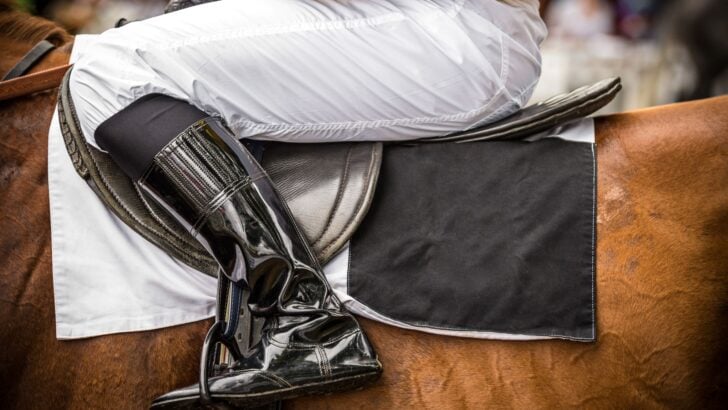
- The total weight includes the jockey, saddle, and lead pads added to reach the required number. Jockeys weigh in before and out after every race.
- A traditional rule of thumb suggests each extra pound is worth roughly one length per mile — though horsemen and studies disagree on the exact effect.
This article is part of our series explaining horse racing — a complete breakdown of how the sport works, from race types and class levels to training and betting.
Sources behind this guide: Weight figures and race conditions reflect current US racing standards and are consistent with the Jockey Club Scale of Weights and guidelines from the International Federation of Horseracing Authorities. Individual weights vary by track, race type, and jurisdiction.
Table of Contents
Why Do Racehorses Carry Weights
Weight in horse racing is about one thing: competitive balance. Without it, the same horses would win over and over again, and most races would be over before they ever broke from the gate. Weight is how the game keeps things level enough to stay competitive.
A faster horse carries more weight, which slows it down enough to give others a chance. A slower horse carries less so it can keep up. In a perfectly set handicap, you’d get a blanket finish — though in reality, the best horses still win plenty of races under heavy loads. Good horses beat good horses with weight shifts all the time, but great horses still show up regardless. Weight tightens things up; it doesn’t rewrite ability.
Miles’s Take — weight is a tax, not a verdict: In 30 years around Fair Grounds, I’ve seen the same pattern: the best horses usually still find a way, even when they’re giving weight away. What the system really does is keep them within reach of each other long enough for something else — trip, pace, ride — to decide it. That’s all you’re really betting into.
How Weight Is Physically Applied
Every horse’s weight assignment starts in the jockey’s room, at the scale. Before each race, jockeys weigh in fully dressed — helmet, silks, boots, and saddle — to confirm they meet the assigned weight for that horse. The saddle itself is part of the total: most racing saddles weigh between one and two pounds, far lighter than the leather saddles used in other equestrian disciplines.
If a jockey comes in under the required weight, lead pads — flat rectangular pieces of lead — are inserted into pockets in the saddle cloth to make up the difference. A jockey assigned to carry 118 pounds who weighs 112 pounds in full gear would need six pounds of lead added to the saddle. After the race, jockeys weigh out on the same scale to confirm the weight did not change during the race. A horse that carries less weight than assigned can be disqualified.
From the barn: I’ve watched the weigh-in process hundreds of times at Fair Grounds and Evangeline Downs. Most jockeys come in right at weight or within a pound or two — experienced riders manage their body weight carefully throughout the week leading up to a race. What always impresses me is how precise the process is. An extra pound or two is not waved through. The scale is the final word.

Types of Weight Assignments
Not all races assign weight the same way. The method depends on the race type, and understanding the difference tells you a lot about what the conditions are trying to accomplish.
Handicap Races
In a handicap race, a racing official — called the handicapper — individually assigns a weight to each horse based on its past performance, speed figures, and record against similar competition. The best horse in the field carries the most weight — a horse that’s been winning allowance races easily might be asked to carry 124 pounds against a rival carrying 118 after finishing third or fourth. Handicap races are less common in American racing today than they were historically, but they still appear regularly in the condition book at most tracks.
Weight-for-Age Races
Weight-for-age races assign weight based on a horse’s age and the time of year, using a published scale developed by The Jockey Club. Younger horses carry less because they have not finished developing physically. A three-year-old in January carries significantly less than a three-year-old in September — the scale accounts for how much development happens over the racing year. Most standard allowance and stakes races in the United States use weight-for-age as the base.
The conditions for a recent race at Louisiana Downs read: Three Year Olds, 122 lbs.; Older, 127 lbs. Non-winners of a race at a mile or over since April 23, 2026 allowed 2 lbs. Seamus’s Girl got the three-year-old allowance and the distance allowance both, which put her at 120 pounds. Most of the field was at 125 or higher. That’s a five-pound break going into a race — and I didn’t do anything to earn it except enter the right horse in the right conditions.
Sex Allowances
Fillies and mares receive a standard weight allowance compared to males — typically five pounds in most American races. A filly carrying 118 pounds is competing on roughly equivalent terms with a colt carrying 123 pounds. Some exceptional fillies and mares routinely beat males at equal weights — Zenyatta and Ruffian are the most famous examples — but the allowance exists because the average mare is at a measurable physical disadvantage against the average male of the same age and fitness.
Apprentice Allowances — The Bug
Apprentice jockeys — riders in their first season who have not yet reached a set number of career wins — are permitted to ride at reduced weights. The allowance is typically tiered to how many wins the apprentice has — larger early on, shrinking as they gain experience — and the exact pounds can vary by track and jurisdiction. At Evangeline Downs, for example, the standard apprentice allowance is 5 pounds.
This “bug” (named for the asterisk symbol used to denote apprentice status in race programs) compensates for the rider’s inexperience and allows apprentices to get mounts they would not otherwise be able to book. Trainers sometimes specifically target apprentice riders for horses they believe have a physical weight advantage that outweighs the experience gap. Worth noting: some races specifically bar apprentice allowances, which signals the track wants experienced riders in that field regardless of the weight cost.
Miles’s Take — when the bug makes sense: Over 30 years I have used apprentice riders strategically several times. A horse that settles easily and runs its own race is a good candidate for a bug rider. A horse that needs tactical positioning in a competitive route — that is not the spot to save those pounds, whatever the exact number is at your track.
| Assignment type | Who sets it | Based on | Common in |
|---|---|---|---|
| Handicap | Racing official (handicapper) | Past performance and speed figures | Designated handicap races |
| Weight-for-Age | The Jockey Club scale | Age and time of year | Allowance and stakes races |
| Sex Allowance | Race conditions | Male vs. female | All open races |
| Apprentice Allowance | Jockey licensing rules | Win count / career stage | Any race with an apprentice rider |
The Scale of Weights
The Jockey Club publishes an official Scale of Weights that sets the base weight for thoroughbred races based on a horse’s age, distance, and month of the racing year. The key principle is straightforward: younger horses carry less because they are still developing physically. A two-year-old racing in spring carries significantly less than a four-year-old at any point in the year. Track secretaries use this scale when writing the conditions for each race in the condition book. The full scale is available at jockeyclub.com.
| Horse age | Distance | Jan-Feb | May-Jun | Sep-Oct |
|---|---|---|---|---|
| 2-year-old | 6 furlongs | Not racing | 108 lbs | 119 lbs |
| 3-year-old | 1 mile | 107 lbs | 114 lbs | 119 lbs |
| 4-year-old+ | 1 mile | 126 lbs | 126 lbs | 126 lbs |
| 3-year-old vs. older | 1 1/4 miles | 101 lbs | 108 lbs | 114 lbs |
In practice, most claiming and allowance races in Louisiana run in the 118-124 pound range for older horses. The actual weight assigned to any horse in any race is printed in the overnight entry sheet and the official race program — it is public information before every race.
How Weight Affects Performance
A traditional racing rule of thumb suggests that each additional pound is worth roughly one length over a mile — though horsemen and studies disagree on the exact effect. Most experienced trainers treat it as a rough guide, not a hard number. Distance, track condition, and the individual horse’s build all shape how much a weight difference actually matters on a given day.
As a general shape: a couple pounds in a short sprint is usually minor, while the same difference in a route race, carried through two turns and over two minutes of sustained effort, starts to tell in the final furlong. For the full distance-by-distance breakdown — how the estimate scales from six furlongs out to a mile and a quarter — see our guide to handicap races, where weight-to-performance math is covered in depth.
Miles’s Take — where weight actually matters: In sprints, I have found weight matters much less than people think. Where I pay close attention is in route races on tracks playing slow — that is when the physical burden starts to tell in the final furlong. I had a gelding a few years back who carried 122 pounds beautifully on a fast track. Put him on a wet track with 120 and he was a different horse. Some are built to carry weight; some are not. You learn which one you have after a few starts under different conditions.
Track condition compounds the effect. A horse carrying top weight on a fast, dry track is a different proposition than that same horse on a muddy surface where every stride requires more effort. Trainers who pay attention to weight also pay attention to the weather forecast — the two interact.

Jockey Size
The weight system creates real pressure on jockeys. Most jockeys ride at between 108 and 118 pounds — well below average for their height and frame. Maintaining racing weight requires sustained dietary discipline that has genuine health consequences. Most major US jurisdictions now set minimum weights at 118 pounds or above, which has helped reduce the most dangerous weight-cutting practices at the professional level. For a full breakdown of how jockeys manage their weight throughout a racing season, see our jockey size and weight guide.
From the barn: I have worked with jockeys over the years who were managing weight carefully every single week of the racing season. The best ones treated it as seriously as any professional athlete treats their fitness. The ones who cut corners with extreme methods did not last as long in the sport.
Key Takeaways — Racehorse Weight Assignments
- Weight is competitive balance, not punishment. Faster horses carry more to give the field a realistic chance — great horses still win, but races are closer.
- The total weight includes jockey, saddle, and lead pads. Jockeys weigh in before and out after every race; a horse carrying under the assigned weight can be disqualified.
- Four systems set the weight: handicap assignments, weight-for-age scale, sex allowances (5 lbs for fillies/mares), and apprentice allowances for bug riders — the exact pounds vary by track and by how experienced the apprentice is (5 lbs at Evangeline Downs, for example).
- Weight matters most in routes on off tracks. In sprints under seven furlongs, a two or three pound difference rarely changes the outcome.
- A class drop combined with a weight break is the most actionable betting signal. Either one alone is a factor; together they usually mean connections are setting the horse up to win.

Frequently Asked Questions
How much weight does a racehorse carry?
Most American racehorses carry between 113 and 126 pounds in a typical race. The exact number depends on the race type, the horse’s age and sex, and whether an apprentice jockey is riding. The total includes the jockey, the saddle, and any lead weights added to reach the assigned number. Stakes races sometimes assign higher weights; maiden and claiming races typically fall in the 118–122 pound range for older horses.
Why do fillies carry less weight than colts?
Fillies and mares receive a standard five-pound sex allowance in most American races, recognizing that the average female is at a slight physical disadvantage compared to males of the same age. This does not mean fillies cannot beat males — exceptional fillies like Zenyatta and Ruffian competed against males at equal or near-equal weights and won — but the allowance exists to reflect average physical differences across the broader population of racehorses.
How much does extra weight slow a horse down?
A traditional rule of thumb suggests each additional pound is worth roughly one length over a mile, though horsemen and studies disagree on the exact effect. Weight matters most in route races of a mile or more, especially on off tracks. In sprints under seven furlongs, the impact is usually small and rarely changes the outcome on its own.
What is an apprentice allowance and what does the bug mean?
An apprentice allowance is a weight reduction granted to jockeys early in their career who have not yet reached a set number of wins. The allowance is typically tiered to experience and varies by track and jurisdiction — Evangeline Downs, for example, uses a 5-pound allowance. It is called the bug because race programs historically marked apprentice status with an asterisk (*) symbol. Trainers sometimes book bug riders strategically when a horse needs weight relief and the race does not require experienced tactical riding.
Can a horse be disqualified for carrying the wrong weight?
Yes. After every race, jockeys weigh out on the official scale to confirm they carried the assigned weight. If a jockey comes in more than a pound under the required weight, meaning the horse received an unfair physical advantage, the horse can be disqualified from its placing. Overweight — carrying more than assigned — is also possible but less common and is announced publicly before the race so bettors are aware.
What is the Scale of Weights in horse racing?
The Scale of Weights is a table published by The Jockey Club that sets base weight assignments for thoroughbred races based on a horse’s age, the race distance, and the time of year. The core principle is that younger horses carry less because they are still developing physically. Track secretaries use this scale as the foundation when writing race conditions.
How do trainers prepare horses to carry weight?
Most horses at the claiming and allowance level do not require specific preparation for their assigned weight — a fit horse handles the normal range without special conditioning. For horses stepping up to stakes races where top weights of 126 pounds or more are possible, trainers sometimes build weight-carrying capacity gradually through longer works and conditioning gallops. The most important factor is overall fitness: a sound, fit horse carries weight more efficiently than an unfit one.
About Miles Henry
Racehorse Owner & Author | 30+ Years in Thoroughbred Racing
Miles Henry (legal name: William Bradley) is a professional horseman based in Folsom, Louisiana. He holds Louisiana Racing License #67012 and has spent over three decades managing Thoroughbreds at premier tracks including Fair Grounds, Delta Downs, and Evangeline Downs.
Expertise & Hands-On Experience: Beyond the track, Miles has decades of experience in specialized equine care, covering everything from hoof health and nutrition to training protocols for Quarter Horses, Friesians, and Paints. Every guide on Horse Racing Sense is rooted in this “boots-on-the-ground” perspective.
30 of their last 90 starts
Equibase Profile.

Connect with Miles: